Trip Facts
Country:
Nepal
Duration:
9 Days
Max Altitude:
4,130 m
Activities:
Trekking and hiking
Region:
Annapurna Region
Starting Point:
Kathmandu
Ending Point:
Kathmandu
Grade:
Moderate
Group Size:
1 to 10 pax
Accomodation:
Teahouses, hotel
Best Season:
Mar-May & Sep-Nov
Notice
- A licensed guide and a TIMS card are required in the Annapurna region. Solo trekking is not allowed, and the rule still stands in 2026 (Nepal Tourism Board, 2026). Spade Himalaya gives you the guide and both permits.
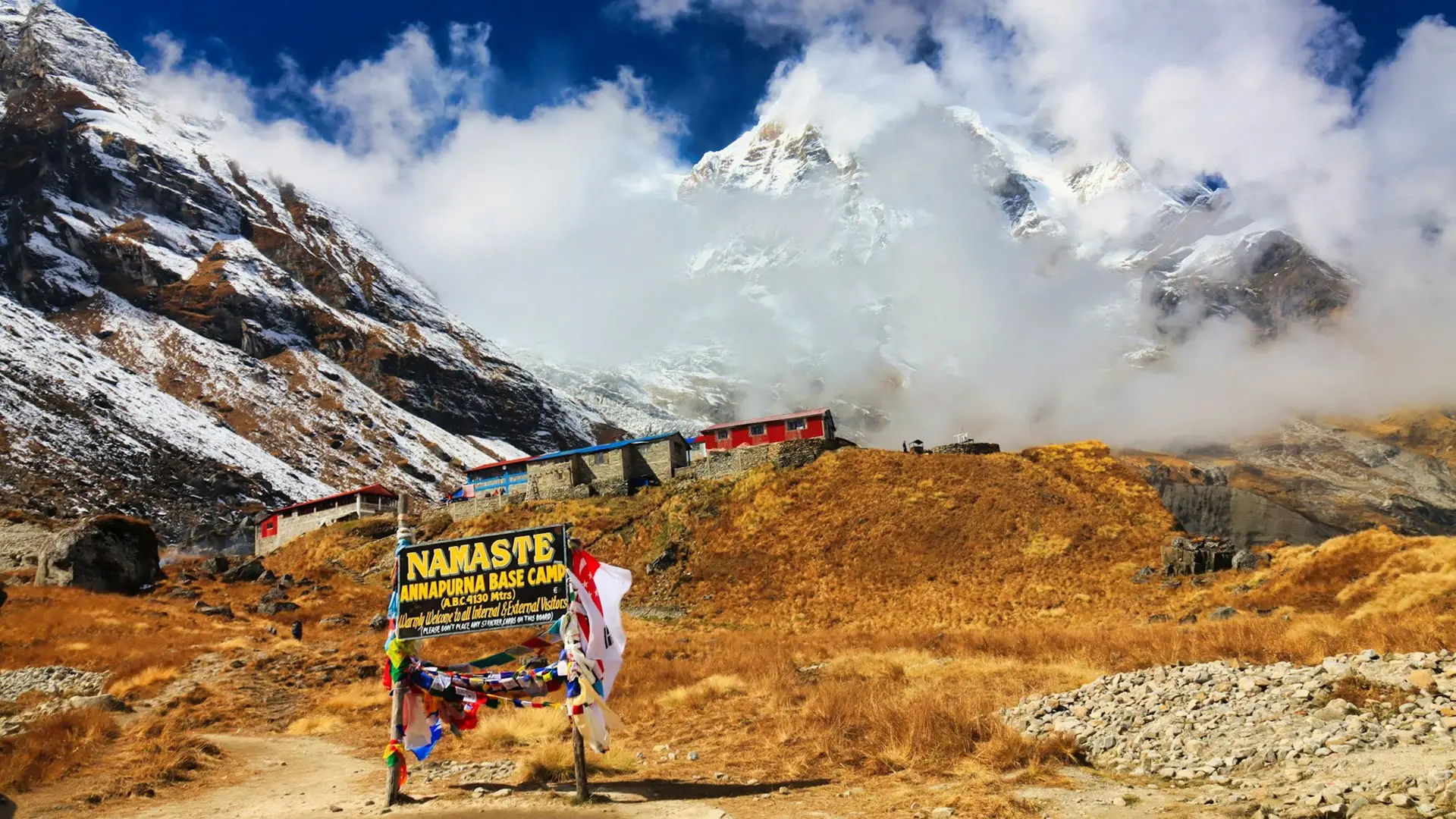
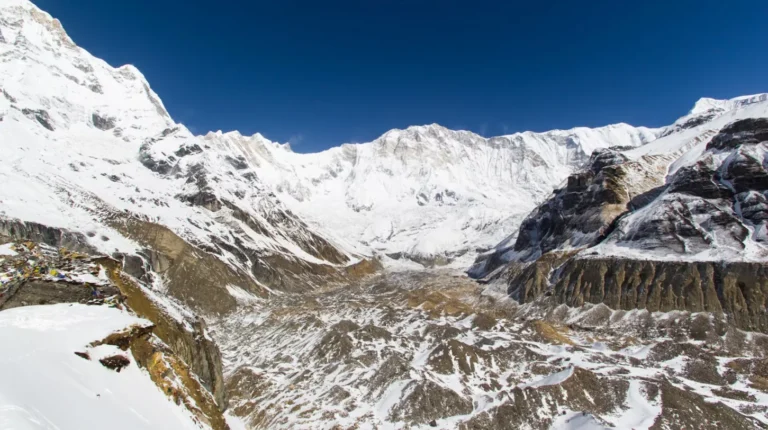
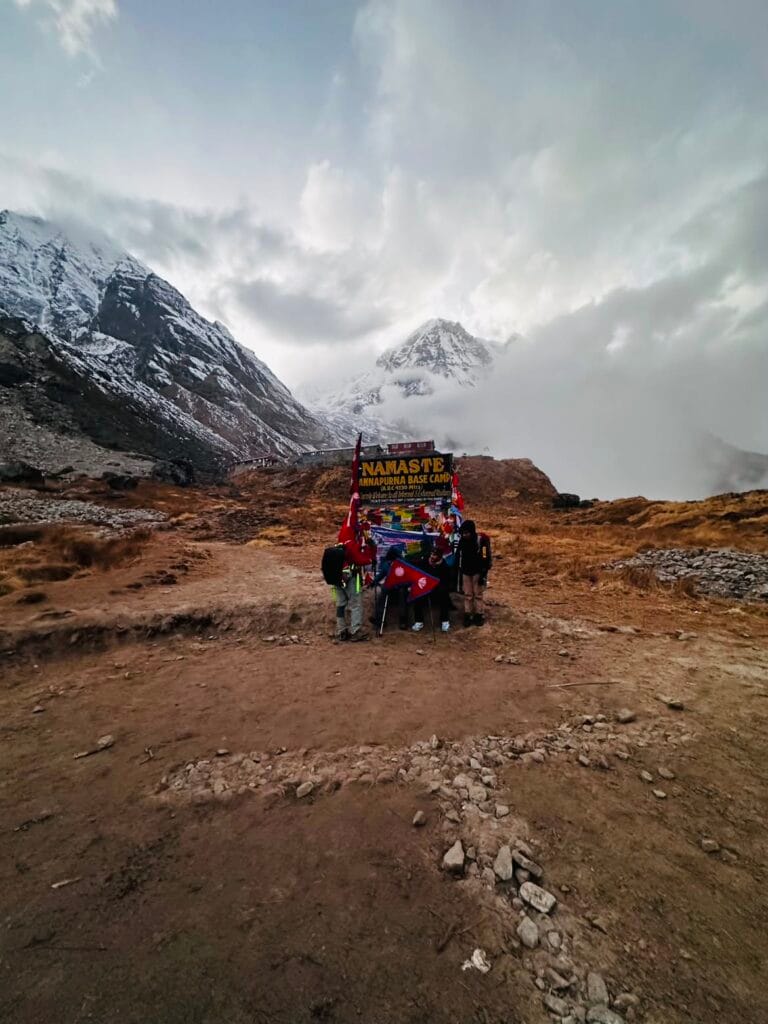
- The trek reaches Annapurna Base Camp at 4,130 m (13,550 ft). This is the floor of a glacial bowl, ringed by peaks over 7,000 m. In 9 days, it is one of the quickest ways to stand below an 8,000 m peak.
- High up, the rooms are basic. In peak season, you often share a room of 4 to 5 beds. Private rooms are rare there. So plan for shared lodging on the upper trail.
Overview of Annapurna Base Camp Trek 9-Days
Quick answer: Annapurna Base Camp does something no other classic trek can. In nine days you walk into a natural amphitheater at 4,130 m, with peaks rising on every side of the sanctuary. Because the trail stays below extreme altitude, fit first timers manage it well. Prices start at US$ 930, permits and a licensed guide included. And the teahouses on this route serve some of the best food in the hills.
The Annapurna Base Camp Trek is a 9-day walk into the Annapurna Sanctuary. This is a high glacial bowl, about 40 km north of Pokhara. A ring of peaks over 7,000 m circles it. So it is the most direct trek to the foot of an 8,000 m giant in Nepal.
You start low, in warm river valleys and Gurung villages. Then you climb the Modi Khola valley through oak and rhododendron forest. In just four trekking days, you reach Annapurna Base Camp (4,130 m). The reward is a wall of ice and rock on every side.
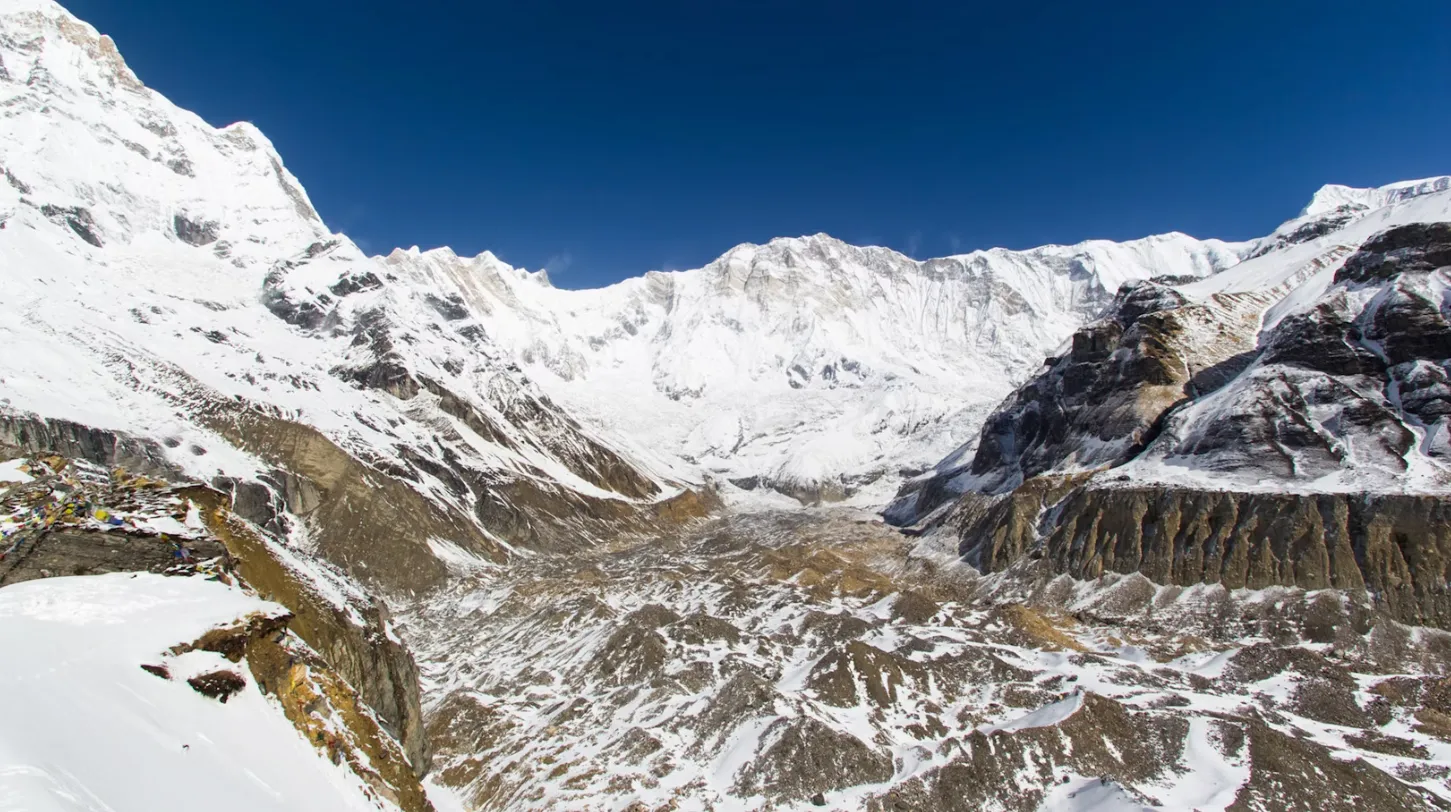
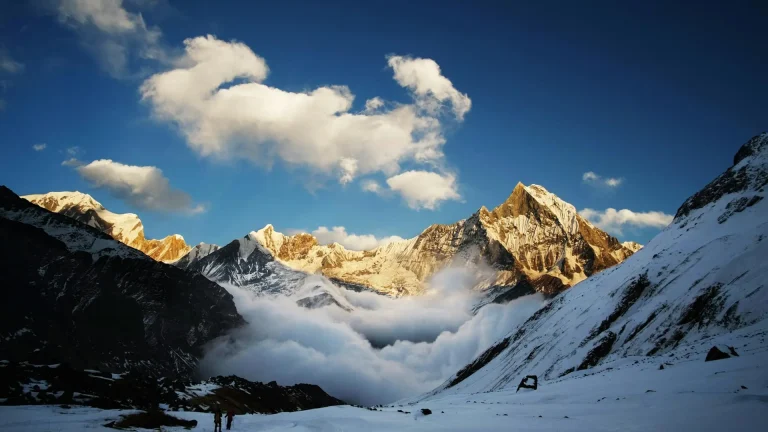
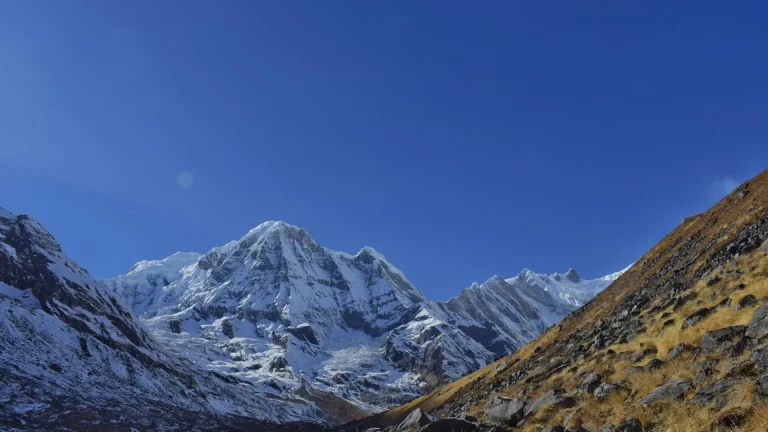
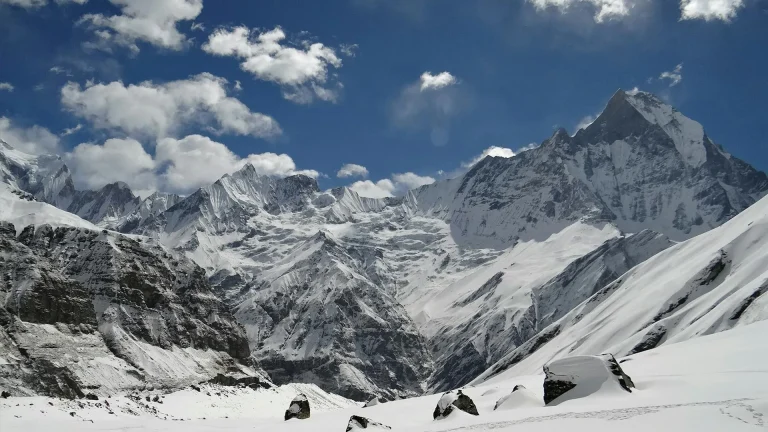
From base camp, you stand right below Annapurna I (8,091 m). It is the tenth-highest mountain on earth. It was also the first 8,000 m peak ever climbed, back in 1950 (Wikipedia: Annapurna, 2026). Close by rises Machhapuchhre (6,993 m), the “fish tail” peak. It is sacred, so climbing it is banned. In fact, no one has ever stood on its top.
The whole trek lies inside the Annapurna Conservation Area. At 7,629 km2, this is the largest protected area in Nepal. The trail also passes the Gurung villages of Ghandruk and Chhomrong. On the way back, you can soak in the hot springs at Jhinu Danda. Best of all, the trek tops out at 4,130 m, not 5,000 m. So the altitude risk is lower, which makes it a great first Himalayan trek.
Spade Himalaya runs this trek with licensed Nepali guides. So your guide sets a safe pace, watches the weather, and checks your health each day. Want more options? The same region has the higher Annapurna Circuit Trek over Thorong La. For a short, easy taste, try the Ghorepani Poon Hill Trek. For a quiet, offbeat route, see the Khopra Danda Trek. Or aim higher with the Everest Base Camp Trek. Still weighing your options? We wrote honest comparisons of the Circuit vs Base Camp, Mardi Himal vs Base Camp, and Poon Hill vs Base Camp to help you pick the right trail.
Trips Highlights
- Stand at Annapurna Base Camp (4,130 m), in a glacial bowl ringed by 7,000 m peaks.
- Look up at Annapurna I (8,091 m), the tenth-highest mountain and the first 8,000 m peak ever climbed.
- See Machhapuchhre (Fishtail, 6,993 m) up close, a sacred peak that has never been climbed.
- Reach the foot of an 8,000 m mountain in one of the shortest treks in Nepal.
- Take the short scenic flight from Pokhara back to Kathmandu at the end of the trek.
- Walk through the Gurung villages of Ghandruk and Chhomrong.
- Climb through oak and rhododendron forest in the Annapurna Conservation Area.
- Soak in the natural hot springs at Jhinu Danda on the way down.
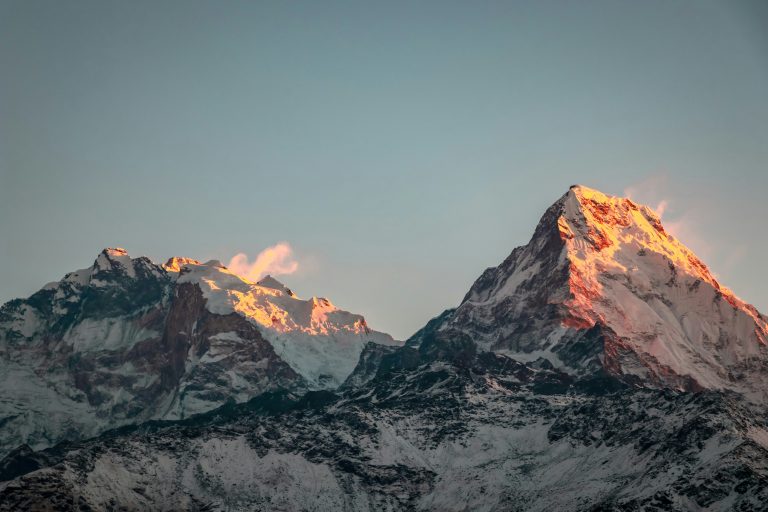
- Watch sunrise light the ring of peaks from base camp.
- Enjoy a short, simple plan built for first-time Himalayan trekkers.
Route Details
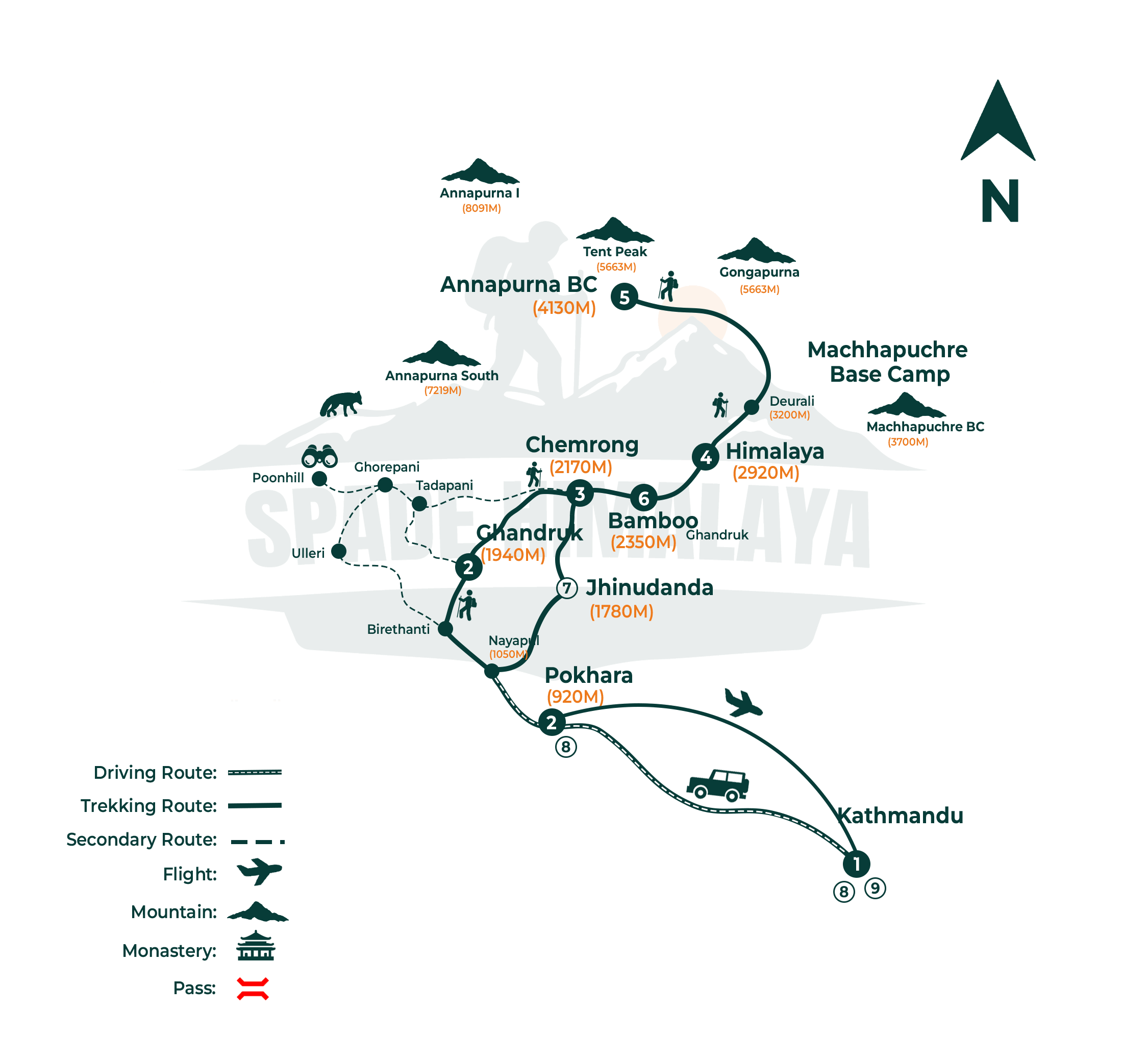
Kathmandu (1,400 m) → drive to Pokhara (820 m) → drive to Ghandruk (1,940 m) → Chhomrong (2,170 m) → Himalaya (2,920 m) → Machhapuchhre Base Camp (3,700 m) → Annapurna Base Camp (4,130 m) → Bamboo (2,350 m) → Jhinu Danda (1,780 m, hot springs) → Nayapul → drive to Pokhara → fly to Kathmandu.
In short, you climb from Pokhara through Ghandruk and Chhomrong into the Modi Khola valley. Then you follow the river up past MBC to Annapurna Base Camp. After that, you walk back down the same valley to the hot springs at Jhinu Danda. Finally, you drive and fly back to Kathmandu.
Trips Itinerary
A Spade Himalaya representative meets you at the airport and takes you to your hotel. In the evening you meet your team for a short briefing and a gear check, so bring your passport, photos and a copy of your insurance.
Kathmandu sits at 1,400 m in a valley ringed by hills. The team sorts your ACAP and TIMS permits while you rest, so there is nothing for you to queue for. If the afternoon is free, Boudhanath is worth the trip across town at dusk.
- Max Altitude: 1,400 m
- Meals: Breakfast Included
- Accommodation: Star Hotel
The day starts early with the long drive west out of the Kathmandu valley to Pokhara, following the Trishuli river for much of the way. From Pokhara a second, shorter drive carries you up into the hills to Ghandruk, so you reach the trailhead village without having walked a step.
Ghandruk sits at 1,940 m on a shelf above the Modi Khola valley, and the road climbs to it through farm terraces and scattered stone hamlets. Pokhara, where you change vehicles, lies at around 820 m, so the afternoon gains you more than a thousand metres by road rather than on foot.
The village is a large Gurung settlement of stone houses and slate roofs, looking straight across at Machhapuchhre and Annapurna South. Walk its upper lanes with what is left of the afternoon, because that is where the mountain view opens out, and it is the best one you will get without climbing for it.
- Duration: 6-8 hours (Pokhara) and 3 hours (Ghandruk)
- Max Altitude: 1,940 m
- Meals: Breakfast, Lunch & Dinner Included
- Accommodation: Guest House
The trail rolls through forest, farmland and stone paved villages, with one long descent and one long climb that together make the day a good deal harder than the distance suggests.
Chhomrong at 2,170 m is the last real village before the sanctuary, and everything above it is lodges only. This is where you buy anything you have forgotten, because there is no second chance.
The village faces Annapurna South and Machhapuchhre across the valley. Sit outside with a drink in the late afternoon and watch the light move across both of them as the sun drops.
- Duration: 5 to 6 hrs Walking
- Max Altitude: 2,170 m
- Meals: Breakfast, Lunch & Dinner Included
- Accommodation: Guest House
You drop steeply to the Chhomrong Khola, cross it, then climb into the narrow Modi Khola valley, passing Sinuwa, Bamboo and Dovan on the way up to the lodges at Himalaya.
The valley walls close in as you gain height to 2,920 m and the air turns cooler and damper. This is the gorge section, where the sky narrows to a strip above you. The path runs through bamboo and rhododendron, shaded and wet underfoot in places, with the river loud below you all day.
- Duration: 5 to 6 hrs Hike
- Max Altitude: 2,920 m
- Meals: Breakfast, Lunch & Dinner Included
- Accommodation: Guest House
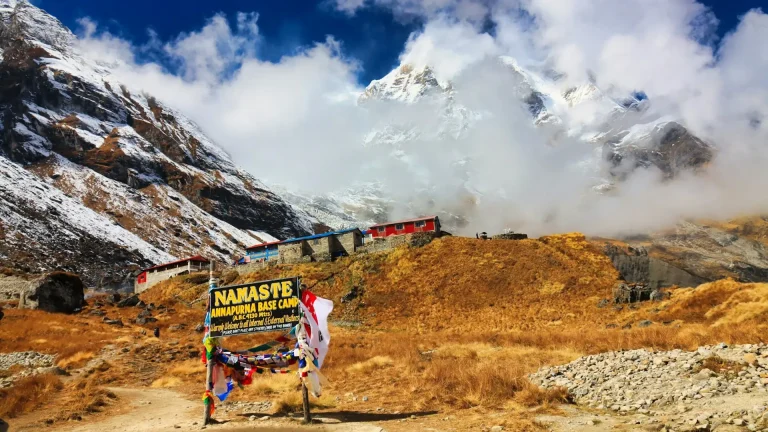
This is the big day. You climb through alpine meadow to Machhapuchhre Base Camp, then walk gently up the glacial bowl into Annapurna Base Camp itself, arriving in the early afternoon.
Machhapuchhre Base Camp is 3,700 m and Annapurna Base Camp 4,130 m. The sanctuary is a full ring of peaks with no easy way out except the way you walked in, which is what makes it so striking.
Try to arrive in time for the afternoon light, when the sun comes round onto the wall above the lodges and the whole bowl turns gold for half an hour.
In the morning the sun comes up over Annapurna I, the tenth highest mountain on earth, and that sunrise, seen from the floor of the sanctuary, is what the entire trek is built around.
- Duration: 5 to 6 hrs
- Max Altitude: 4,130 m
- Meals: Breakfast, Lunch & Dinner Included
- Accommodation: Guest House
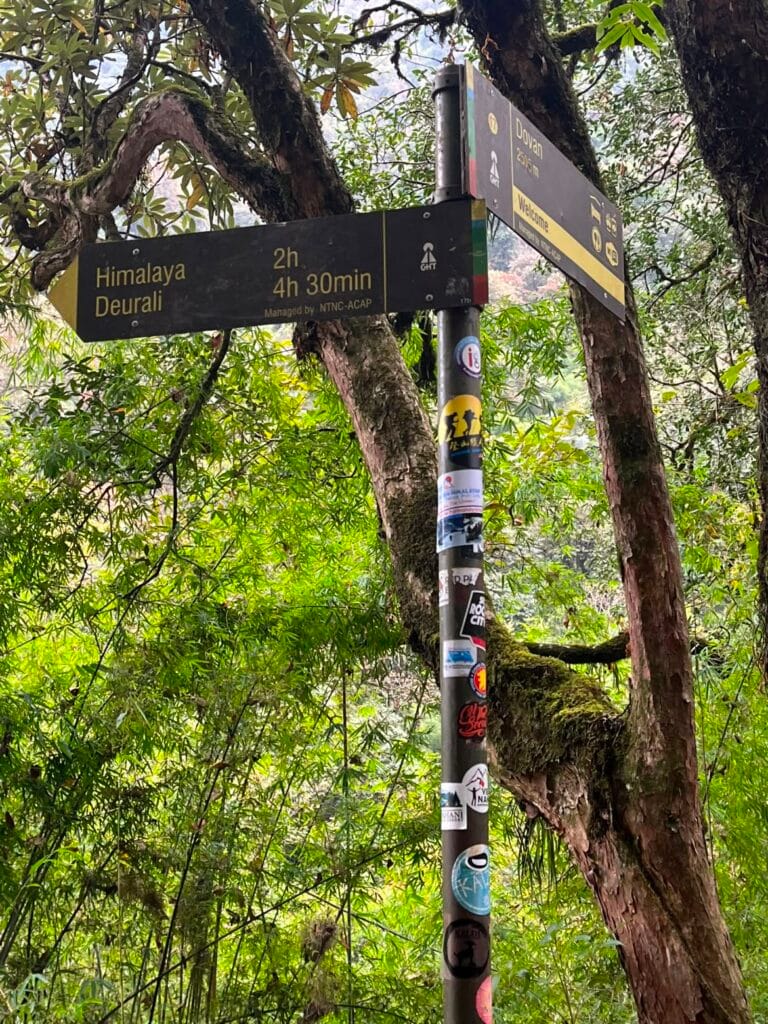
After sunrise at base camp you head back down the valley, passing Machhapuchhre Base Camp, Deurali and Himalaya, and finish the day at Bamboo in thick forest beside the river.
You lose nearly 1,800 m, dropping from 4,130 m to 2,350 m in a single day. The walking gets easier and the air feels richer with every hour, which is the opposite of how the way up felt. Coming down also shows you the valley from the other direction, and you notice plenty you walked straight past.
- Duration: 5 to 6 hrs Hike
- Max Altitude: 4,130 m
- Meals: Breakfast, Lunch & Dinner Included
- Accommodation: Guest House
You walk down through forest and terraced fields, with one short climb back toward Chhomrong that everybody resents by this stage, and reach Jhinu Danda in the middle of the afternoon.
Jhinu Danda is at 1,780 m and the natural hot springs lie below the village beside the river, about fifteen minutes down a steep path from the lodges.
The springs are the reward for a week of walking and they are the whole reason this stop exists. Go before dark and take a towel, because there is nothing to hire down there.
- Duration: 5 to 6 hrs
- Max Altitude: 2,350 m
- Meals: Breakfast, Lunch & Dinner Included
- Accommodation: Guest House
The last walk follows the trail through villages and terraces to Nayapul. From there you drive to Pokhara and take the short flight back to Kathmandu, where a representative meets you at the airport.
You finish at 1,050 m, having come down from 4,130 m over four days, and your knees will have noticed even if the rest of you has not. The evening is free, and Thamel has no shortage of places to mark the end of the trek with your group.
- Duration: 2.5 Drive and 3-4 Hrs Hike
- Max Altitude: 1,780 m
- Meals: Breakfast, Lunch Included
- Accommodation: Star Hotel
Depending on your flight time you may have a few free hours to shop or look around, then a representative takes you to the airport, about thirty minutes from Thamel, and we suggest allowing three hours before an international departure.
- Max Altitude: 1,400 m
- Meals: Breakfast Included
Trips Include
- All international and domestic airport transfers by private vehicle.
- Flight from Pokhara to Kathmandu at the end of the trek.
- 2 nights' hotel in Kathmandu (3-star, twin share, with breakfast).
- Kathmandu to Pokhara, Pokhara to Ghandruk, and Nayapul to Pokhara by private vehicle.
- All teahouse and lodge accommodation during the trek.
- All meals (breakfast, lunch, dinner) during the trek, plus daily seasonal fresh fruit.
- Annapurna Conservation Area Permit (ACAP) and TIMS card.
- A licensed, government-registered English-speaking trekking guide (assistant guide for groups of 8 or more).
- Porter support, one porter per two trekkers (pay, insurance, meals, lodging, equipment).
- Pulse oximeter for twice-daily oxygen and heart-rate checks.
Trips Exclude
- International airfare to and from Nepal.
- Nepal entry visa (US$30 for 15 days, US$50 for 30 days, US$125 for 90 days).
- Travel and medical insurance (mandatory; must cover high-altitude trekking and helicopter evacuation).
- Lunches and dinners in Kathmandu and Pokhara.
- Drinks, bottled water, snacks, and desserts on the trail.
- Hot showers, Wi-Fi, and device charging at teahouses (a small fee each).
- Tips for guide, porters, and driver.
- Personal expenses and any costs arising from early departure or itinerary changes.
- Anything not listed under Cost Includes.
Trips Altitude
Trips Map
Trips Gallery
Packing List
General
- Four-season (zero degree) sleeping bag.
- Sleeping bag liner
- Puffy down jacket.
- Duffel bag.
- Daypack, 30 to 45 litres, with a rain cover
Upper Body
- Warm hat or beanie that covers the ears
- Neck gaiter, buff, or scarf
- Sunglasses with UV protection
- Headlamp with spare batteries
- Sunscreen (SPF 35 to 60) and lip balm
- Technical base-layer tops (long and short sleeve)
- Fleece jacket or wool pullover
- Waterproof, windproof shell jacket
Lower Body
- Thermal base-layer trousers
- Comfortable trekking trousers
- Casual or sport trousers for the teahouses
- Waterproof, windproof shell trousers
Hands
- Wool or technical liner gloves
- Insulated shell outer gloves
- Light gloves for using walking poles (optional)
Feet
- Waterproof trekking boots (well broken in)
- 4 to 5 pairs of warm wool socks and sock liners
- Light shoes or sandals for the evenings and the hot springs
Undergarments
- Quick-drying technical underwear
- Sports bras (women)
- Thermal underwear set for cold nights
First Aid Kits
(Your guide carries a kit, medication, and a pulse oximeter, but a personal kit is strongly recommended.)
- Assorted adhesive and butterfly bandages
- Blister treatment cream and antiseptic ointment
- Ibuprofen or other pain relief
- Altitude medication such as acetazolamide (Diamox), only if advised by your doctor
- Insect or anti-itch ointment
- Water-purification tablets
Others
- Passport, 4 passport-size photos, and a copy of your insurance and flight details
- Reusable water bottle and a water filter or purifier
- Toiletry kit, quick-dry towel, toilet paper, hand wipes, and soap
- High-energy snacks (bars, nuts, dried fruit)
- Swimwear for the Jhinu Danda hot springs
- Waterproof or dry bags for documents and electronics
Optional
- Trekking poles (your own, if you prefer them; otherwise provided)
- Power bank and spare batteries
- Camera with memory cards, charger, and spare batteries
- Music player and earphones
- Book or cards for the evenings
Good to Know
Before you go
You only need a few things ready. First, bring your passport, four photos, and a copy of your insurance. Then Spade Himalaya can sort your ACAP and TIMS card. Also, carry enough cash in Nepalese rupees from Pokhara, because there are no ATMs on the trail. Last, train a little before you come. The trail has long staircases, so hill and stair practice helps.
Since April 2023, Nepal requires foreign trekkers in the Annapurna region to walk with a licensed guide from a registered agency. One guide may lead up to seven trekkers, and the rule still holds in 2026 (Kathmandu Post, 2023). The goal is simple: safety and faster help in an emergency. Spade Himalaya is a registered agency with licensed guides. So your permits, plans, and emergency cover are all handled for you.
Base camp tops out at 4,130 m, which is lower than many treks. Still, altitude needs respect. The plan climbs slowly, and your guide checks you each day. So drink 3 to 4 litres of water daily, walk at an easy pace, and skip alcohol up high. Tell your guide at the first headache or wave of nausea. Going down is the best cure.
The weather swings a lot. Afternoons are warm low down, and nights are freezing up high. So pack good layers. After heavy snow, there can be avalanche risk on the upper Modi Khola. Your guide watches this closely and will change the timing or route to stay safe.
You sleep in simple teahouses. Lower down, rooms are twin. Higher up, you often share a room of 4 to 5 beds in peak season. The food is hearty: dal bhat, noodles, potatoes, soup, and bread. Vegetarian meals are easy, and fresh fruit comes daily. For water, refill and purify rather than buy bottles.
The Annapurna region is the home of the Gurung people. A smile and a “Namaste” go a long way. Ask before you photograph people or shrines. Also, walk clockwise around mani walls and chortens. These small courtesies are warmly received, and they make the trek richer.
Trips Reviews
Standing at Annapurna Base Camp Was an Unforgettable Moment
Trips FAQs
Trek Difficulty & Altitude
It is graded moderate. There is no technical climbing, but you walk 5 to 7 hours a day with some long stone staircases and a top altitude of 4,130 m. Anyone with a basic fitness level who can hike for several hours on consecutive days can complete it. A little cardio and hill training beforehand makes the steeper sections much easier.
Annapurna Base Camp sits at 4,130 m (13,550 ft), lower than the 5,000 m-plus of Everest or the Annapurna Circuit, so the altitude risk is real but more manageable. The itinerary gains height gradually, your guide carries a pulse oximeter, and drinking plenty of water and pacing slowly keep most trekkers comfortable. Tell your guide early if you feel headachy or unwell.
Base Camp is shorter (9 days), tops out at 4,130 m, and walks you into a glacial amphitheatre below Annapurna I. The Annapurna Circuit Trek is longer, crosses the Thorong La pass at over 5,400 m, and circles the whole massif. Choose Base Camp for a shorter, lower first Himalayan trek, and the Circuit for a bigger, higher journey.
Permits, Guide & Insurance
Yes. Since April 2023, every foreign trekker in the Annapurna region must hire a licensed guide and carry a TIMS card. The rule still stands in 2026 (Nepal Tourism Board, 2026). Solo trekking is not allowed here. So Spade Himalaya gives you a licensed guide and sorts your permits.
You need two. First, the Annapurna Conservation Area Permit (ACAP), about NPR 3,000 for foreign trekkers. Second, the TIMS card, about NPR 2,000 for non-SAARC trekkers. Spade Himalaya arranges both before you start. The ACAP helps fund the conservation area, and the TIMS card supports trekker safety.
Yes, it is a must. Your policy has to cover high-altitude trekking and a helicopter rescue. Many normal policies do not, so check the wording first. Arrange it at home before you fly. Then leave a copy with Spade Himalaya at the briefing, so the team can act fast in an emergency.
Annapurna Base Camp sits at 4,130 m. That is lower than Everest Base Camp or the Annapurna Circuit, so the risk is smaller. Still, altitude is real. The plan climbs slowly, and your guide checks you with a pulse oximeter. So drink plenty of water, walk at an easy pace, and speak up early if you feel unwell.
Best Time to Trek
Spring (March to May) and autumn (September to November) are best. In these months, the skies are clear and the views are sharp. Winter is cold but quiet, and there can be some avalanche risk up high after snow. The summer monsoon brings rain, cloud, and leeches. So most people pick spring or autumn.
Accommodation & Facilities
You stay in teahouses with simple twin rooms lower down. Higher up, rooms often have 4 to 5 beds in peak season, because private rooms are rare there. The food is filling and varied. You get dal bhat, noodles, potatoes, soup, and bread. Vegetarian meals are easy to find.
Yes. Jhinu Danda, your stop on Day 7, has natural hot springs just below the village. They sit beside the Modi Khola, a short walk down. After several days of trekking, a warm soak is a real treat. It is a great way to ease your legs before the final day.
Trek Highlights & Views
Yes. Annapurna Base Camp is the best viewpoint on the trek. You stand directly below Annapurna I (8,091 m), the tenth-highest mountain in the world, with Annapurna South, Hiunchuli, and the sacred Fishtail peak of Machhapuchhre (6,993 m) ringing the basin. Sunrise, when the first light hits the summits, is the moment most trekkers remember most.
Base Camp is shorter, at 9 days, and tops out at 4,130 m. It walks you into a glacial bowl below Annapurna I. The Annapurna Circuit Trek is longer and higher, and it crosses the Thorong La pass above 5,400 m. So choose Base Camp for a shorter, lower first trek. Choose the Circuit for a bigger journey.