Trip Facts
Country:
Nepal
Duration:
10 Days
Max Altitude:
Tengboche, 3,860 m (12,664 ft)
Activities:
Trekking and hiking
Region:
Everest / Khumbu region
Starting Point:
Kathmandu
Ending Point:
Kathmandu
Grade:
Easy to Moderate
Group Size:
2 to 16 trekkers
Accomodation:
Teahouses, Hotel in Kathmandu
Best Season:
Mar-May & Sep-Nov
Notice
The Everest Panorama Trek is the short, easy way to see Mount Everest up close. You walk the classic trail to Namche Bazaar and Tengboche (3,860 m), then turn back, so you skip the high base camp.
The trek stays under 3,900 m, with short days and a rest day at Namche. So it suits beginners, families, and anyone short on time.
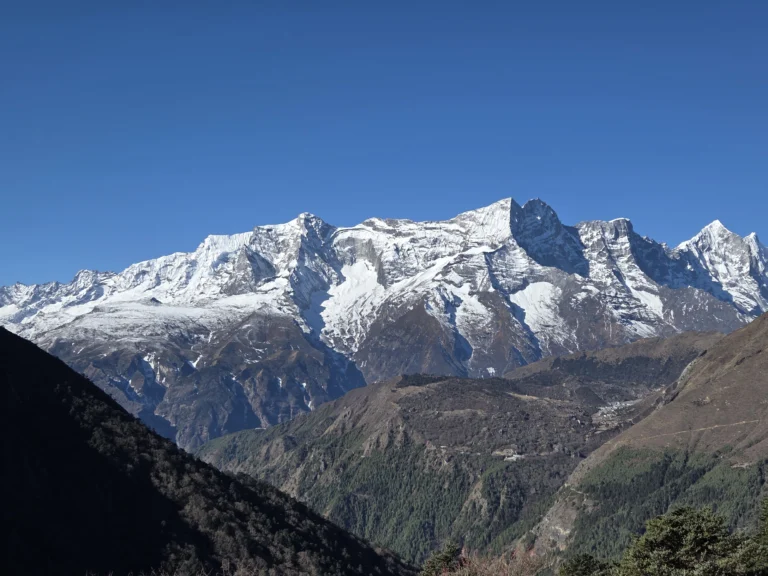
You still get close views of Everest, Lhotse, Nuptse, and Ama Dablam. A licensed guide is not legally required in the Everest region, but because of the altitude we recommend trekking with one. Every trek we run includes a licensed guide who carries a first-aid kit and checks your health daily, and we arrange all your permits.
Overview of Everest Panorama Trek (10 Days): Everest View Trek
Quick answer: Not every Everest trip needs a base camp. The Everest Panorama Trek takes 10 unhurried days through Sherpa country to Tengboche monastery. Then, on the acclimatization day, you climb to Hotel Everest View at 3,880 m, where the mountain fills the terrace railing. In fact, this is the gentlest trek we run in the Everest region, and fit first timers handle it well. From US$ 990, everything arranged.
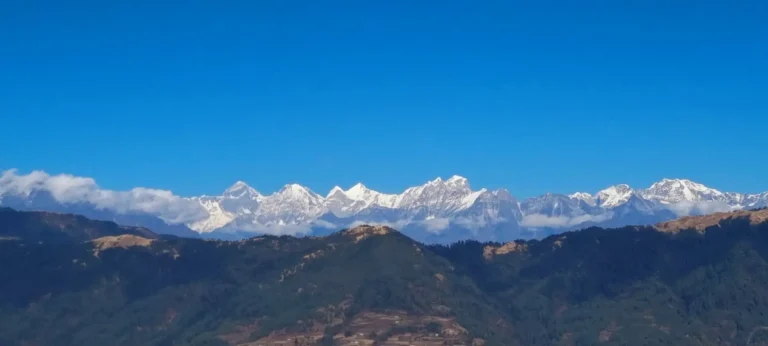
The Everest Panorama Trek is a 10-day journey into the heart of the Khumbu, the home of the Sherpa people. People also call it the Everest View Trek. It takes you to the same famous viewpoints as the base camp trek, but it stops at Tengboche. So you see Everest up close, yet you avoid the long, hard climb to 5,000 m.
The trek starts with the thrilling flight to Lukla. Then you walk the Dudh Koshi valley to Namche Bazaar, the trading hub of the Everest region. After a rest day, you climb to Tengboche, home of the largest monastery in the Khumbu. From here, the view of Everest, Lhotse, and Ama Dablam is one of the finest in Nepal. Then you turn back and retrace the trail to Lukla.
This trek is graded easy to moderate. It stays below 3,900 m, with short days and a steady, safe pace. There is no high pass and no technical climbing. So the altitude risk is low, and the trek is a great first taste of the high Himalaya. You still walk through Sagarmatha National Park, a UNESCO World Heritage site listed in 1979.
Spade Himalaya runs this trek with licensed Sherpa guides. So your guide sets a safe pace, watches the weather, and checks your health each day. Want to go all the way to base camp? Then see the classic Everest Base Camp Trek. This trek is built around two places our guides love writing about: Namche Bazaar, where you sleep two nights, and Hotel Everest View, where Everest joins you for breakfast. And the trip starts with the famous flight to Lukla. To reach base camp and fly back, see the Everest Base Camp Trek with helicopter return. For the quiet Gokyo Lakes, see the Gokyo Valley Trek. For an even lower, road-based option, see the Pikey Peak Trek.
Planning your trip? Then read our Everest region trekking guide and our guide to the best time to trek the Everest region. Of course, even this shorter route enters the national park, so the Everest permit guide applies to you too.
Trips Highlights
- See Mount Everest (8,849 m), Lhotse, Nuptse, and Ama Dablam up close, with no base camp climb.
- Reach Tengboche (3,860 m) and visit the largest monastery in the Khumbu.
- Explore Namche Bazaar, the lively Sherpa capital of the Everest region.
- Hike to the Hotel Everest View (3,880 m) on the acclimatization day.
- Visit the Sherpa villages of Khumjung and Khunde and the Hillary school.
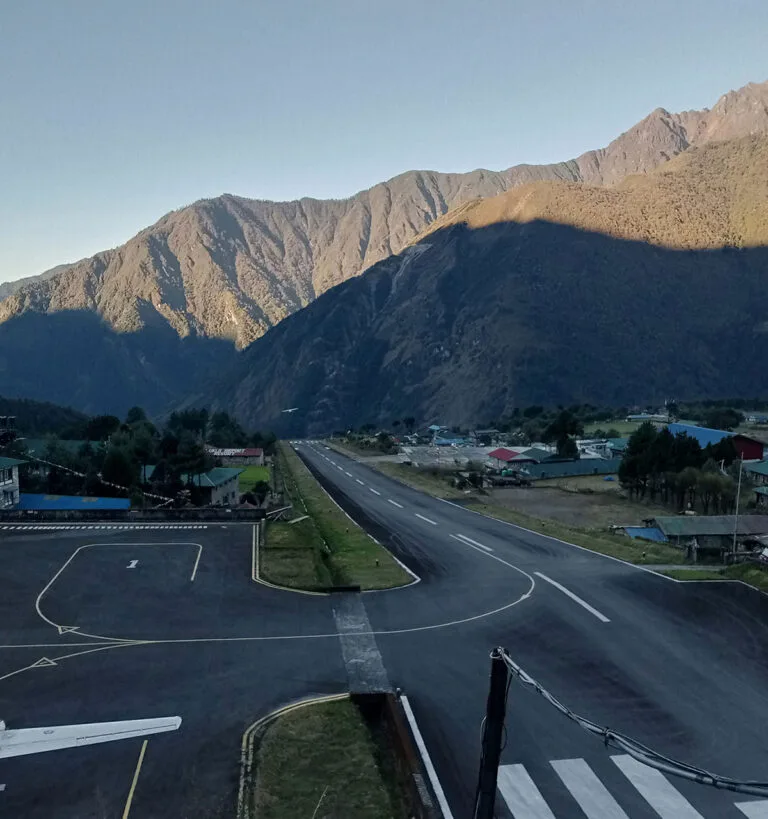
- Take the dramatic Lukla flight, one of the most thrilling flights anywhere.
- Walk through Sagarmatha National Park, a UNESCO World Heritage site.
- Enjoy low altitude, short days, and a safe, gentle pace.
- Trek a route that suits beginners, families, and those short on time.
- Meet the Sherpa people and learn about their mountain culture.
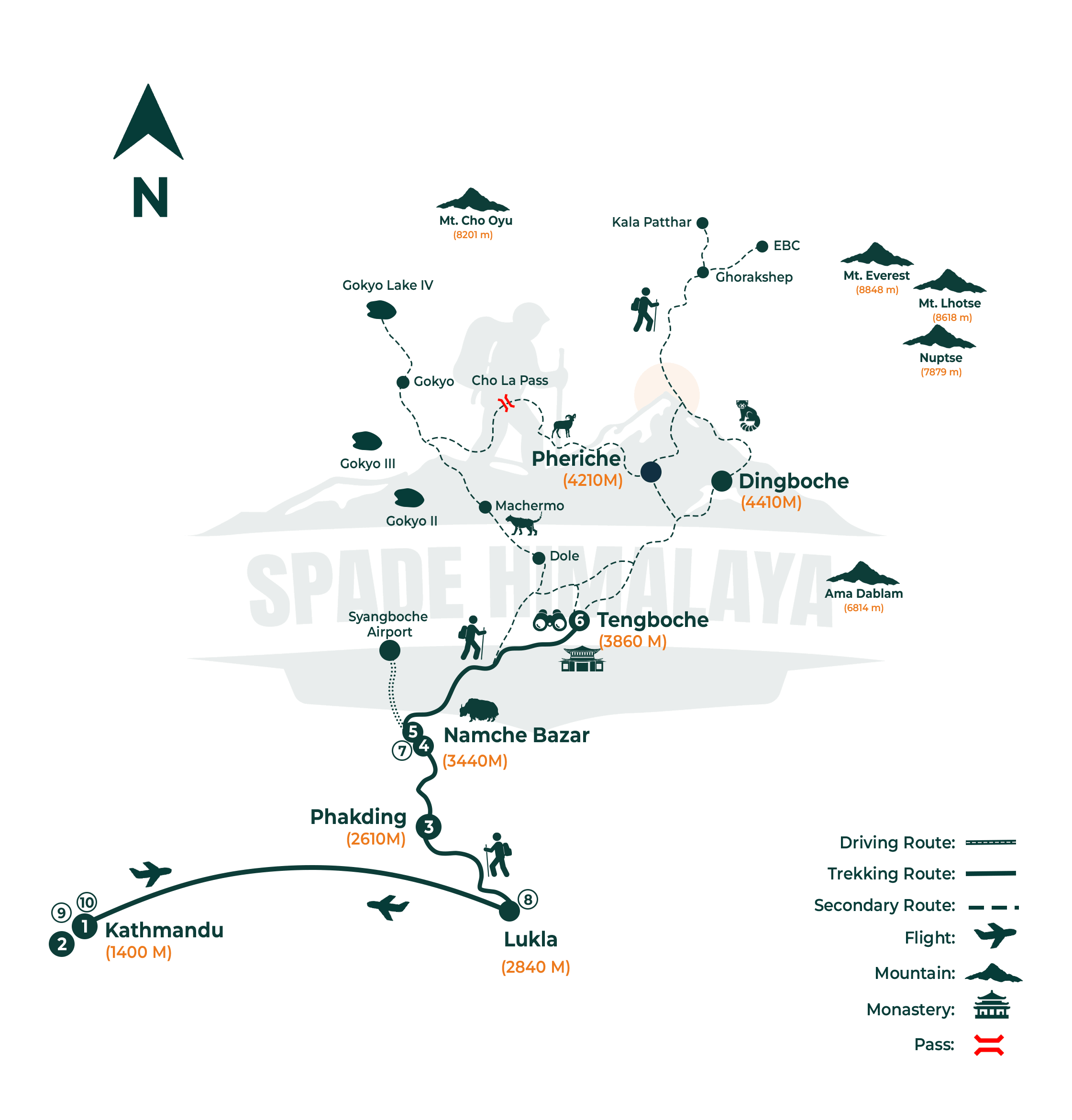
Kathmandu (1,400 m) → fly to Lukla (2,846 m) → Phakding (2,610 m) → Namche Bazaar (3,440 m) → Hotel Everest View (3,880 m) and Khumjung → Tengboche (3,860 m) → Namche Bazaar → Lukla → fly to Kathmandu.
In short, you fly to Lukla and walk up the Dudh Koshi to Namche. After a rest day, you climb to Tengboche for the big Everest view. Then you turn around and retrace the trail down to Lukla for the flight home.
Trips Itinerary
A Spade Himalaya representative meets you at Tribhuvan International Airport and takes you to your hotel in Thamel. In the late afternoon your guide runs a full briefing on the route, the daily plan and the gear.
Kathmandu sits at 1,400 m in a valley ringed by hills, and the Khumbu you are flying to lies east of here. Bring your passport, two photos and a copy of your insurance for the permits, and buy or hire anything missing in Thamel afterwards.
- Duration: 30 min drive
- Max Altitude: 1,400 m
- Accommodation: 3 star Hotel (shared room)
Today you tour the Kathmandu valley with a guide, and in the afternoon your gear is checked over and there is time for any last shopping before the mountains.
You visit Swayambhunath on its hill, the great stupa at Boudhanath, the temple complex at Pashupatinath and Kathmandu Durbar Square. All four are UNESCO World Heritage sites, and the valley holds seven monument zones in total. Sleep early, because tomorrow starts before dawn.
- Max Altitude: 1,400 m
- Meals: Breakfast Included
- Accommodation: 3 star Hotel (shared room)
You start very early for the flight to Lukla, meet your porter over a cup of tea, and walk gently downhill to Phakding in three or four hours. In the busy months you drive to Manthali first.
Lukla is 2,846 m and Phakding 2,610 m, so the first day loses height rather than gaining it. That is on purpose and it is the most useful thing the itinerary does for you.
The trail follows the Dudh Koshi through pine forest and Sherpa hamlets, past mani walls, painted prayer stones and spinning prayer wheels, and over your first suspension bridges hung with flags.
- Duration: 3 to 4 hrs hike
- Max Altitude: Lukla 2,846 m
- Meals: Breakfast, Lunch & Dinner
- Accommodation: Guest House
Today is the big climb. You follow the river north through Benkar and Monjo, where a ranger checks your permits at the national park gate, then cross the Hillary Bridge before the climb begins.
Namche Bazaar sits at 3,440 m in a horseshoe of hills and is the trading heart of the Khumbu. You sleep here two nights, because gaining this much height and staying at it is how people get ill.
About halfway up the hill, on a clear day, you get your first view of Everest, looking small and dark behind the huge white wall of Lhotse and Nuptse in front of it.
Take that climb slowly and stop often to look back down the valley, because it is the hardest single stretch of this trek and there is nothing at all to gain by rushing it.
- Duration: 5 to 6 hours walk
- Max Altitude: 3,440 m
- Meals: Breakfast, Lunch & Dinner
- Accommodation: Guest House
A rest day, though rest here means an active hike. You climb high and come back down to sleep, walking up to the Hotel Everest View and on to the twin villages of Khumjung and Khunde.
The hotel sits at 3,880 m and is one of the highest in the world. From its terrace Everest, Lhotse and Ama Dablam line up across the valley, and it is worth an hour and the price of a coffee.
In Khumjung you can visit the old monastery and the school Sir Edmund Hillary helped to found in 1961. Back in Namche there is the Sherpa Culture Museum and a busy market to fill the afternoon.
- Duration: 3 to 4 hrs walk
- Max Altitude: 3,880 m
- Meals: Breakfast, Lunch & Dinner
- Accommodation: Guest House
You leave Namche on a high, level trail with the peaks ahead of you, drop steeply to Phunki Thenga beside the river for lunch, then climb through pine and rhododendron forest to Tengboche.
Tengboche is at 3,860 m, set on a ridge with Ama Dablam in front of you and Everest behind. It is one of the finest positions of any building in the Himalaya.
The monastery is the largest in the Khumbu and was rebuilt after a fire in 1989. If the timing works you can sit in on the afternoon prayers, and at Phunki Thenga the prayer wheels are turned by the stream.
- Duration: 5 to 6 hrs walk
- Max Altitude: 3,860 m
- Meals: Breakfast, Lunch & Dinner
- Accommodation: Guest House
You wake early for one more look at Everest in the clear morning light, visit the monastery if it is open for prayers, then walk back down the way you came toward Namche.
The day is mostly downhill, retracing the forest trail to Phunki Thenga and climbing back up to Kyangjuma, dropping overall from 3,860 m to 3,440 m over four or five hours. The big peaks stay in view for most of the walk, so this is your last high stretch for photographs.
- Duration: 4 to 5 hrs walk
- Max Altitude: Tengboche 3,860 m
- Meals: Breakfast, Lunch & Dinner
- Accommodation: Guest House
Your last day on the trail. You make the long descent out of Namche to the Hillary Bridge, then follow the Dudh Koshi down past Monjo, Benkar and Phakding all the way to Lukla.
You lose 600 m over six or seven hours and the walking turns gentle and green, with the river for company and the forest closing back in around you as you drop.
At Lukla you check into your lodge and celebrate with your crew. A warm fire and a last trail dinner are a fitting end, and this is the evening to thank your guide and porters properly.
- Duration: 6 to 7 hrs walk
- Max Altitude: Namche 3,440 m
- Meals: Breakfast, Lunch & Dinner
- Accommodation: Guest House
You take an early flight from Lukla back to Kathmandu and a representative takes you to your hotel in Thamel. In peak season you fly via Manthali and drive the last stretch by road.
Flights go early, before the cloud builds in the valley and closes the strip. The rest of the day is free to rest, shower and shop, and in the evening there is a farewell dinner with the team.
- Max Altitude: Lukla 2,846 m
- Meals: Breakfast & Lunch Included
- Accommodation: Shared Star Hotel
The morning is free for last shopping, then a representative drives you to the airport. We keep this day as a spare buffer in case the Lukla flight is delayed, which happens often enough that building it in is simply sensible.
- Max Altitude: 1,400 m
- Meals: Breakfast Included
Trips Include
- All airport transfers in a private vehicle.
- 3 nights' hotel in Kathmandu (3-star, twin share) with breakfast.
- Guided Kathmandu Valley sightseeing with a private car and city guide.
- Round-trip flights between Kathmandu (or Manthali / Ramechhap) and Lukla, with airport transfers.
- All ground transfers to and from Manthali / Ramechhap in peak season.
- All teahouse accommodation during the trek (6 nights).
- All meals (breakfast, lunch, dinner) during the trek, plus a farewell dinner.
- Sagarmatha National Park entry permit and Khumbu Pasang Lhamu Rural Municipality permit.
- A licensed, experienced Sherpa guide (pay, insurance, meals, lodging).
- Porter support, one porter per two trekkers (pay, insurance, meals, lodging).
- First-aid kit and a pulse oximeter for daily health checks.
- Trip-completion certificate and all government taxes.
Trips Exclude
- International airfare to and from Nepal.
- Nepal entry visa (US$30 for 15 days, US$50 for 30 days, US$125 for 90 days).
- Lunches and dinners in Kathmandu.
- Kathmandu monument entry fees while sightseeing.
- Travel and medical insurance (mandatory; must cover trekking and helicopter evacuation).
- All drinks, snacks, hot showers, Wi-Fi, and device charging on the trail.
- Optional Kathmandu to Lukla helicopter transfer (extra fee).
- Tips for guide, porter, and driver.
- Personal expenses and any costs from early departure or itinerary changes.
- Anything not listed under Cost Includes.
Trips Altitude
Trips Map
Trips Gallery
Packing List
General
- Three-season sleeping bag.
- Sleeping bag liner
- Puffy down jacket.
- Duffel bag
- Daypack, 30 to 40 litres, with a rain cover
Upper Body
- Knitted hat or beanie
- Buff, scarf, or neck gaiter
- Sunglasses with UV protection
- Headlamp with spare batteries
- Sunscreen (SPF 35 to 60) and lip balm
- Technical base-layer tops (light and heavy)
- Short and long sleeve trekking shirts
- Fleece jacket or wool pullover
- Waterproof, windproof shell jacket
Lower Body
- Technical base-layer trousers
- Hiking trousers (2 pairs)
- Comfortable trousers for the teahouses
- Waterproof, windproof shell trousers
Hands
- Wool or technical liner gloves
- Insulated outer gloves for the cold mornings
Feet
- Waterproof trekking boots (well broken in)
- Warm wool socks and sock liners
- Light shoes or sandals for the evenings
- Gaiters (useful in mud or winter snow)
Undergarments
- Quick-drying technical underwear
- Sports bras (women)
- Sleeping clothes or pyjamas
First Aid Kits
(Your guide carries a kit, medication, and a pulse oximeter, but a personal kit is strongly recommended.)
- Sunscreen and lip balm
- Antiseptic ointment and blister care
- Personal medication and any altitude medication advised by your doctor
- Water-purification tablets or a UV purifier
- Hand sanitiser and basic cold or stomach medicine
Others
- Passport and extra passport photos
- Reusable water bottle and a hydration bladder
- Toiletry kit, quick-dry towel, toilet paper
- High-protein snacks (bars, nuts)
- Waterproof or dry bags for documents and money
- Trekking poles
Optional
- Power bank and spare batteries
- Camera or phone for photos
- Binoculars
- Cards or a book
- Thermos for hot water
Good to Know
This trek gives you the famous Everest view for far less effort than the base camp route. So it suits beginners, families, and anyone short on time. You still fly to Lukla, walk through Namche, and reach Tengboche, the cultural heart of the Khumbu. You simply turn back before the high, hard days. So you get the magic of the Everest region in just over a week.
Lukla is a small mountain airport, so weather can cause delays. In quiet months, you fly from Kathmandu in 35 to 40 minutes. In busy months, you fly from Manthali after a 4 to 6 hour drive. So we keep a spare day in Kathmandu at the end, in case of a delay. A direct helicopter can also be arranged for an extra fee.
The trek stays low, so altitude sickness is unlikely. Still, the air at Tengboche is thinner than at home. So you walk slowly, drink 3 to 4 litres of water a day, and rest at Namche. Eat well for energy, and tell your guide if you feel unwell. Your guide carries an oximeter to check your oxygen each day.
You sleep in cosy teahouses with twin rooms. Lower down, in Lukla, Phakding, and Namche, some rooms have a private bathroom. The food is simple and filling: dal bhat, noodles, potatoes, soup, eggs, and bread. Vegetarian meals are easy to find. For water, refill and purify rather than buy bottles. A dry “Khumbu cough” can start above Namche, so carry a buff and lozenges.
The trail runs on cash, so carry enough Nepalese rupees from Kathmandu or Namche. There are ATMs in Namche, but they can run dry. Hot showers, Wi-Fi, and charging all cost a small fee that rises with altitude. So bring a power bank and enjoy the quiet of the hills.
Trips Reviews
No reviews found.
Trips FAQs
Permits, Guide & Insurance
Not by law. Nepal’s 2023 rule lists the Everest region among the areas needing a licensed guide (Nepal Tourism Board, retrieved 2026-06-30). However, the local Khumbu Pasang Lhamu Rural Municipality rejected the rule and allows solo trekking (The Himalayan Times, 2023-03-28). Still, you trek to almost 3,900 m, so because of the altitude we recommend a guide. Spade Himalaya gives you a licensed Sherpa guide who handles the route, the permits, and your health.
You need two. First, the Sagarmatha National Park permit (NPR 3,000). Second, the Khumbu Pasang Lhamu Rural Municipality permit (NPR 3,000). There is no TIMS card in the Khumbu. Spade Himalaya arranges both, and a ranger checks them on the trail.
Yes, it is a must. Your policy should cover trekking and a helicopter rescue. The Everest region is remote, so good cover matters even on a low trek. Arrange it at home before you fly, and leave a copy with Spade Himalaya at the briefing.
Trek Difficulty & Altitude
It is graded easy to moderate. You walk 3 to 7 hours a day, and you stay below 3,900 m. There is no high pass and no technical climbing. So it is far easier than the Everest Base Camp trek. With a rest day at Namche and a steady pace, most fit, healthy people manage it well.
This plan is 10 days from Kathmandu to Kathmandu. That includes 2 city days, 6 trekking days, and the flights. So you get a rest day at Namche and a gentle pace. We can also shorten the trek if you have less time.
Yes. The low altitude, the short days, and the rest day make it ideal for first-time trekkers. Children and older walkers manage it well too. So it is a perfect, gentle introduction to the high Himalaya.
The risk is low, because you stay under 3,900 m and sleep even lower. Still, the air is thinner up high, so you walk slowly and drink plenty of water. Your guide checks your health and carries a pulse oximeter. If you feel unwell, tell your guide at once.
Best Time to Trek
Spring (March to May) and autumn (late September to November) are best, with clear skies and stable weather. Because the trek stays low, it also works well in December, though the nights are cold. The summer monsoon brings cloud and rain, so most people skip it.
Trek Highlights & Views
The Everest Panorama Trek follows the same trail as the Everest Base Camp Trek, but only as far as Tengboche. Then it turns back. So you see Everest up close, yet you skip the high, hard days above 4,000 m. It is shorter, easier, and lower, which suits beginners and families.
Yes. You see Everest from the climb to Namche, from the Hotel Everest View, and from Tengboche. At Tengboche, Everest, Lhotse, Nuptse, and Ama Dablam all stand close and clear. So you get the famous Everest panorama without the long walk to base camp.