Trip Facts
Country:
Nepal
Duration:
5 Days
Max Altitude:
4,500 m
Activities:
Trekking and driving
Region:
Annapurna region
Starting Point:
Pokhara
Ending Point:
Pokhara
Grade:
Moderate
Group Size:
2 to 10 trekkers
Accomodation:
Teahouses, 3-star hotel in Pokhara
Best Season:
Mar-May & Sep-Nov
Notice
This is the fast, 5-day version of the Mardi Himal trek. It starts and ends in Pokhara, so it is short and easy to fit in.
The high point is Mardi Himal Base Camp (4,500 m), on a ridge right below Machhapuchhre, the Fishtail peak. You reach it on Day 4.
The trek climbs fast, from 822 m to 4,500 m in about three days. So altitude care matters. If you want a gentler pace, see the 10-day Mardi Himal Trek.
Overview of Short Mardi Himal Trek 5-Days
Quick answer: The Short Mardi Himal Trek is a fast 5-day ridge trek from Pokhara to Mardi Himal Base Camp (4,500 m), below the Fishtail peak. It is moderate, climbs fast, and requires an ACAP permit, a TIMS card, and a licensed guide (Nepal Tourism Board, retrieved 2026-06-26).
The Short Mardi Himal Trek is a 5-day ridge trek in the Annapurna region. It is the quick way to reach Mardi Himal Base Camp. The whole trip starts and ends in Pokhara, with no Kathmandu travel. So it suits trekkers who are short on time but still want a big mountain finish.
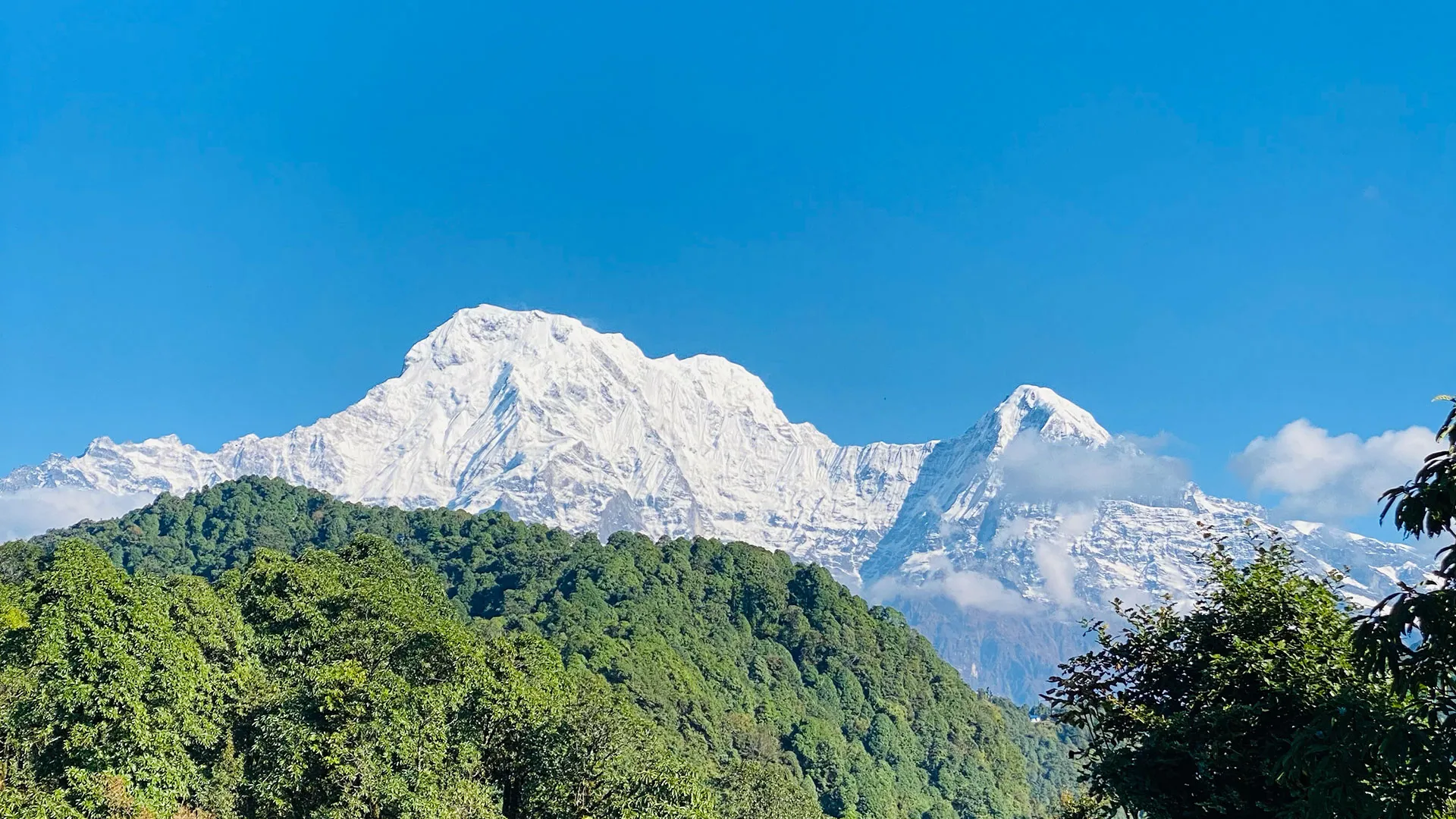
The trail is one of Nepal’s newer routes, so it stays quiet. You walk a high forest spur that sits right below Machhapuchhre (6,993 m), the sacred Fishtail peak. First, you drive to Kande and climb through rhododendron forest. Then you follow the ridge up through Low Camp and High Camp. As you climb, the trees thin and the peaks fill the sky: Mardi Himal (5,587 m), Machhapuchhre, Annapurna South (7,219 m), and Hiunchuli (6,441 m).
The big day is the hike to Mardi Himal Base Camp (4,500 m). You walk the open ridge to the viewpoint, with peaks on three sides. After that, you drop a long way down to the village of Siding. Here, local farmers and honey-hunters still live a traditional life. So even on a short trek, you get real culture as well as high views.
One thing to know: this trek gains height fast. You go from 822 m to 4,500 m in about three days. So the risk of altitude sickness is real, and you should walk slowly and drink plenty of water. If you are worried about the quick climb, the 10-day Mardi Himal Trek adds more time to adjust.
Spade Himalaya runs this trek with licensed Nepali guides. So your guide sets a safe pace, watches the weather, and checks your health each day. Want to pair it with another trek? It links well with the Annapurna Base Camp Trek and the Ghorepani Poon Hill Trek.
Planning a quick trip? Compare the 3, 4, and 5 day short Mardi options, check the Mardi Himal Trek cost, and read up on the Mardi Himal Trek difficulty and best time. For the full overview, see our Mardi Himal Trek guide. Short on days, not on views. Here, our post on doing Mardi Himal in five days from Pokhara explains exactly how this itinerary works. Also, our short treks near Kathmandu roundup shows the alternatives.
Trips Highlights
- Reach Mardi Himal Base Camp (4,500 m) in just 5 days from Pokhara.
- Stand on a quiet ridge right below the Fishtail peak, Machhapuchhre (6,993 m).
- Watch sunrise and sunset over the peaks from Mardi Himal High Camp.
- See Mardi Himal, Annapurna South, Hiunchuli, and the Annapurna range up close.
- Climb a forest ridge through Low Camp and High Camp.
- Walk through rhododendron and oak forest full of birds.
- Meet the farmers and honey-hunters of Siding village on the way down.
- Gain big altitude fast, a rare experience in a short trek.
- Start and finish in lakeside Pokhara, with no long travel.
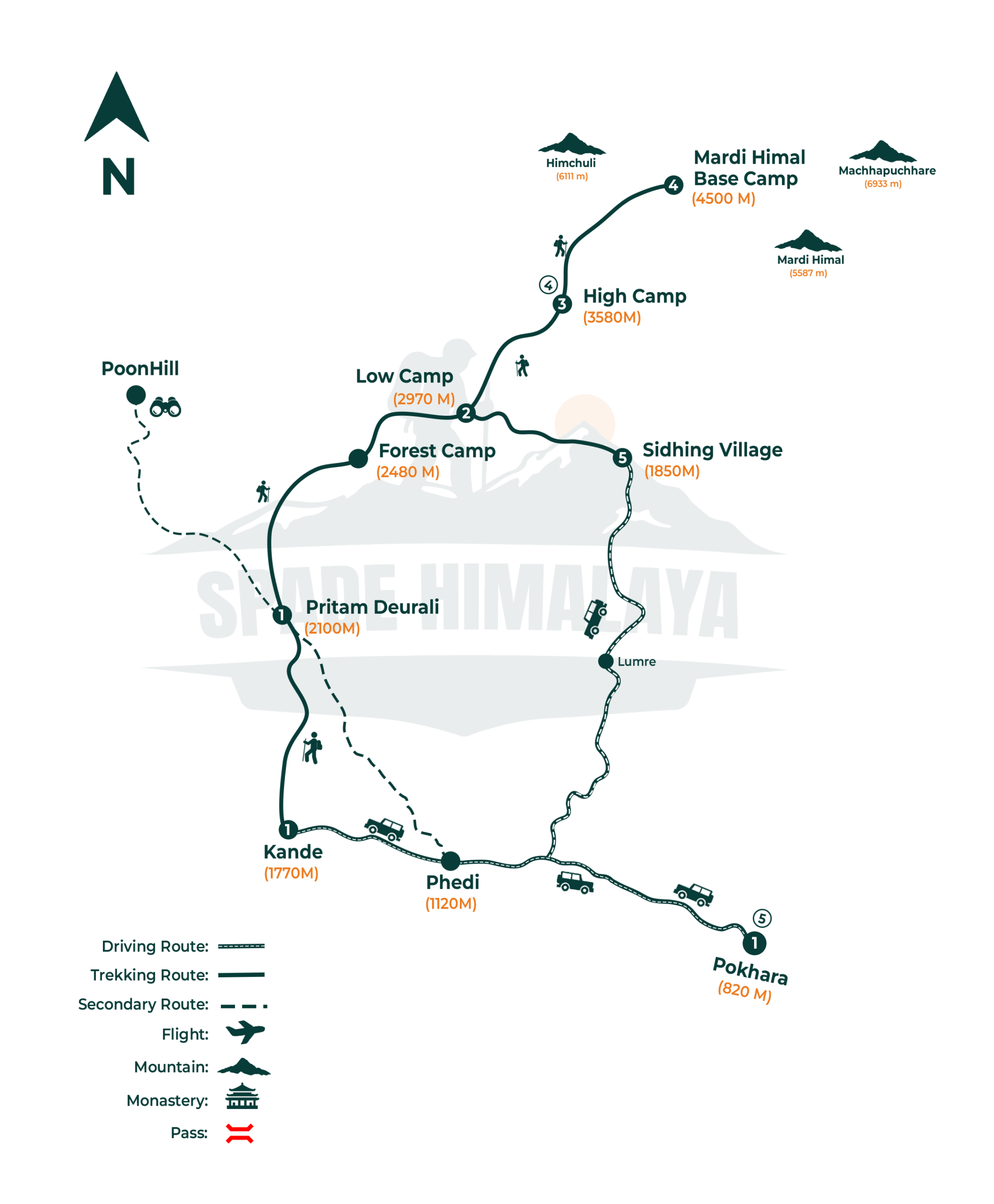
Pokhara (822 m) → drive to Kande (1,770 m), trek to Pitam Deurali (2,100 m) → Low Camp (2,970 m) → High Camp (3,580 m) → Mardi Himal Base Camp (4,500 m), descend to Siding (1,750 m) → drive to Pokhara.
In short, you drive to Kande and climb the forest ridge through Deurali, Low Camp, and High Camp. Then you hike to Mardi Himal Base Camp. After that, you descend to Siding village and drive back to Pokhara.
Trips Itinerary
A drive after breakfast takes you up to Kande, where the road ends and you start walking. The trail climbs past the village of Pothana and through rhododendron forest to Pitam Deurali, arriving late in the afternoon.
Kande is at 1,770 m and Deurali at 2,100 m, on the forested ridge that carries this whole trek. The drive up gives wide views back over Pokhara and Phewa Lake, and higher on the trail the peaks show through gaps in the trees.
- Duration: 5 to 6 hrs hike
- Max Altitude: 2,100 m
- Meals: Lunch, breakfast & Dinner
- Accommodation: Guest House
You head uphill along the ridge through rhododendron and old oak. The path is steep in places and your legs work hard, but the slope is fair rather than cruel, and you reach Low Camp in the afternoon.
Low Camp is at 2,970 m, so you feel the height by the time you arrive. This is where the forest thins and the trees carry moss and lichen instead of leaves. Near the camp it opens properly and the snow peaks stand up behind the green hills for the first time.
- Duration: 5 to 6 hrs hike
- Max Altitude: 2,970 m
- Meals: Breakfast, Lunch & Dinner
- Accommodation: Guest House
Today you climb into open mountain country. The trail rises steeply through thinning forest, so take it slowly, and the ground turns rocky as you reach the ridge before High Camp.
Above 3,000 m the trees give way to meadow and low scrub. High Camp at 3,580 m is the highest point you sleep at, and the lodges here are basic, because everything arrives on someone’s back.
From a rise just below the camp the view opens out, with Annapurna, Hiunchuli and Machhapuchhre standing close. Stay outside for the sunset even when it is cold, because this is the best light of the trek.
- Duration: 4 to 5 hrs hike
- Max Altitude: 3,580 m
- Meals: Breakfast, Lunch & Dinner
- Accommodation: Guest House
This is the big day, so you start early. You walk the open ridge up to Mardi Himal Base Camp, then turn around and drop a very long way down to the village of Siding, arriving tired.
Base Camp is 4,500 m and the high point of the trek. The descent to Siding at 1,750 m loses about 2,750 m in one day, so use poles and expect your knees to complain.
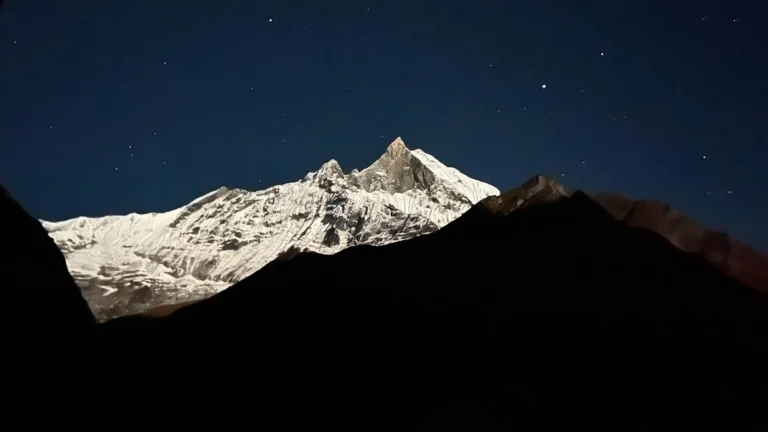
The ridge is narrow with steep ground on both sides, and peaks stand on three sides of you at the top. Machhapuchhre looks close enough to touch from up there.
It has never been climbed to its summit and stays closed to climbers, because the mountain is sacred to Shiva. You are looking at one of the very few Himalayan peaks nobody has ever stood on.
- Duration: 7 to 8 hrs hike
- Max Altitude: 4,500 m
- Meals: Breakfast, Lunch & Dinner
- Accommodation: Guest House
After breakfast in Siding a jeep takes you back to Pokhara, about three hours on a rough but pretty road. The track drops through terraced fields and small towns before it rejoins the tarmac.
You come down to the lake at 822 m and the afternoon is free. You can rest by Phewa Lake, row out to the Tal Barahi temple on the island, or go paragliding off Sarangkot, which launches from the ridge you could see from the trail on your first morning.
- Duration: 2 to 3 hrs driving
- Max Altitude: 1,750 m
Trips Include
- Private jeep or car from Pokhara to Kande (trek start) and from Siding back to your Pokhara hotel.
- All teahouse and lodge accommodation during the trek.
- All meals (breakfast, lunch, dinner) during the trek.
- Safe drinking water using a filter or purification tablets.
- Annapurna Conservation Area Permit (ACAP) and TIMS card.
- A licensed, first-aid trained, English-speaking Spade Himalaya guide (2 guides for groups over 7).
- Porter support, one porter per two trekkers (pay, insurance, meals, lodging, equipment).
- First-aid kit for basic medical assistance during the trip.
- Rescue-operation assistance for serious illness (funded by your travel insurance).
Trips Exclude
- Airport pickup and departure transfer.
- Kathmandu to Pokhara and return transport.
- Hotels, lunches, and dinners in Kathmandu and Pokhara.
- International airfare and airport departure tax.
- Nepal entry visa (US$30 for 15 days, US$50 for 30 days, US$125 for 90 days).
- Travel and medical insurance (mandatory; must cover high-altitude trekking and helicopter evacuation).
- All drinks, snacks, hot showers, Wi-Fi, and device charging on the trail.
- Tips for guide, porter, and driver.
- Personal trekking gear and any personal expenses.
- Anything not listed under Cost Includes.
Trips Altitude
Trips Map
Trips Gallery
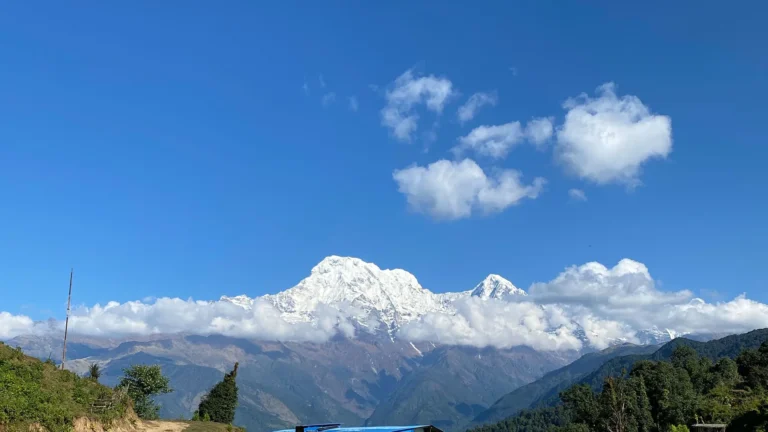
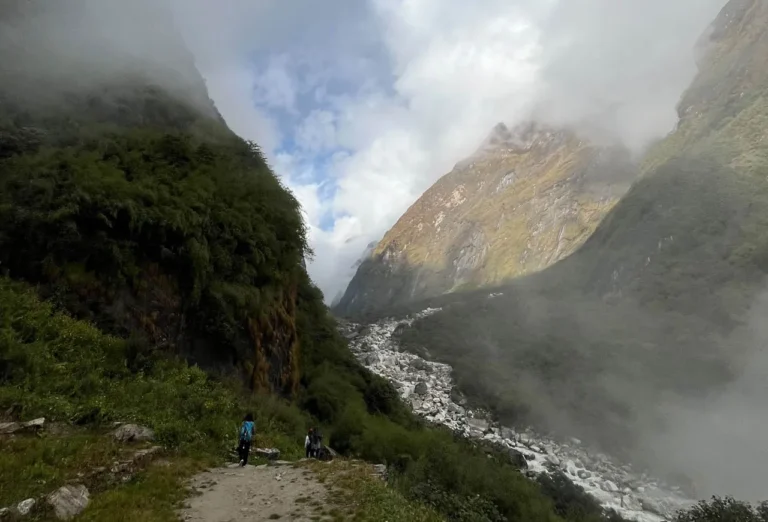
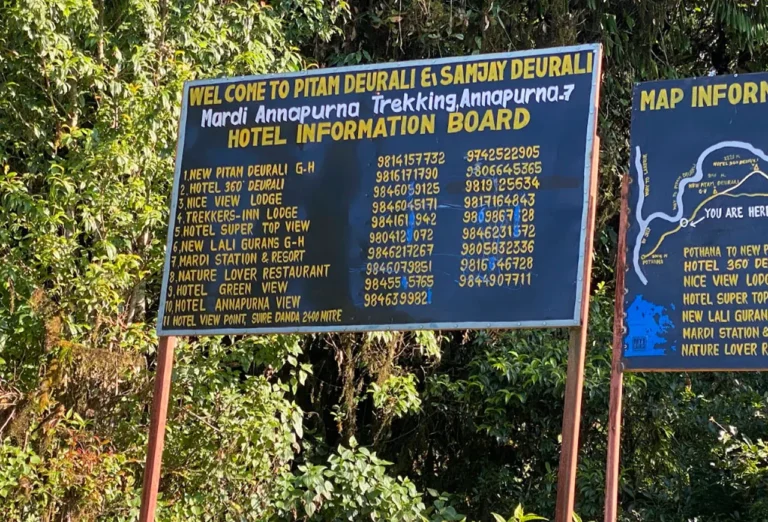
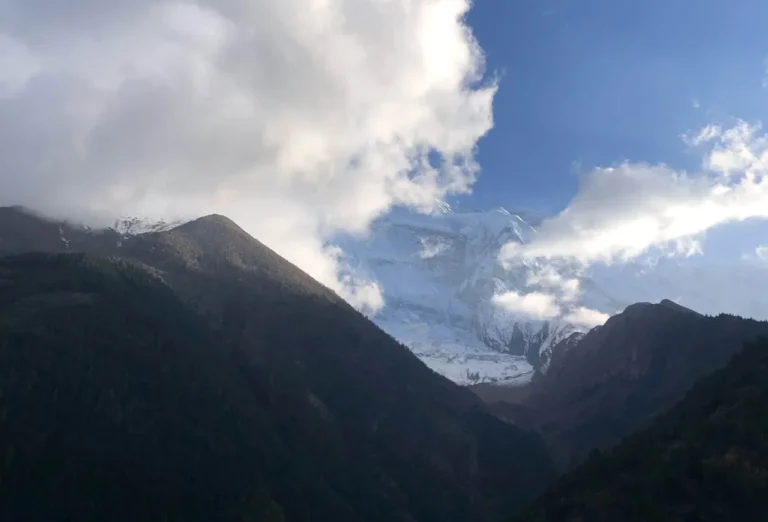
Packing List
General
- Four-season (zero degree) sleeping bag.
- Sleeping bag liner
- Puffy down jacket.
- Duffel bag.
- Daypack, 25 to 35 litres, with a rain cover
Upper Body
- Warm hat or beanie that covers the ears
- Neck gaiter, buff, or scarf
- Sunglasses with UV protection
- Headlamp with spare batteries
- Sunscreen (SPF 35 to 60) and lip balm
- Long-sleeve t-shirts and thermal tops
- Fleece jacket or wool pullover
- Waterproof, windproof shell jacket
Lower Body
- Thermal base-layer trousers
- Comfortable trekking trousers
- Light trousers for the teahouses
- Waterproof, windproof shell trousers
Hands
- Wool or technical liner gloves
- Warm outer gloves for High Camp and the base camp ridge
Feet
- Waterproof trekking boots (well broken in)
- 4 to 5 pairs of warm wool socks and sock liners
- Light shoes or sandals for the evenings
Undergarments
- Quick-drying technical underwear
- Sports bras (women)
- Thermal underwear set for cold nights
First Aid Kits
(Your guide carries a kit, medication, and a pulse oximeter, but a personal kit is strongly recommended.)
- Assorted adhesive and blister bandages
- Antiseptic ointment and pain relief
- Altitude medication such as acetazolamide (Diamox), only if advised by your doctor
- Anti-itch ointment
- Water-purification tablets
Others
- Passport, 4 passport photos, and a copy of your insurance
- Reusable water bottle and a water filter or purifier
- Toiletry kit, quick-dry towel, toilet paper, hand wipes
- High-energy snacks (bars, nuts, dried fruit)
- Waterproof or dry bags for documents and electronics
Optional
- Trekking poles (your own, if you prefer them; otherwise provided)
- Power bank and spare batteries
- Camera with memory cards, charger, and spare batteries
- Local SIM card for Pokhara and the lower trail
- Book or cards for the evenings
Good to Know
This trek packs a big mountain finish into just 5 days. It starts and ends in Pokhara, so there is no long travel. You reach a 4,500 m base camp below the Fishtail in a few days of walking. So it is perfect if you are short on time but still want real high views. For a gentler, longer plan, pick the 10-day Mardi Himal Trek instead.
Spring and autumn are the prime seasons. In spring, the forests bloom and the air is mild. In autumn, the skies are the clearest of the year. Winter is cold and quiet, with snow up high, but clear days are common. The summer monsoon brings rain and cloud, so most trekkers avoid it. Bring warm layers in any season, because High Camp gets cold at night.
This is the key thing to plan for. You gain over 3,600 m of height in about three days, which is quick. So altitude sickness is a real risk. Walk slowly, even when you feel strong. Drink 3 to 4 litres of water a day, and skip alcohol up high. Your guide carries an oximeter and checks you daily. If you feel unwell, tell them at once. Going down is the best cure. If the quick climb worries you, the 10-day version is gentler.
This trek is moderate, and it suits fit beginners. You walk 5 to 8 hours a day on ridge trails, with steep parts. The base camp day is the longest and highest. So train before you come. A few weeks of walking, jogging, and stair climbing makes a big difference.
Since April 2023, foreigners must trek the Annapurna region with a licensed guide. You also need the ACAP and a TIMS card. Spade Himalaya is a registered agency, so the guide and permits are handled for you. A ranger checks the permits at points along the trail.
The trail runs on cash, and there are no ATMs. So carry enough Nepalese rupees from Pokhara. Hot showers, Wi-Fi, and charging all cost a small fee. This package starts and ends in Pokhara. So Kathmandu travel, hotels, and airport transfers are not included. Plan those separately if you need them.
You sleep in family-run teahouses along the ridge. Lower down, some have attached bathrooms. Higher up, the rooms are basic and warmed by a stove in the dining hall. The food is fresh and filling, with dal bhat, momo, soup, and eggs. Goods cost more higher up, because everything is carried in. For water, refill and purify rather than buy bottles. This saves money and cuts plastic waste.
Trips Reviews
A Fantastic Short Adventure with Incredible Himalayan Views

Trips FAQs
Trek Difficulty & Altitude
It is graded moderate. The short Mardi Himal trek difficulty comes mainly from the fast climb, not from any technical sections. You walk 5 to 8 hours a day on ridge trails, with some steep, rocky parts. The high point is 4,500 m. So a good level of fitness helps. Beginners can do it too, but it feels more of an adventure for them.
Yes, and it is worth taking seriously. You climb from 822 m to 4,500 m in about three days, which is fast. So altitude sickness is more likely here than on slower treks. To stay safe, walk slowly, drink 3 to 4 litres of water a day, and skip alcohol. Your guide checks your oxygen with an oximeter. Tell them early if you feel a headache or nausea.
The Mardi Himal Base Camp trek tops out at 4,500 m, reached on Day 4. The highest sleeping point is High Camp at 3,580 m. So the plan climbs the ridge step by step, then makes the base camp a day hike. Drink plenty of water and keep an easy pace, especially on the high day.
Trek Highlights & Views
This 5-day version is the fast option. It starts and ends in Pokhara, skips Forest Camp, and climbs to base camp in three days. The 10-day Mardi Himal Trek is the relaxed option. It starts in Kathmandu, adds more rest, and climbs more slowly. So choose the 5-day for speed, and the 10-day for comfort and easier acclimatization.
Permits, Guide & Insurance
Yes. Since April 2023, foreigners must trek the Annapurna region with a licensed guide. You also need two permits: the Annapurna Conservation Area Permit (ACAP) and a TIMS card. Spade Himalaya provides the guide and arranges both permits. The guide and porter are already part of your package, so you do not need to hire them yourself.
The ACAP is about NPR 3,000 (around US$25) for foreign trekkers. The TIMS card is about NPR 2,000 (around US$17). So the permits total roughly US$42 per person. Spade Himalaya includes both in the trip cost and handles the paperwork before you start.
Yes, it is a must. Your policy has to cover high-altitude trekking and a helicopter rescue. Many normal policies do not, so check the wording first. Arrange it at home before you fly. Then leave a copy with Spade Himalaya at the briefing, so the team can act fast in an emergency.
Best Time to Trek
Spring (March to May) and autumn (September to November) are best. In spring, the rhododendron forest blooms in red and pink. In autumn, the skies are clear and the views are sharp. Winter is cold but doable with warm gear, with some snow up high. The summer monsoon brings rain and cloud, so most people skip it.
Accommodation & Facilities
You sleep in simple teahouses, usually in twin rooms with shared bathrooms. Higher up, the rooms are basic and the nights are cold. The food is hearty and local. Dal bhat (rice and lentils) is the staple, with free refills. You can also get momo, noodles, soup, and eggs. In Pokhara, you also find plenty of Western food.
Bring Nepalese rupees in cash. Only rupees are accepted on the trail. There are no ATMs on the trek, so withdraw cash in Pokhara first. Cards are not taken in the villages. So carry small notes for snacks, drinks, charging, and tips. A little extra cash is wise, in case of any delay.