Trip Facts
Country:
Nepal
Duration:
7 Days
Max Altitude:
4,065 m (13,337 ft)
Activities:
Trekking and hiking
Region:
Everest region
Starting Point:
Kathmandu
Ending Point:
Kathmandu
Grade:
Easy to Moderate
Group Size:
2 to 16 trekkers
Accomodation:
Teahouses, 3-star hotel in KTM
Best Season:
Oct - May
Notice
The Pikey Peak Trek is a short, easy trek to Pikey Peak (4,065 m), one of the best sunrise viewpoints of Mount Everest. Sir Edmund Hillary is said to have loved this view.
The trek stays at low altitude, with short days and warm village stays. So it suits beginners, families, and anyone short on time.
You drive in and out, so no flight is needed. A licensed guide is required for trekking in Nepal, and we arrange your guide and all permits.
Overview of Pikey Peak Trek 7-Days
Everest, said to be Sir Edmund Hillary’s favourite. It needs no flight, suits beginners, and stays good even in winter. A licensed guide is required (Nepal Tourism Board, retrieved 2026-06-28).
The Pikey Peak Trek is a 7-day journey through the quiet, lower part of the Everest region. People also call it the Pikey Peak sunrise trek. Instead of flying to Lukla and climbing high, you drive into the green hills of Solu. So you swap the crowds and the thin air for warm villages, calm trails, and a huge mountain view.
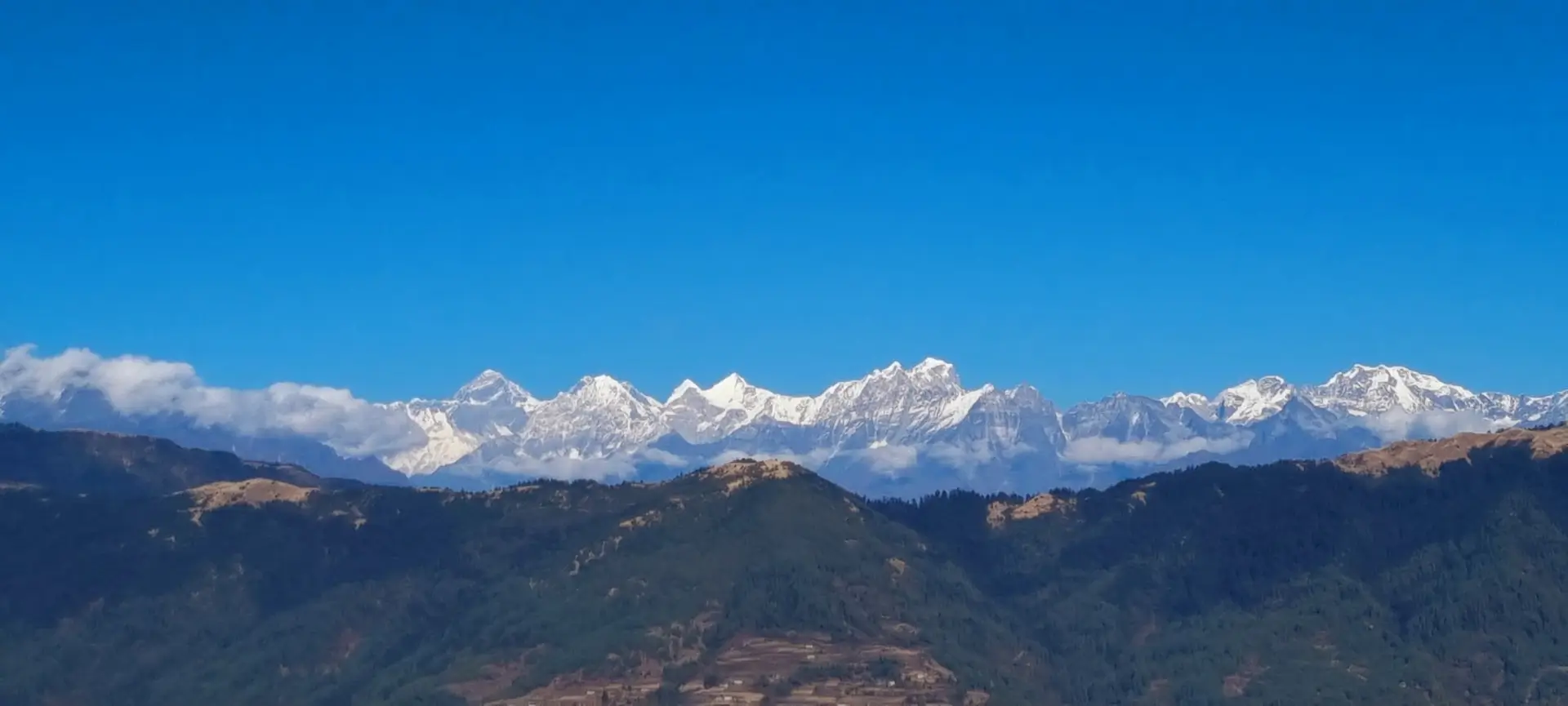
The trek is famous for one thing above all. From the top of Pikey Peak (4,065 m), you get one of the widest views of the Himalaya in all of Nepal. On a clear morning, you see Everest, Lhotse, Makalu, Cho Oyu, Kanchenjunga, Numbur, and Gauri Shankar in one long sweep. Sir Edmund Hillary, the first man to climb Everest, is said to have called this his favourite view of the mountain.
The route also runs through real Sherpa country. You pass ridge villages like Jhapre and the lovely old Sherpa town of Junbesi. Along the way, you see mani walls, prayer flags, and quiet monasteries, such as Thubten Choling near Junbesi. So the trek mixes big mountains with deep Buddhist culture.
This trek is graded easy to moderate. It tops out at 4,065 m, but only for the sunrise climb, and you sleep much lower each night. The daily walks are short, between 2 and 7 hours. So the altitude risk is low, and the trek is a great first taste of the Himalaya. It even works in winter, when higher trails close.
Spade Himalaya runs this trek with licensed Sherpa guides. So your guide sets a safe pace, watches the weather, and checks your health each day. Want to go higher next? Then see the classic Everest Base Camp Trek or the quieter Gokyo Valley Trek. For another easy sunrise trek, try the Ghorepani Poon Hill Trek.
Planning your trip? Then read our Everest region trekking guide and our roundup of the best short treks near Kathmandu. Comparing seasons across Nepal? Then our best time to trek in Nepal guide covers every month, region by region.
Trips Highlights
- Watch sunrise over Everest from Pikey Peak (4,065 m), a viewpoint loved by Sir Edmund Hillary.
- See Everest, Lhotse, Makalu, Cho Oyu, Kanchenjunga, Numbur, and Gauri Shankar in one sweep.
- Trek a quiet, off-path trail with very few other trekkers.
- Walk through Sherpa villages like Jhapre and the old town of Junbesi.
- Visit the peaceful Thubten Choling Monastery near Junbesi.
- Enjoy low altitude and short days, ideal for beginners and families.
- Trek without a flight, on a budget-friendly drive-in route.
- Go even in winter, when higher treks are closed by snow.
- Walk through rhododendron forest, yak pastures, and open ridges.
- Meet the Sherpa people and learn about their mountain culture.
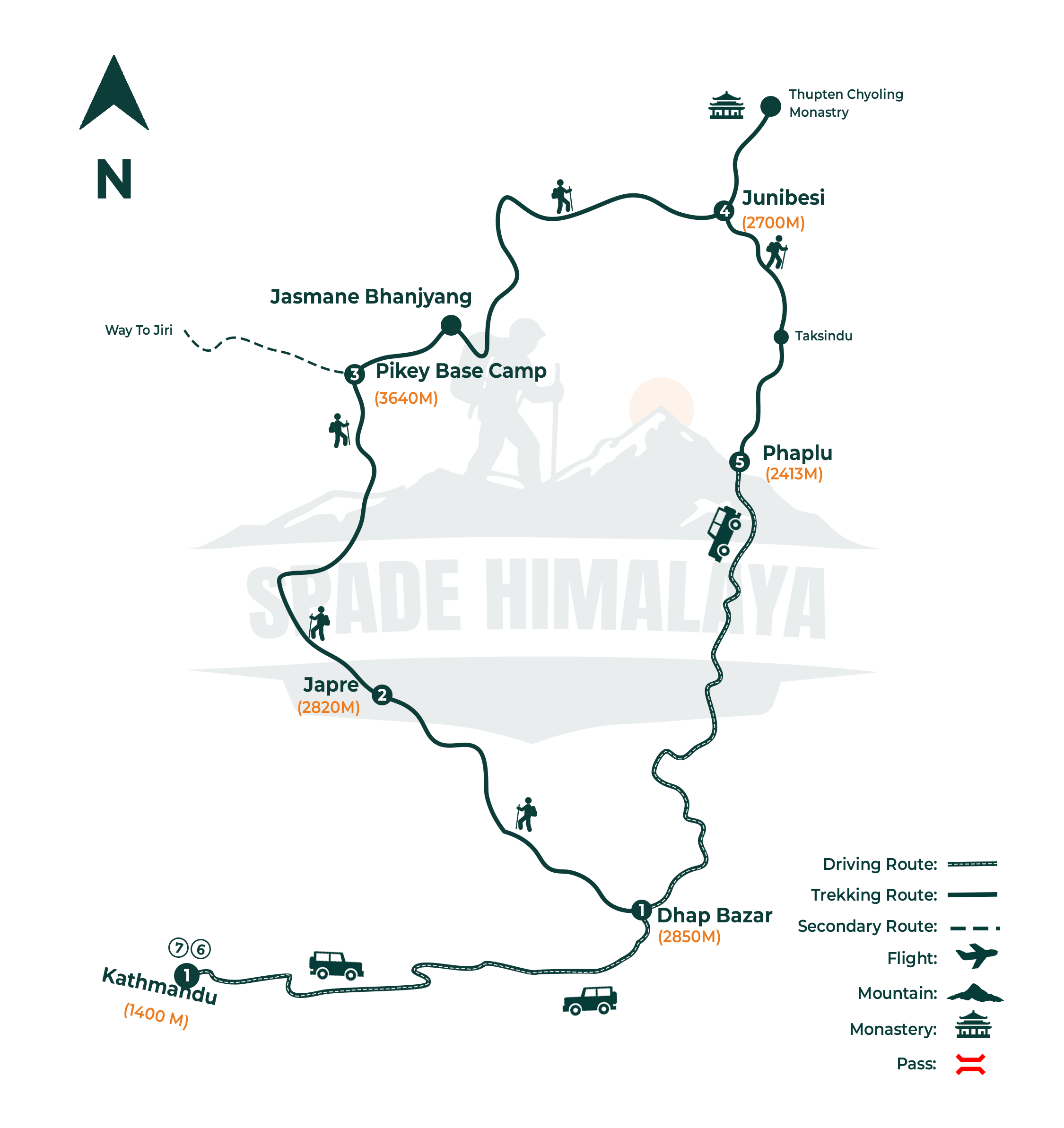
Kathmandu (1,400 m) → drive to Dhap (2,850 m) → Jhapre (2,820 m) → Pikey Base Camp (3,640 m) → Pikey Peak (4,065 m) → Junbesi (2,700 m) → Phaplu (2,413 m) → drive to Kathmandu.
In short, you drive from Kathmandu into the hills of Solu. Then you walk up through Jhapre to Pikey Base Camp and climb Pikey Peak for sunrise. After that, you descend through Junbesi to Phaplu and drive back to Kathmandu.
Trips Itinerary
You leave Kathmandu early and drive east into the hills. First, the road follows the rivers and terraced farms of the middle hills. Then it climbs through Sherpa country toward the Solu region. The views grow greener and quieter as you go. By late afternoon, you reach Dhap, a small village and the start of the trek. So you settle into your teahouse and rest for the walk ahead.
- Duration: 7 to 8 hrs drive
- Max Altitude: 2,850 m
- Meals: Breakfast, Lunch & Dinner
- Accommodation: Guest House
Today is a short, easy day, which is a gentle way to start. The trail climbs through forest and open farmland, with wide hill views. Soon you reach Jhapre, a pretty Sherpa village on a ridge. On a clear day, you already see Everest and Numbur from here. So you have time to explore the village and meet the warm local people. Then you rest early, ready for the climb to base camp.
- Duration: 2 to 3 hrs hike
- Max Altitude: 2,900 m
- Meals: Breakfast, Lunch & Dinner
- Accommodation: Guest House
The trail climbs steadily today, through rhododendron forest and high yak pastures. As you rise, the trees thin out and the views open wide. You pass mani walls and prayer flags along the ridge. By afternoon, you reach Pikey Base Camp, set in open meadow below the peak. So you arrive with time to rest and enjoy the sunset. The night is cold and clear, with a sky full of stars.
- Duration: 5 to 6 hrs hike
- Max Altitude: 3,640 m
- Meals: Breakfast, Lunch & Dinner
- Accommodation: Guest House
This is the big day. You start before dawn and climb to the top of Pikey Peak with a headlamp. At the summit, you wait for the sun to rise over the Himalaya. Then the whole range lights up: Everest, Lhotse, Makalu, Cho Oyu, Kanchenjunga, Numbur, and Gauri Shankar. So take your time and soak in this huge view. After photos, you descend the long, scenic trail through forest to the Sherpa town of Junbesi.
- Duration: 6 to 7 hrs walk
- Max Altitude: 4,065 m
- Meals: Breakfast, Lunch & Dinner
- Accommodation: Guest House
Today is a calm, cultural day. First, you can visit the Thubten Choling Monastery near Junbesi, home to many monks and nuns. Then the trail winds through farms, past mani walls and old chortens. You walk through more Sherpa villages on the way. By afternoon, you reach Phaplu, a larger village with a small airstrip. So you rest here and celebrate the end of the trek with your crew.
- Duration: 4 to 5 hrs hike
- Max Altitude: Junbesi 2,700 m
- Meals: Breakfast, Lunch & Dinner
- Accommodation: Guest House
You start early for the long, scenic drive back to Kathmandu. The road winds down through green hills and busy hill towns. If you prefer, you can swap this drive for a short Phaplu to Kathmandu flight, for an extra fee. By evening, you reach Kathmandu and check into your hotel. So you can shower, rest, and enjoy a farewell dinner with the team.
- Duration: 8 to 9 hrs drive
- Max Altitude: 2,413 m
- Meals: Breakfast & Lunch Included
- Accommodation: Guest House
After breakfast, the morning is free for last-minute shopping in Thamel. At the set time, a Spade Himalaya guide drives you to the airport. So you fly home with great photos and happy memories. This marks the end of your Pikey Peak Trek. We suggest you keep this spare day in case the long drive runs late.
- Max Altitude: 1,400 m
- Meals: Breakfast Included
Trips Include
- All airport transfers in a private vehicle.
- 2 nights' hotel in Kathmandu (3-star, twin share) with breakfast.
- Private vehicle transport from Kathmandu to Dhap and from Phaplu to Kathmandu.
- All teahouse and homestay accommodation during the trek (5 nights).
- All meals (breakfast, lunch, dinner) during the trek, plus a farewell dinner.
- All local trekking permits, and the Gaurishankar Conservation Area Permit if your route needs it.
- A licensed, experienced Sherpa guide (pay, insurance, meals, lodging).
- Porter support, one porter per two trekkers (pay, insurance, meals, lodging).
- First-aid kit and a pulse oximeter for daily health checks.
- Trip-completion certificate and all government taxes.
Trips Exclude
- International airfare to and from Nepal.
- Nepal entry visa (US$30 for 15 days, US$50 for 30 days, US$125 for 90 days).
- Lunches and dinners in Kathmandu.
- Kathmandu sightseeing and monument entry fees.
- Travel and medical insurance (mandatory; must cover trekking and helicopter evacuation).
- All drinks, snacks, hot showers, Wi-Fi, and device charging on the trail.
- Optional Phaplu to Kathmandu flight (extra fee).
- Tips for guide, porter, and driver.
- Personal expenses and any costs from early departure or itinerary changes.
- Anything not listed under Cost Includes.
Trips Altitude
Trips Map
Trips Gallery
Packing List
General
- Three-season sleeping bag
- Sleeping bag liner
- Puffy down jacket
- Duffel bag
- Daypack, 30 to 40 litres, with a rain cover
Upper Body
- Knitted hat or beanie
- Buff, scarf, or neck gaiter
- Sunglasses with UV protection
- Headlamp with spare batteries (needed for the sunrise climb)
- Sunscreen (SPF 35 to 60) and lip balm
- Technical base-layer tops (light and heavy)
- Short and long sleeve trekking shirts
- Fleece jacket or wool pullover
- Waterproof, windproof shell jacket
Lower Body
- Technical base-layer trousers
- Hiking trousers (2 pairs)
- Comfortable trousers for the teahouses
- Waterproof, windproof shell trousers
Hands
- Wool or technical liner gloves
- Insulated outer gloves for the cold summit morning
Feet
- Waterproof trekking boots (well broken in)
- Warm wool socks and sock liners
- Light shoes or sandals for the evenings
- Gaiters (useful in mud or winter snow)
Undergarments
- Quick-drying technical underwear
- Sports bras (women)
- Sleeping clothes or pyjamas
First Aid Kits
(Your guide carries a kit, medication, and a pulse oximeter, but a personal kit is strongly recommended.)
- Sunscreen and lip balm
- Antiseptic ointment and blister care
- Personal medication and any altitude medication advised by your doctor
- Water-purification tablets or a UV purifier
- Hand sanitiser and basic cold or stomach medicine
Others
- Passport and extra passport photos
- Reusable water bottle and a hydration bladder
- Toiletry kit, quick-dry towel, toilet paper
- High-protein snacks (bars, nuts)
- Waterproof or dry bags for documents and money
- Trekking poles
Optional
- Power bank and spare batteries
- Camera or phone for photos
- Binoculars
- Cards or a book
- Micro spikes (useful if there is snow or ice in winter)
Good to Know
This trek gives you a huge Everest view for far less effort than the high routes. So it suits beginners, families, and anyone short on time. It is quiet, low, and beautiful, and it runs through warm Sherpa villages. Best of all, it stays good in winter, when most high treks close. In short, it is one of the best short treks in Nepal.
You reach the trek by road, not by air. The drive from Kathmandu to Dhap takes about 7 to 8 hours through the green middle hills. The return drive from Phaplu is a little longer. Phaplu also has a small airstrip, so you can swap the return drive for a short flight, for an extra fee. So the trip is flexible and easy to plan.
The climb to Pikey Peak starts before dawn, in the cold and dark. So you wear warm layers and carry a headlamp. The walk to the top is steady, not steep, and it takes about an hour from base camp. At the summit, you wait for the sunrise to light up the whole Himalaya. That moment, with Everest glowing in the first light, is the heart of the trek.
The trek stays low, so altitude sickness is unlikely. Still, the air at 4,065 m is thinner than at home. So walk slowly on the summit climb, and drink 2 to 3 litres of water a day. Eat well for energy, and tell your guide if you feel unwell. Your guide carries an oximeter to check your oxygen each day.
You sleep in simple teahouses and family homestays, with twin rooms and shared bathrooms. The welcome is warm, and the food is fresh and filling. Expect dal bhat, noodles, potatoes, soup, eggs, and bread. Vegetarian meals are easy to find. For water, refill and purify rather than buy bottles. The nights are cold up high, so a good sleeping bag matters, and we provide one.
The trail runs on cash, so carry enough Nepalese rupees from Kathmandu. There are few ATMs once you leave the city. Hot showers, Wi-Fi, and charging may cost a small fee in the villages. So bring a power bank, and treat the trek as a chance to switch off and enjoy the hills.
Trips Reviews
No reviews found.
Trips FAQs
Permits, Guide & Insurance
Yes. Since 2023, Nepal requires a licensed guide for trekking (Nepal Tourism Board, retrieved 2026-06-28). So solo trekking is not allowed. Spade Himalaya gives you a licensed Sherpa guide who handles the route, the permits, and your health.
The standard route from Dhap to Phaplu does not enter Sagarmatha National Park. So you only need a local trekking permit, which is a small fee. If you trek the longer route from Jiri or Shivalaya, you also need the Gaurishankar Conservation Area Permit (about NPR 3,000). Spade Himalaya arranges whatever your route needs.
Yes, it is a must. Your policy should cover trekking and a helicopter rescue. The route is remote in places, so good cover matters even on a low trek. Arrange it at home before you fly, and leave a copy with Spade Himalaya at the briefing.
Trek Difficulty & Altitude
It is graded easy to moderate. You walk 2 to 7 hours a day, and you reach 4,065 m only on the sunrise climb. There is no high pass and no technical climbing. So it is much easier than the Everest Base Camp trek. The low altitude and short days make it a great first Himalayan trek.
Yes. The short days, the low altitude, and the gentle trails make it ideal for first-time trekkers. Children and older walkers manage it well too. So it is a perfect way to see the high Himalaya without a hard, long climb.
The risk is low, because you stay under 4,100 m and sleep much lower each night. Still, the air is thinner up high, so you should walk slowly and drink plenty of water. Your guide checks your health and carries a pulse oximeter. If you feel unwell, tell your guide at once.
This plan is 7 days from Kathmandu to Kathmandu. You drive in and out, so no flight is needed. We can also shorten the trek to 5 or 6 days, or extend it from Jiri or Shivalaya for a longer walk.
Best Time to Trek
Yes. This is one of the best winter treks in Nepal. The trail stays low, so deep snow is rare, and the winter skies are very clear. The nights are cold, so you need warm layers and a good sleeping bag. We provide a down jacket and a sleeping bag for the trip.
Accommodation & Facilities
You drive from Kathmandu to Dhap, which takes about 7 to 8 hours. On the way back, you drive from Phaplu to Kathmandu. If you prefer, you can take a short Phaplu to Kathmandu flight instead, for an extra fee.
Trek Highlights & Views
It is one of the widest mountain views in Nepal. From the top, you see Everest, Lhotse, Makalu, Cho Oyu, Kanchenjunga, Numbur, and Gauri Shankar in one sweep. Sir Edmund Hillary, who first climbed Everest, is said to have called this his favourite view of the mountain.