Last updated: June 2026. Gear advice from Spade Himalaya’s guiding experience, with verified flight and porter weight limits.
Quick answer: Pack in layers, keep it light, and do not overpack. The core kit is broken-in boots, a warm down jacket, thermal base layers, a waterproof shell, and a good sleeping bag. Domestic flights limit you to 15 kg, and you can rent the big items cheaply in Kathmandu.
The secret to packing for Nepal is simple: layers, not bulk. Mountain weather swings from hot sun to freezing nights in a day, so you dress up and down as you go. This guide gives you the full checklist by category, plus the weight limits and the smart things most first-timers forget.
Key Takeaways
- Pack a layering system: base layer, insulation, and a waterproof shell.
- Good broken-in boots matter most, since blisters end more treks than altitude.
- Domestic flights to Lukla cap baggage at 15 kg (10 kg checked, 5 kg carry-on).
- Keep your porter duffel reasonable. The International Porter Protection Group advises loads stay around 20 kg.
- You can rent down jackets and sleeping bags cheaply in Kathmandu, so do not overpack at home.
How should you pack for a Nepal trek?
Pack in three layers, and add or remove them as the day changes. This system keeps you warm without carrying bulk. Also, it works in every season and at every altitude.
- Base layer: thermal top and bottoms that move sweat off your skin.
- Insulation: a fleece or light jacket for warmth, plus a down jacket for the cold.
- Shell: a waterproof, windproof jacket and trousers for rain, snow, and wind.
So on a warm morning you walk in a base layer, and at a cold pass you add everything. That flexibility is why layering beats one heavy coat.
The essential clothing list
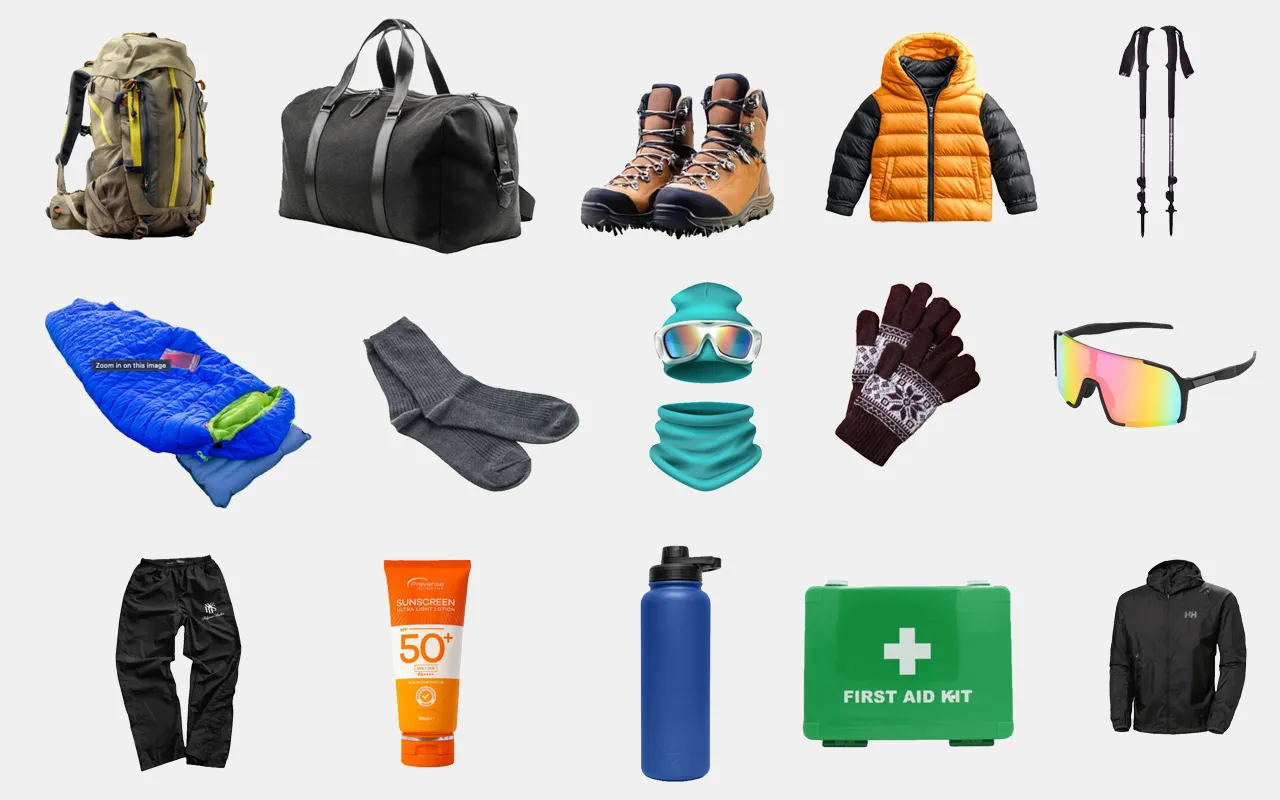
Bring enough to layer, but resist packing your whole wardrobe. You can do laundry on longer treks, and you will wear the same few things happily. Here is the core clothing kit.
| Item | Notes |
|---|---|
| Thermal base layers (2 sets) | Merino or synthetic, not cotton |
| Trekking shirts (2 to 3) | Quick-dry, long sleeve for sun |
| Fleece or mid-layer (1) | Warmth on the move |
| Down jacket (1) | Essential for cold mornings and high camps |
| Waterproof shell jacket | Rain, wind, and snow |
| Waterproof trousers | For rain and high passes |
| Trekking trousers (2) | One convertible pair is handy |
| Underwear and trekking socks | Merino socks reduce blisters |
Footwear
Your boots are the most important item you will pack, so get them right. Above all, break them in on hills at home before you fly. New boots on day one cause blisters that can wreck a trek.
So bring sturdy, waterproof trekking boots with ankle support. Also pack a light pair of camp shoes or sandals for the evenings, so your feet can rest at the lodge. Finally, merino trekking socks and a couple of spare pairs finish the kit.
Head, hands, and sun protection
The sun is fierce at altitude, so protect your skin and eyes as much as your body from the cold. The thin air lets through much stronger UV than at sea level. For more on why altitude affects you, see our altitude sickness guide.
- Sun hat or cap, plus a warm beanie for the cold.
- A buff or scarf for dust, sun, and wind.
- Gloves: a thin liner pair and a warm insulated pair.
- Sunglasses with strong UV protection, wraparound if possible.
- High-SPF sunscreen and a lip balm with sun protection.
Sleeping gear and your pack
A warm sleeping bag turns a cold teahouse night into a good sleep. Teahouses give you a bed and a blanket, but nights get very cold high up, so bring your own bag.
- Sleeping bag rated to about minus 10°C for spring and autumn, warmer for winter.
- Sleeping bag liner for extra warmth and hygiene.
- Daypack (30 to 40 litres) for what you carry each day: water, layers, camera, snacks.
- Duffel bag for your main gear, which a porter carries.
- Rain cover for both bags, and a few dry bags inside.
- Trekking poles to save your knees on the long descents.
Documents, money, and health
Sort your paperwork and a small health kit before you fly. Your agency arranges the permits, so you mainly need your own documents and cash. For the permit system itself, see our Nepal trekking permits guide.
- Passport, plus a printed copy, and passport photos. (Your Nepal visa can be arranged on arrival or online.)
- Travel insurance that covers trekking and helicopter rescue. This is essential.
- Cash in Nepalese rupees, since trails have no card machines.
- A personal first-aid kit: blister plasters, painkillers, and any personal medicine.
- Water purification: tablets, a filter, or a SteriPen.
- Hand sanitiser and a quick-dry travel towel.
Electronics and extras
A few small items make daily life on the trail much easier. So pack these before you leave.
- Headlamp with spare batteries, for early starts and dark lodges.
- Power bank, since charging costs money and gets scarce high up.
- A universal plug adapter for Nepal.
- Phone and a camera, with spare memory.
- Snacks you like, such as energy bars and chocolate.
- Basic toiletries, wet wipes, and toilet paper.
What to leave out, and what to rent in Kathmandu
Do not overpack, because you can sort gear cheaply in Kathmandu. The Thamel district is full of shops that rent and sell trekking kit. So you can pick up a down jacket or a sleeping bag for a few dollars a day, rather than buying and carrying them from home.
So leave out heavy books, big toiletry bottles, jeans, and spare shoes you will never wear. In short, if you are unsure about an item, leave it. A lighter bag makes every day on the trail easier.
Watch the weight: flights and porters
Weight limits are real, so pack with them in mind. Domestic flights to Lukla, the gateway to Everest, cap you at 15 kg per person, made up of 10 kg checked and 5 kg carry-on. Excess is charged per kilo, and the limit is enforced strictly.
Porters matter even more than planes. One porter usually carries the gear of two trekkers. So keep your duffel reasonable, because the International Porter Protection Group advises that porter loads stay around 20 kg. On a Spade Himalaya trip, we hold to fair porter loads and make sure our crew is properly equipped.
Season adjustments
Tweak the list a little for the time of year. For the full seasonal picture, see our best time to trek in Nepal guide.
- Spring and autumn: the standard list above works well.
- Winter (December to February): add a warmer sleeping bag, extra insulation, and thicker gloves and socks.
- Monsoon (June to September): focus on rain gear, quick-dry clothes, and full waterproof covers, and pack salt or repellent for leeches on lower trails.

FAQs
What is the most important thing to pack for a Nepal trek?
Broken-in trekking boots. Blisters from new boots end more treks than altitude does, so wear yours on hills for weeks before you fly. After boots, a warm down jacket and a good sleeping bag matter most, since nights get very cold at altitude.
Do I need a sleeping bag for teahouse trekking?
Yes. Teahouses give you a bed and a blanket, but high-altitude nights are freezing, so bring your own bag rated to about minus 10°C, warmer for winter. You can rent a good sleeping bag cheaply in Kathmandu if you do not own one.
How much should my bag weigh?
Keep it light. Domestic flights to Lukla allow only 15 kg per person (10 kg checked, 5 kg carry-on). Your porter carries your main duffel, and fair porter loads sit around 20 kg for two trekkers’ gear, so pack only what you truly need.
Can I buy or rent trekking gear in Kathmandu?
Yes, and it is a smart move. The Thamel area has many shops that rent and sell down jackets, sleeping bags, poles, and more, often for just a few dollars a day. So you do not need to buy and carry everything from home.
What should I not bring on a Nepal trek?
Leave out cotton clothing, jeans, heavy books, large toiletry bottles, and spare shoes. Cotton stays wet and cold, and extra weight makes every climb harder. When in doubt, leave it out and keep your pack light. For the whole trip beyond the packing, see our how to plan a trip to Nepal guide.
Accuracy note: prices, durations, and trail details in this guide are Spade Himalaya’s 2026 field research and typical market ranges; route details reviewed by Yubaraj Katel, government-licensed trekking guide (Licence No. 19827) with 10 years of experience across the Everest, Annapurna, Langtang, and Manaslu regions.
