Trip Facts
Country:
Nepal
Duration:
14 Days
Max Altitude:
Kala Patthar, 5,545 m (18,192 ft)
Activities:
Trekking and hiking
Region:
Everest / Khumbu (Sagarmatha National Park)
Starting Point:
Kathmandu
Ending Point:
Kathmandu
Grade:
Strenuous
Group Size:
2-16 Pax
Accomodation:
Teahouses on the trail, hotel in Kathmandu
Best Season:
Mar-May & Sep-Nov
Notice
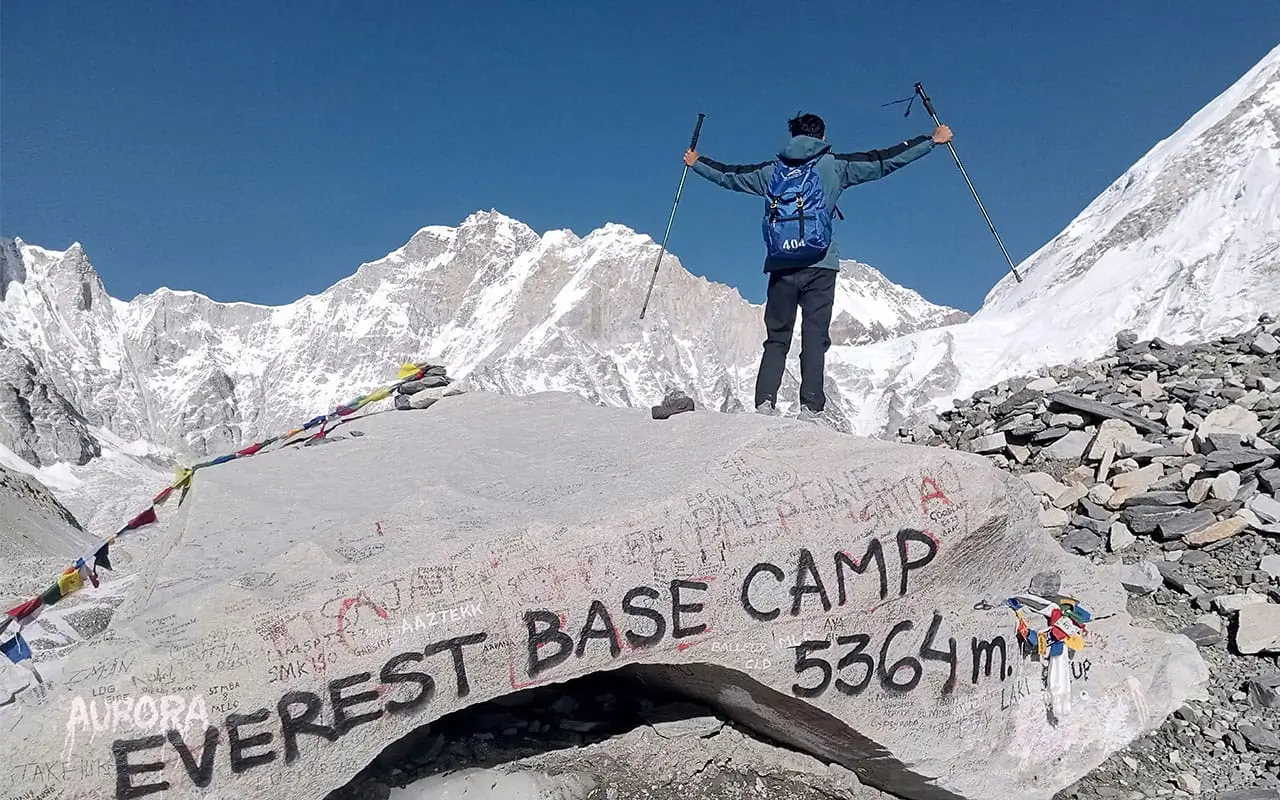
The trek reaches Everest Base Camp (5,364 m) and Kala Patthar (5,545 m). Kala Patthar is the best place to see Everest itself.
Lukla flights leave from Kathmandu (35 minutes) in quiet months. In the busy months, they leave from Manthali, after a 5 to 6 hour drive.
Overview of Everest Base Camp Trek 14-Days
Quick answer: The classic 14-day Everest Base Camp Trek reaches Base Camp (5,364 m) and the Kala Patthar viewpoint (5,545 m) in Nepal’s Khumbu. It is graded strenuous, starts with a flight to Lukla, and is best in spring and autumn.
The Everest Base Camp Trek is a 14-day walk to the foot of the world’s highest mountain. It runs through the Khumbu, the home of the Sherpa people. Most of the route lies inside Sagarmatha National Park. This park is a UNESCO World Heritage Site of 1,148 km2, listed in 1979. So the trail is both wild and protected.
First, you fly to Lukla. Then you climb slowly up the Dudh Koshi valley to Namche Bazaar. From there, the trail passes Tengboche Monastery and the village of Dingboche. Finally, you reach Everest Base Camp at 5,364 m. The camp sits right below the Khumbu Icefall.
One thing surprises many people. You cannot see the top of Everest from base camp, because Nuptse hides it. So the best view comes from Kala Patthar at 5,545 m. You climb it at dawn on Day 10. That sunrise on Everest is the high point of the whole trip.
This Everest Base Camp trek is graded strenuous, but it needs no climbing skills. The hard part is the thin air, not the trail. So the plan adds two rest days, at Namche and Dingboche. As a result, the pace stays safe.
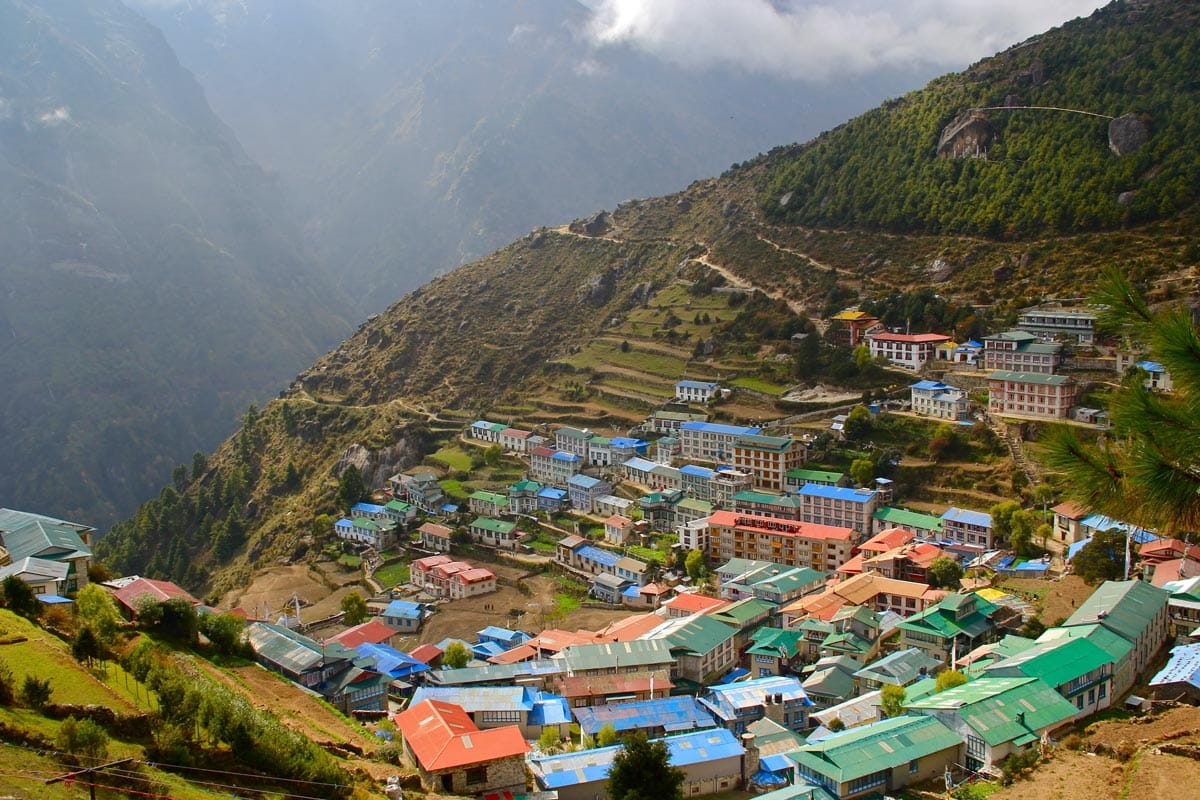
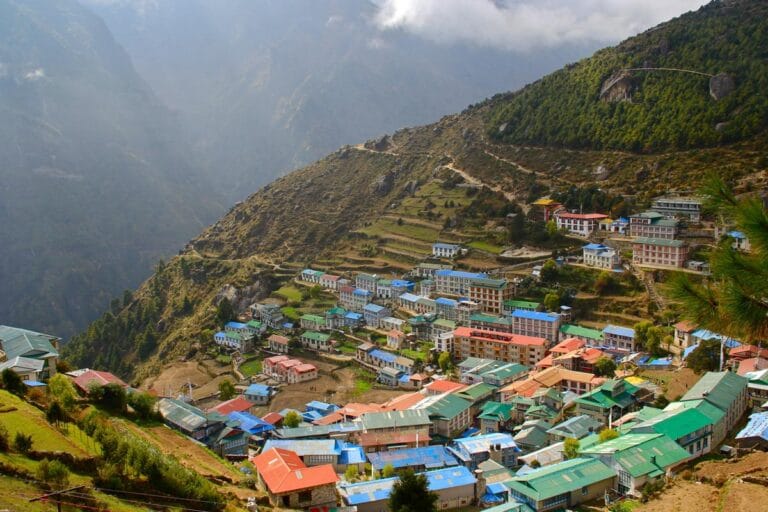
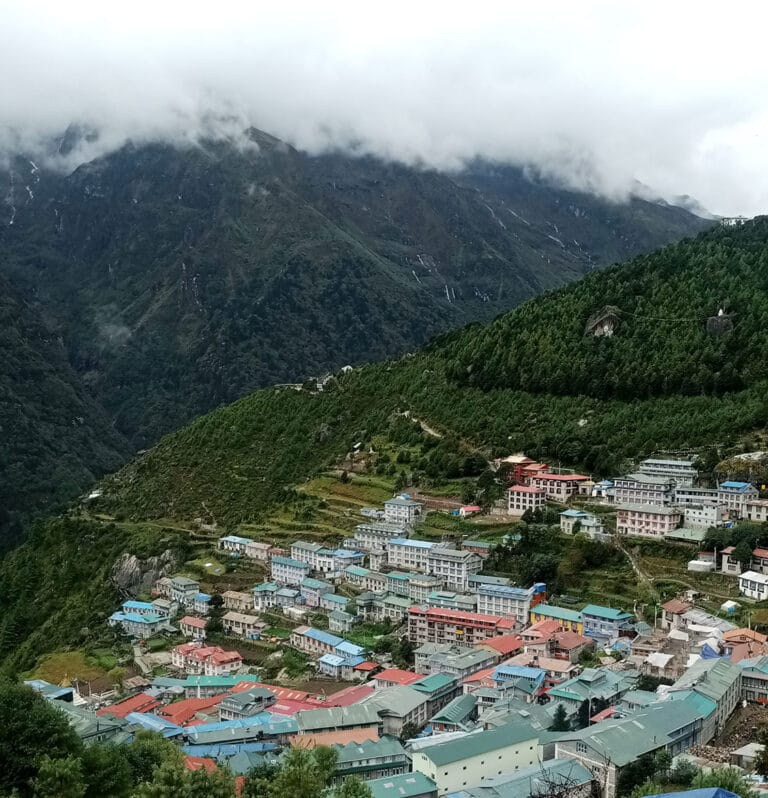
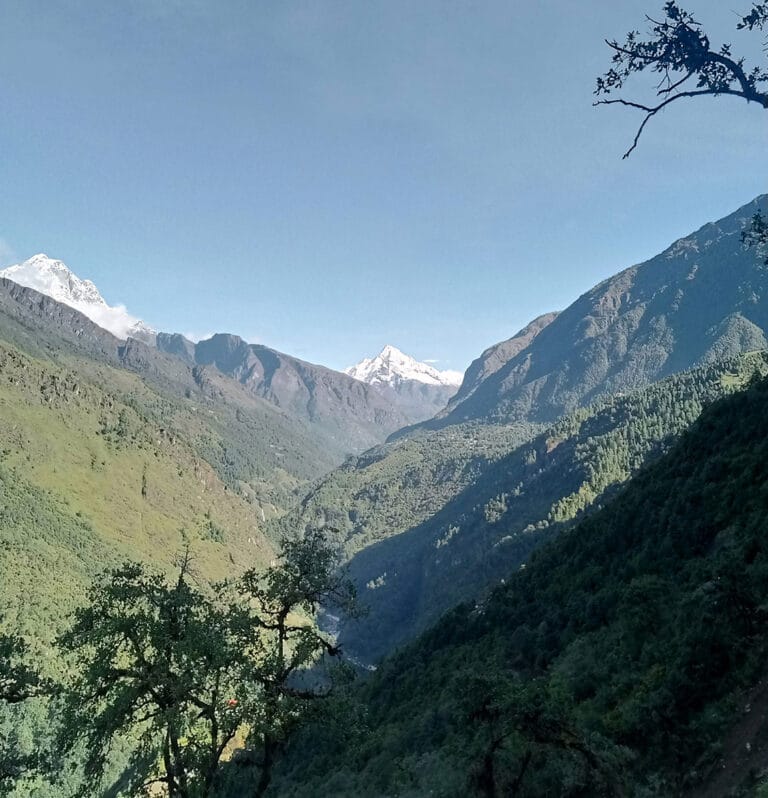
Beautiful view of Namche Bazaar from the top hills
Spade Himalaya runs this trek with licensed Sherpa guides. So your guide sets a safe pace, watches the weather, and checks your health each day. To picture the days that matter most, our guides cover the Lukla flight, the Namche Bazaar rest day, and the Kala Patthar sunrise. Want a bigger challenge? You can add the high passes on the Everest Three Passes Trek. For a slower, photo-focused plan, see the Everest Base Camp Trek via Kala Patthar. Short on time? Fly back on the Everest Base Camp Trek with helicopter return. If you prefer a lower and easier trip, try the Annapurna Base Camp Trek or the short Ghorepani Poon Hill Trek.
Before you book, three reads will save you questions later. Our Everest Base Camp permits guide lists every fee with current figures. Then check the best time to trek to base camp, broken down month by month. And when your dates are set, print our packing list for the trek.
Trips Highlights
- Stand at Everest Base Camp (5,364 m), at the foot of the world's highest peak.
- Climb Kala Patthar (5,545 m) at dawn for the best Everest view.
- Take the Lukla flight, one of the most thrilling flights on earth.
- Walk through Sagarmatha National Park, a UNESCO World Heritage Site.
- Explore Namche Bazaar, the lively heart of the Khumbu.
- Visit Tengboche Monastery, the biggest monastery in the region.
- See the Khumbu Glacier and Icefall up close.
- Wake to sunrise over Everest, Lhotse, Nuptse, and Ama Dablam.
- Meet the Sherpa people and learn about their way of life.
- Spot Makalu, the fifth-highest peak, from Nangkartshang (5,083 m).
Route Details
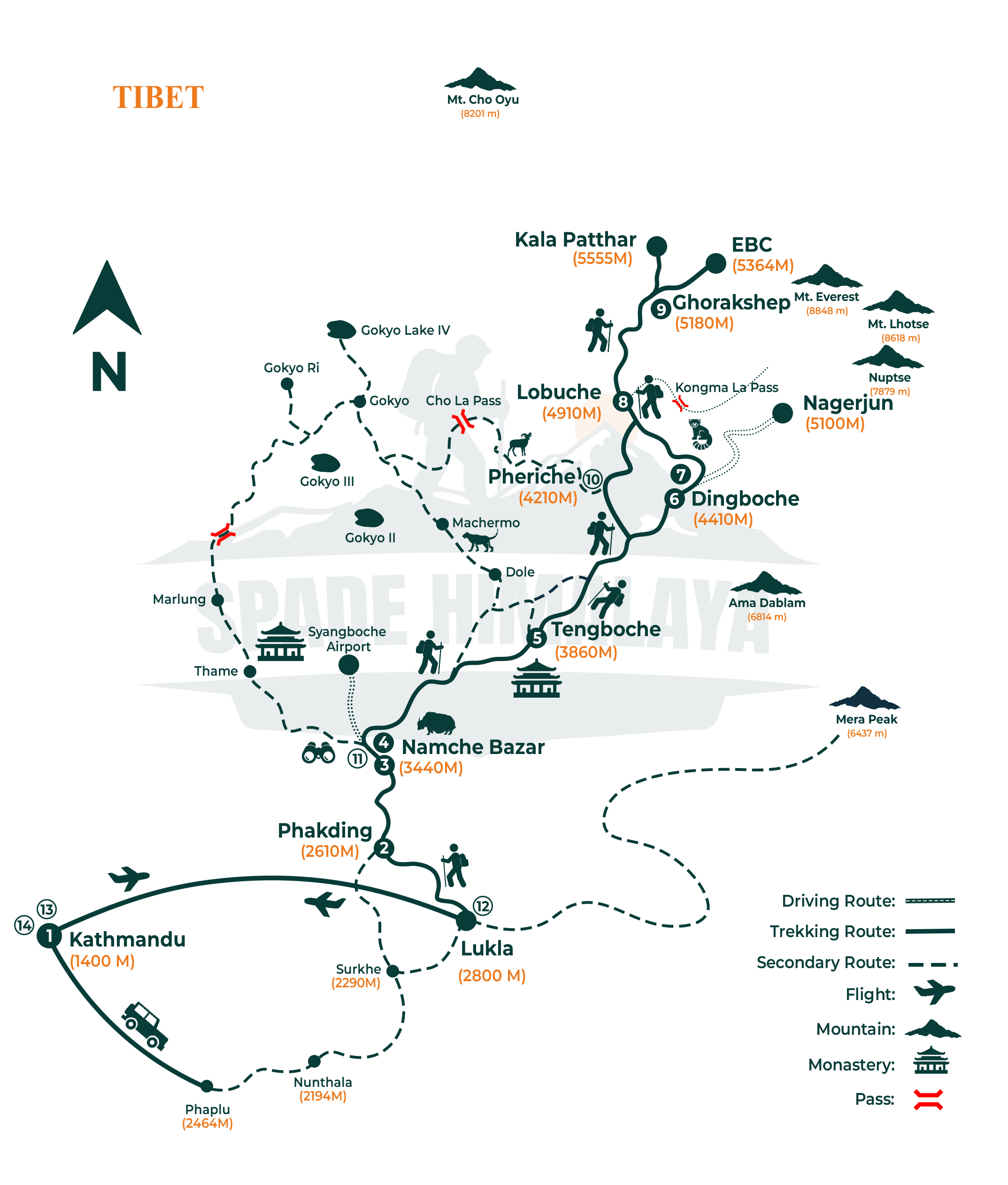
In short, you walk up the Dudh Koshi to Namche. Then you climb the Imja valley past Tengboche and Dingboche. After Lobuche and Gorak Shep, you reach base camp and Kala Patthar. Finally, you walk back the same way to Lukla.
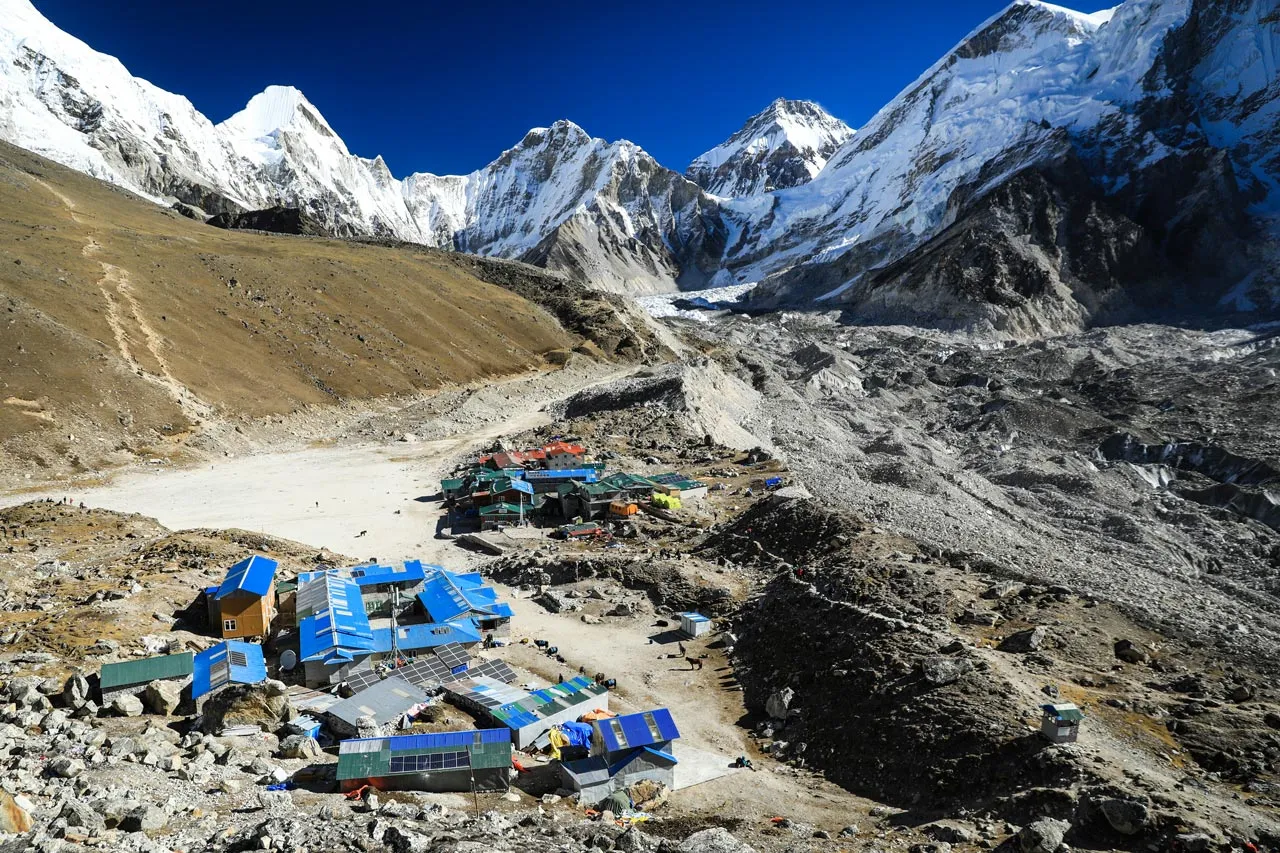
Kathmandu (1,400 m) → fly to Lukla (2,846 m) → Phakding (2,610 m) → Namche Bazaar (3,440 m) → Tengboche (3,860 m) → Dingboche (4,410 m) → Lobuche (4,910 m) → Gorak Shep (5,190 m) → Everest Base Camp (5,364 m) → Kala Patthar (5,545 m) → Pheriche (4,240 m) → Namche Bazaar → Lukla → fly to Kathmandu.
Trips Itinerary
A Spade Himalaya representative meets you at the airport and drives you to your hotel. In the evening your team checks your gear and sorts the permit papers, so bring your passport, one photo and a copy of your insurance.
Kathmandu sits at 1,400 m in a bowl shaped valley ringed by hills. The Khumbu lies east of here and can only be reached by air, which is why the whole trek hangs on one short flight. If the afternoon is free, Boudhanath is best at dusk when the butter lamps are lit.
- Duration: 30 min Drive
- Accommodation: Shared 3 Star Hotel
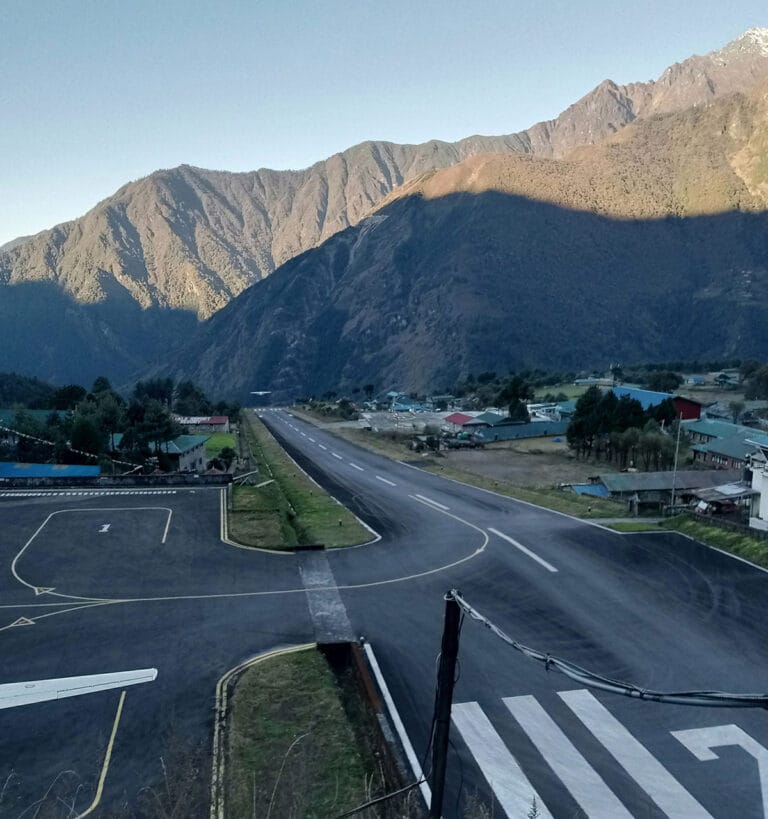
An early flight takes you to Lukla, thirty five minutes from Kathmandu. In the busy months you drive to Manthali the night before and fly a shorter leg from there. At Lukla you meet your porter, drink tea, and start walking.
Lukla is 2,846 m and Phakding 2,610 m, so your first day on the trail loses height rather than gaining it. That is on purpose, and it is the single most useful thing the itinerary does for you.
The trail follows the Dudh Koshi, the milk river, through pine forest and Sherpa hamlets. You pass mani walls, painted prayer stones and your first suspension bridges, strung end to end with prayer flags.
- Duration: 3-4 Hours flight and drive
- Max Altitude: 2,840 m
- Meals: Breakfast, Lunch & Dinner Included
- Accommodation: Guest House
Today is the big climb, so start slow and stop often. The trail follows the river north through Benkar and Monjo, where a ranger checks your permits at the park gate, then drops to Jorsalle for lunch.
After Jorsalle you cross the Hillary Suspension Bridge, high above the meeting of two rivers and heavy with prayer flags, and the long climb to Namche begins.
About halfway up, on a clear day, Everest appears for the first time. Namche Bazaar sits at 3,440 m in a horseshoe of hills and is the trading heart of the Khumbu.
You sleep here two nights, because gaining more than 600 m in a day and then staying at that height is how people get into trouble further up the valley.
- Duration: 6 - 7 hrs hike
- Max Altitude: 3,440 m
- Meals: Breakfast, Lunch & Dinner Included
- Accommodation: Guest House
A rest day, though rest here means walking. You climb to the Hotel Everest View and come back down to sleep, which is the climb high and sleep low rule the rest of the trek depends on.
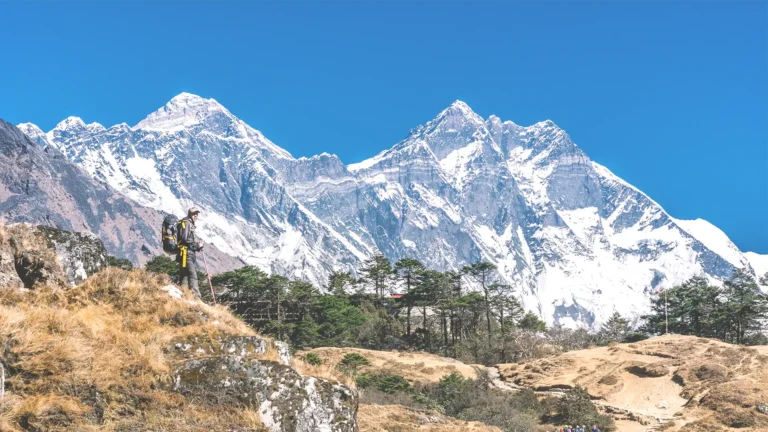
The hotel sits at 3,880 m and is one of the highest in the world. From its terrace Everest, Lhotse and Ama Dablam line up across the valley, and it is worth the price of a coffee to sit there for an hour.
Back in Namche the afternoon is yours. The Sherpa Culture Museum explains the mountaineering history you are walking through, and the Saturday market is worth timing your trek around if you can.
- Duration: 3 - 4 hrs hike
- Max Altitude: 3,880 m
- Meals: Breakfast, Lunch & Dinner Included
- Accommodation: Guest House
You leave Namche on a high, level trail with the peaks ahead of you all morning, then drop steeply to Phunki Thenga beside the river for lunch before the climb to Tengboche.
At Phunki Thenga the prayer wheels are turned by the stream itself, which is a detail most people walk straight past. The climb after it is steady rather than brutal, through pine and rhododendron forest.
Tengboche Monastery is the largest in the Khumbu and was built in 1916. It stands on a ridge with Ama Dablam in front and Everest behind, and if you arrive by mid afternoon you can sit in on the prayers.
- Duration: 5 to 6 hrs hike
- Max Altitude: 3,860 m
- Meals: Breakfast, Lunch & Dinner Included
- Accommodation: Guest House
You drop through forest to Deboche, cross the Imja Khola on a high bridge hung with flags, then climb gently past Pangboche and Somare to Dingboche, arriving in the afternoon.
Pangboche has one of the oldest monasteries in the Khumbu and is worth the short detour uphill. Above it the trees thin and then stop altogether, and the country turns wide, bare and rocky.
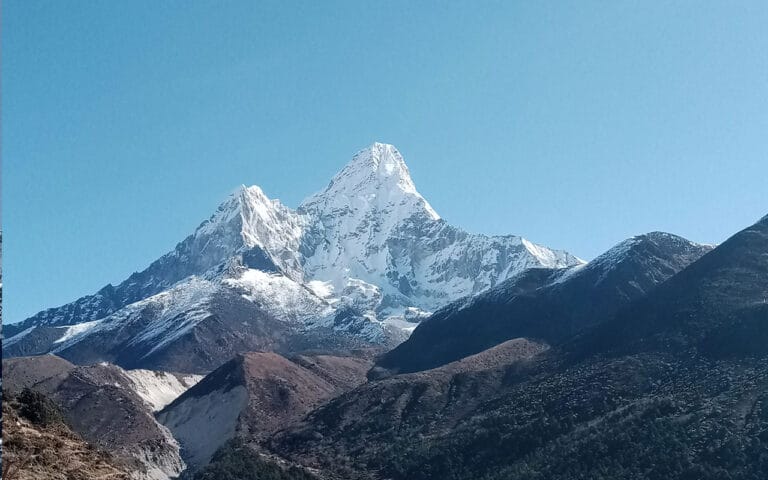
Dingboche is at 4,410 m, a village of stone walled fields built to shelter crops from the wind. Ama Dablam stands close on your right for most of the morning and looks quite different from this side.
- Duration: 6 -7 Hrs trek
- Max Altitude: 4,410 m
- Meals: Breakfast, Lunch & Dinner Included
- Accommodation: Guest House
Your second rest day, and again you climb high to sleep low. The ridge above the village is steep and slow going, and most people take three hours to get up it and half that to come down.
Nangkartshang tops out at 5,083 m, so you gain 673 m and then give it all back. It feels pointless while you are doing it, and it is the reason you make base camp. From the top you can pick out Makalu at 8,463 m away to the east.
- Duration: 3 - 4 hrs Hike
- Max Altitude: 5,083 m
- Meals: Breakfast, Lunch & Dinner Included
- Accommodation: Guest House
The trail rises gently up the wide valley to Thukla for lunch, then climbs steeply to the pass above it. After that an easier walk along the glacier moraine brings you into Lobuche by mid afternoon.
At the top of the Thukla Pass stand dozens of stone memorials to climbers and Sherpas who died on Everest, hung with prayer flags. It is a quiet place and worth stopping at properly rather than walking through.
Lobuche is at 4,910 m and from here you are walking on and beside the Khumbu Glacier. The nights are cold enough that water bottles freeze inside the lodge, so take one into your sleeping bag.
- Duration: 5 -6 hrs hike
- Max Altitude: 4,910 m
- Meals: Breakfast, Lunch & Dinner Included
- Accommodation: Guest House
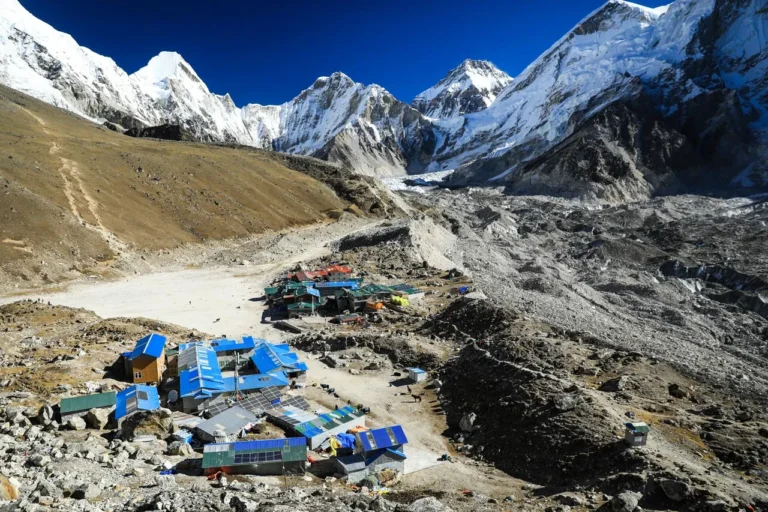
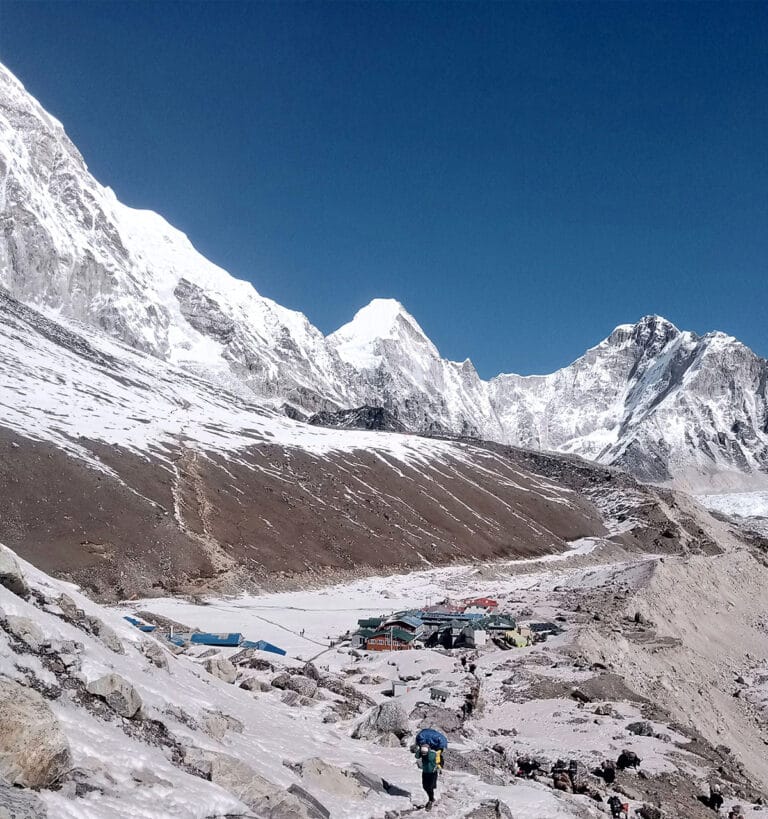
The day the whole trek is built around. You follow the glacier to Gorak Shep, drop your bag at the lodge, then push on over rock and ice to Everest Base Camp before turning around and coming back.
Base camp is 5,364 m and Gorak Shep 5,190 m. Nobody sleeps at base camp, so you return the same afternoon, which makes this a long day at height over loose, awkward ground.
The Khumbu Icefall tumbles down ahead of you in blocks the size of houses, and in spring the camp below it turns into a small city of brightly coloured tents.
One thing catches almost everyone out: Everest itself is hidden from base camp. You see it properly tomorrow morning from the top of Kala Patthar instead.
- Duration: 4 -5 hrs hike
- Max Altitude: 5,364 m
- Meals: Breakfast, Lunch & Dinner Included
- Accommodation: Guest House
You start well before dawn and climb Kala Patthar by head torch to reach the top for sunrise. Then you come back to Gorak Shep for breakfast and keep walking down the valley to Pheriche.
Kala Patthar is 5,545 m and the highest point of the trek. This, not base camp, is where you actually see Everest, with the whole south west face lit up as the sun comes over Nuptse.
Pheriche sits at 4,240 m and has a Himalayan Rescue Association aid post that runs free altitude talks in season. After ten days going up, the air here feels thick and most people sleep properly for the first time.
- Duration: 7 - 8 hrs hike
- Max Altitude: 5,545 m
- Meals: Breakfast, Lunch & Dinner Included
- Accommodation: Guest House
Now the long walk back begins. The trail drops down the Imja valley past Pangboche, Tengboche and Phunki Thenga, and you finish the day back in Namche after six or seven hours of walking.
You lose 800 m and drop back below the treeline, where the air turns warm and green and smells of pine again after a week of nothing but rock, ice and moraine. Everything looks different walking the other way, and views that were behind you on the way up are now straight ahead.
- Duration: 6 - 7 hrs hike
- Max Altitude: 3,440 m
- Meals: Breakfast, Lunch & Dinner Included
- Accommodation: Guest House
The last trekking day follows the Dudh Koshi back down through Cheplung, Phakding and Monjo. It is six to seven hours with one short climb into Lukla at the end.
You finish at 2,846 m, back where the walking started twelve days ago. The forest closes in, the river gets louder, and most people notice how easy breathing has become after two weeks up high.
This is the evening to thank your guide and porters properly, and a tip is customary rather than expected. Lukla’s lodges fill with crews coming off the mountain, so there is usually music and a good deal of noise.
- Duration: Walking: 7 to 8 hrs
- Max Altitude: 2,840 m
- Meals: Breakfast, Lunch & Dinner Included
- Accommodation: Guest House
A morning flight takes you back to Kathmandu, thirty five minutes direct or via Manthali with a drive in the busy season. The rest of the day is yours to rest, shower and eat something that is not dal bhat.
Flights out of Lukla go early, before the cloud builds in the valley. Delays do happen, which is why the itinerary keeps a day in hand. In the evening Spade Himalaya hands you a trip certificate over a farewell dinner.
- Duration: 35 min flight & 5 - 6 hrs Drive
- Max Altitude: 1,400 m
- Meals: Breakfast Included
- Accommodation: Star Hotel
A representative drives you to the airport, about thirty minutes from Thamel depending on traffic, and we suggest arriving three hours before an international departure. You leave with photographs of base camp, the Khumbu Icefall and a sunrise seen from 5,545 m.
- Meals: Breakfast Included
Trips Include
- Airport transfers in a private vehicle.
- Flight from Kathmandu to Lukla and back to Kathmandu (from Ramechhap in peak season).
- Shared star hotel in kathmandu for 2 nights (arrival and post-trek), with breakfast Included. (Private room can be organized at extra cost).
- All ground transfers to and from Manthali / Ramechhap in peak season.
- All teahouse accommodation during the trek.
- All meals (breakfast, lunch, dinner) during the trek.
- Sagarmatha National Park entry permit and Khumbu Pasang Lhamu Rural Municipality permit.
- A licensed, experienced guide (pay, insurance, meals, lodging). 2 guides for every group size more than 7 trekkers.
- Guide's first-aid kit and daily health monitoring.
- Porter support, one porter per two trekkers (pay, insurance, meals, lodging).
- Trip-completion certificate from Spade Himalaya.
Trips Exclude
- International airfare to and from Nepal.
- Nepal entry visa.
- Travel and medical insurance.
- Drinks, snacks, hot showers, Wi-Fi, and device charging on the trail.
- Sleeping bag and down jacket.
- Personal expenses and any costs from early departure or itinerary changes.
- Tips for guide and porters.
- Emergency evacuation costs.
- Anything not listed under Cost Includes.
Trips Altitude
Trips Map
Trips Gallery
Packing List
General
- Four-season (zero degree) sleeping bag (available to rent for about US$35)
- Sleeping bag liner
- Puffy down jacket (available to rent for about US$35)
- Daypack, 35 to 45 litres, with a rain cover
Upper Body
- Knitted hat or beanie
- Scarf, neck gaiter, or buff (highly recommended)
- Headlamp with spare batteries
- Sunglasses (UV protection)
- Technical base layer (lighter for warm months, heavier for cold months)
- Short and long sleeve technical shirts
- Fleece jacket or pullover
- Waterproof, windproof shell jacket
Lower Body
- Technical base layer (weight to suit the season)
- Hiking trousers (2 pairs)
- Comfortable trousers for the teahouses
- Hiking shorts
- Waterproof, windproof shell trousers
Hands
- Wool or technical liner gloves
- Insulated hard-shell outer gloves
Feet
- Waterproof trekking boots (broken in)
- Warm wool or technical socks, and hiking socks
- Liner socks (optional)
- Ice cleats or micro spikes (essential for November to March)
- Gaiters (light for dust, heavier for snow)
- Casual shoes for the evenings
Undergarments
- Quick-drying technical underwear
- Sleeping clothes or pyjamas
First Aid Kits
- Sunscreen and lip balm
- Antiseptic ointment and blister care
- Cough syrup (the dry "Khumbu cough" is common at altitude)
- Personal medication and any altitude medication advised by your doctor
- Water purification tablets or a UV purifier
Optional
- Power bank and spare batteries
- Camera or phone for photos
- Cards or a book
- Binoculars
- Whistle, thermos for hot water, and a comb
Good to Know
Before you go
You only need a few things ready. First, bring your passport, one photo, and a copy of your insurance. Then Spade Himalaya can sort your two permits. Also, draw enough cash in Kathmandu or Namche, because the trail runs on rupees. Last, train a little before you come. A few weeks of walking and hill climbing makes the high days much easier.
Lukla is a small mountain airport, so weather can cause delays. In quiet months, you fly from Kathmandu in 35 minutes. In busy months, you fly from Manthali after a 5 to 6 hour drive. So it is wise to keep a spare day before your flight home. A direct helicopter is also an option for about US$850 per person.
The plan follows one simple rule: climb high, sleep low. So it adds rest days at Namche and Dingboche. Drink 3 to 4 litres of water a day, and walk slowly. Skip alcohol up high, and eat well for energy. If you feel unwell, tell your guide at once. Going down even a little is the best cure, and the Pheriche aid post can help.
You sleep in cosy teahouses run by Sherpa families. Lower down, some rooms have a private bathroom. Higher up, rooms are basic and nights are cold. The food is simple and filling, like dal bhat, noodles, soup, and potatoes. Vegetarian meals are easy to find, and meat is best avoided high up. For water, refill and purify rather than buy bottles.
A dry cough is common above Namche, because the air is cold and dry. So cover your mouth with a buff, drink plenty, and use lozenges. It is annoying but harmless, and it fades once you go back down.
Trips Reviews
No reviews found.
Trips FAQs
Trek Difficulty
It is graded strenuous. The Everest Base Camp trek difficulty comes mostly from the thin air, not the trail. There is no climbing skill needed. Still, you walk 5 to 8 hours a day for two weeks. You also reach 5,545 m at Kala Patthar. So you should train first, and then take a slow, steady pace.
Yes, a fit beginner can. You do not need past trekking experience. You do need good fitness and a careful pace. So train for 8 to 12 weeks, then trek slowly with your guide. For a full fitness and training plan, see our Everest Base Camp trek difficulty guide.
Most trekkers who train and climb slowly reach base camp. There is no official figure, but in our experience the large majority finish. The few who turn back almost always do so because of altitude. So the rest days and the slow pace are there to keep you on track.
Guide Requirement & Trek Regulations
Not by law in the Khumbu. Nepal’s 2023 rule lists the Everest region among the areas needing a licensed guide (Nepal Tourism Board, retrieved 2026-06-29). However, the local Khumbu Pasang Lhamu Rural Municipality rejected the rule and allows solo trekking (The Himalayan Times, 2023-03-28). So independent trekking is still allowed. Still, a guide adds real safety at altitude. So Spade Himalaya gives you a licensed Sherpa guide who handles the permits, the route, and your health.
Trek Highlights & Mountain Views
No, and this surprises most people. At base camp, Nuptse hides the top of Everest. So the best view comes from Kala Patthar at 5,545 m. You climb it at dawn on Day 10. That is why the plan includes both base camp and Kala Patthar.
Permits and Entry Requirements
You need two permits. First, the Sagarmatha National Park permit (about NPR 3,000). Second, the Khumbu Pasang Lhamu permit (about NPR 3,000). Spade Himalaya arranges both, and a ranger checks them on the trail. They are paid in cash, in Nepalese rupees. These permits are the main fixed part of the Everest Base Camp trek cost.
Transportation and Lukla Flights
It comes down to air traffic. In the busy months (March, April, May, October, and November), flights move to Manthali to ease the load. So you drive 5 to 6 hours, then fly 20 minutes. In quiet months, you fly straight from Kathmandu in 35 minutes. A direct helicopter is also an option for about US$550 per person.
Best Time to Trek Everest Base Camp
Spring (March to May) and autumn (late September to November) are best. In these months, the skies are clear and the trails are busy. Winter is cold but quiet, and you can still go with warm gear. The monsoon (July to August) brings rain and cloud, so most people skip it.
Trekker's Well-Being & Safety
It is common, and it rises fast with height. One study in the Nepali Himalaya found it in 15% of trekkers at 4,000 to 4,500 m, and 51% at 4,500 to 5,000 m (PubMed, retrieved 2026-06-16). So the plan adds two rest days and a slow pace. Your guide also checks you each day. A medical post at Pheriche can help in an emergency.
Yes, it is a must. Your policy has to cover trekking up to 5,500 m and a helicopter rescue. Many normal policies do not, so check the wording. Arrange it at home before you fly. Then leave a copy with Spade Himalaya at the briefing.
About half of sea level. The air still holds 21% oxygen, but the pressure drops with height, so each breath gives you less. At 5,500 m, the available oxygen is roughly 50% of the sea level value. So a slow climb and the two rest days matter more than raw strength.
Accommodation and Connectivity
Yes, but it gets harder higher up. Most teahouses offer Wi-Fi and charging for a small fee. There are ATMs in Namche, but they can run dry. So carry enough cash in Nepalese rupees. Cards are rarely taken up the valley.
Trek Cost
Our guided packages roll the permits, the Lukla flights, your guide, porter support, lodging, and meals into one clear price. A 14-day trip usually starts around US$1,500 per person, and the price depends on group size and season. For a full breakdown, see our Everest Base Camp trek cost guide.