Route advisory, 1 September 2026. A glacial flood on 26 August 2026 destroyed road access in Rasuwa district, including Syabrubesi, the road trailhead for this trek. The Nepal Tourism Board has advised postponing travel through the Galchhi to Nuwakot to Rasuwa to Syabrubesi corridor, and the Prithvi Highway has been closed. Early estimates for restoring basic road access run from several weeks to several months and are not yet firm.
The trails themselves are largely intact. What has closed the region is the loss of the single road that serves the Langtang, Gosaikunda and Tamang Heritage routes together. The costs, distances and route detail below describe this trek in normal conditions and remain accurate for planning a future trip, but they should not be used to travel now. The Everest and Annapurna regions, Kathmandu, Pokhara and Chitwan are unaffected and operating normally.
Update, 2 September 2026. We are now running a 16 day alternative that walks in and out from Sundarijal and avoids the damaged road entirely, reaching Gosaikunda and the Langtang valley on foot in both directions. It is longer and more demanding than the standard route and is priced differently. Please contact us for the day by day detail.
We will update this page when access is restored. If you are holding autumn dates, please contact us and we will give you the current position honestly, including if the answer is to postpone.
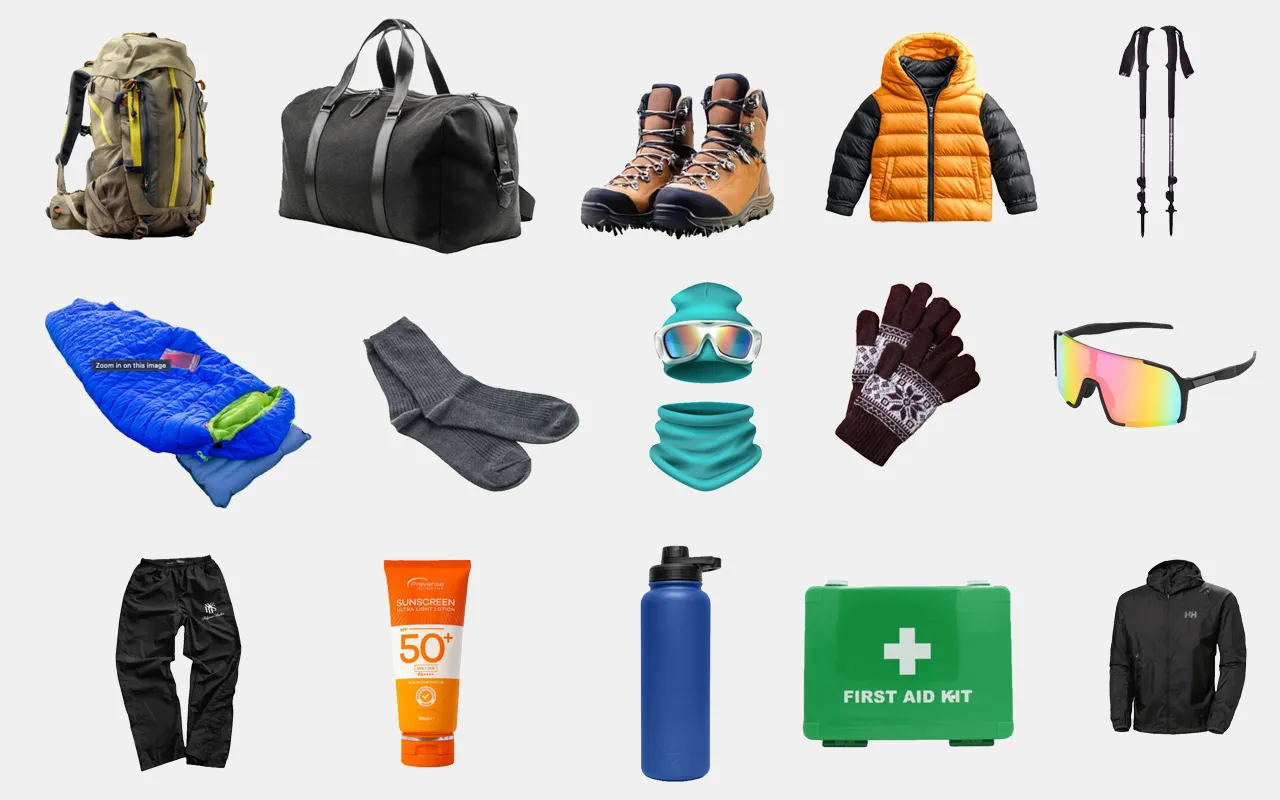
Quick answer: Pack in layers for the Langtang Valley Trek: a base layer, a fleece or down mid-layer, and a waterproof shell. Bring good boots, a four-season sleeping bag, a warm down jacket, and micro spikes for Tserko Ri. Avoid cotton, and carry a sun kit and a small first-aid kit.
Pack in layers for the Langtang Valley Trek, because the trail runs from warm valleys to a freezing high viewpoint. You need good boots, a four-season sleeping bag, and a warm down jacket. So plan for both sun and snow. This guide lists every item, and explains why you need it.
Key Takeaways
- Layers are key: base layer, fleece or down mid-layer, and a waterproof shell.
- Bring a four-season sleeping bag rated to about -10°C. Spade Himalaya can provide one.
- Avoid cotton. It holds sweat and stays cold and wet.
- Pack a 30 to 40 litre daypack for yourself, plus a duffel for the porter.
- Carry micro spikes for snow on Tserko Ri, plus sun and first-aid kit.
This is a full packing guide for the Langtang trek. For the full trip, see our Langtang Valley Trek package. For the wider picture, see our Langtang region guide.
What is the best layering system?
The smartest way to dress for Langtang is in three layers, so you can adjust as the weather changes. This keeps you warm, dry, and comfortable.
- Base layer. This sits against your skin and wicks away sweat. So use merino wool or synthetic, never cotton.
- Mid-layer. This traps warmth. A fleece jacket or a light down jacket works well.
- Outer shell. This blocks wind and rain. So pack a waterproof, windproof jacket.
So you add layers when you climb high or stop, and remove them when you warm up. This simple system handles everything from warm valleys to a cold dawn on Tserko Ri.
What clothing should you pack?
Here is the full clothing list for the Langtang Valley Trek. It covers the warm days and the cold nights.
- 2 to 3 base-layer tops (merino or synthetic, long and short sleeve)
- 1 fleece jacket or wool pullover
- 1 warm down jacket (Spade Himalaya can provide one)
- 1 waterproof, windproof shell jacket
- 2 trekking trousers, plus thermal base-layer trousers
- 1 pair of waterproof shell trousers
- Quick-drying underwear and sports bras
- Warm hat or beanie that covers the ears
- Sun hat or cap, plus a buff or neck gaiter
- Liner gloves and warm outer gloves
So avoid cotton for anything next to your skin. Cotton holds sweat, so it stays cold and wet. In short, choose wool or synthetic and stay dry.
What footwear do you need?
Good boots matter more than almost anything else, because sore feet can end a trek. So break in your boots well before you come.
- Waterproof trekking boots with ankle support, well broken in
- 4 to 5 pairs of warm wool socks, plus thin liner socks
- Light shoes or sandals for the teahouses in the evening
- Micro spikes, in case of snow on Tserko Ri or icy ground
- Gaiters, useful for snow, mud, or dust
So test your boots on long walks at home first. New boots cause blisters, which can ruin the trek. In short, broken-in boots are the single best comfort buy.
What sleeping gear and packs do you need?
You need a warm sleeping bag and two bags to carry your gear. Here is what to bring.
- A four-season sleeping bag, rated to about -10°C. Spade Himalaya can provide one for the trek.
- A sleeping bag liner, for extra warmth and hygiene.
- A daypack, 30 to 40 litres, with a rain cover. You carry this yourself.
- A duffel bag for the porter. Spade Himalaya can provide one.
So your porter carries the duffel, usually up to about 10 to 12 kg. You carry only your daypack, with water, snacks, a layer, and your camera. In short, pack light in your daypack, since you carry it all day.
What documents and money should you bring?
Keep your papers safe and dry, because you cannot trek without them. Carry these in a waterproof pouch.
- Passport, plus two or three spare passport photos
- Your trekking permits and TIMS card, which Spade Himalaya arranges (Nepal Tourism Board, retrieved 2026-06-25)
- A printed copy of your travel insurance
- Enough Nepalese rupees in cash, since there are no ATMs on the trail
So bring more cash than you think you need. You pay cash for drinks, snacks, charging, Wi-Fi, hot showers, and tips. For the permit detail, see our Langtang trek permit guide.
What health and sun essentials do you need?
A few small items make a big difference to your comfort and safety. Do not skip these.
- A reusable water bottle, plus a filter or purification tablets
- Sunscreen (SPF 50) and lip balm, since the high sun is strong
- Sunglasses with UV protection
- A headlamp with spare batteries, for early starts
- A personal first-aid kit with blister plasters and pain relief
- Altitude medicine such as acetazolamide, only if your doctor advises it
- Hand sanitiser, a quick-dry towel, and toilet paper
So treat your water rather than buying bottles. This saves money and cuts plastic waste in the park. Your guide also carries a first-aid kit and a pulse oximeter.
What optional extras are worth packing?
These items are not vital, but many trekkers are glad they packed them. Add them if you have space.
- Trekking poles, which help on the long descent
- A power bank, since charging costs money and is slow up high
- A camera with spare batteries and memory cards
- An Ncell SIM card, which has the best signal in Langtang
- High-energy snacks like bars, nuts, and dried fruit
- A book or cards for the quiet evenings
So poles and a power bank are the two most useful extras. In short, pack light, but do not leave these behind.
How does packing change by season?
What you pack changes a little with the season, so adjust for the cold. Here is a quick guide.
| Season | What to add |
|---|---|
| Spring and autumn | Lighter layers, a standard down jacket |
| Winter (Dec to Feb) | Thermal layers, a thicker down jacket, two pairs of gloves, micro spikes |
| Monsoon (Jun to Aug) | Waterproof gear, quick-dry clothes, leech protection |
- Spring and autumn. These are mild. So lighter layers and a standard down jacket are enough.
- Winter (December to February). This is cold. So add thermal layers, a thicker down jacket, two pairs of gloves, and micro spikes. For the detail, see our Langtang Valley Trek in winter guide.
- Monsoon (June to August). This is wet. So focus on waterproof gear, quick-dry clothes, and leech protection.
So the core list stays the same all year. You just add or remove warmth for the season. In short, pack for the season you choose.
FAQs
What should I pack for the Langtang Valley Trek?
Pack in three layers: a base layer, a fleece or down mid-layer, and a waterproof shell. Add good boots, a four-season sleeping bag, sun protection, and a first-aid kit. So you are ready for both warm days and cold nights.
Do I need a sleeping bag for Langtang?
Yes. The teahouses are cold up high, so a four-season bag rated to about -10°C is best. Spade Himalaya can provide a sleeping bag for the trek. A liner adds extra warmth too.
How heavy should my bag be?
Your porter carries the duffel, usually up to about 10 to 12 kg. You carry a daypack of 30 to 40 litres yourself. So keep your daypack light, with water, snacks, a layer, and your camera.
Do I need micro spikes for the Langtang trek?
In spring and autumn, only if there is fresh snow on Tserko Ri. In winter, yes. So pack micro spikes if you plan to trek in the cold months or hike the high viewpoints after snowfall.
Can I rent gear in Kathmandu?
Yes. You can rent a sleeping bag, a down jacket, and trekking poles in Kathmandu for a few dollars a day. Spade Himalaya can also provide a sleeping bag, down jacket, and duffel for the trek.
Should I bring cash on the Langtang trek?
Yes. There are no ATMs on the trail. So carry enough Nepalese rupees from Kathmandu for drinks, snacks, charging, Wi-Fi, hot showers, and tips.
Accuracy note: official fees, rules, and hard facts in this guide are cited inline from their sources; trail and price details are Spade Himalaya field research; route details reviewed by Yubaraj Katel, government-licensed trekking guide (Licence No. 19827) with 10 years of experience leading treks in the Langtang region.

Keep Planning Your Trek
Updated: 1 Sep, 2026
6 min
Langtang Valley Trek in Winter (December, January, February)
Route advisory, 1 September 2026. A glacial flood on 26 August 2026 destroyed road access in...
Updated: 1 Sep, 2026
7 min
Langtang Valley Trek Cost in 2026: A Full Price Breakdown
Route advisory, 1 September 2026. A glacial flood on 26 August 2026 destroyed road access in...
Updated: 1 Sep, 2026
11 min
Langtang Region Trek: The Complete 2026 Guide
Route advisory, 1 September 2026. A glacial flood on 26 August 2026 destroyed road access in...