Last updated: June 2026. Medical facts checked against the CDC, the Himalayan Rescue Association, and the Lake Louise scoring system. This is general information, not medical advice. Talk to a doctor before your trek.
Quick answer: Altitude sickness is the body’s reaction to thin air, and it can affect anyone above about 2,500 m. The key is to climb slowly, watch for a headache with other symptoms, and go down if you feel worse. Descent is the only sure cure. With a slow pace and a good guide, it stays very manageable.
Altitude, not fitness or steep ground, is the real risk on a high Nepal trek. The good news is that it is well understood and highly preventable. This guide explains what altitude sickness is, how to spot it, how to prevent it, and exactly what to do if it strikes, all from official medical sources.
Key Takeaways
- Altitude sickness can start above 2,500 m and affects fit and unfit trekkers alike.
- Mild altitude sickness (AMS) is a headache plus nausea, fatigue, dizziness, or poor sleep.
- In Nepal Himalaya trekkers, it affected about 15% at 4,000 to 4,500 m and 51% above 4,500 m (PubMed, retrieved 2026-06-30).
- The cure is simple: do not climb higher with symptoms, and descend if they get worse.
- HACE and HAPE are rare but life-threatening, and both need immediate descent and rescue.
What is altitude sickness?
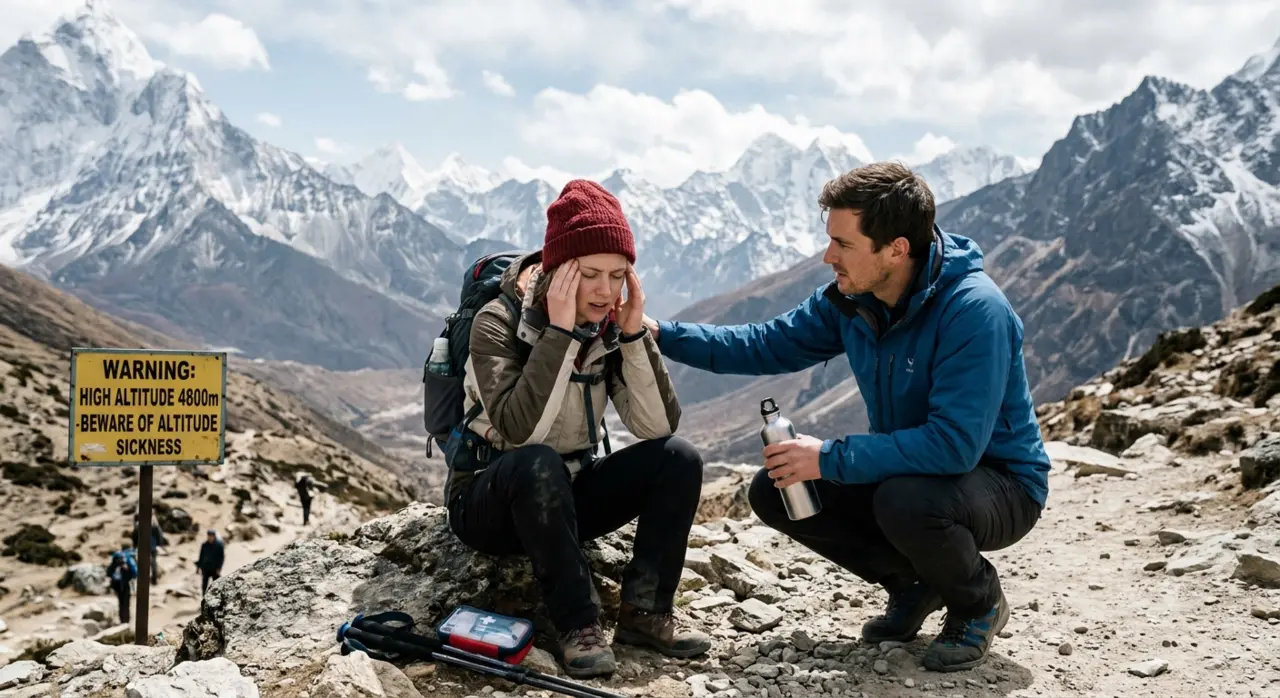
Altitude sickness is what happens when you go up faster than your body can adjust to the thin air. Higher up, each breath holds less oxygen, and the body needs time to catch up. The problem can begin above about 2,500 m, and it gets more likely the higher you sleep (CDC, retrieved 2026-06-30).
There are three forms. The first is acute mountain sickness (AMS), which is common and usually mild. However, the other two are rare but serious: high-altitude cerebral edema (HACE), which is swelling of the brain, and high-altitude pulmonary edema (HAPE), which is fluid in the lungs. So most trekkers only ever meet the mild form, if any.
What are the symptoms of altitude sickness?
Mild altitude sickness is a headache plus at least one other symptom. The other symptoms are nausea, tiredness, dizziness, or trouble sleeping (Himalayan Rescue Association, retrieved 2026-06-30). Many trekkers say it feels like a hangover. Typically, it shows up within a few hours of reaching a new, higher altitude.
Doctors confirm it with the Lake Louise score, which adds up these symptoms and needs a headache to be present (StatPearls, NIH, retrieved 2026-06-30). So the rule of thumb is simple: if you have a headache and feel off after going higher, treat it as altitude sickness until proven otherwise.
The dangerous forms: HACE and HAPE
HACE and HAPE are rare, but they can kill within hours, so learn the warning signs. They are medical emergencies. If you see them, the person must go down at once.
- HACE (brain): confusion, clumsiness, or losing balance. A classic test is asking the person to walk heel to toe in a straight line. If they cannot, treat it as HACE.
- HAPE (lungs): breathlessness even at rest, a persistent cough, a tight chest, extreme tiredness, and sometimes blue lips.
For both, the action is the same and it is urgent. Descend immediately, give bottled oxygen if you have it, and arrange a rescue (CDC, retrieved 2026-06-30). Do not wait for morning.
How common is altitude sickness on Nepal treks?
It is common enough to respect, and it does not care how fit you are. The CDC records that AMS affects about 25% of people who sleep above 2,450 m. In one study of trekkers in the Nepal Himalaya, it affected about 15% of people at 4,000 to 4,500 m and 51% above 4,500 m (PubMed, retrieved 2026-06-30).
Here is the myth to drop: being fit does not protect you. In fact, strong, fit trekkers are often the ones who get sick, because they climb too fast. So a marathon runner who races uphill is at more risk than a slow, patient walker. So age and fitness matter far less than your pace.
How do you prevent altitude sickness?
Slow ascent is by far the best prevention, and it is mostly free. Going too high too fast is the single biggest cause. So a good itinerary is built around a gentle climb and rest days. Follow these simple rules.
- Climb slowly. Above about 3,000 m, try not to sleep more than 300 to 500 m higher than the night before (Himalayan Rescue Association, retrieved 2026-06-30).
- Take rest days. Add an acclimatization day every 3 to 4 days, or roughly every 1,000 m of gain.
- Climb high, sleep low. Walk up higher during the day, then come back down to sleep.
- Drink plenty of water, and eat well, since carbohydrates help.
- Avoid alcohol and sleeping pills. They make it worse and hide the warning signs.
Some trekkers also take acetazolamide (Diamox) to help prevent it. The CDC notes a common preventive dose of 125 mg twice a day, started the day before you go higher. It is a prescription drug, so speak to your doctor before your trip.
The golden rules of altitude
The Himalayan Rescue Association sums up safety in a few simple rules that have saved many lives (Himalayan Rescue Association, retrieved 2026-06-30). For the wider country picture beyond altitude, our is Nepal safe to visit guide covers advisories, roads, and travel scams.
- Learn the symptoms of altitude sickness before you go.
- Never climb higher if you have symptoms of AMS.
- If you feel worse, or do not improve with rest, go down.
- Descent is the cure. Even 300 to 500 m of descent can bring quick relief.
So keep these in your head, and you have the core of altitude safety.
What to do if you get altitude sickness
The right response depends on how bad it is, but going up is never the answer. Here is the plan.
- Mild symptoms: stop and rest at the same altitude. Drink water, and take a simple painkiller for the headache. Do not climb higher until you feel completely better.
- Not improving, or getting worse: go down. A descent of 300 to 500 m or more usually brings fast relief, even if it means changing your plan.
- Signs of HACE or HAPE: descend at once, give oxygen if you have it, and arrange a rescue. This is an emergency, so do not wait.
Shortening a trek to stay safe is never a failure. After all, the mountain will still be there next time.
How a guide keeps you safe at altitude
A licensed guide is your single biggest safety upgrade at altitude. A good guide sets a slow pace, builds in acclimatization days, and checks your health every day. Many carry a pulse oximeter to measure your oxygen levels, plus a first-aid kit.
Above all, an experienced guide spots the early signs before you do, and knows when to rest, when to descend, and how to arrange a helicopter if needed. On a Spade Himalaya trip, our itineraries are built around safe acclimatization, and our guides watch your health at every stage. For how our permits and guides work, see our Nepal trekking permits guide.
A note on medical advice
This guide is general information, not medical advice. Symptoms and the right treatment vary from person to person. So please talk to a travel doctor before your trek, especially about medication or if you have any health condition. In an emergency on the trail, descend and seek help at once.
FAQs
Can fit people get altitude sickness?
Yes. Fitness does not protect you at all. In fact, fit trekkers often get sick because they climb too fast. Altitude sickness depends on your rate of ascent, not your fitness or age. A slow, patient walker is safer than a racing athlete.
Does Diamox prevent altitude sickness?
It helps. Acetazolamide, sold as Diamox, speeds up how fast your body adjusts, and the CDC lists a common preventive dose of 125 mg twice a day. It is a prescription medicine, so talk to your doctor before using it. So it supports slow ascent, but it does not replace it.
At what altitude does altitude sickness start?
It can begin above about 2,500 m, and it becomes more likely the higher you sleep. Generally, most trekkers feel fine below 3,000 m. Above 3,500 m, a careful, slow ascent really matters. The classic high treks, like Everest Base Camp, cross 5,000 m, so they need proper acclimatization.
Is Everest Base Camp dangerous for altitude sickness?
The Everest Base Camp trek climbs to 5,545 m at Kala Patthar, so altitude is a real factor. However, a good itinerary with rest days and a watchful guide makes it very manageable for fit, careful trekkers. For timing, see our best time to trek in Nepal guide.
What is the single best way to prevent altitude sickness?
Climb slowly. Above 3,000 m, sleep no more than 300 to 500 m higher each night, and take regular rest days. Slow ascent prevents more altitude sickness than any pill. Also, drinking water and skipping alcohol help.
Accuracy note: official fees, rules, and hard facts in this guide are cited inline from their sources; trail and price details are Spade Himalaya field research; route details reviewed by Yubaraj Katel, government-licensed trekking guide (Licence No. 19827) with 10 years of experience across the Everest, Annapurna, Langtang, and Manaslu regions.
