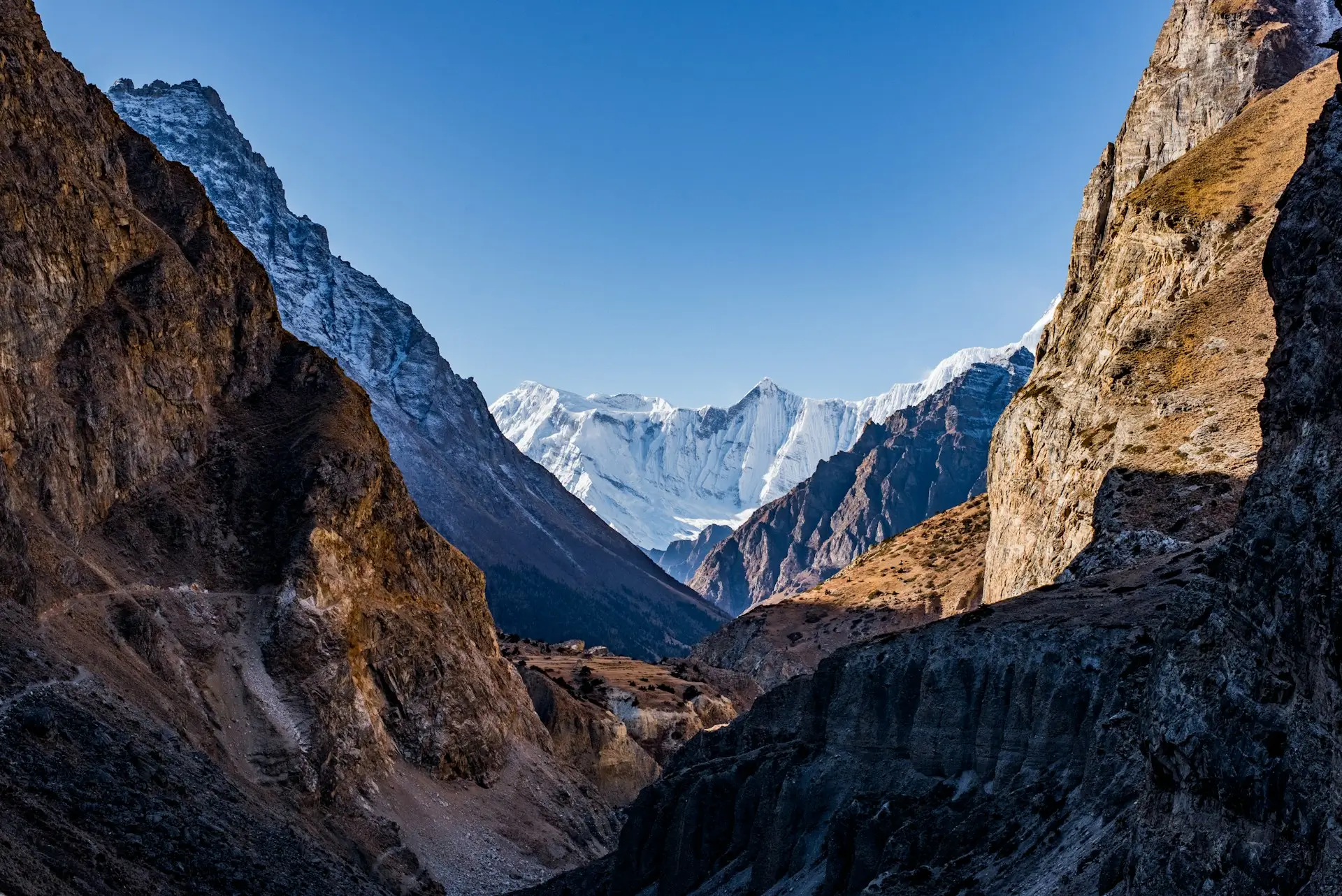
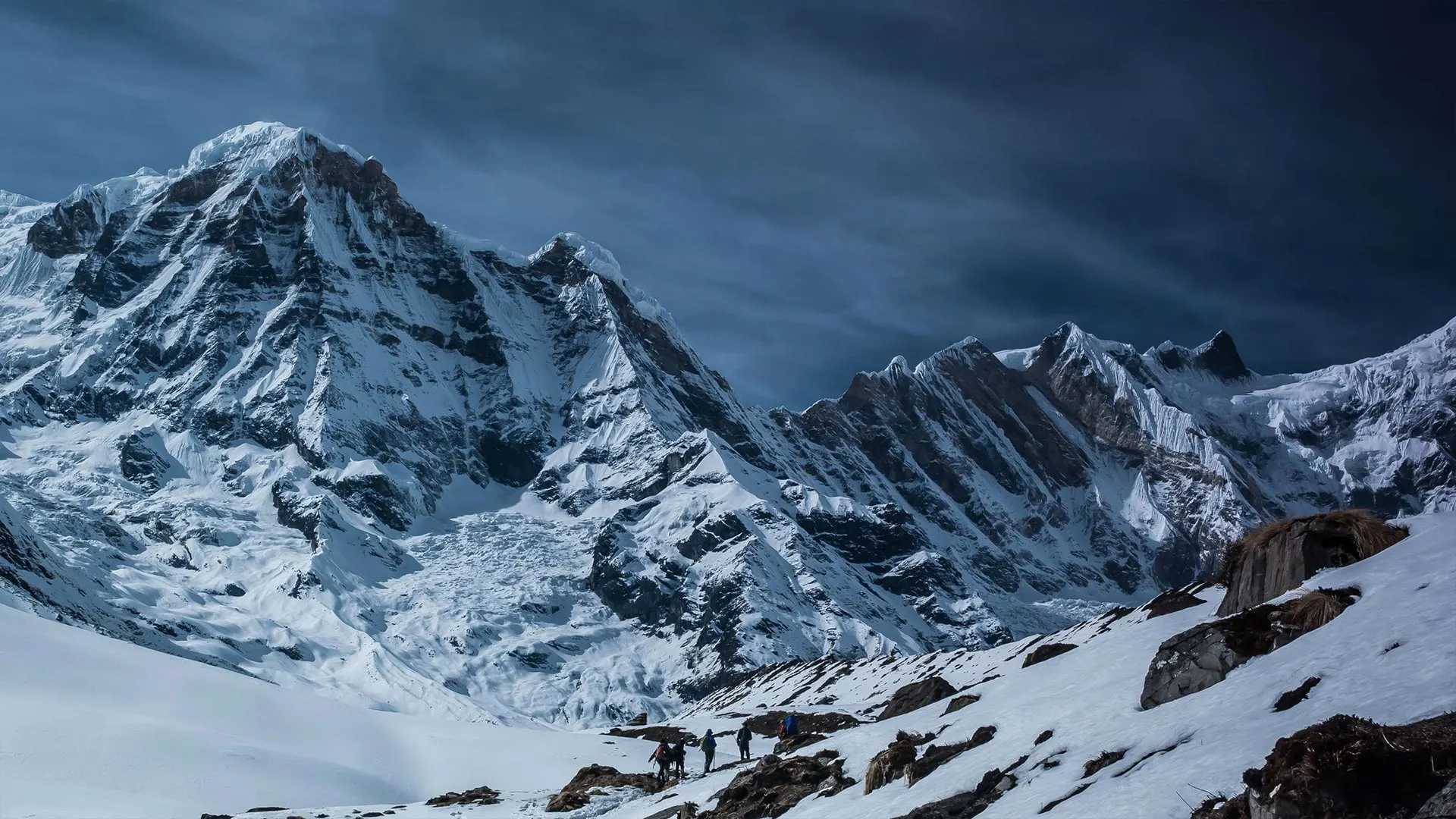
Quick answer: The Makalu Base Camp Trek is graded challenging (Grade 4 on the Spade Himalaya Trek Difficulty Scale): remote, high, and long, with the Shipton La pass and simple lodges or camping. It suits fit, experienced trekkers, not beginners. The best seasons are spring and autumn.
The Makalu Base Camp Trek is graded Challenging, and it is one of the toughest base camp treks in Nepal. There is no climbing and no technical ground. However, it is very remote, the days are long, and you cross the Shipton La pass twice. So strong fitness and some trekking experience really matter here.
Key Takeaways
- Makalu is Grade 4 (Challenging) on the Spade Himalaya Trek Difficulty Scale.
- The main challenges are remoteness, long days, and the Shipton La pass (4,220 m).
- Altitude is the biggest risk, not the terrain. So a slow pace matters most.
- You walk about 6 to 7 hours on most days, over roughly 12 to 14 walking days.
- The best time to go is spring (March to May) and autumn (September to November).
This guide covers the difficulty, the pass, the altitude risk, fitness, and the best time. For the full plan, see the Makalu Base Camp Trek guide and our 18-day Makalu Base Camp Trek.
The Spade Himalaya Trek Difficulty Scale
We grade every trek from 1 to 5, so you can compare them at a glance. This is our own simple scale, based on altitude, length, remoteness, and lodging.
| Grade | Name | What it means | Example treks |
|---|---|---|---|
| 1 | Easy | Under 3,500 m, short, gentle days | Poon Hill |
| 2 | Moderate | Up to about 4,200 m, no high pass | Annapurna Base Camp |
| 3 | Strenuous | 5,000 to 5,550 m, a base camp or one high pass, good lodges | Everest Base Camp, Annapurna Circuit, Manaslu Circuit |
| 4 | Challenging | Remote, above 5,000 m, long rough days, simple lodges or some camping | Makalu, Everest Three Passes |
| 5 | Expedition | Very remote, full camping, or several high passes | Upper Dolpo |
On this scale, the Makalu Base Camp Trek is a Grade 4 (Challenging). It is harder than Everest Base Camp, mainly because it is so remote. However, it is not as extreme as a full camping expedition like Upper Dolpo.
Why is the Makalu trek hard?
It is a real challenge, but a fit, prepared trekker can do it without climbing skills. Several things make it tough.
First, it is very remote. So there are few lodges and little help nearby. Second, the days are long, often 6 to 7 hours. Third, you cross the Shipton La pass twice, once in each direction. Finally, you spend many days at altitude.
In short, the trek asks for stamina, the right gear, and a calm mindset. So it suits trekkers who already enjoy long days and thin air.
What is the Shipton La pass like?
The Shipton La pass at 4,220 m is the gateway to the Barun valley. You cross it on the way in, and again on the way out. The climb is long and steep. Still, it is not technical.
The reward at the top is huge. You get wide views over the Barun valley and the peaks beyond. After the pass, the trail drops into the deep, wild valley that leads to base camp. Your guide checks the weather first, because snow can make the ridge slow and cold.
Why is altitude the real challenge?
Altitude is the biggest risk on this trek, far more than the trail itself. Altitude sickness (AMS) gets more likely the higher you sleep. In one study of Nepali Himalaya trekkers, AMS affected about 15% of people at 4,000 to 4,500 m and 51% at 4,500 to 5,000 m (PubMed, retrieved 2026-06-20).
So the plan is built to manage it. First, you climb slowly. Next, you take an acclimatization day at Khongma Danda. Also, you drink plenty of water and skip alcohol up high. Your guide carries a pulse oximeter and checks you daily.
Two rare problems need fast action. HACE affects the brain, and HAPE affects the lungs. For both, the safest treatment is to go down quickly (CDC Yellow Book, retrieved 2026-06-20). Because Makalu is so remote, a serious case means a helicopter. So good insurance is a must.
What is a typical day on the Makalu trail?
Most days follow a simple rhythm, so you soon settle into it. Here is how a normal day looks.
You wake around 6 to 7 am. Then you eat breakfast and start walking by about 8 am. You walk for 3 to 4 hours, with short breaks, and stop for lunch near midday. After lunch, you walk another 2 to 3 hours to the next stop. So you usually arrive by mid-afternoon.
The evenings are quiet and cold. First, you rest and drink tea. Then you eat an early dinner. Finally, you sleep early, because the next day starts at dawn. In the remotest parts, you may sleep in a tented camp instead of a lodge.
How fit do you need to be?
You need strong general fitness, plus ideally some past trekking at altitude. If you can hike 6 to 7 hours with a daypack on back-to-back days, you are on the right track.
Here is a simple way to prepare:
- Start 10 to 12 weeks before the trek. Build cardio with walking, jogging, cycling, or stairs.
- Do long hikes on hills, on consecutive days, with a daypack.
- Add leg and core strength to protect your knees on the long descents.
- Break in your boots well before you fly.
In short, the fitter you are, the more you will enjoy this wild, remote route.
When is the best time to trek Makalu?
Spring (March to May) and autumn (September to November) are the best seasons. Both bring stable weather, clearer skies, and a safer Shipton La crossing. Autumn gives the sharpest views. Spring is a little warmer and adds forest color lower down.
The table below shows rough temperatures by season. These are field-experience ranges from our guides, not exact figures, because mountain weather changes fast.
| Season | Lower trail (day) | Base camp area (night) | Verdict |
|---|---|---|---|
| Spring (Mar to May) | 12 to 20°C | -8 to -15°C | Excellent, warmer |
| Autumn (Sep to Nov) | 10 to 18°C | -10 to -18°C | Excellent, clearest |
| Winter (Dec to Feb) | 5 to 12°C | -18 to -25°C | Severe, for experts only |
| Monsoon (Jun to Aug) | 15 to 22°C | -5 to -12°C | Wet, cloudy, leeches |
So for clear views and a safe pass, stick to spring or autumn.
Who finds it hardest, and how do you cope?
Some people find Makalu harder than others, so it helps to know the common struggles. Luckily, each has a simple fix.
- Going too fast. Speed causes altitude sickness. So slow down.
- Underestimating the remoteness. Help is far away. So come well prepared and self-reliant.
- Skipping training. The long days hit the unprepared hard. So train for 10 to 12 weeks.
- Not drinking enough. Cold hides thirst. So drink 3 to 4 litres a day.
The fix for all of them is the same. In short, go slow, prepare well, drink water, and listen to your guide.
Is the Makalu trek right for you?
Makalu suits fit, experienced trekkers who want a true wilderness trip. It is not a good first trek, because it is so remote and demanding. So if you are new to the Himalaya, start smaller, then build up to Makalu.
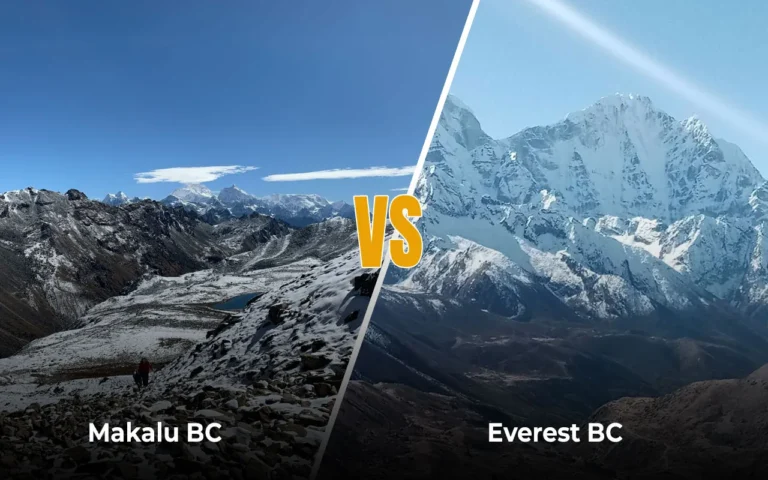
For a gentler first trek, look at the Everest Base Camp Trek, which is Grade 3 and better supported. To compare Makalu directly with the classic route, read Makalu vs Everest Base Camp.
FAQs
How hard is the Makalu Base Camp Trek?
It is Grade 4 (Challenging) on the Spade Himalaya Trek Difficulty Scale, and one of the toughest base camp treks in Nepal. There is no climbing, but it is very remote, the days are long, and you cross the Shipton La pass twice. So you need strong fitness and ideally past high-altitude trekking.
How high is the Shipton La pass?
Shipton La is 4,220 m. It is the ridge that leads into the Barun valley, and you cross it both on the way in and on the way out. The climb is long and steep, but it is not technical. The views from the top are wide and worth the effort.
Is Makalu harder than Everest Base Camp?
Yes. Everest Base Camp is Grade 3 and well supported, with many lodges. Makalu is Grade 4, far more remote, with fewer lodges and some camping. The terrain is rougher and help is further away. So Makalu asks for more experience and self-reliance.
Do you have to camp on the Makalu Base Camp trek?
Sometimes, yes. The route uses simple lodges where they exist, but some remote sections need camping support. That is one of the reasons it grades 4, Challenging, rather than 3.
How many days do you walk on the Makalu trek?
You walk for about 12 to 14 days, out and back, with a rest day at base camp. Most days are 6 to 7 hours. The full trip is around 18 days, including the flights to Tumlingtar and the drives to and from the trailhead.
Accuracy note: official fees, rules, and hard facts in this guide are cited inline from their sources; trail and price details are Spade Himalaya field research; route details reviewed by Yubaraj Katel, government-licensed trekking guide (Licence No. 19827) with 10 years of experience across the Everest, Annapurna, Langtang, and Manaslu regions.

Keep Planning Your Trek
Updated: 6 Jul, 2026
6 min
Makalu Base Camp Trek Cost and Permits (2026)
Quick answer: The Makalu Base Camp Trek costs more than busier treks because it is remote,...
Updated: 6 Jul, 2026
10 min
Makalu Base Camp Trek: The Complete 2026 Guide
Quick answer: The Makalu Base Camp Trek is a remote 18-day trek to the foot of...
Updated: 6 Jul, 2026
5 min
Makalu Base Camp vs Everest Base Camp: Which Trek to Choose?
Quick answer: Choose the Makalu Base Camp Trek for a remote, wild, very quiet trek with...