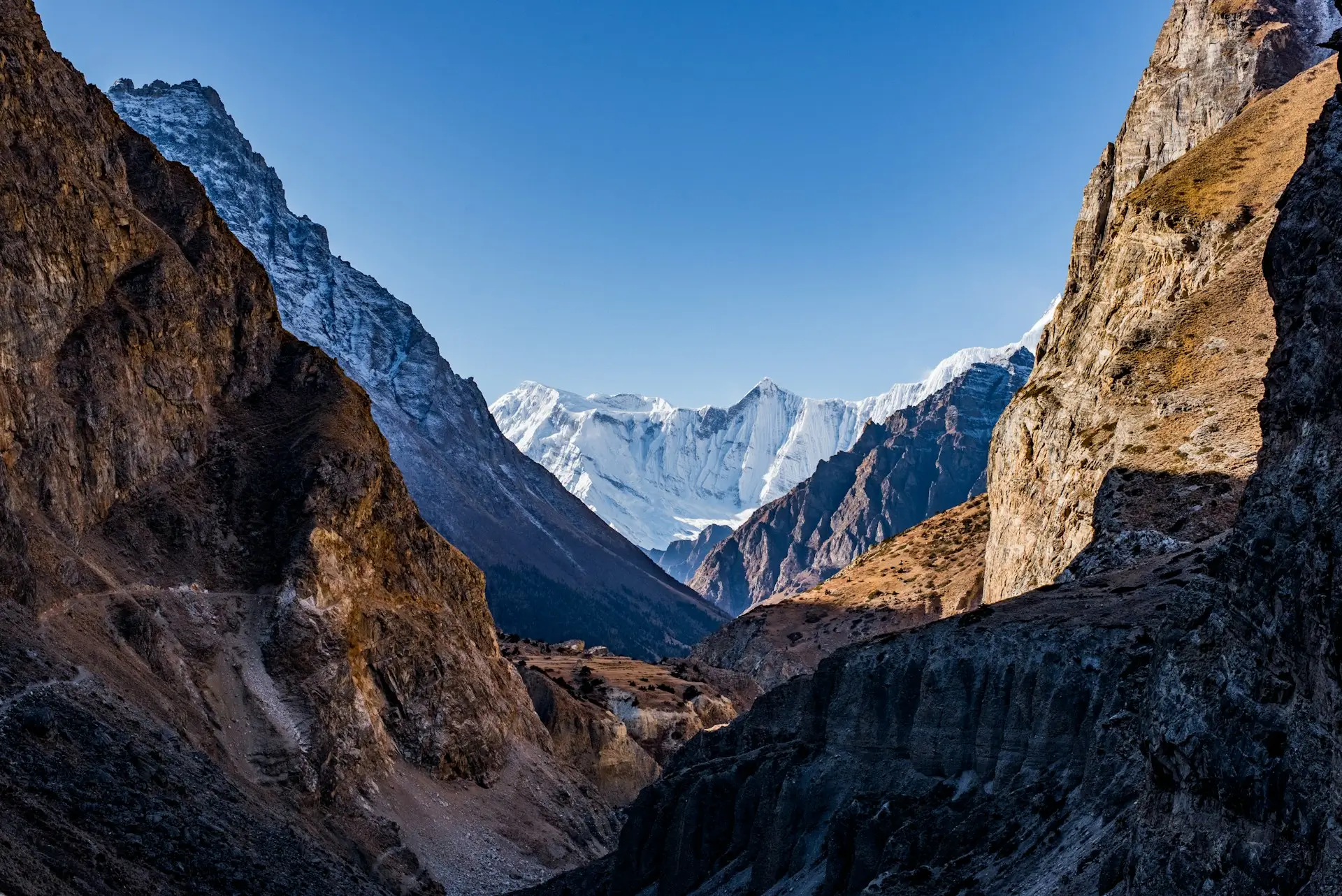
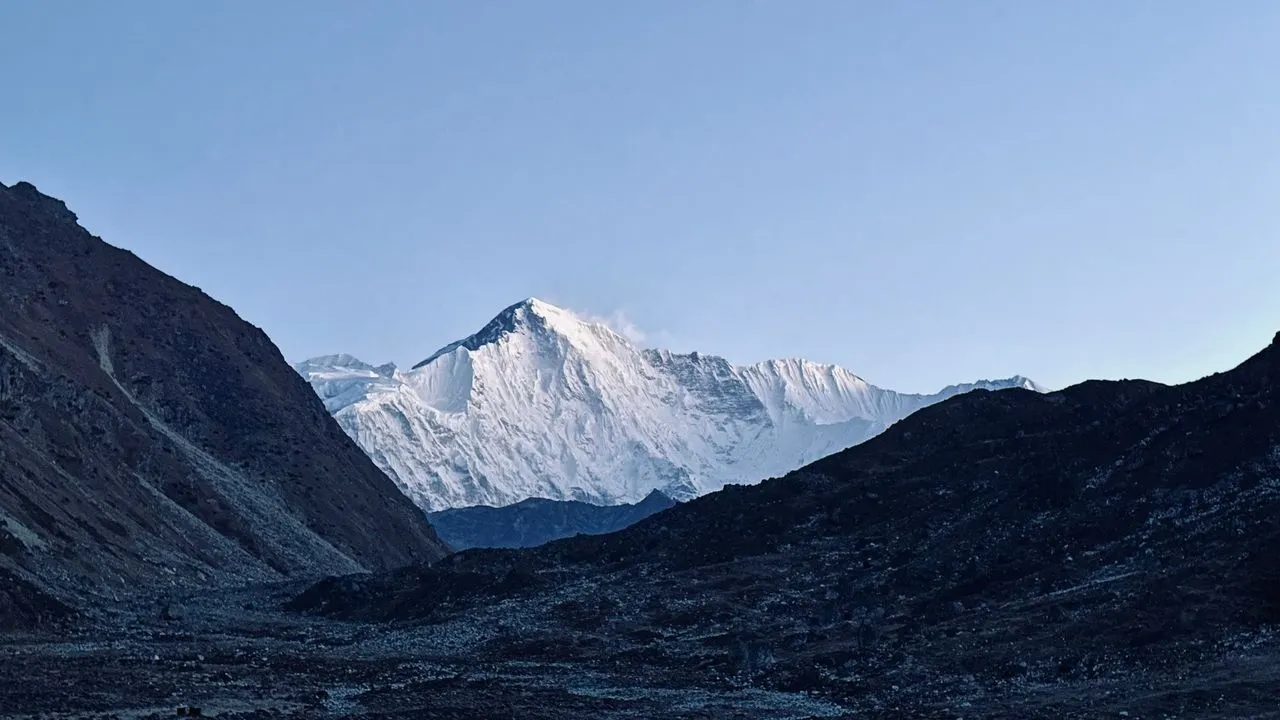
Quick answer: The Makalu Base Camp Trek is a remote 18-day trek to the foot of Makalu (8,463 m), the world’s fifth-highest mountain. It crosses the Shipton La pass, needs three permits, and is graded challenging. There are few other trekkers. The best seasons are spring and autumn.
The Makalu Base Camp Trek takes you to the foot of Makalu, the fifth-highest mountain on Earth. It is one of the wildest, quietest treks in Nepal. In fact, it sees only a tiny fraction of the crowds on Everest or Annapurna. However, it is also remote and tough. So it suits fit trekkers who want true solitude.
Key Takeaways
- The trek reaches Makalu Base Camp (about 4,870 m), below the world’s fifth-highest peak (8,463 m).
- It is remote and challenging, with long days and the Shipton La pass (4,220 m).
- You need a National Park permit, a local permit, and a TIMS card, plus a guide.
- Most plans run about 18 days, starting with a flight to Tumlingtar.
- The best time to go is spring (March to May) and autumn (September to November).
This is the hub for everything we cover on Makalu. First, use it to plan the big picture. Then follow the links to our deeper guides and the full trek itinerary. For the trip itself, see our 18-day Makalu Base Camp Trek.
What is the Makalu Base Camp Trek?
The Makalu Base Camp Trek is an 18-day journey into the remote Barun valley of eastern Nepal. It ends at the base of Makalu, which stands at 8,463 m and is the fifth-highest mountain in the world (Wikipedia: Makalu, retrieved 2026-06-20). Makalu sits just 19 km southeast of Everest, in the same Mahalangur range.
The whole route runs inside Makalu Barun National Park. This park covers 1,500 km² and was set up in 1992 (Wikipedia: Makalu Barun National Park, retrieved 2026-06-20). In fact, it is the only protected area on Earth with an elevation gain of more than 8,000 m. As a result, it holds everything from tropical forest to snow peaks. It is also home to snow leopard, red panda, and clouded leopard.
In short, this is raw, wild Himalaya. So it rewards trekkers who want to leave the crowds behind.
What is the route, and how many days does it take?
Most people complete the Makalu Base Camp Trek in about 18 days, including travel. The trip starts with a flight from Kathmandu to Tumlingtar. Then a jeep takes you up to the village of Seduwa.
From there, you walk for several days. First, you climb through forest and farms to Tashi Gaon and Khongma Danda. Next, you cross the Shipton La pass (4,220 m) into the Barun valley. Then you follow the river up through Yangri Kharka and Langmale Kharka. Finally, you reach Makalu Base Camp at about 4,870 m.
After a rest day at base camp, you walk back the same way to Tumlingtar. Then you fly to Kathmandu. Here is the route in short:
Kathmandu to Tumlingtar to Seduwa to Tashi Gaon to Khongma Danda to Shipton La (4,220 m) to Dobate to Yangri Kharka to Langmale Kharka to Makalu Base Camp (4,870 m), then back the same way.
What permits do you need for the Makalu trek?
You need three things to trek Makalu: a National Park permit, a local permit, and a TIMS card. Makalu is not a restricted area like Manaslu or Dolpo. However, it is a protected national park, so the rules still apply.
- Makalu Barun National Park entry permit. This is about NPR 3,000 for foreign trekkers (Nepal Tourism Board, retrieved 2026-06-20).
- Local rural municipality permit. This is a small extra fee for the area.
- TIMS card. This is about NPR 2,000 for non-SAARC trekkers.
A common myth is that Makalu needs a Khumbu permit. It does not. The Khumbu permit is for the Everest region. Makalu sits in Sankhuwasabha district instead. So you only need the three permits above.
A licensed guide is strongly advised, and the region is far too remote to trek alone safely. Spade Himalaya arranges all the permits for you. For the full breakdown, see our Makalu permit and cost guide.
How much does the Makalu Base Camp Trek cost?
A guided Makalu Base Camp Trek usually costs about US$1,600 to US$2,400 per person in 2026. It costs more than a typical teahouse trek, for two clear reasons. First, the region is remote, so logistics and supplies cost more. Second, some sections may need camping support, not just teahouses.
The main costs are the flights to Tumlingtar, your guide and crew, permits, transport, and food and lodging. For a full line-by-line breakdown, see our Makalu cost guide.
Trek difficulty: the Spade Himalaya Trek Difficulty Scale
We grade every trek from 1 to 5, so you can compare them fast. This is our own scale, based on altitude, length, remoteness, and lodging.
| Grade | Name | What it means | Example treks |
|---|---|---|---|
| 1 | Easy | Under 3,500 m, short, gentle days | Poon Hill |
| 2 | Moderate | Up to about 4,200 m, no high pass | Annapurna Base Camp |
| 3 | Strenuous | 5,000 to 5,550 m, a base camp or one high pass, good lodges | Everest Base Camp, Annapurna Circuit, Manaslu Circuit |
| 4 | Challenging | Remote, above 5,000 m, long rough days, simple lodges or some camping | Makalu, Everest Three Passes |
| 5 | Expedition | Very remote, full camping, or several high passes | Upper Dolpo |
On this scale, the Makalu Base Camp Trek is Grade 4 (Challenging). It sits there because it is very remote, with long days and some camping.
What are the temperatures by season?
Here are rough temperatures by season, so you know what to pack. These are field-experience ranges from our guides, not exact figures, because mountain weather changes fast.
| Season | Lower trail (day) | Base camp area (night) | Verdict |
|---|---|---|---|
| Spring (Mar to May) | 12 to 20°C | -8 to -15°C | Excellent, warmer |
| Autumn (Sep to Nov) | 10 to 18°C | -10 to -18°C | Excellent, clearest |
| Winter (Dec to Feb) | 5 to 12°C | -18 to -25°C | Severe, experts only |
| Monsoon (Jun to Aug) | 15 to 22°C | -5 to -12°C | Wet, cloudy, leeches |
How hard is the Makalu Base Camp Trek?
The Makalu Base Camp Trek is graded challenging, and it is one of the toughest base camp treks in Nepal. There is no climbing or technical ground. Still, it is hard for other reasons.
First, it is very remote, with few lodges and little help nearby. Second, the days are long, often 6 to 7 hours. Third, you cross the Shipton La pass twice. So good fitness and some trekking experience really matter here.
The main risk is altitude, not the terrain. So the trek builds in an acclimatization day at Khongma Danda. For more, see our guide to Makalu difficulty and best time.
What do you see at Makalu Base Camp?
Makalu Base Camp gives you one of the great mountain views in Nepal. You stand right below Makalu’s huge south face. Around you rise its satellite peaks, Kangchungtse (7,678 m) and Chomo Lonzo (7,804 m). Baruntse (7,129 m) fills the head of the valley too.
On a clear day, you can even see the east face of Everest from here. This is the famous Kangshung face. Few trekkers ever see it. So this view alone is a big reason to make the journey.
When is the best time to trek Makalu?
Spring (March to May) and autumn (September to November) are the best seasons. Both bring stable weather, clearer skies, and a safer Shipton La crossing. Autumn gives the sharpest mountain views. Spring is a little warmer and adds forest blooms lower down.
The other seasons are hard. Winter is severe at this altitude, and the high camps are bitterly cold. The summer monsoon brings rain, cloud, and leeches to the lower trail. So most trekkers stick to spring or autumn.
How do you get there?
The trek starts with a flight from Kathmandu to Tumlingtar, then a jeep to Seduwa. Tumlingtar is a small airstrip in eastern Nepal. The flight is short and scenic. After landing, you drive on rough mountain roads to the trailhead.
At the end, you reverse the route. So you drive back to Tumlingtar, then fly to Kathmandu. Mountain flights can face weather delays, though. So it is wise to keep a spare day before any onward international flight.
What are accommodation and food like?
You sleep in basic teahouses, with simple lodges or tented camps in the remotest parts. Lower down, the teahouses are small but friendly. Higher up, they get very basic, and choices thin out. So a warm sleeping bag is essential.
The food is simple but filling. For example, you get dal bhat, potatoes, rice, noodles, and Tibetan bread. Choice is limited high up, because supplies travel a long way. So a flexible attitude helps a lot on this trek.
How do you stay safe at altitude?
Altitude is the main risk, and the remoteness makes safety even more important. Altitude sickness (AMS) gets more likely the higher you go. In one study of Nepali Himalaya trekkers, AMS affected about 15% of people at 4,000 to 4,500 m and 51% at 4,500 to 5,000 m (PubMed, retrieved 2026-06-20).
So the plan keeps you safe step by step. First, you climb slowly. Next, you take the rest day at Khongma Danda. Also, you drink plenty of water and skip alcohol up high. Your guide carries a pulse oximeter and checks you daily.
Watch for two rare but serious problems too. HACE affects the brain, and HAPE affects the lungs. For both, the best treatment is to go down fast (CDC Yellow Book, retrieved 2026-06-20). Because Makalu is so remote, a rescue means a helicopter. So good insurance is a must.
What should you pack?
The key is layers, plus solid gear for a cold, remote trek. Here is a short list of essentials:
- Waterproof trekking boots, broken in, plus warm socks
- Base layers, a fleece or down mid-layer, and a waterproof shell
- A four-season sleeping bag and a down jacket
- Warm hat, sun hat, sunglasses, buff, and gloves
- Headlamp, trekking poles, sunscreen, and a water bottle
- Micro spikes for the Shipton La pass, in case of snow
Our trek page lists the full, season-by-season packing list. Because help is far away, do not cut corners on gear.
What wildlife and culture will you see?
Makalu Barun is one of Nepal’s richest wild places. It protects snow leopard, red panda, clouded leopard, and the Himalayan tahr. You may not see the rare cats. Still, the forests are alive with birds and color, especially in spring.
The people here are Sherpa and Rai. Their villages, like Tashi Gaon and Seduwa, feel remote and traditional. So please trek with respect. For example, ask before you photograph people, and tread lightly in the villages.
Who should trek to Makalu Base Camp?
Makalu suits fit, experienced trekkers who want a true wilderness trip. You do not need climbing skills. However, you do need strong fitness, the right gear, and ideally some past trekking at altitude.
It is not a good first trek, because it is so remote and demanding. So if you are new to the Himalaya, start smaller. For example, the Everest Base Camp Trek is more supported, and the Manaslu Circuit Trek is a wild but easier step. Then you can take on Makalu later.
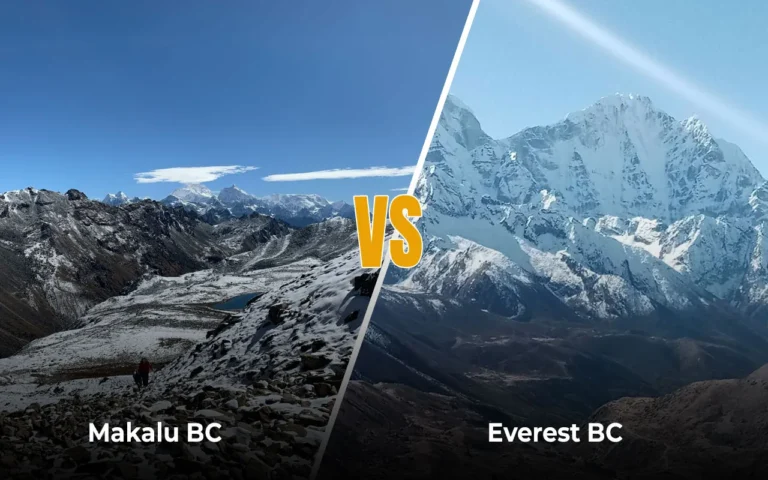
If you are comparing options, read Makalu vs Everest Base Camp and our Everest region guide.
FAQs
How long is the Makalu Base Camp Trek?
Most plans run about 18 days, including travel. The trip starts with a flight to Tumlingtar and a jeep to Seduwa. Then you walk for roughly 12 to 14 days, out and back, with a rest day at base camp. The rest is travel to and from the trail.
Do you need a permit for the Makalu Base Camp Trek?
Yes. You need three: the Makalu Barun National Park entry permit, a local rural municipality permit, and a TIMS card. Makalu is not a restricted area, so there is no special restricted permit. You do not need a Khumbu permit either, because that is for the Everest region.
What is the Barun valley?
It is the remote eastern valley the trek follows to reach Makalu Base Camp, inside the Makalu Barun National Park. It is one of the least-visited major valleys in Nepal, which is exactly why the route feels so wild.
How high is Makalu Base Camp?
Makalu Base Camp sits at about 4,870 m. From there, short walks reach viewpoints near 5,000 m. The peak above you, Makalu, is 8,463 m, the fifth-highest mountain in the world. The highest pass on the trek, Shipton La, is 4,220 m.
Can you see Everest from the Makalu trek?
Yes. From the upper Barun valley and base camp, you can see the east face of Everest, known as the Kangshung face. You also see Lhotse, Baruntse, and Makalu’s satellite peaks. It is a rare view that few trekkers ever get.
How many permits do you need for the Makalu trek?
Three. The Makalu route requires three separate permits, more than most Nepal treks, because of the national park and the remote areas it crosses. On a guided trip we arrange all of them for you.
Accuracy note: official fees, rules, and hard facts in this guide are cited inline from their sources; trail and price details are Spade Himalaya field research; route details reviewed by Yubaraj Katel, government-licensed trekking guide (Licence No. 19827) with 10 years of experience across the Everest, Annapurna, Langtang, and Manaslu regions.

Start Planning Your Trek
Updated: 6 Jul, 2026
6 min
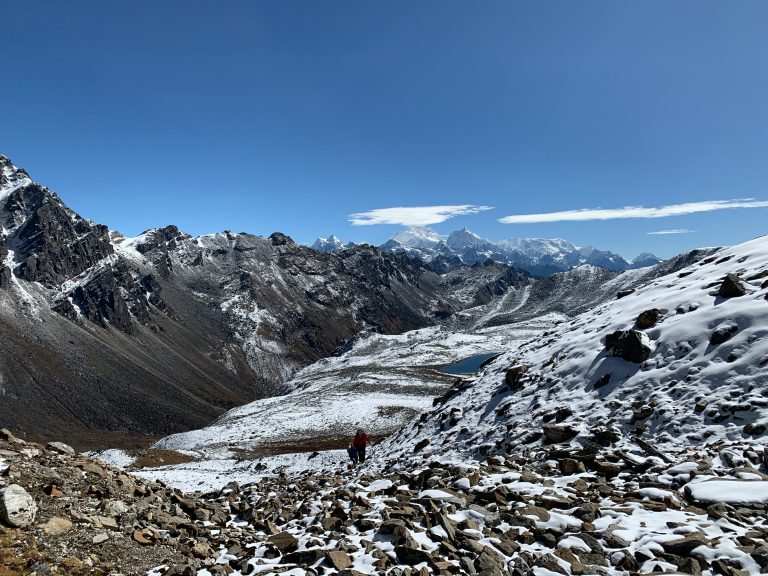
Makalu Base Camp Trek Cost and Permits (2026)
Quick answer: The Makalu Base Camp Trek costs more than busier treks because it is remote,...
Updated: 6 Jul, 2026
7 min
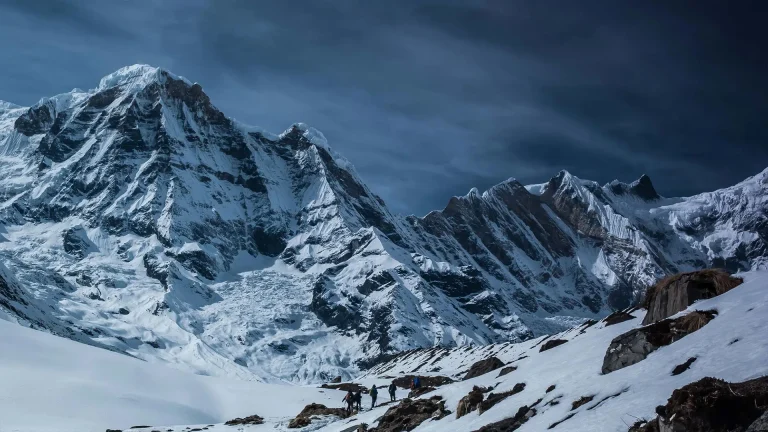
Makalu Base Camp Trek Difficulty and Best Time (2026)
Quick answer: The Makalu Base Camp Trek is graded challenging (Grade 4 on the Spade Himalaya...
Updated: 6 Jul, 2026
5 min
Makalu Base Camp vs Everest Base Camp: Which Trek to Choose?
Quick answer: Choose the Makalu Base Camp Trek for a remote, wild, very quiet trek with...