Trip Facts
Country:
Nepal
Duration:
5 Days
Max Altitude:
Tharepati, 3,650 m
Activities:
Trekking and driving
Region:
Langtang Region
Starting Point:
Kathmandu
Ending Point:
Kathmandu
Grade:
Easy to Moderate
Group Size:
2 to 10 trekkers
Accomodation:
Teahouses, Hotel in Kathmandu
Best Season:
Mar-May & Sep-Nov
Notice
Access note, 1 September 2026. This trek is running normally. The glacial flood of 26 August 2026 closed road access to the Langtang, Gosaikunda and Tamang Heritage routes. Helambu is usually listed under the same region, so it is being assumed closed too. It is not. Helambu is reached from Kathmandu through Sundarijal and Melamchi, in Sindhupalchowk, which was not in the flood path, and that approach is intact. This itinerary is unaffected and departures are unchanged.
Helambu is the easiest trek in the Langtang region. It starts close to Kathmandu, so there is no flight and no long drive.
The high point is Tharepati (3,650 m). The trek stays below 4,000 m, so the altitude risk is low. This makes it great for families and first-timers.
The trail crosses two parks, so you need a Langtang National Park permit, a Shivapuri Nagarjun National Park permit, and a TIMS card. Spade Himalaya arranges them all, plus a licensed guide.
Overview of Helambu Trek 5-Days
Quick answer: The Helambu Trek is a short, easy 5-day trek close to Kathmandu, through Hyolmo villages to Tharepati (3,650 m). It needs no flight, suits beginners and families, and requires park permits, a TIMS card, and a licensed guide (Nepal Tourism Board, retrieved 2026-06-26).
The Helambu Trek is a short, easy trek in the hills just north of Kathmandu. It runs through the Helambu region, the home of the Hyolmo people. Some people also call it the Langtang Helambu trek, because Helambu sits in the wider Langtang area. So it mixes gentle walking, deep forest, and warm Buddhist culture. Best of all, it is one of the few Himalayan treks you can reach in about an hour from the city.
The trek starts with a short drive to Sundarijal, on the edge of the Kathmandu Valley. Then you walk into Shivapuri Nagarjun National Park, a quiet, protected forest. The trail climbs through oak and rhododendron woods to Chisapani, your first mountain viewpoint. After that, you follow a high ridge through Tamang and Hyolmo villages like Kutumsang and Tharepati.
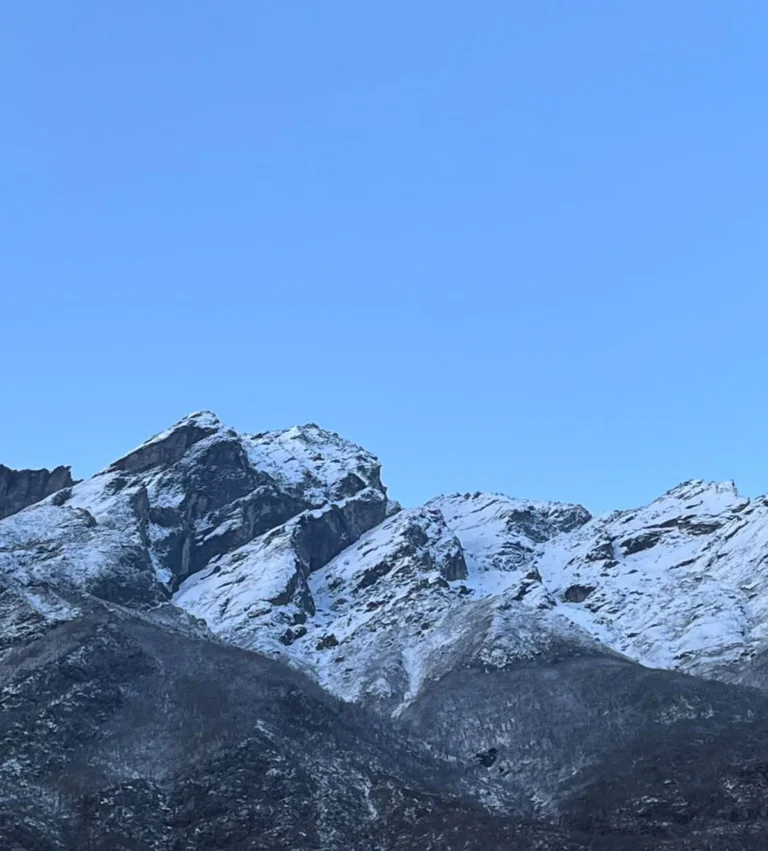
The high point is Tharepati (3,650 m). From here, you get a wide view of the Langtang range, Jugal Himal, Dorje Lakpa, Ganesh Himal, and Gauri Shankar. Then the trail drops into the green Helambu valley. You visit Tarke Ghyang, famous for its old monastery, and Sermathang, a pretty Sherpa village. So the trek blends mountain views with real village life.
Helambu is graded easy to moderate. The trek tops out at 3,650 m, so altitude sickness is rare. You walk 4 to 7 hours a day on clear trails, with some up-and-down sections. There is no high pass and no technical climbing. So it suits fit beginners, families, and anyone short on time.
Spade Himalaya runs this trek with licensed Nepali guides. So your guide sets a safe pace, watches the weather, and checks your health each day. Want more in the same region? The Langtang Valley Trek climbs higher to Kyanjin Gompa. The Langtang Gosaikunda Trek adds the sacred lake and a high pass, and it finishes through Helambu. For another easy trek, see the Ghorepani Poon Hill Trek.
Want more detail first? Our Helambu Trek guide covers the cost, difficulty, and best time in depth. Looking at other easy options? Then see the best short treks near Kathmandu. For the wider area, read our guide to trekking in Langtang.
Trips Highlights
- Trek one of the easiest, shortest routes in the Langtang region.
- Reach Tharepati (3,650 m) for wide views of Langtang, Jugal Himal, and Dorje Lakpa.
- Walk through quiet Shivapuri Nagarjun National Park forest.
- Meet the Hyolmo people and learn about their Tibetan Buddhist culture.
- Visit the old Tarke Ghyang Monastery and other Buddhist shrines.
- Pass charming villages like Chisapani, Kutumsang, Tarke Ghyang, and Sermathang.
- Walk through oak and rhododendron forest that blooms in spring.
- Spot wildlife like langur monkeys, musk deer, and many birds.
- Enjoy a short trek with low altitude, ideal for families and first-timers.
- Start and finish near Kathmandu, with no flight needed.
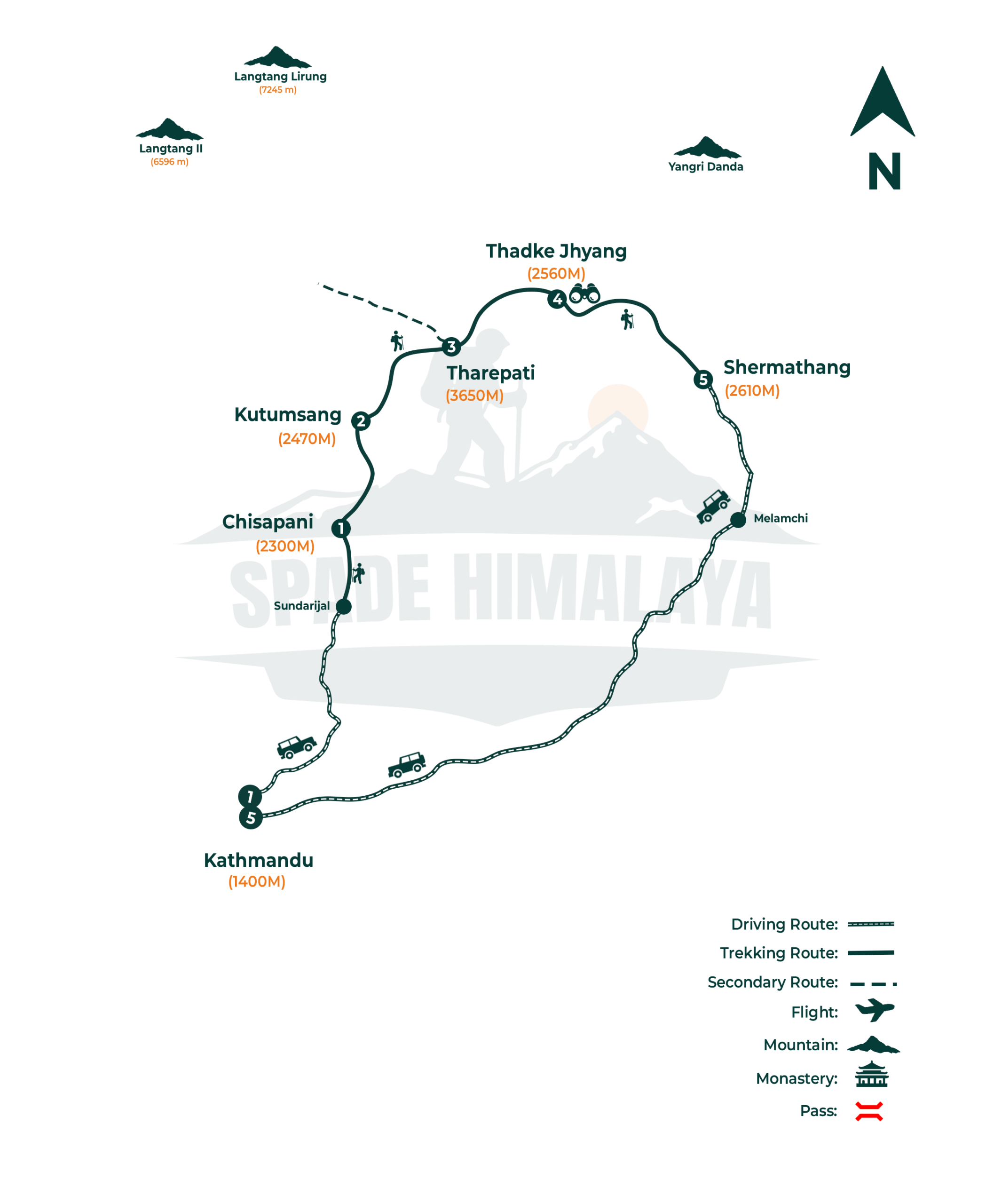
Kathmandu (1,400 m) → drive to Sundarijal (1,350 m), trek to Chisapani (2,300 m) → Kutumsang (2,470 m) → Tharepati (3,650 m) → Tarke Ghyang (2,560 m) → Sermathang (2,610 m), drive to Kathmandu via Melamchi.
In short, you drive to Sundarijal and walk up through Shivapuri Nagarjun National Park to Chisapani. Then you follow the ridge through Kutumsang to Tharepati, the high point. After that, you drop into the Helambu valley to Tarke Ghyang and Sermathang, then drive back to Kathmandu.
Trips Itinerary
A short drive from Kathmandu gets you to Sundarijal in about an hour, so you are walking by mid morning. The trail climbs steadily through forest to Chisapani, which makes a gentle first day.
You walk up through Shivapuri Nagarjun National Park, the protected forest on the rim of the Kathmandu valley, gaining height to 2,300 m. There is a park entry fee, which your guide handles. Higher up the trail passes through Mulkharka, a Tamang village, with the Langtang peaks showing between the oak and rhododendron.
- Duration: 5 to 6 hrs Driving & Trekking
- Max Altitude: 2,300 m
- Meals: Breakfast, Lunch & Dinner
- Accommodation: Guest House
Start early for the sunrise from Chisapani, then follow the ridge for most of the day. You pass Pati Bhanjyang and Gul Bhanjyang before dropping into Kutumsang in the middle of the afternoon.
The trail rolls along the ridge through meadows and terraced fields, with Gul Bhanjyang at 2,140 m and Kutumsang at 2,470 m. It is far more up and down than those two numbers suggest, so pace yourself. The villages along here are Tamang, and daily life carries on around you as you walk through.
- Duration: 6 to 7 hrs
- Max Altitude: 2,470 m
- Meals: Breakfast, Lunch & Dinner
- Accommodation: Lodge
This is the highest day of the trek. The trail climbs through rhododendron and fir, past the meadow at Mangengoth, and on up to Tharepati, which takes six or seven hours at a steady pace.
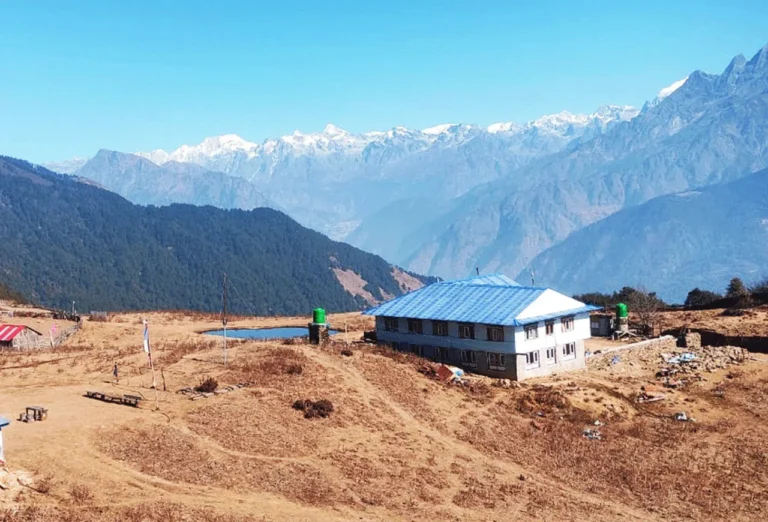
Tharepati sits at 3,650 m on the ridge and is the high point of the route. It is open ground, so the wind gets up in the afternoon and the temperature drops fast once the sun goes off the slope.
The view opens at Yurin Danda on the way up. From Tharepati you can pick out Gauri Shankar, Dorje Lakpa, Jugal Himal and the Langtang range, so give yourself time up there before the light goes.
- Duration: 6 to 7 hrs hike
- Max Altitude: 3,650 m
- Meals: Breakfast, Lunch & Dinner
- Accommodation: Guest House
Today you drop off the ridge into the Helambu valley, through forest and small villages. You pass Melamchi Gaon and reach Tarke Ghyang in the afternoon, and the walking eases as you lose height.
The path loses more than a thousand metres, from 3,650 m down to 2,560 m, and the air turns warm and green again. This is the day the trek changes from mountain walking to village walking.
Tarke Ghyang is a large Sherpa village with an old monastery, and local tradition ties the area to Guru Rinpoche. Walk past the prayer walls and look inside the monastery before you settle into the lodge.
- Duration: 6 hrs hike
- Max Altitude: Tharepati 3,650 m
- Meals: Breakfast, Lunch & Dinner
- Accommodation: Guest House
A gentle walk takes you to Sermathang, then you drive back to Kathmandu, stopping at Melamchi Bazaar on the way. It is an easy last day rather than a hard push down to the road.
The trail runs through woodland with streams and small waterfalls, past Sherpa hamlets such as Gangyul. Sermathang is a quiet village at 2,610 m with monasteries worth a short look, and the people here are Hyolmo, whose language and culture sit closer to Tibet than to Kathmandu.
- Duration: 6 to 7 hrs hike
- Max Altitude: Sermathang 2,610 m
- Meals: Breakfast & Lunch
- Accommodation: Guest House
Trips Include
- Both ways Transportation from Kathmandu to Sundarijal and Melamchi to Kathmandu by local bus or jeep.
- All teahouse and lodge accommodation during the trek.
- All meals (breakfast, lunch, dinner) during the trek, plus seasonal fruit and a farewell dinner.
- Safe drinking water using a filter or purification tablets.
- Langtang National Park permit, Shivapuri Nagarjun National Park permit, and TIMS card.
- A licensed, first-aid trained, English-speaking Spade Himalaya guide (2 guides for groups over 7).
- Porter support, one porter per two trekkers (pay, insurance, meals, lodging, equipment).
- First-aid kit for daily health checks.
- Rescue-operation assistance for serious illness (funded by your travel insurance).
- Spade Himalaya trip-completion certificate, and all government taxes.
Trips Exclude
- International airfare and airport departure tax.
- Nepal entry visa (US$30 for 15 Days, US$50 for 30 days, US$125 for 90 days).
- Lunches and dinners in Kathmandu.
- Travel and medical insurance (mandatory; should cover trekking and emergency evacuation).
- All drinks, snacks, hot showers, Wi-Fi, and device charging on the trail.
- Tips for guide, porter, and driver.
- Extra nights in Kathmandu from early arrival, late departure, or itinerary changes.
- Personal trekking gear and any personal expenses.
- Anything not listed under Cost Includes.
Trips Altitude
Trips Map
Trips Gallery
Packing List
General
- Sleeping bag suitable for the season
- Down jacket
- Duffel bag
- Daypack, 25 to 35 litres, with a rain cover
Upper Body
- Warm hat or beanie
- Buff, scarf, or neck gaiter
- Sunglasses with UV protection
- Headlamp with spare batteries
- Sunscreen and lip balm
- Moisture-wicking base-layer tops
- Fleece jacket or wool pullover
- Waterproof, windproof shell jacket
Lower Body
- Comfortable trekking trousers
- Thermal base-layer trousers for cold mornings
- Light trousers for the teahouses
- Waterproof shell trousers
Hands
- Light gloves for cold mornings on the ridge
Feet
- Sturdy trekking boots (well broken in)
- 3 to 4 pairs of warm socks
- Light shoes or sandals for the evenings
Undergarments
- Quick-dry underwear
- Sports bras (women)
- Sleeping clothes
First Aid Kits
(Your guide carries a kit, medication, and a pulse oximeter, but a personal kit is helpful.)
- Adhesive and blister bandages
- Antiseptic ointment and pain relief
- Any personal medicine you take
- Water-purification tablets
Others
- Passport, passport photos, and a copy of your insurance
- Reusable water bottle and a filter or purifier
- Toiletry kit, quick-dry towel, toilet paper, hand sanitiser
- High-energy snacks (bars, nuts, dried fruit)
- Waterproof or dry bags for documents and electronics
Optional
- Trekking poles (your own, if you prefer them; otherwise provided)
- Power bank and spare batteries
- Camera with memory cards and charger
- Local SIM card for the lower trail
- Book or cards for the evenings
Good to Know
Helambu is the easy gateway to the Himalaya. It is short, low, and close to Kathmandu, with no flight to catch. You walk quiet forest trails, meet the Hyolmo and Sherpa people, and visit old monasteries. So it is perfect for families, first-timers, and anyone with only a few days. It is also a calm alternative to the busier Langtang and Gosaikunda routes.
Spring and autumn are the prime seasons. In spring, the forests bloom and the air is mild. In autumn, the skies are clear and the views are at their best. Winter is cold and quiet, with snow on the higher ridge near Tharepati. The summer monsoon brings rain and leeches, so most trekkers avoid it. Helambu is one of the few Nepal treks you can enjoy almost year-round with the right gear.
This trek is easy to moderate and stays below 4,000 m. So altitude sickness is rare. Still, take it steady on the climb to Tharepati. Drink plenty of water and eat well for energy. Your guide carries an oximeter and watches your health. If you feel unwell, tell them, and the team will adjust the plan. With its gentle profile, Helambu is a great first Himalayan trek.
The trail crosses two national parks, Langtang and Shivapuri Nagarjun. So you need both park permits plus a TIMS card. Foreigners must also trek with a licensed guide in this region. Spade Himalaya is a registered agency, so the guide and all three permits are handled for you. You only need your passport, photos, and insurance.
Helambu is the homeland of the Hyolmo people, who follow Tibetan Buddhism. You also meet Tamang and Sherpa villagers along the way. So you see monasteries, prayer walls, and stupas throughout the trek. Tarke Ghyang has one of the most revered monasteries in the valley. A smile and a “Namaste” go a long way, and walking clockwise around shrines is respectful.
There is no flight on this trek. You drive to Sundarijal, near Kathmandu, to start, and drive back from Melamchi at the end. So it is simple and cheap to reach. You sleep in family-run teahouses, with simple twin rooms and shared bathrooms. The trail runs on cash, and there are no ATMs, so carry enough Nepalese rupees. Hot showers, Wi-Fi, and charging cost a small fee.
Trips Reviews
Beautiful Villages and a Relaxing Trek Close to Kathmandu
A Great Trek for Beginners Looking for Nature and Culture
Peaceful Short Trek with Amazing Mountain Views
Trips FAQs
Trek Difficulty & Altitude
It is graded easy to moderate. The Helambu trek difficulty is low, because the trek stays below 4,000 m and has no high pass. You walk 4 to 7 hours a day on clear trails, with some uphill and downhill. There is no technical climbing. So most people in good health, including families, can complete it. A little fitness training first makes it even easier.
The high point is Tharepati at 3,650 m, reached on Day 3. The trek stays below 4,000 m the whole way. So the risk of altitude sickness is low. Still, you should walk at a steady pace and drink plenty of water. Your guide carries an oximeter and checks your health each day.
Yes, it is one of the best easy treks in Nepal. The low altitude, short days, and gentle trails make it ideal for families and first-time trekkers. There is no high pass and no flight. So it is a safe, relaxed way to enjoy the Himalayan foothills, the forest, and the local culture.
Permits, Guide & Insurance
Yes. Foreigners must trek the Langtang region with a licensed guide. You also need three documents: the Langtang National Park permit, the Shivapuri Nagarjun National Park permit, and a TIMS card. Spade Himalaya provides the guide and arranges all the permits. So you only need your passport, photos, and insurance copy.
The Langtang National Park permit is about NPR 3,000 (around US$25) for foreign trekkers. The Shivapuri Nagarjun National Park permit is about NPR 1,000 (around US$8). The TIMS card is about NPR 2,000 (around US$15). Spade Himalaya includes all of these in the trip cost and handles the paperwork before you start.
Yes, it is strongly advised. Your policy should cover trekking and emergency evacuation, since the trail is in the hills away from hospitals. Arrange it in your home country before you fly. Then leave a copy with Spade Himalaya at the briefing, so the team can act fast if you need help.
Best Time to Trek
Spring (March to May) and autumn (September to November) are best. In spring, the rhododendron forests bloom in bright colours. In autumn, the skies are clear and the mountain views are sharp. Winter is cold but doable, with snow on the higher ridge. The summer monsoon brings rain, leeches, and slippery trails, so most people skip it.
Accommodation & Facilities
You sleep in simple teahouses, usually in twin rooms with shared bathrooms. The lodges are cosy, with a stove in the dining hall for warmth. The food is hearty and local. Dal bhat (rice and lentils) is the staple, with free refills. You can also get momo, thukpa, noodles, and even pizza at some lodges. Vegetarian meals are easy to find.
Trek Highlights & Views
The Hyolmo (also called Yolmo) are the main people of the Helambu valley. They follow Tibetan Buddhism and are closely linked to the Sherpa and Tamang. You see their culture in the monasteries, prayer flags, and stone houses. So the trek is as much about people and faith as it is about the mountains.
Yes, but not Everest or Annapurna, which are too far away. From Tharepati and other high points, you see the Langtang range, including Langtang Lirung (7,234 m). You also see Jugal Himal, Dorje Lakpa, Ganesh Himal, and Gauri Shankar. So the views are wide and beautiful, even though the trek itself stays low.