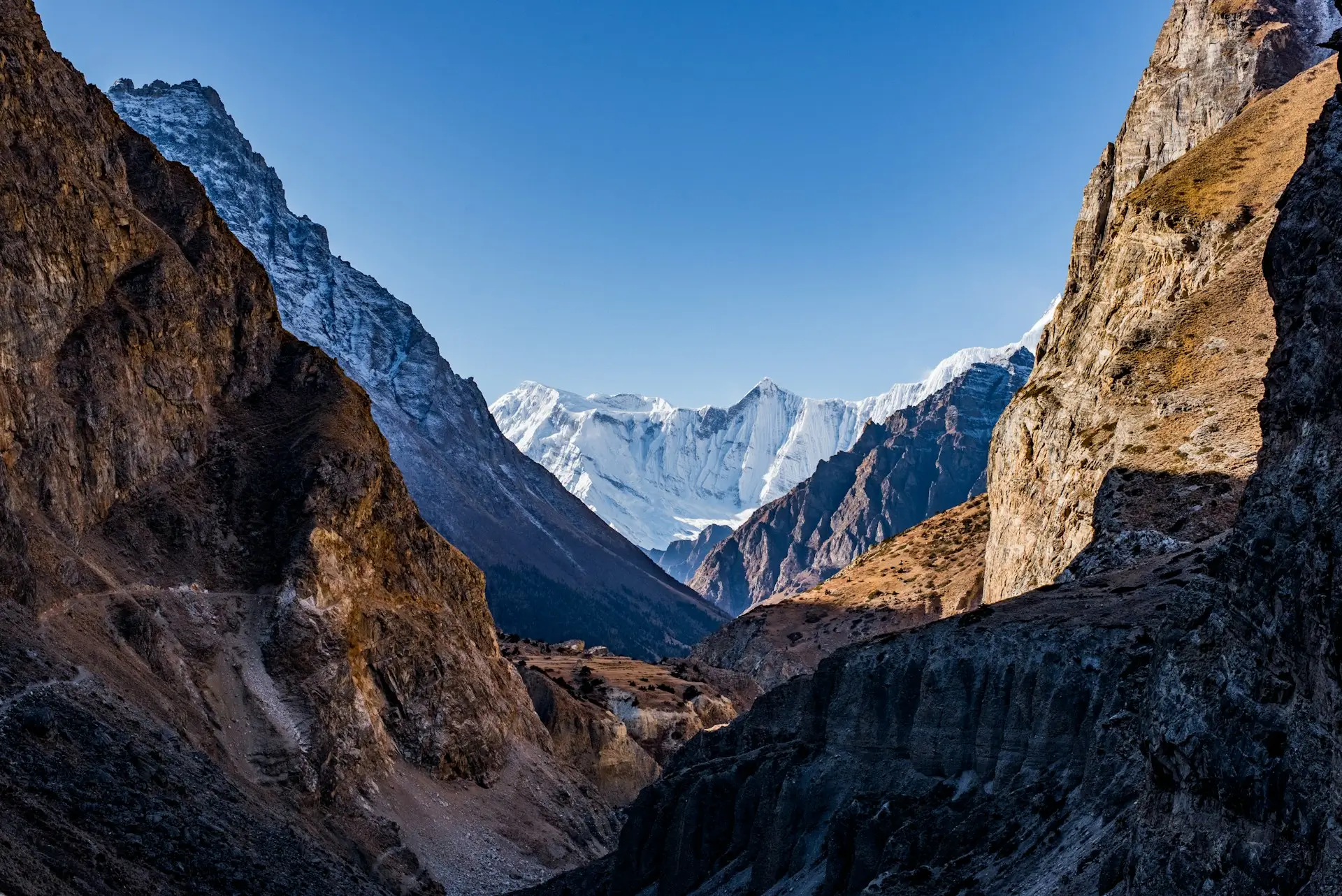
Route advisory, 1 September 2026. A glacial flood on 26 August 2026 destroyed road access in Rasuwa district. The Langtang, Gosaikunda and Tamang Heritage routes are currently unreachable, because the single road serving all three, through Syabrubesi, was severed, and the Nepal Tourism Board has advised postponing travel through that corridor. The Everest and Annapurna regions are unaffected and operating normally. The comparison below remains accurate for planning, but the usual road approach to Langtang is not available at present. Early estimates for reopening run from weeks to months and are not firm.
Update, 2 September 2026. We are now running a 16 day alternative that walks in and out from Sundarijal and avoids the damaged road entirely, reaching Gosaikunda and the Langtang valley on foot in both directions. It is longer and more demanding than the standard route and is priced differently. Please contact us for the day by day detail.
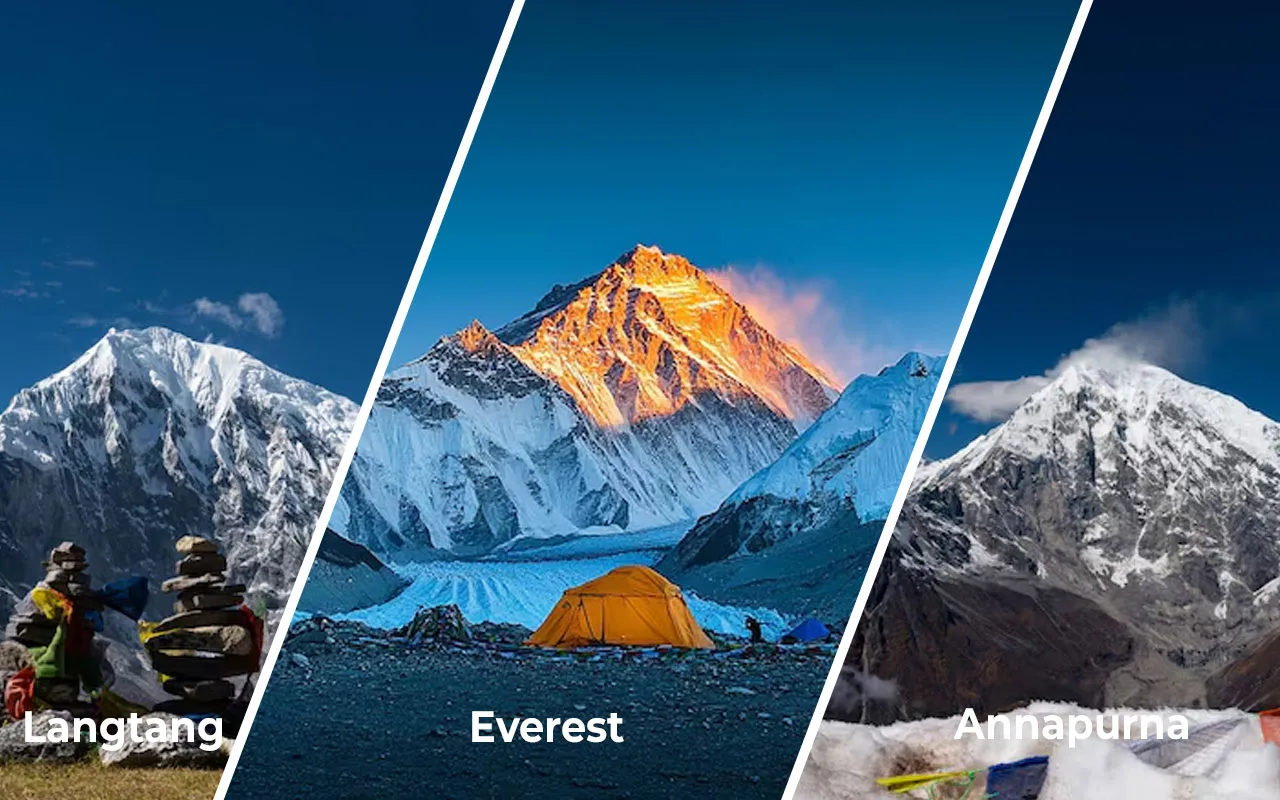
Quick answer: Choose Langtang for the cheapest, shortest trek close to Kathmandu (no flight). Choose Annapurna Base Camp for a classic mid-range trek from Pokhara. Choose Everest Base Camp for the most iconic, but longest and hardest, of the three. All three are non-technical.
Choose Langtang if you want the cheapest, shortest trek close to Kathmandu. Choose Annapurna Base Camp for a classic mid-range trek from Pokhara. Choose Everest Base Camp for the most iconic, but longest and hardest, of the three. All three are superb. They simply suit different time frames, budgets, and fitness levels.
Key Takeaways
- Langtang: about 10 days, moderate, the cheapest. No flight needed.
- Annapurna Base Camp: about 9 days, moderate, mid-range cost. Access from Pokhara.
- Everest Base Camp: about 14 days, strenuous, the most expensive. Needs a Lukla flight.
- All three are non-technical. So fit trekkers can do any of them.
- For a first trek, Langtang and Annapurna are gentler than Everest.
This guide compares the three on days, difficulty, altitude, cost, and crowds. So you can pick with confidence. For the full Langtang picture, see our Langtang region guide.
Quick comparison
| Feature | Langtang Valley | Annapurna Base Camp | Everest Base Camp |
|---|---|---|---|
| Duration | about 10 days | about 9 days | about 14 days |
| Grade | Moderate | Moderate | Strenuous |
| Highest point | Tserko Ri 4,984 m | Base camp 4,130 m | Kala Patthar 5,545 m |
| Flight needed | No | No | Yes (Lukla) |
| Walking distance | about 65 km | about 110 km | about 130 km |
| Cost | Lowest | Mid-range | Highest |
| Crowds | Quietest | Busy | Busiest |
| Access | Drive from Kathmandu | Drive from Pokhara | Fly to Lukla |
| Best for | First trek, low budget, short time | First trek, classic scenery | Bucket-list, more time |
Difficulty: which is hardest?
Everest Base Camp is the hardest of the three, while Langtang and Annapurna Base Camp are both moderate. So your fitness and experience should guide the choice.
On the Spade Himalaya Trek Difficulty Scale, both Langtang and Annapurna Base Camp are Grade 2 (Moderate). Everest Base Camp is Grade 3 (Strenuous). The reason is height. Everest reaches 5,545 m at Kala Patthar, far higher than the other two.
None of the three needs climbing skills. So the main challenge is the daily walking and the altitude. For a first big trek, Langtang or Annapurna is the gentler start. Then you can save Everest for later.
How do the altitudes compare?
Everest Base Camp goes much higher than the other two, so it carries more altitude risk. Here is how they compare.
- Langtang Valley: you sleep no higher than Kyanjin Gompa (3,870 m). The high point is the optional Tserko Ri hike (4,984 m).
- Annapurna Base Camp: the high point is base camp itself, at 4,130 m. You sleep there, so the altitude is gentle.
- Everest Base Camp: you climb to Kala Patthar (5,545 m) and reach base camp (5,364 m). So you spend many days above 4,000 m.
Because Everest stays high for so long, it needs more acclimatization. All three plans climb slowly and build in rest. On every trek, your guide carries a pulse oximeter and checks you daily.
Cost: which is cheapest?
Langtang is the cheapest of the three, mainly because it needs no flight. This is its biggest advantage for budget trekkers.
For Everest, you fly to Lukla. That flight is costly and can be delayed by weather. For Annapurna Base Camp, you drive from Pokhara, so there is no big flight cost. For Langtang, you just drive from Kathmandu.
So the cost order is clear. Langtang is the lowest. Annapurna Base Camp sits in the middle. Everest Base Camp is the highest, because of the flight and the extra days. For the Langtang breakdown, see our Langtang Valley Trek cost guide.
Time: how many days?
Annapurna Base Camp is the shortest, Langtang is close behind, and Everest needs the most days. So your holiday length matters.
Annapurna Base Camp takes about 9 days. Langtang takes about 10 days. Both can be done in under two weeks. Everest Base Camp takes about 14 days, because it climbs higher and needs more rest.
So if you only have ten days, Langtang or Annapurna fits well. For Everest, you need closer to two full weeks. In short, pick the trek that matches your time off.
How do scenery and culture compare?
Each trek has its own character, so the views and culture differ. Here is what makes each one special.
- Langtang gives you glaciers, 7,000 m peaks, and warm Tamang culture, all close to Kathmandu. It also feels the quietest of the three.
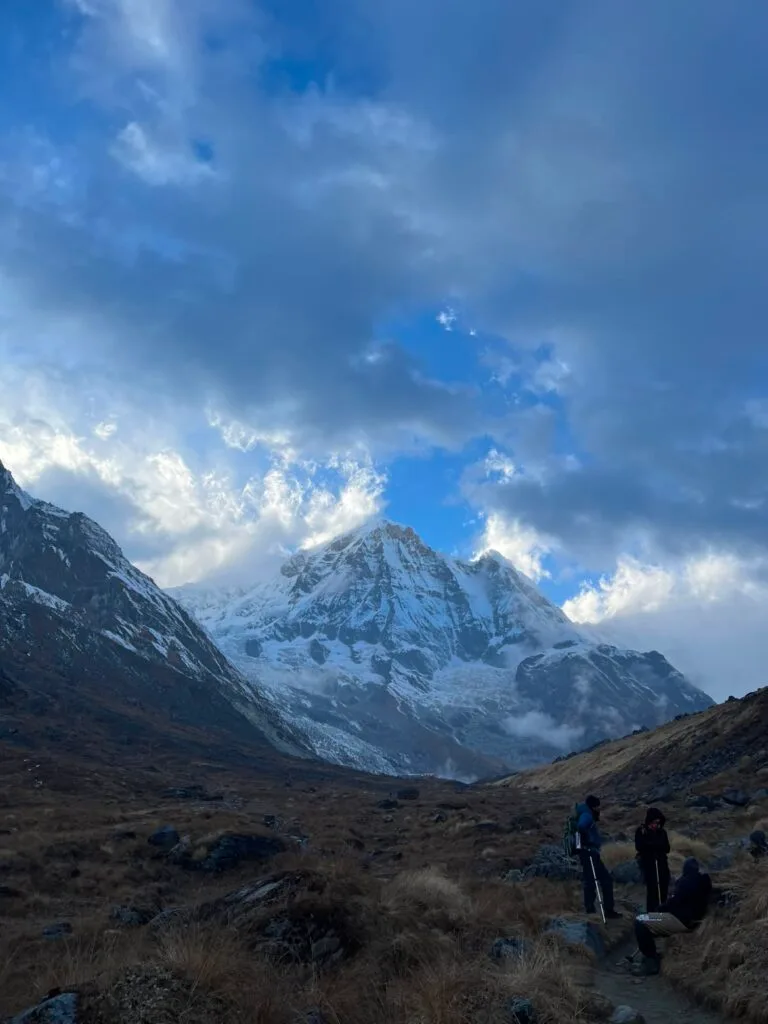
- Annapurna Base Camp leads you into a ring of giant peaks. You stand in a natural amphitheatre below Annapurna I (8,091 m) (Wikipedia, retrieved 2026-06-25).
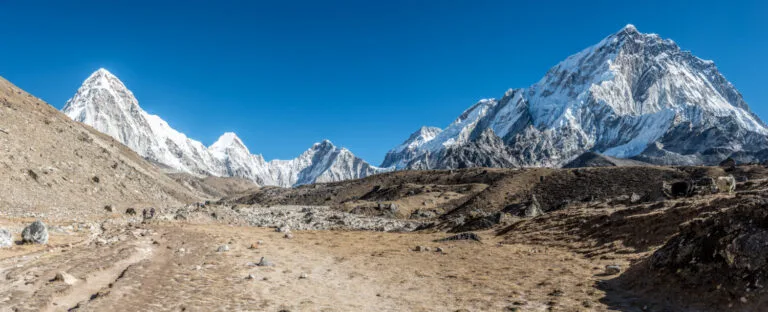
- Everest Base Camp is the most iconic. You walk to the foot of the world’s highest mountain, through famous Sherpa villages.
So if you want the big name, choose Everest. If you want quiet value close to the city, choose Langtang. If you want a classic mid-range trek, choose Annapurna.
How do the crowds compare?
Langtang is the quietest of the three, while Everest is the busiest. So crowd levels can shape your choice.
Everest Base Camp is world-famous, so the trail is busy in peak season. Annapurna Base Camp is also popular, but it spreads out more. Langtang sees fewer trekkers, so it feels calmer and more personal.
So if you want space and quiet, Langtang wins. If you do not mind company on a famous trail, Everest delivers the bucket-list feel.
Which trek is right for you?
- Choose Langtang if you want the lowest cost, the shortest travel, and a quiet trail close to Kathmandu. It is a superb first trek.
- Choose Annapurna Base Camp if you want a classic, scenic trek from Pokhara with gentle altitude. It is also great for beginners.
- Choose Everest Base Camp if you have about two weeks, a bigger budget, and you dream of standing below Everest.
So there is no single best trek. There is only the best trek for you. To compare the wider regions, see our Everest region guide and Annapurna region guide.
Ready for Langtang? See the Langtang Valley Trek, or the Annapurna Base Camp Trek and Everest Base Camp Trek.
FAQs
Is Langtang easier than Everest Base Camp?
Yes. Langtang is graded moderate, while Everest Base Camp is strenuous. Langtang sleeps no higher than 3,870 m, while Everest reaches 5,545 m at Kala Patthar. So Langtang is the gentler, shorter trek.
Is Langtang or Annapurna Base Camp better for beginners?
Both are great for beginners, since both are moderate with no high pass. Langtang is cheaper and closer to Kathmandu. Annapurna Base Camp has a slightly lower high point and starts from Pokhara. So pick by budget and travel plan.
Which trek is the cheapest?
Langtang is the cheapest. It needs no flight, just a drive from Kathmandu. Annapurna Base Camp is mid-range, and Everest Base Camp is the most expensive because of the Lukla flight and the extra days.
Which trek has the best views?
All three are stunning in different ways. Everest gives you the world’s highest peak. Annapurna gives you a ring of giants from base camp. Langtang gives you glaciers and Tamang villages close to the city.
How many days do I need for each?
Annapurna Base Camp takes about 9 days. Langtang takes about 10 days. Everest Base Camp takes about 14 days. So if your time is short, Langtang or Annapurna is the better fit.
Which trek is the quietest?
Langtang is the quietest of the three. Everest is the busiest, and Annapurna sits in between. So if you want calm, personal trails, Langtang is the best choice.
Accuracy note: prices, durations, and trail details in this guide are Spade Himalaya’s 2026 field research and typical market ranges; route details reviewed by Yubaraj Katel, government-licensed trekking guide (Licence No. 19827) with 10 years of experience leading treks in the Everest region.

Still Deciding?
Updated: 1 Sep, 2026
7 min
Langtang Valley Trek Cost in 2026: A Full Price Breakdown
Route advisory, 1 September 2026. A glacial flood on 26 August 2026 destroyed road access in...
Updated: 6 Jul, 2026
9 min
Everest Base Camp Trek Cost in 2026: Full Breakdown
Quick answer: A guided Everest Base Camp Trek’s biggest single cost is the round-trip Lukla flight,...
Updated: 20 Jul, 2026
9 min
Annapurna Base Camp Trek Cost (2026): A Full Breakdown
What the Annapurna Base Camp trek really costs in 2026: permits, guide, food, transport, and package...