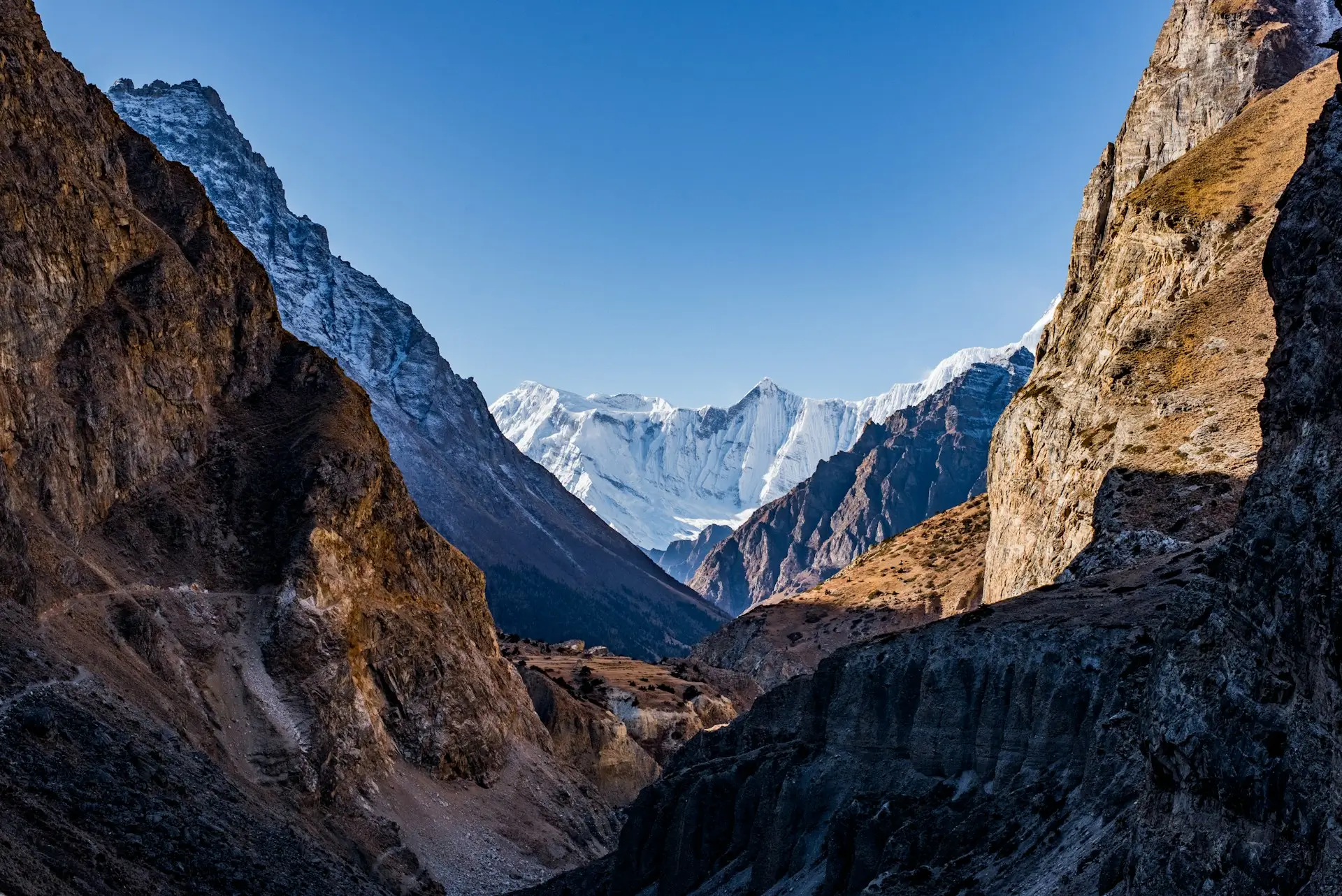
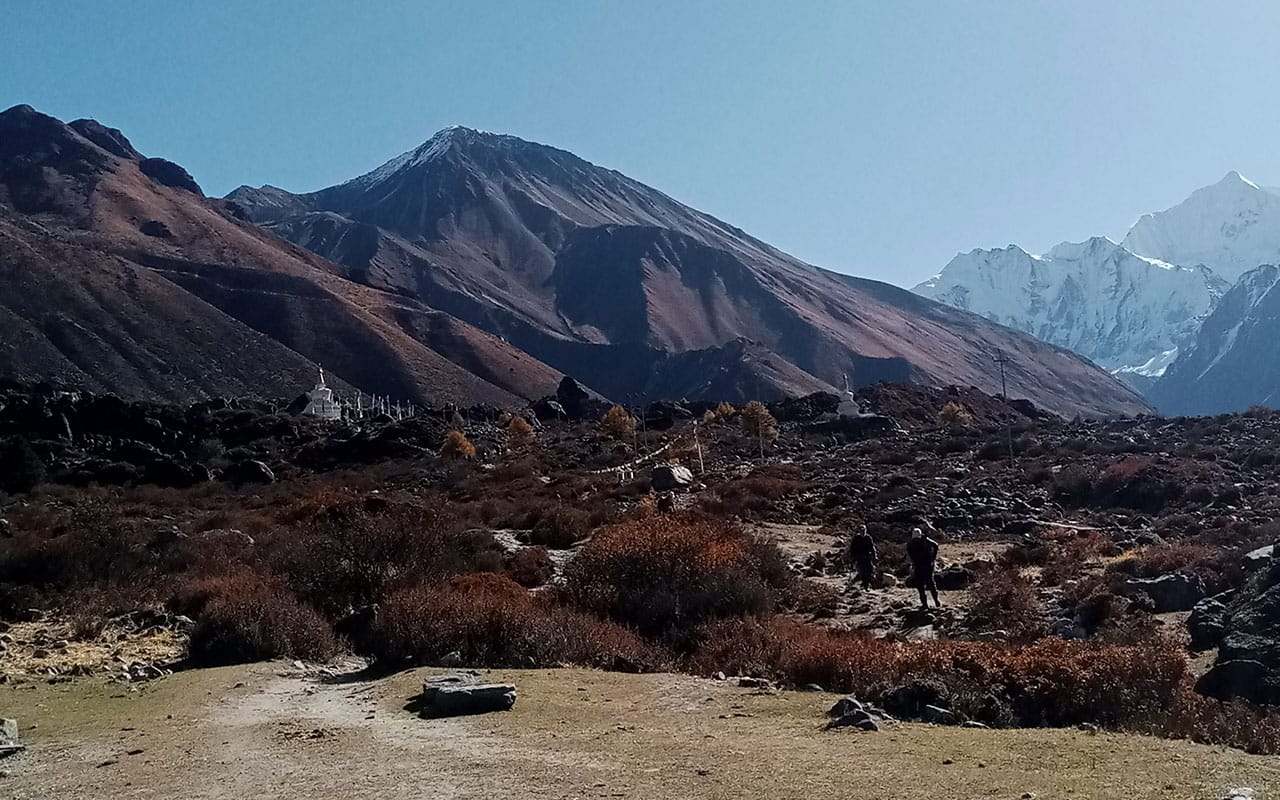
Route advisory, 1 September 2026. A glacial flood on 26 August 2026 destroyed road access in Rasuwa district, including Syabrubesi, the road trailhead for this trek. The Nepal Tourism Board has advised postponing travel through the Galchhi to Nuwakot to Rasuwa to Syabrubesi corridor, and the Prithvi Highway has been closed. Early estimates for restoring basic road access run from several weeks to several months and are not yet firm.
The trails themselves are largely intact. What has closed the region is the loss of the single road that serves the Langtang, Gosaikunda and Tamang Heritage routes together. The costs, distances and route detail below describe this trek in normal conditions and remain accurate for planning a future trip, but they should not be used to travel now. The Everest and Annapurna regions, Kathmandu, Pokhara and Chitwan are unaffected and operating normally.
Update, 2 September 2026. We are now running a 16 day alternative that walks in and out from Sundarijal and avoids the damaged road entirely, reaching Gosaikunda and the Langtang valley on foot in both directions. It is longer and more demanding than the standard route and is priced differently. Please contact us for the day by day detail.
We will update this page when access is restored. If you are holding autumn dates, please contact us and we will give you the current position honestly, including if the answer is to postpone.
Quick answer: The Langtang Valley Trek is graded moderate, so it suits fit beginners. It has no climbing; the challenge is the daily walking and the optional dawn hike to Tserko Ri (4,984 m). The highest sleeping point is Kyanjin Gompa (3,870 m). The best seasons are spring and autumn.
The Langtang Valley Trek is graded moderate, so it suits fit beginners and experienced hikers alike. The challenge comes from the daily walking, not from any climbing. You walk 5 to 7 hours a day on clear trails. The hardest part is the optional dawn hike to Tserko Ri (4,984 m). With some training, most healthy people finish it well.
Key Takeaways
- The trek is graded moderate, which is Grade 2 on the Spade Himalaya Trek Difficulty Scale.
- You walk 5 to 7 hours a day on clear, well-marked trails.
- The high point is Tserko Ri (4,984 m), an optional hike on the rest day.
- There is no climbing and no technical ground.
- The best time is spring (March to May) and autumn (September to November).
This guide covers how hard the trek really is, and when to go. For the full plan, see our Langtang Valley Trek package. For the wider picture, see our Langtang region guide.
How hard is the Langtang Valley Trek?
The Langtang Valley Trek is moderate, which means it is harder than a short hill walk but far easier than a high-pass trek. There is no climbing and no technical terrain. So the main challenge is the daily walking and the altitude.
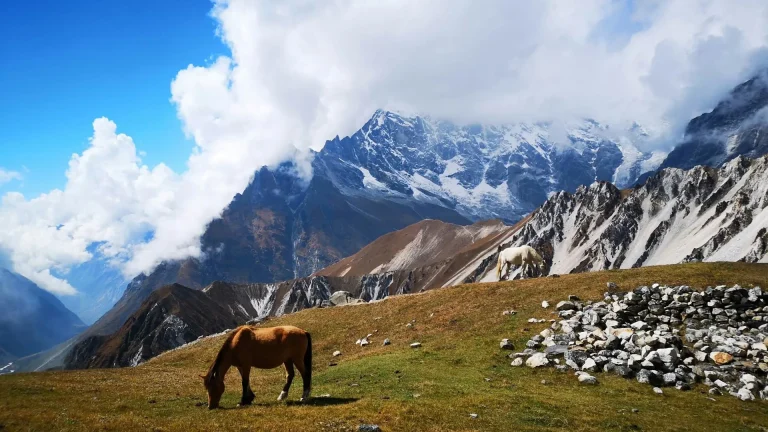
On the Spade Himalaya Trek Difficulty Scale, Langtang is Grade 2. For comparison, the Annapurna Base Camp Trek is also Grade 2. The Everest Base Camp and Manaslu Circuit treks are Grade 3, which is a step harder. So Langtang is a great first big trek in Nepal.
You walk for about a week, with a steady climb up the valley. The trail is clear and well marked. So you do not need ropes, spikes, or any special skills, except micro spikes if there is snow on Tserko Ri.
What makes it challenging?
Three things make the Langtang Valley Trek a real effort: the daily hours, the altitude, and the Tserko Ri hike. None of them are extreme. Still, they ask for honest fitness.
- Daily walking. You walk 5 to 7 hours most days, with uphill sections. So your legs and lungs need to be ready.
- Altitude. You sleep as high as Kyanjin Gompa (3,870 m). The air is thinner here, so you tire faster.
- The Tserko Ri hike. This optional dawn climb reaches 4,984 m. It is steep, and it is the hardest day of the trek.
So the trek is not about danger or technical skill. It is about steady walking at altitude. With training, this is well within reach for most people.
What is the daily distance and altitude?
You climb the valley over several days, then hike high on the rest day. Here is the shape of the trek, day by day.
| Day | Route | Walking time | Sleep altitude |
|---|---|---|---|
| Syabrubesi to Lama Hotel | up the river gorge | 6 to 7 hrs | 2,460 m |
| Lama Hotel to Langtang Village | through forest | 5 to 6 hrs | 3,450 m |
| Langtang Village to Kyanjin Gompa | open valley | 4 to 5 hrs | 3,870 m |
| Kyanjin Gompa rest day | Tserko Ri hike | 5 to 7 hrs | 3,870 m |
| Return to Lama Hotel | mostly downhill | 7 to 8 hrs | 2,460 m |
So the climb up is gradual, which is good for your body. The trek also builds in a rest day at Kyanjin Gompa. This helps you adjust before the high hike to Tserko Ri. For the full day-by-day distances, see our Langtang Valley Trek distance guide. Also, to choose between the two high viewpoints, see Kyanjin Ri vs Tserko Ri.
How fit do you need to be?
You need good general fitness, but not an athlete’s body. If you can walk for 5 to 7 hours with a light daypack, you are ready. So a few weeks of training makes a big difference.
Here is a simple plan to prepare:
- Walk often. Take long walks on hills or stairs, two or three times a week.
- Add cardio. Jogging, cycling, or swimming builds your stamina.
- Train with a pack. Carry a 5 to 7 kg daypack on your practice hikes.
- Strengthen your legs. Squats and lunges help on the climbs and descents.
So start training a month or two before the trek. The fitter you are, the more you will enjoy each day. In fact, fitness is the best way to lower your altitude risk too.
How do you stay safe at altitude?
Altitude is the main health risk on this trek, but it is very manageable with a slow pace. Altitude sickness (AMS) gets more likely the higher you go. In one study of Nepali Himalaya trekkers, AMS affected about 15% of people at 4,000 to 4,500 m and 51% at 4,500 to 5,000 m (PubMed, retrieved 2026-06-23).
So the plan is simple. First, climb slowly. Next, take the rest day at Kyanjin Gompa. Also, drink 3 to 4 litres of water a day, and skip alcohol up high. Your guide carries a pulse oximeter and checks you daily.
Watch for two rare but serious problems too. HACE affects the brain, and HAPE affects the lungs. For both, the best treatment is to go down fast (CDC Yellow Book, retrieved 2026-06-23). So tell your guide early if you feel unwell.
When is the best time to trek Langtang?
Spring (March to May) and autumn (September to November) are the best seasons. Both bring stable weather and clear skies. So the views are at their best, and the trail is safe.
In spring, the rhododendron forests bloom red and pink. The days are mild, and the valley is full of colour. In autumn, the air is crisp after the rains. So autumn gives the sharpest, longest mountain views.
Winter (December to February) is cold, and snow can fall above 3,000 m. Still, clear days are common, and the trail is quiet. The summer monsoon (June to August) brings rain, leeches, and landslide risk. So most trekkers avoid it.
Best time by season, at a glance
Here is each season in short, so you can pick your dates. These notes come from our guiding experience in the valley.
| Season | Weather | Verdict |
|---|---|---|
| Spring (Mar to May) | Mild, rhododendrons in bloom | Excellent |
| Autumn (Sep to Nov) | Clear, crisp, sharp views | Excellent, the most popular |
| Winter (Dec to Feb) | Cold, snow up high, quiet trails | Good on clear days, pack warm |
| Monsoon (Jun to Aug) | Rain, leeches, cloud, landslide risk | Best avoided |
So spring and autumn are the safe, scenic choices. If you want quiet trails and you do not mind the cold, winter can work too. Just bring warm gear and micro spikes for Tserko Ri.
Is the Langtang Valley Trek good for beginners?
Yes. Langtang is one of the best first big treks in Nepal. It is moderate, short, and close to Kathmandu. So it gives you a real Himalayan trek without the cost or the long approach of Everest.
The trail is clear, and the climb is gradual. The rest day at Kyanjin Gompa helps your body adjust. So a fit beginner who trains first can do it comfortably with a good guide. For a full first-timer’s guide, see our Langtang Valley Trek for beginners.
If you want something even gentler first, try the short Helambu Trek or the cultural Tamang Heritage Trek. For a bigger challenge, see the Langtang Gosaikunda Trek.
FAQs
Is the Langtang Valley Trek hard?
It is graded moderate, so it is a real effort but not extreme. You walk 5 to 7 hours a day on clear trails, with a steady climb. There is no climbing or technical ground. So with some training, most healthy people finish it well.
How high does the Langtang Valley Trek go?
The highest sleeping point is Kyanjin Gompa at 3,870 m. The highest point you reach is Tserko Ri at 4,984 m, an optional hike on the rest day. A gentler viewpoint, Kyanjin Ri, sits at 4,773 m.
Do I need trekking experience for Langtang?
No, but you do need good fitness. The trek is a fine first big trek in Nepal. The trail is clear, and the climb is gradual. So a fit beginner who trains first can do it with a guide.
What is the best month to trek Langtang?
October is often the best single month, with clear skies and sharp views. April is also excellent, with rhododendron blooms. So autumn and spring are the prime windows for the trek.
Can you trek Langtang in winter?
Yes, on clear days. Winter is cold, and snow can fall above 3,000 m. Still, the trail stays quiet and beautiful. So pack warm gear, bring micro spikes for Tserko Ri, and check the forecast.
How do I avoid altitude sickness on Langtang?
Climb slowly, take the rest day at Kyanjin Gompa, and drink plenty of water. Skip alcohol up high, and eat well. Tell your guide early if you feel unwell. Your guide carries an oximeter and checks you daily.
Accuracy note: official fees, rules, and hard facts in this guide are cited inline from their sources; trail and price details are Spade Himalaya field research; route details reviewed by Yubaraj Katel, government-licensed trekking guide (Licence No. 19827) with 10 years of experience leading treks in the Langtang region.

Keep Planning Your Trek
Updated: 1 Sep, 2026
7 min
Langtang Valley Trek Cost in 2026: A Full Price Breakdown
Route advisory, 1 September 2026. A glacial flood on 26 August 2026 destroyed road access in...
Updated: 1 Sep, 2026
6 min
Langtang Valley Trek Distance and Map: Day-by-Day Route Guide
Route advisory, 1 September 2026. A glacial flood on 26 August 2026 destroyed road access in...
Updated: 1 Sep, 2026
11 min
Langtang Region Trek: The Complete 2026 Guide
Route advisory, 1 September 2026. A glacial flood on 26 August 2026 destroyed road access in...