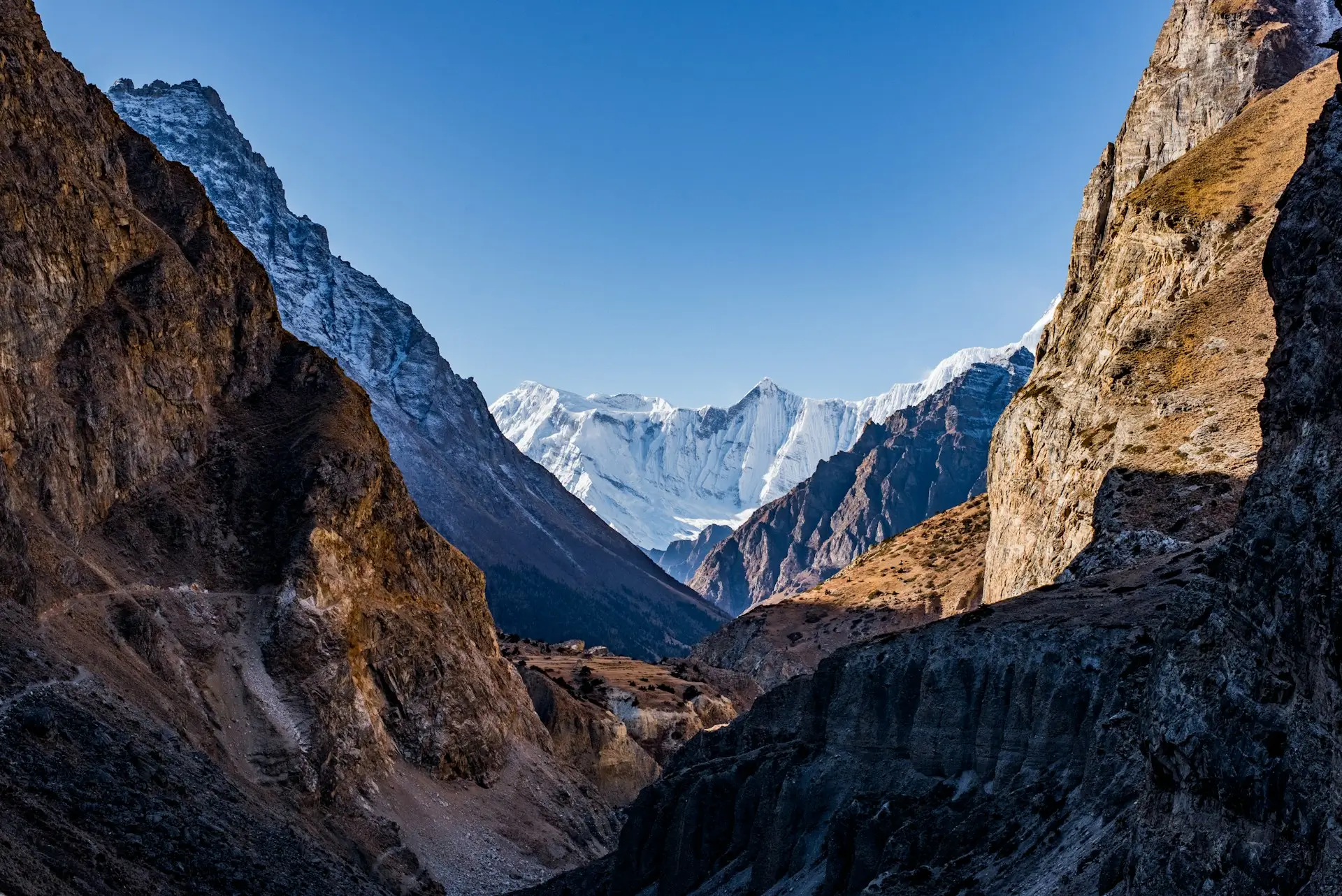
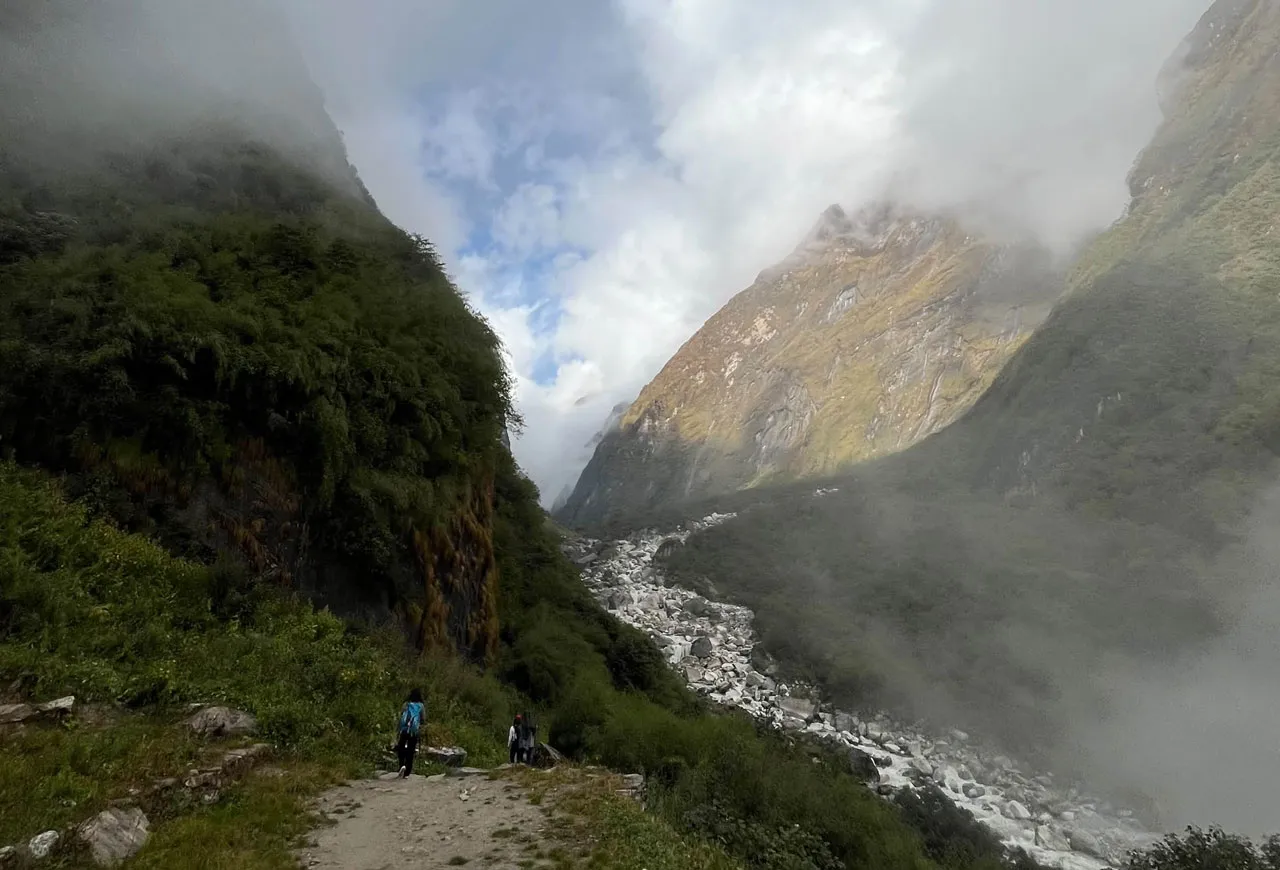
Quick answer: A guided Mardi Himal Trek costs US$395 to US$995 per person in 2026 on Spade Himalaya’s departures. The 5-day trek is cheapest at US$395 to US$550, the 10-day runs US$750 to US$995, and there is no flight, which keeps Mardi one of the best-value treks in Nepal.
A guided Mardi Himal Trek costs US$395 to US$995 per person in 2026. Trek length and group size set the price. Mardi is still one of the cheapest treks in Nepal. The reason is simple. There is no flight, the trek is short, and the permits are low.
Key Takeaways
- A guided trek costs US$395 to US$995 per person, by trek length and group size.
- The short 4 to 5 day trek is the cheapest option.
- There is no flight cost. You start with a short drive from Pokhara.
- Permits are cheap, about US$40 in total.
- Bigger groups pay less per person, because they share the guide and jeep.
This guide breaks down every cost, line by line. For the route, see our Mardi Himal Trek guide. For the full plans, see the 5-day short trek and the 10-day trek.
What does the Mardi Himal Trek cost?
Our Mardi Himal treks cost between US$395 and US$995 per person. Two things move the price. First, the trek length, 5 days or 10. Second, the group size, because the guide, the transport and the permits are shared.
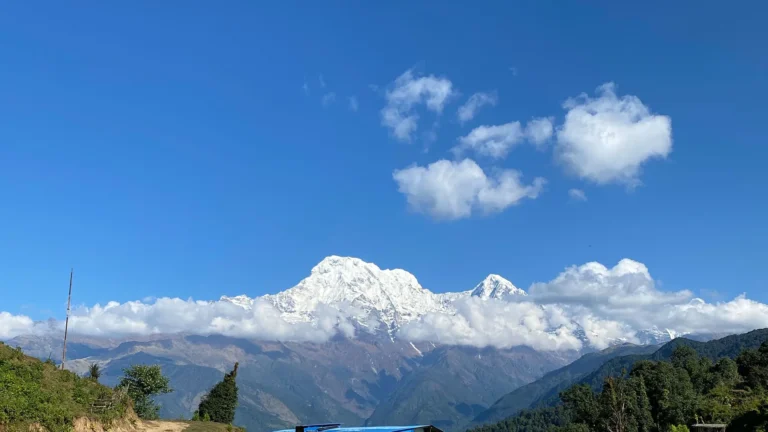
Mardi Himal Trek 10-Days
A solo trekker pays more, because there is no one to share the guide and jeep. A group of four or more pays much less each. So Mardi is great value for friends who travel together.
Here is the cost at a glance:
| Trip | Our 2026 price per person |
|---|---|
| Short Mardi Himal, 5 days | US$395 to US$550 |
| Mardi Himal, 10 days | US$750 to US$995 |
| Mardi plus Annapurna Base Camp, 13 days | US$810 to US$1,080 |
These are guided package prices. They cover the guide, permits, transport, lodging, and food on the trek. Now let us break each part down.
What is the cost breakdown, line by line?
Here is where your money goes on a Mardi Himal Trek. These are 2026 estimates for one foreign trekker. Group costs are shared, so they drop per person.
| Item | Rough cost (per person) | Notes |
|---|---|---|
| ACAP permit | US$25 (NPR 3,000) | Annapurna Conservation Area |
| TIMS card | about US$15 (NPR 2,000) | NPR 1,000 for SAARC nationals |
| Transport (Pokhara to trailhead and back) | US$20 to US$60 | Jeep or taxi, shared in a group |
| Licensed guide | US$25 to US$35 per day | Shared in a group |
| Porter (optional, shared) | US$18 to US$25 per day | One porter per two trekkers |
| Teahouse lodging | US$3 to US$8 per night | Often low if you eat there |
| Food on the trail | US$18 to US$25 per day | Three meals, rises with altitude |
So the biggest costs are the guide, the food, and the lodging. The permits and transport are small. In short, the trek length is the main thing that sets the price.
Why is there no flight cost?
Most famous treks need a flight, but Mardi Himal does not. So you save money right away.
For Everest, you fly to Lukla, which is costly and can be delayed. For Mardi, you just drive from Pokhara to the trailhead at Kande in about an hour. So there is no big flight cost and no weather delay.
You do need to reach Pokhara first. It is a 6 to 7 hour drive from Kathmandu, or a short 25-minute flight. So Mardi stays cheap and easy to reach.
What drives the price up or down?
Three things move the Mardi Himal Trek cost the most: trek length, group size, and season. So you can plan around them to save.
- Trek length. A short 4 to 5 day trek costs far less than the 10-day version. So pick the length that fits your time.
- Group size. The guide and jeep cost the same for one trekker or four. So a bigger group splits these costs and pays less each.
- Season. Spring and autumn are peak times, so lodges are busy. Winter is quieter and a little cheaper, but colder.
So if budget matters, travel in a small group and pick the short route. You still get the same big views. For the short plans, see our short Mardi Himal Trek from Pokhara.
What extra costs should you budget for?
Your package covers the big items, but carry extra cash for the small ones. The ridge has no ATMs. So bring enough Nepalese rupees from Pokhara.
Here is what to budget on top of the package:
- Drinks and snacks. Tea, soft drinks, and chocolate cost more the higher you go.
- Hot showers and charging. Both cost a small fee, and power is scarce at High Camp.
- Wi-Fi. Many lodges charge a little for it.
- Tips. Many trekkers give US$40 to US$70 in total for the guide and porter.
- Pokhara extras. Your hotel, meals, and any activities in Pokhara.
- Travel insurance. This is a must, at about US$100 to US$150 for the trip.
So set aside roughly US$10 to US$15 a day for trail extras. Then you will not run short on the ridge.
How do you keep the cost down?
You can trek Mardi Himal on a tight budget without missing the best parts. Here are the simple ways to save.
- Pick the short route. The 4 to 5 day trek costs far less than the 10-day plan.
- Travel in a group. This shares the guide and jeep, the biggest saving.
- Refill your water. Use a filter or tablets instead of buying bottles.
- Eat dal bhat. It is filling, fresh, and comes with free refills.
- Rent gear in Pokhara. A sleeping bag and down jacket cost a few dollars a day.
- Skip the extras. Cut back on hot showers, Wi-Fi, and soft drinks up high.
So with a few smart choices, you can do the whole trek for less. Spade Himalaya can also build a budget plan for you.
Is the Mardi Himal Trek worth the cost?
Yes. For the price, Mardi gives you some of the best value in the Himalaya. You reach 4,500 m and stand below the Fishtail peak in just a few days.
You also walk a quiet ridge, far from the crowds, through forest and high meadows. For a trek this short and this scenic, the value is hard to beat. So it is a great first Himalayan trip or a quick second one.
To compare it with the longer classic, read Mardi Himal vs Annapurna Base Camp. For the difficulty and best season, see our Mardi Himal difficulty and best time guide.
FAQs
How much does the Mardi Himal Trek cost in 2026?
A guided trek costs US$395 to US$995 per person with Spade Himalaya. The 5-day trek runs US$395 to US$550 and the 10-day runs US$750 to US$995. Within each, a solo trekker pays the top of the range and a group of 12 or more pays the bottom. Permits and all meals on trek are included.
Why is the Mardi Himal Trek so cheap?
Mostly because there is no flight, and the trek is short. You just drive from Pokhara to the trailhead. The permits are low too. So Mardi is one of the best-value treks in Nepal.
What do the Mardi Himal permits cost?
The ACAP permit is NPR 3,000 (about US$25). The TIMS card is NPR 2,000 (about US$15) for foreign trekkers. So the permits total about US$40 per person. Spade Himalaya includes both in the trip cost.
Are guides and porters included in the price?
In a Spade Himalaya package, yes. The guide is included, and porter support is part of the trip. Since 2023, a licensed guide is required in the Annapurna region (Nepal Tourism Board, retrieved 2026-06-25).
How much extra cash should I carry?
Carry about US$10 to US$15 a day for trail extras, plus your tips. This covers drinks, snacks, hot showers, Wi-Fi, and charging. There are no ATMs on the ridge, so bring enough rupees from Pokhara.
Can I do the Mardi Himal Trek on a budget?
Yes. Pick the short route, travel in a group, refill your water, and eat dal bhat. You can also rent gear in Pokhara. So a careful trekker can keep the cost low and still enjoy every day.
Accuracy note: official fees, rules, and hard facts in this guide are cited inline from their sources; trail and price details are Spade Himalaya field research; route details reviewed by Yubaraj Katel, government-licensed trekking guide (Licence No. 19827) with 10 years of experience leading treks in the Annapurna region.

Before You Book
Updated: 6 Jul, 2026
10 min
Mardi Himal Trek: The Complete 2026 Guide
Quick answer: The Mardi Himal Trek is a short, quiet ridge trek in Nepal’s Annapurna region,...
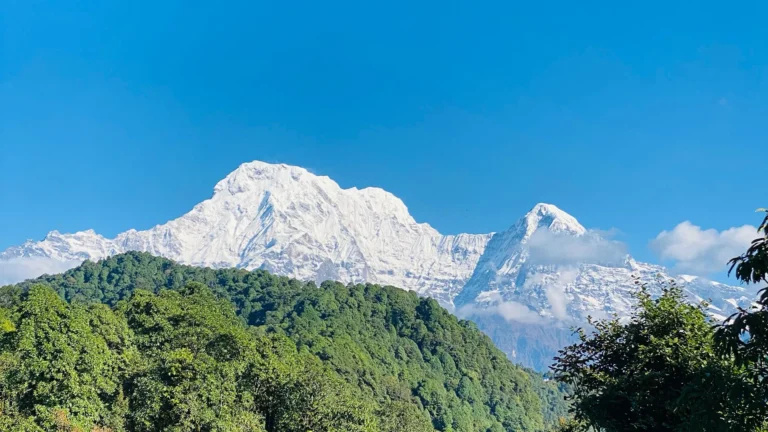
Updated: 6 Jul, 2026
6 min
Short Mardi Himal Trek from Pokhara (3, 4, and 5 Day Options)
Quick answer: The short Mardi Himal Trek runs from Pokhara in 3, 4, or 5 days...
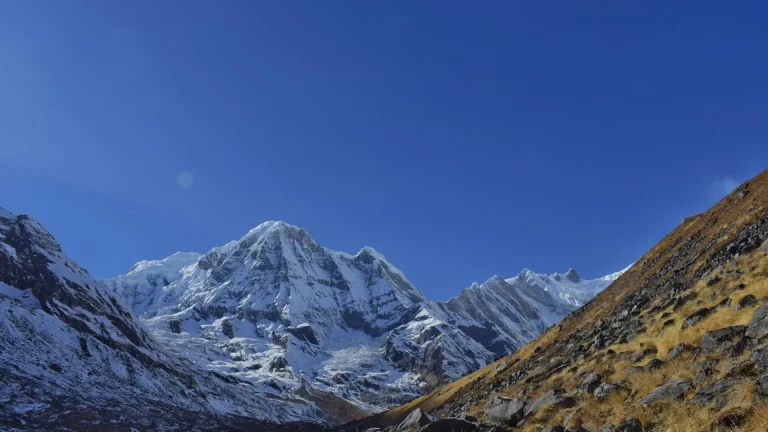
Updated: 15 Jul, 2026
12 min
Annapurna Region Treks: Routes, Cost & Best Time (2026 Guide)
Quick answer: The Annapurna region, near Pokhara, has Nepal’s widest range of treks: from the easy Poon...