Trip Facts
Country:
Nepal
Duration:
11 Days
Max Altitude:
Kala Patthar, 5,545 m (18,192 ft)
Activities:
Trekking and a scenic helicopter flight
Region:
Everest / Khumbu region
Starting Point:
Kathmandu
Ending Point:
Kathmandu
Grade:
Moderate to Strenuous
Group Size:
Min 2
Accomodation:
Teahouses on the trail, hotel in Kathmandu
Best Season:
Mar-May & Sep-Nov
Notice
This trek walks up to Everest Base Camp (5,364 m) and Kala Patthar (5,545 m), then flies back by helicopter from Gorak Shep. So you skip the long walk down.
The helicopter saves about three days. So you get the full base camp experience in just 11 days.
The route uses the same safe, slow ascent as the classic trek, with two rest days. So the time saving comes on the way out, not on the way up.
Overview of Everest Base Camp Trek with Helicopter Return 11-Days
Quick answer: The Everest Base Camp Trek with helicopter return is an 11-day trip. You trek up to Everest Base Camp and Kala Patthar over eight days, with two rest days. Then you fly back to Kathmandu by helicopter from Gorak Shep. So you save about three days and skip the long descent.
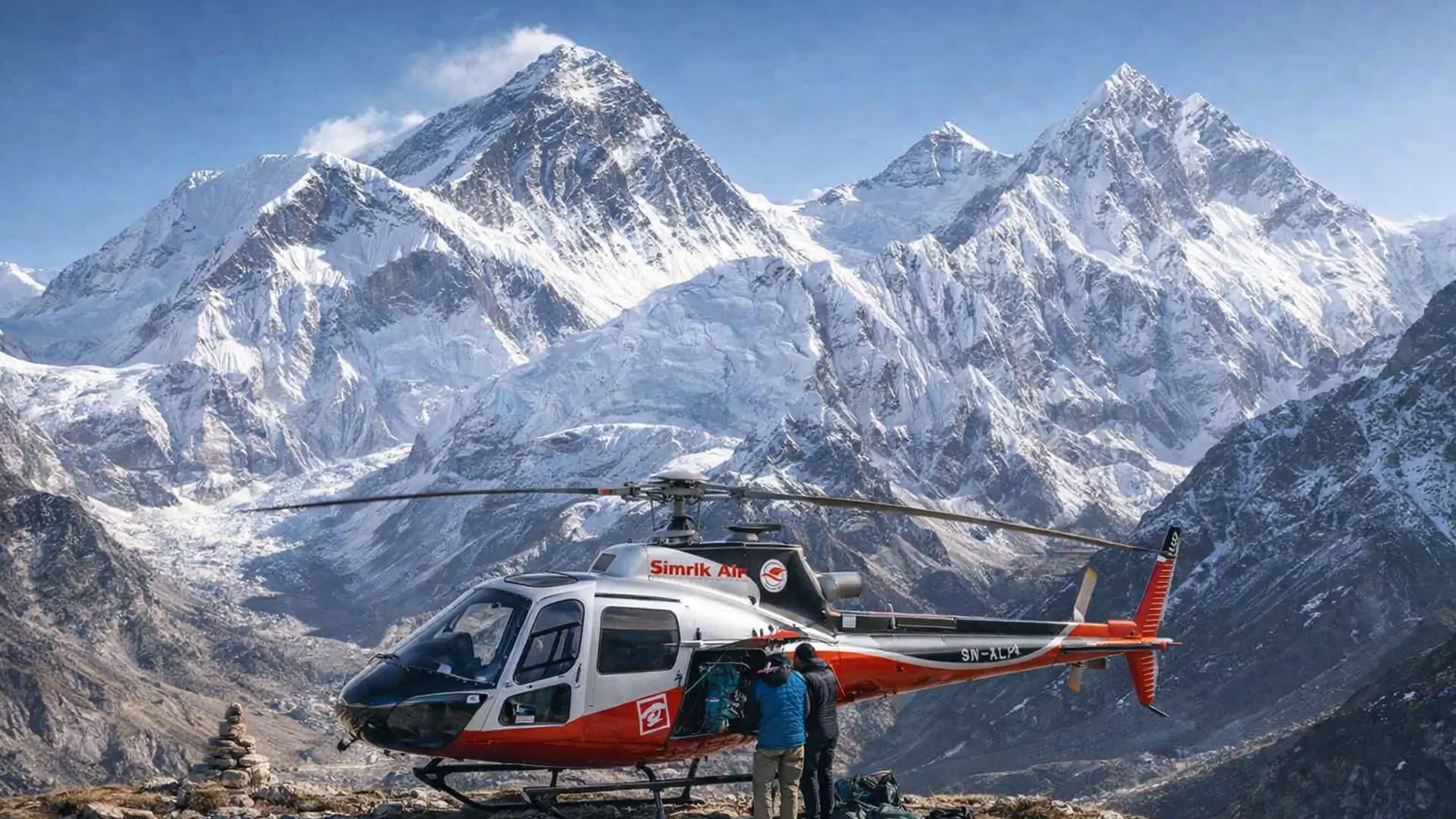
The Everest Base Camp Trek with helicopter return is the fastest comfortable way to reach base camp. Some trekkers call it the Everest Base Camp helicopter return trek. You walk up the Khumbu the classic way, valley by valley. Then, after Kala Patthar at dawn, you board a helicopter and fly back over the peaks to Kathmandu. So you trade the three-day walk down for a 15-minute mountain flight.
This plan keeps the climb safe and slow. You still rest at Namche (3,440 m) and Dingboche (4,410 m). You still reach base camp on foot, the way it should be done. The helicopter only changes the exit. So you cut the trip to 11 days without rushing the altitude.
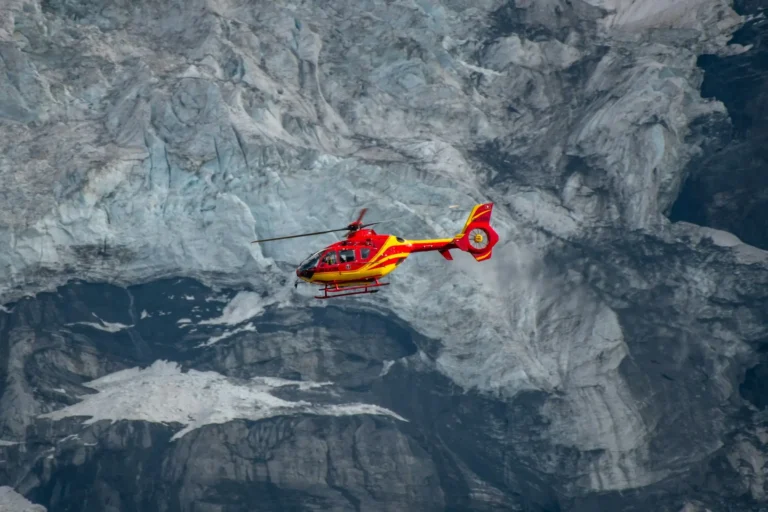
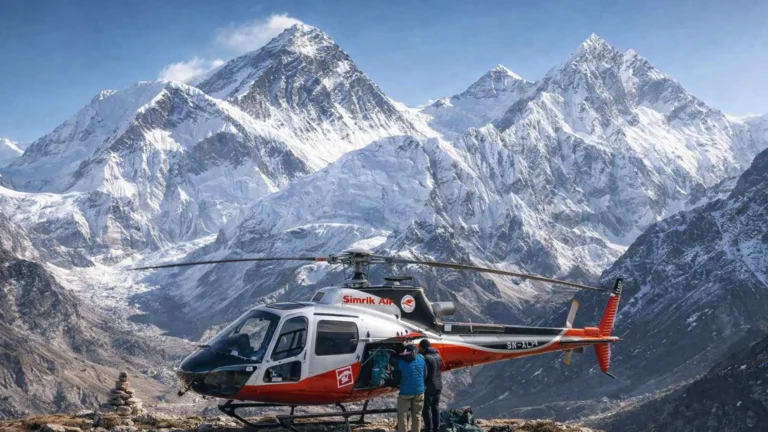
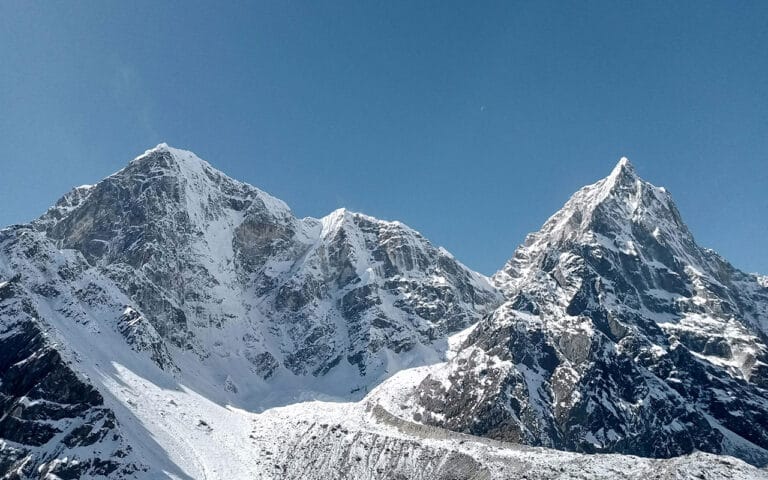
The helicopter flight is a highlight in itself. You lift off from Gorak Shep at 5,140 m and float past Nuptse, Lhotse, and Ama Dablam. The flight usually makes a short stop near Lukla to refuel, then carries on to Kathmandu. So you land back in the city the same morning you stood at Kala Patthar.
This trek is graded strenuous, but it needs no climbing skills. The hard part is the thin air, not the trail. At Kala Patthar, the oxygen is about half of sea level. Spade Himalaya runs this trek with licensed Sherpa guides. So your guide sets a safe pace, watches the weather, and checks your health each day. Read before you go: the Lukla flight, the Namche rest day, and the Kala Patthar morning you earn before the helicopter carries you home.
Want to walk both ways instead? See the classic 14-day Everest Base Camp Trek. For more rest days and a culture day, see the 16-day Kala Patthar route. To add the Gokyo Lakes, see the 19-day Gokyo route. For the full budget, see our Everest Base Camp trek cost guide. First, check which months give the clearest flying weather. Then read how tough the walking days are before you choose dates.
Trips Highlights
- Stand at Everest Base Camp (5,364 m), at the foot of the world's highest peak.
- Climb Kala Patthar (5,545 m) at dawn for the best Everest view.
- Fly back by helicopter from Gorak Shep, over Nuptse, Lhotse, and Ama Dablam.
- Save about three days by skipping the long walk down.
- Take the famous Lukla flight in on a thrilling mountain landing.
- Walk through Sagarmatha National Park, a UNESCO World Heritage Site.
- Explore Namche Bazaar, the lively heart of the Khumbu.
- Visit Tengboche Monastery, the biggest monastery in the region.
- Keep the safe, slow ascent with two rest days, at Namche and Dingboche.
- Meet the Sherpa people and learn about their mountain way of life.
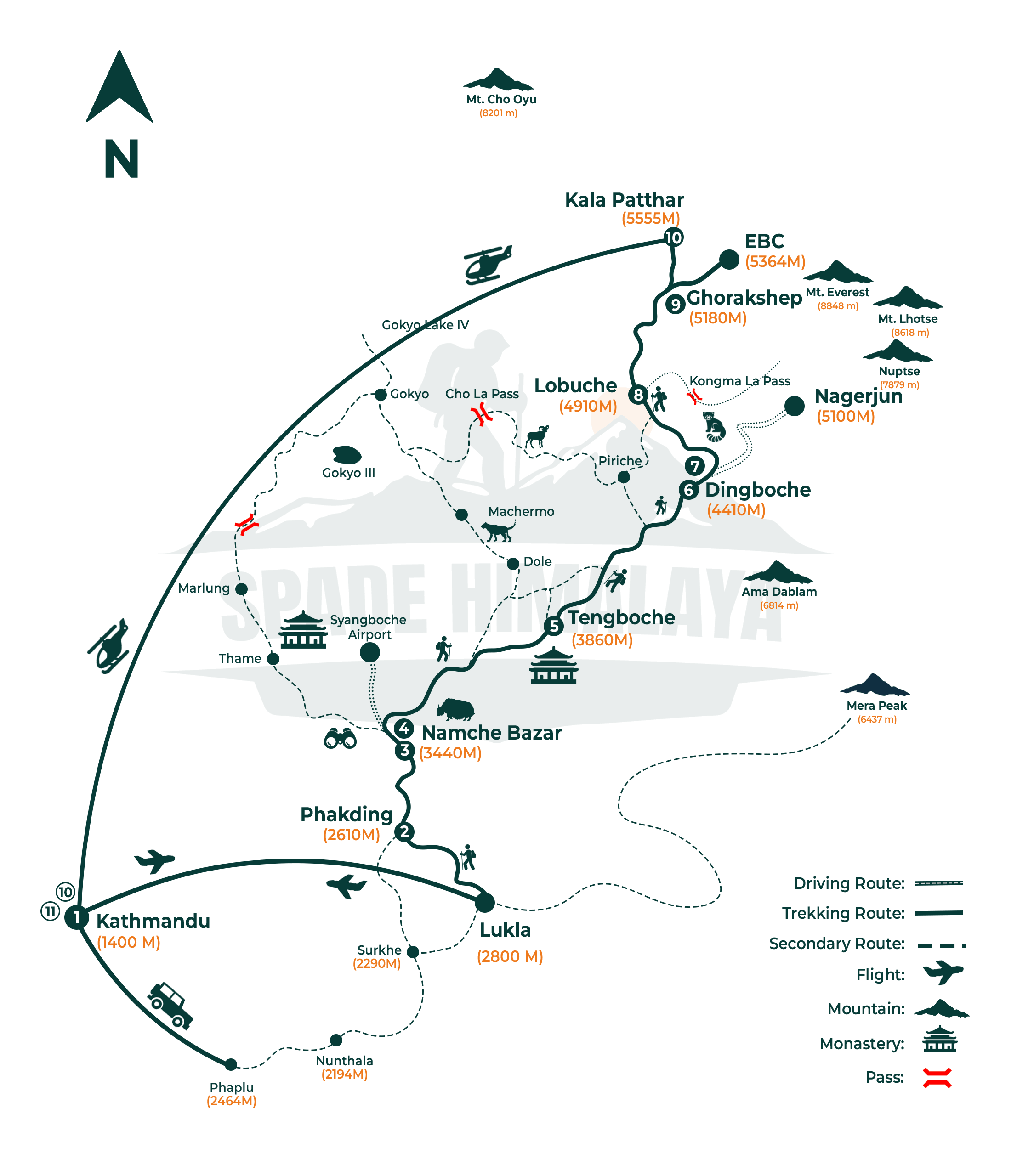
Kathmandu (1,400 m) → fly to Lukla (2,846 m) → Phakding (2,610 m) → Namche Bazaar (3,440 m) → Tengboche (3,860 m) → Dingboche (4,410 m) → Lobuche (4,910 m) → Gorak Shep (5,140 m) → Everest Base Camp (5,364 m) → Kala Patthar (5,545 m) → helicopter from Gorak Shep to Kathmandu.
In short, you walk up the Dudh Koshi to Namche. Then you climb past Tengboche and Dingboche to Lobuche and Gorak Shep. After base camp and Kala Patthar, you fly back to Kathmandu by helicopter.
Trips Itinerary
A Spade Himalaya representative meets you at the airport and drives you to your hotel in Thamel, about thirty minutes from the terminal. You walk in to Everest Base Camp and fly out by helicopter, so tonight is your only night here before an early start.
Kathmandu sits at 1,400 m, so there is nothing to adjust to yet. Shower, eat and sleep off the flight, because the Lukla departure tomorrow is very early. Your guide runs the briefing in the late afternoon and checks your kit, so bring your passport, two photographs and your insurance copy.
- Duration: 30 min Drive
- Max Altitude: 1,400 m
- Accommodation: Star Hotel
You fly to Lukla at first light, meet your porter over a cup of tea, and walk three to four gentle hours downhill to Phakding beside the Dudh Koshi river.
Lukla sits at 2,846 m and Phakding at 2,610 m, so the first day loses height rather than gaining it. In the busiest months the flight leaves from Manthali instead, after an early road transfer.
The landing at Tenzing Hillary Airport is known for its short hillside runway. From there the trail passes mani walls, prayer wheels and your first suspension bridges strung with flags.
- Duration: 3 to 4 hrs walk
- Max Altitude: Lukla 2,846 m
- Meals: Breakfast, Lunch & Dinner
- Accommodation: Guest House
A long climbing day of five to six hours takes you up the river, through the national park gate at Monjo, and finally up the steep hill to Namche Bazaar.
Namche stands at 3,440 m, around 800 m above Phakding, and the last two hours of that are the hardest part. Go slowly, stop often, and let the faster groups past you.
You cross the high Hillary Suspension Bridge where the Dudh Koshi meets the Bhote Koshi. Halfway up the hill, on a clear day, Everest first appears behind the wall of Lhotse and Nuptse.
- Duration: 5 to 6 hrs walk
- Max Altitude: 3,440 m
- Meals: Breakfast, Lunch & Dinner
- Accommodation: Guest House
Today is an acclimatization day, which means an easy hike rather than a lie in. You climb above Namche, visit the villages on the plateau, and come back down to sleep.
The Hotel Everest View sits at 3,880 m, about 440 m above the town. From the terrace you look straight at Everest, Lhotse and Ama Dablam. Khumjung has an old monastery and the school Sir Edmund Hillary helped to found, and Namche itself has a Sherpa culture museum.
- Duration: 3 to 4 hrs walk
- Max Altitude: 3,880 m
- Meals: Breakfast, Lunch & Dinner
- Accommodation: Guest House
You leave Namche on a high trail that follows the hillside, drop to the river at Phunki Thenga, then climb through forest for the last push up to Tengboche.
Tengboche is at 3,860 m, only a little higher than Namche, but the long drop to the river and the climb back out of it make this a proper day on your feet. The monastery is the largest in the Khumbu and sits on a ridge with Ama Dablam in front and Everest behind.
- Duration: 5 to 6 hrs walk
- Max Altitude: 3,860 m
- Meals: Breakfast, Lunch & Dinner
- Accommodation: Guest House
The trail drops through forest to Deboche, crosses the Imja Khola on a high bridge, then climbs through Pangboche and turns up the Imja valley to Dingboche.
Dingboche sits at 4,410 m and you gain about 550 m today. Above Pangboche the trees stop altogether and the land turns to open stone and grazing ground.
Pangboche has one of the oldest monasteries in the Khumbu and is worth a short look inside. Dingboche itself is a patchwork of stone walled fields under the Lhotse wall and Island Peak.
- Duration: 5 to 6 hrs walk
- Max Altitude: 4,410 m
- Meals: Breakfast, Lunch & Dinner
- Accommodation: Guest House
Your second acclimatization day, spent climbing part way up the Nangkartshang ridge above the village and then coming back down for a warm lunch and an easy afternoon.
The ridge tops out around 5,083 m and most groups go high enough to feel it. From up there you can see Makalu at 8,463 m far to the east, the fifth highest mountain in the world, along with Lhotse, Cholatse and Island Peak. Drink plenty and rest properly afterwards.
- Duration: 3 to 4 hrs walk
- Max Altitude: 5,083 m
- Meals: Breakfast, Lunch & Dinner
- Accommodation: Guest House
You walk up the wide valley to Thukla, climb the steep moraine to the Thukla Pass, then follow the edge of the Khumbu Glacier to the lodges at Lobuche.
Lobuche is at 4,910 m and the pass at 4,830 m is the hard part of the day. Five to six hours of walking, most of it above 4,600 m, so it feels longer than it reads.
At the top of the pass stands a field of stone memorials to climbers and Sherpas who died on Everest. It is a quiet place and most people stop there without being asked to.
- Duration: 5 to 6 hrs walk
- Max Altitude: 4,910 m
- Meals: Breakfast, Lunch & Dinner
- Accommodation: Guest House
The main day. You follow the rocky edge of the glacier to Gorak Shep, leave your pack, then continue out across the ice to Everest Base Camp and return the same way.
Gorak Shep is at 5,140 m and Base Camp at 5,364 m, with seven to eight hours of walking in total. The ground is loose moraine and the height makes every step slower than it looks.
Base Camp is marked by cairns and prayer flags below the Khumbu Icefall, and in spring the tents of the expedition teams cover the ice here in their hundreds.
You are standing at the foot of Everest, 8,848.86 m by Nepal’s official survey, and this is as close to it as anyone gets without holding a climbing permit.
- Duration: 7 to 8 hrs walk
- Max Altitude: 5,364 m
- Meals: Breakfast, Lunch & Dinner
- Accommodation: Guest House
You climb Kala Patthar before dawn for the best Everest view on the route, come back down for breakfast, then fly out of Gorak Shep by helicopter to Kathmandu.
Kala Patthar is 5,545 m, the highest point of the trip, and the climb takes about two hours in the dark and cold. Go slowly, because the air here holds roughly half the oxygen of sea level.
The sunrise lights the summit first, with Nuptse, Pumori and Changtse around you. The helicopter usually refuels near Lukla or Pheriche and puts you back in Kathmandu within the hour.
- Duration: 3 to 4 hrs walk
- Max Altitude: 5,545 m
- Meals: Breakfast Included
- Accommodation: Star Hotel
Your last morning is free for shopping or a final walk around Thamel, then a representative drives you to the airport. If you would like more time in Nepal we can add city nights or a Chitwan extension, so tell your guide before the last day rather than on it.
- Max Altitude: 1,400 m
- Meals: Breakfast included
Trips Include
- Airport transfers in a private vehicle.
- 2 nights' hotel in Kathmandu (arrival and post-trek), with breakfast.
- One-way flight from Kathmandu (or Manthali / Ramechhap) to Lukla.
- All ground transfers to and from Manthali / Ramechhap in peak season.
- Shared helicopter return from Gorak Shep to Kathmandu.
- All teahouse accommodation during the trek.
- All meals (breakfast, lunch, dinner) during the trek.
- Purified drinking water during the trek using Water Filter or water purification tablets.
- Sagarmatha National Park entry permit and Khumbu Pasang Lhamu Rural Municipality permit.
- A licensed, experienced Sherpa guide (pay, insurance, meals, lodging).
- Porter support, one porter per two trekkers (pay, insurance, meals, lodging).
- A 75 litre Spade Himalaya duffel bag (yours to keep).
- Guide's first-aid kit and daily health monitoring.
- Trip-completion certificate from Spade Himalaya.
- A farewell dinner on the last night in Nepal.
- All administrative expenses and government taxes.
Trips Exclude
- International airfare to and from Nepal.
- Nepal entry visa (US$30 for 15 days, US$50 for 30 days, US$125 for 90 days).
- Travel and medical insurance (mandatory; must cover trekking above 5,000 m and helicopter evacuation).
- Lunches and dinners in Kathmandu, apart from the farewell dinner.
- Drinks, snacks, hot showers, Wi-Fi, and device charging on the trail.
- Sleeping bag and down jacket (available to rent for about US$35 each).
- Extra helicopter cost if you charter a private flight instead of a shared seat.
- Tips for guide and porters.
- Personal expenses and any costs from early departure or itinerary changes.
- Anything not listed under Cost Includes.
Trips Altitude
Trips Map
Trips Gallery
Packing List
Upper Body
- Base layer tops (light, quick-dry)
- Fleece or light insulated mid layer
- Warm down jacket
- Waterproof, windproof shell jacket
Lower Body
- Trekking trousers and base layer bottoms
- Waterproof shell trousers
- Comfortable underwear (quick-dry)
Feet
- Warm hat, sun hat, and a buff
- Insulated gloves and thin liner gloves
- Broken-in trekking boots and camp shoes
- Wool or synthetic socks, plus spares
General
- A four-season sleeping bag (rentable in Kathmandu)
- A 30 to 40 litre daypack with a rain cover
- Trekking poles and a headlamp
Others
- Sunglasses with full UV protection
- High-SPF sunscreen and SPF lip balm
- Personal first-aid kit and any personal medicine
- Water bottles and purification tablets or a filter
- Passport, passport photos, and insurance papers
- Enough cash in Nepalese rupees
Good to Know
The return flight leaves from Gorak Shep, weather permitting. Pilots fly early, before the wind picks up. So an early Kala Patthar start fits the flight window well. The helicopter seats up to five, and a short refuel stop near Lukla is normal.
The plan follows one simple rule: climb high, sleep low. So it keeps the two rest days, at Namche and Dingboche. Drink 3 to 4 litres of water a day, and walk slowly. If you feel unwell, tell your guide at once. The Pheriche aid post can help in an emergency.
Lukla and Gorak Shep both depend on clear skies. So keep a spare day before your international flight home. If the helicopter is held by weather, your guide will plan the safest option. In most cases, a short delay is all it takes.
You can make this trip more comfortable in a few ways. Choose premium lodges in Namche and Dingboche, or book a private helicopter seat. So the trek can flex from a standard plan to a full luxury Everest Base Camp trip.
Trips Reviews
No reviews found.
Trips FAQs
Permits, Guide & Insurance
Not by law in the Khumbu. Nepal’s 2023 rule lists the Everest region among the areas needing a licensed guide (Nepal Tourism Board, retrieved 2026-06-29). However, the local Khumbu Pasang Lhamu Rural Municipality rejected the rule and allows solo trekking (The Himalayan Times, 2023-03-28). So independent trekking is still allowed. Still, a guide adds real safety at altitude. So Spade Himalaya gives you a licensed Sherpa guide who handles the permits, the route, and your health.
Two. The Sagarmatha National Park permit (NPR 3,000) and the Khumbu Pasang Lhamu Rural Municipality permit (NPR 3,000), about US$45 in total. There is no TIMS card in the Khumbu. For the full guide, see our Everest Base Camp trek permits post.
Trek Difficulty & Altitude
You need a good level of fitness, but no climbing skill. So you should train with hill walks and long days on your feet before you come. The trek is graded strenuous because of the altitude and the long days, not the terrain. With steady training and the two rest days, most fit, healthy trekkers manage it well.
Accommodation & Facilities
It can be. The helicopter return is the first step toward a luxury Everest Base Camp trek. So you can also upgrade to premium lodges lower down and a private helicopter seat. Just ask, and we will tailor the comfort level to suit you.
Trek Highlights & Views
It is an 11-day trip that walks up to Everest Base Camp and Kala Patthar, then flies back to Kathmandu by helicopter from Gorak Shep. So you get the full base camp experience, but you skip the three-day walk down. The ascent stays slow and safe, with two rest days.
Our package costs USD 3,000 to USD 3,600 per person, depending on group size. So the Everest Base Camp trek helicopter return cost depends on group size, season, and comfort level. For the full breakdown of permits, flights, and guiding, see our Everest Base Camp trek cost guide.
Yes, when the weather is clear. Pilots fly only in safe conditions, so flights can shift by a few hours for weather. The helicopter usually makes a short stop near Lukla to refuel. So a small buffer in your plans is wise, in case of a weather hold.
It saves about three days and skips the long descent, which is hard on tired knees. So it suits trekkers who are short on time or who want a comfortable, scenic exit. If you prefer to walk both ways, the classic 14-day Everest Base Camp Trek is the better fit.
The flight takes about 1 to 1.5 hours in total. So it usually makes a short stop near Lukla or Pheriche to refuel. The helicopter seats up to five people, and pilots fly early, before the wind picks up. So an early start at Kala Patthar fits the flight window well.
