Annapurna Circuit Trek via Thorong La Pass 15-Days
Start from
USD 1590
USD 1190
Searching trips…
Start typing to search trips...
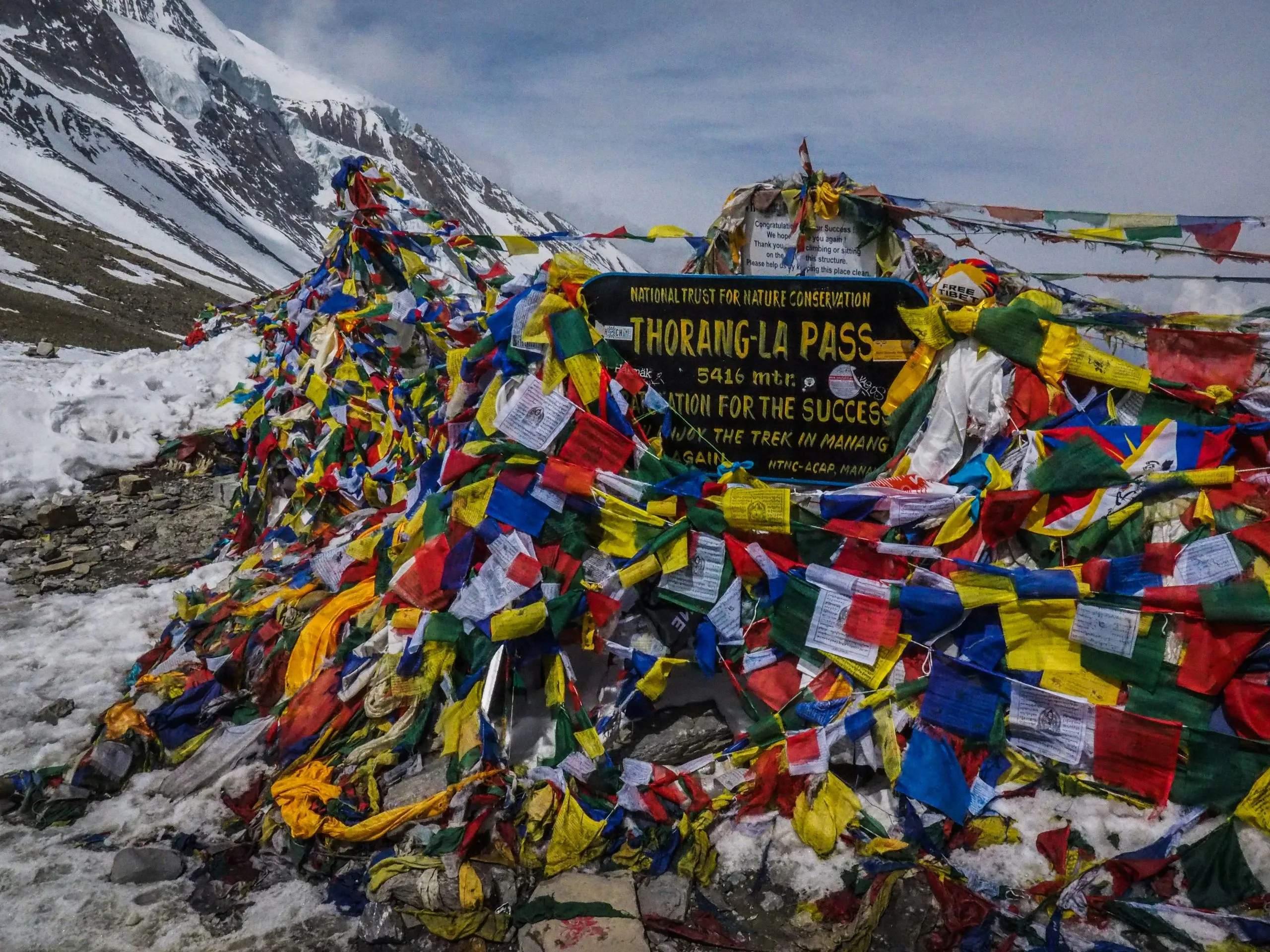
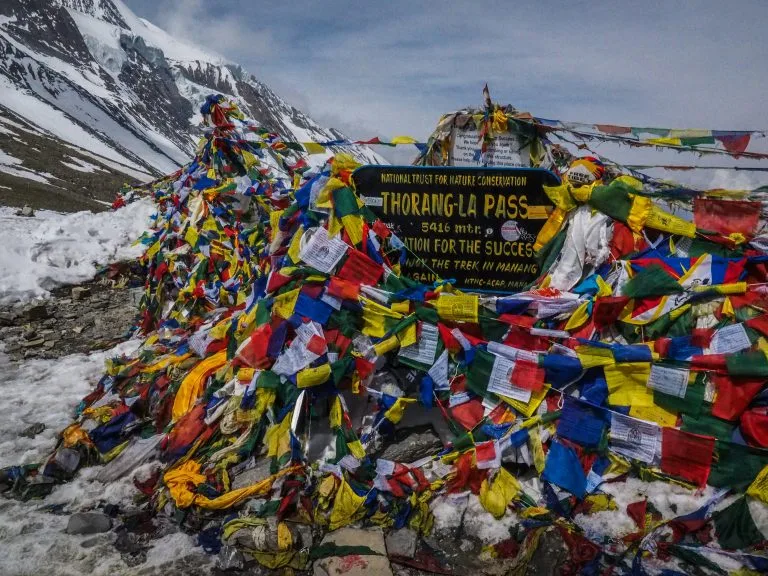
Quick answer: Thorong La (5,416 m) is the high point of the Annapurna Circuit and one of the highest trekking passes in the world. You cross it on a long, pre-dawn day from High Camp. Altitude is the main risk, so slow acclimatization and an early start matter most.
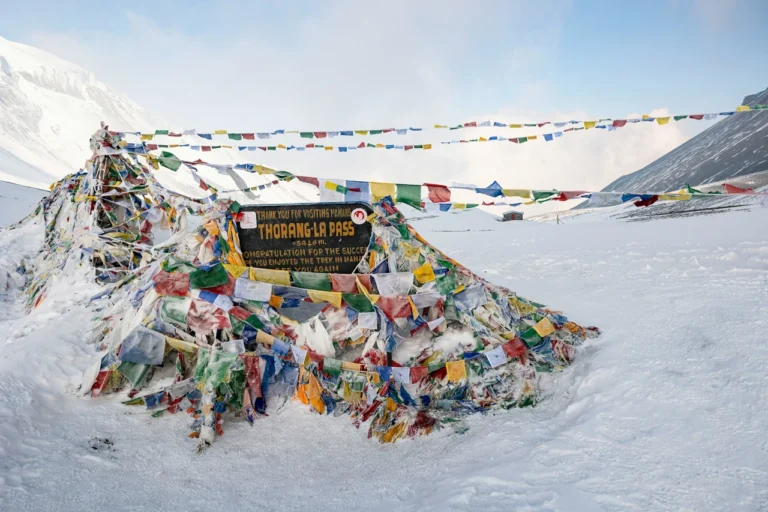
Thorong La Pass sits at 5,416 m (17,769 ft). It is the high point and the crux of the Annapurna Circuit. It links the Manang valley in the east with Muktinath and Mustang in the west (Wikipedia, retrieved 2026-06-18). The crossing is not technical. However, it is a long, hard day. Up there, the air holds only about half the oxygen of sea level. So success comes down to acclimatization, an early start, and good weather.
Key Takeaways
- Thorong La is 5,416 m, one of the highest passes crossed on any popular trek.
- The crossing day is long. It means a pre-dawn start, a climb of about 1,000 m, then a big drop to Muktinath.
- It needs no climbing skills. But it does need acclimatization and fitness.
- Altitude sickness is the main risk. The Manang rest day and a slow pace keep you safe.
This guide covers the altitude, the difficulty, the crossing day, and how to prepare. The pass is the heart of both the 12-day Annapurna Circuit Trek and the longer 15-day version via Muktinath and Mustang.
| Fact | Detail |
|---|---|
| Pass | Thorong La |
| Altitude | 5,416 m |
| On the | Annapurna Circuit |
| Crossing day | 7 to 9 hours from High Camp |
| Main risk | Altitude |
| Best time | Spring and autumn |
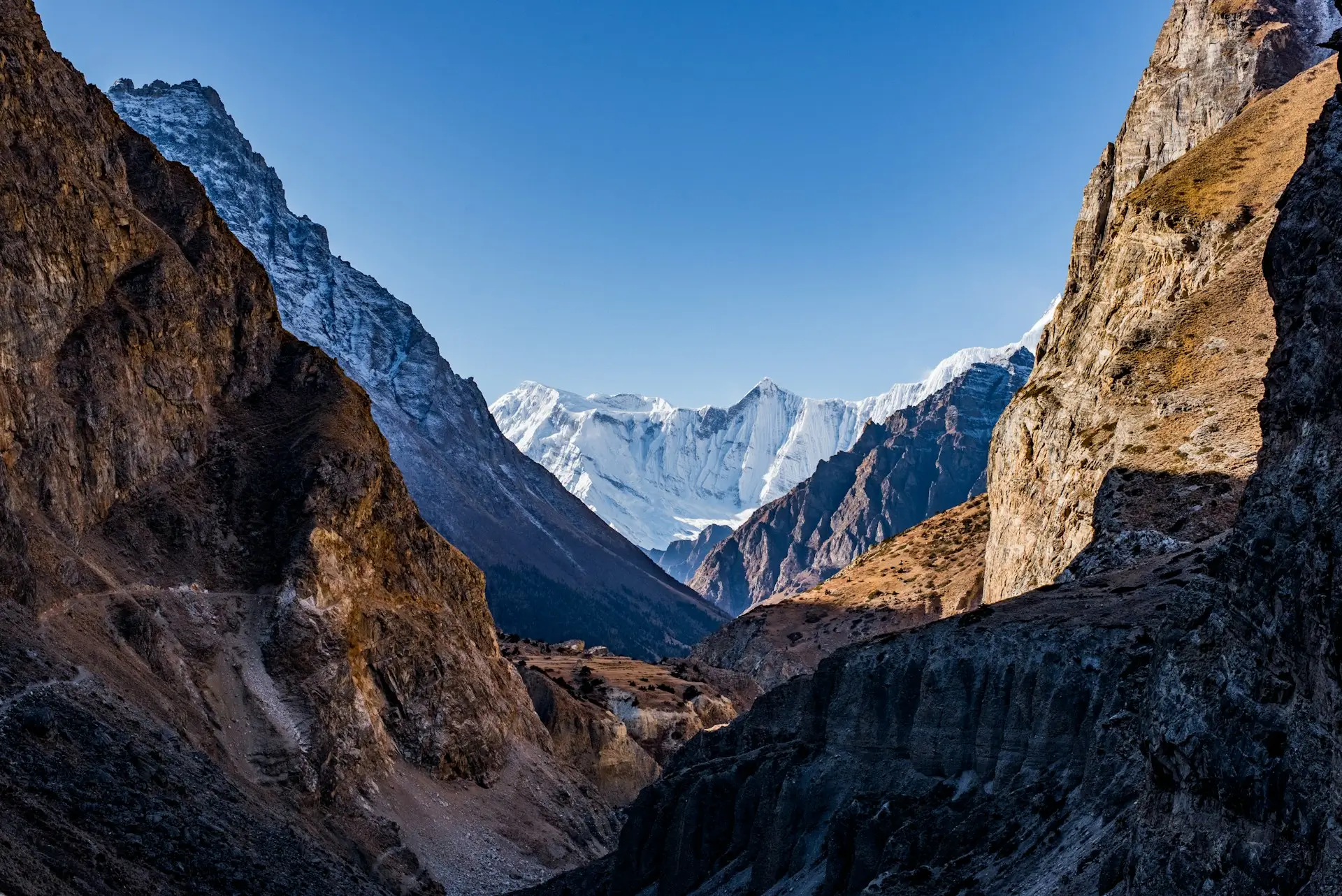
At 5,416 m, your body works at roughly half its sea-level oxygen all day. That is the most important fact about the pass. It is not the steepness that makes it hard. Instead, it is the thin air. At this height, even fit trekkers move slowly, breathe hard, and tire fast.
Start from
USD 1590
USD 1190
This is why the Annapurna Circuit builds in a rest day at Manang (3,540 m) before the pass. It also climbs gently through Yak Kharka and Thorong Phedi. Your body needs days, not hours, to adjust. So rushing the approach is the most common reason trekkers fail to cross.
You start very early, around 3 to 4 AM, to reach the pass before the wind builds. Then you descend a long way to Muktinath. A typical crossing looks like this:
The whole day usually takes 7 to 9 hours. Your guide checks conditions first. So if snow or a storm moves in, the guide will turn back, which is the right call.
Thorong La is strenuous, but a fit, well-prepared trekker can cross it with no climbing experience. There is no technical ground. You need only good boots and warm layers, plus micro spikes if there is snow. What makes it hard is the mix of altitude, an early start, the cold, and the long day.
In our experience, the trekkers who cross easily do three things. First, they train beforehand. Second, they take the Manang rest day seriously. Third, they walk the approach slowly. Fitness helps, but acclimatization matters more. So this is not a pass to attempt without those gradual days behind you.
Acute mountain sickness (AMS) is the real danger on the pass, and it rises sharply with height. In one study of Nepali Himalaya trekkers, AMS affected about 15% at 4,000 to 4,500 m and 51% at 4,500 to 5,000 m (PubMed, retrieved 2026-06-18). Crossing at 5,416 m puts you above that range. So prevention is everything.
Here is how to stay safe:
Carry any altitude medication your doctor advises. And never push over the pass with worsening symptoms.
Two rare but life-threatening conditions can develop at this height, and both need an immediate descent. The US Centers for Disease Control splits altitude illness into three types: AMS, high-altitude cerebral edema (HACE), and high-altitude pulmonary edema (HAPE) (CDC Yellow Book, retrieved 2026-06-18).
For both, the CDC is clear: descent and oxygen work far better than any medicine. This is exactly why we never push trekkers with worsening symptoms over the pass. It is also why a guide who spots these signs early matters so much. Both are uncommon with good acclimatization. Still, everyone crossing Thorong La should know the warning signs.
Turning back is a normal, safe choice, not a failure. A good guide plans for it. Weather can close Thorong La with snow or high wind. Or your body may simply not adjust in time.
So what are your options? If the pass is unsafe or you feel unwell, you can rest a day at Manang or Yak Kharka and try again, if your schedule allows. Or you can descend the way you came, down the Marsyangdi valley. Travel insurance with helicopter cover handles the worst case. The mountain will always be there. Pushing on into bad weather or worsening symptoms is the one mistake that turns a hard day into a dangerous one.
The summit morning is bitterly cold and dark, so the right gear keeps you safe. Carry these in your daypack on crossing day. Your duffel goes ahead with the porter.
Spring (March to May) and autumn (late September to November) are the best windows. In both, the pass is most reliably open and clear. In winter (December to February), heavy snow can block Thorong La or make it dangerous. In the monsoon (June to August), cloud and rain cut visibility on the approach.
Even in the good seasons, the pass needs a clear-weather window. So a flexible day or two helps. Your guide tracks the forecast and times the crossing for the safest day.
Good preparation is what gets you across. Here is what to do.
For the full route and budget, see our Annapurna Circuit cost guide and the wider Annapurna region trekking guide.
Thorong La is 5,416 m (17,769 ft). It is the highest point of the Annapurna Circuit, and one of the highest passes crossed on any popular trek. At that height, the air holds only about half the oxygen of sea level. That is what makes the crossing day so hard.
It is strenuous, but not technical. You need fitness, warm gear, and good acclimatization, but no climbing skills. The challenge is the thin air, the cold, the pre-dawn start, and the long descent to Muktinath. With training and the Manang rest day, fit beginners cross it well.
Usually 7 to 9 hours. You start around 3 to 4 AM from Thorong Phedi or High Camp. Then you climb about 1,000 m to the 5,416 m pass. After that, you descend more than 1,500 m to Muktinath. So it is the longest and hardest day of the Annapurna Circuit.
East to west, from Manang to Muktinath. This is the standard direction. It lets you acclimatize slowly on the long climb up the Manang valley. Then you descend the steeper western side. Crossing the other way gains height too fast, so it is far riskier.
Yes, with preparation. It needs no climbing experience, but it does need training and careful acclimatization. A fit first-time trekker can cross safely on a well-paced, guided plan that includes the Manang rest day. So beginners should not attempt it rushed or unguided.
Accuracy note: official fees, rules, and hard facts in this guide are cited inline from their sources; trail and price details are Spade Himalaya field research; route details reviewed by Yubaraj Katel, government-licensed trekking guide (Licence No. 19827) with 10 years of experience across the Everest, Annapurna, Langtang, and Manaslu regions.

Updated: 6 Jul, 2026
7 min
Quick answer: A guided Annapurna Circuit Trek is good value, with mandatory but cheap permits and...
Updated: 6 Jul, 2026
10 min
Quick answer: Yes, you can trek the Annapurna Circuit in winter (December to February), but it...
Updated: 15 Jul, 2026
12 min
Quick answer: The Annapurna region, near Pokhara, has Nepal’s widest range of treks: from the easy Poon...