Everest Panorama Trek (10 Days): Everest View Trek
Start from
USD 1390
USD 990
Searching trips…
Start typing to search trips...
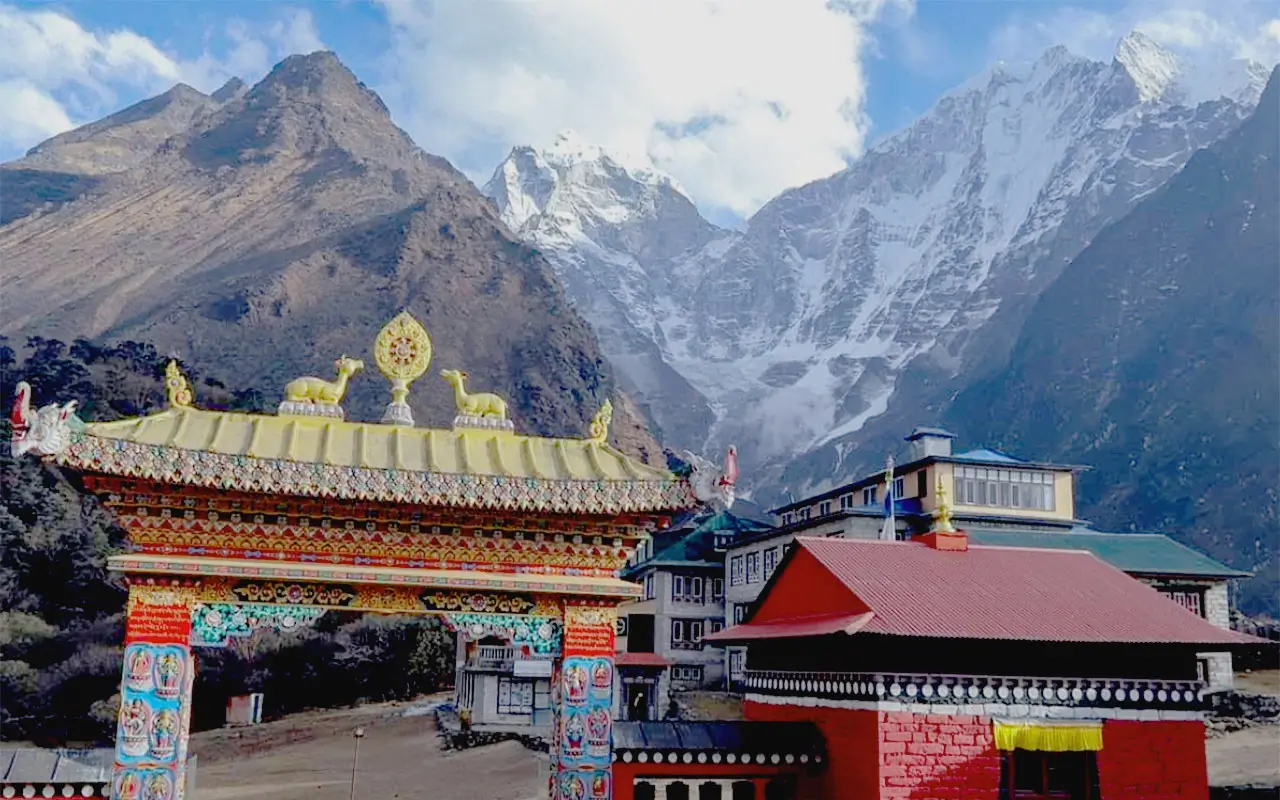
Quick answer: Tengboche Monastery is the largest and most famous monastery in Nepal’s Everest region, set on a ridge at about 3,860 m with Everest, Lhotse, and Ama Dablam behind it. Built in 1916, it hosts the Mani Rimdu festival each autumn. Nearly every Everest Base Camp trekker walks through its courtyard.
Some places earn their fame with size. Tengboche earns it with position. The monastery stands on an open ridge above the joining of two rivers, and the mountains arrange themselves around it like an audience. So when trekkers remember one building from the whole Everest trail, it is usually this one.
Key Takeaways
- Tengboche Monastery sits at about 3,860 m, a day’s walk above Namche Bazaar.
- It is the largest gompa in the Khumbu and the spiritual heart of the Sherpa community.
- Built in 1916, destroyed twice (earthquake 1934, fire 1989), and rebuilt both times.
- The Mani Rimdu festival fills the courtyard with masked dances each autumn.
- You also see it spelled Thyangboche. Same ridge, same monastery.
Tengboche Monastery, also called Dawa Choling Gompa, is the main monastery of the Everest region and the largest in the Khumbu. It belongs to the Nyingma school of Tibetan Buddhism, and it was the first celibate monastery of that lineage in the valley, according to Wikipedia’s history of the site. Around 60 monks have called it home in recent decades.
For the Sherpa people, this is the region’s spiritual center. Blessings for Everest expeditions happen here. So do weddings, festivals, and the daily rhythm of prayer that has outlasted earthquakes and fire.
For trekkers, it is something simpler: the most beautiful stop on the trail. The Nepal Tourism Board calls Tengboche a mid-way station on the road to Everest, and that is exactly how most people meet it, tired from the climb and suddenly very glad they came.
One spelling note before we go on. Older maps and books write Thyangboche monastery instead of Tengboche. Both names point to the same ridge.
The Tengboche monastery altitude is about 3,860 m (12,664 ft). That is a full day above Namche and high enough that the air feels noticeably thinner in the courtyard.
Here is where it sits on the classic route:
| Stop | Altitude |
|---|---|
| Lukla | 2,846 m |
| Namche Bazaar | 3,440 m |
| Tengboche | about 3,860 m |
| Dingboche | 4,410 m |
| Everest Base Camp | 5,364 m |
So Tengboche is a step on the acclimatization ladder, not just a photo stop. Our altitude sickness guide explains why sleeping heights like this one matter so much on the way up.
The story starts with a footprint. Sherpa tradition says the great lama Sangwa Dorje meditated on this ridge centuries ago and left his footprint in the rock, a sign that a monastery would one day stand here. The site waited a long time. Then, in 1916, Lama Gulu founded Tengboche with the backing of three local Sherpa patrons and a strong bond to Rongbuk Monastery, its mother monastery on the Tibetan side of Everest.
The building’s life since then reads like a lesson in Sherpa resilience. In 1934, a huge earthquake destroyed the monastery, and Lama Gulu died in the same period. His successors rebuilt it, with a skilled carpenter brought from Lhasa and murals painted by the renowned artist Kappa Kalden.
Then came the second blow. In 1989, a fire burned the monastery down and took many of its old scriptures and treasures with it. Once again the community rebuilt, this time with help from around the world, including Sir Edmund Hillary’s Himalayan Trust. The monastery you walk into today rose from that effort, led by the abbot Nawang Tenzing Jangpo, who is regarded as the reincarnation of Lama Gulu himself.
Fall twice, rebuild twice. That is the short version, and it is why the place feels less like a monument and more like something alive.
Mani Rimdu is the Everest region’s most famous festival, and Tengboche is its stage. The full observance runs about 19 days of prayer and preparation. Then the final three days open to the public, and the courtyard fills with monks in carved masks performing ritual dances that act out the victory of Buddhism over older ways.
The timing follows the Tibetan lunar calendar, so the dates move each year. In practice, the public days usually land in late October or November, around the full moon. That happens to be peak trekking season, so with a well-timed itinerary you can stand in the crowd with pilgrims from across the Khumbu.
Two honest tips from our guides. First, confirm the dates before you build a trip around them, because they shift every year. Second, arrive a day early if you can. The festival draws crowds, and beds near the monastery fill fast.
Tengboche also marks Dumje in summer and other Buddhist observances through the year. But if you want the masked dances, Mani Rimdu in autumn is the one to plan for.
You walk there from Namche Bazaar, and the trail makes you earn it. The Namche to Tengboche stage runs about 9 km and takes 5 to 6 hours. First the path traverses high above the valley with Everest and Ama Dablam ahead. Then it drops steeply to the river at Phunki Thenga, around 3,250 m, where water-driven prayer wheels spin beside the bridge. And then comes the climb: roughly 600 m up through rhododendron and pine to the ridge.
| Leg | What it involves |
|---|---|
| Namche to Phunki Thenga | Gentle traverse, then a steep drop to the river |
| Phunki Thenga to Tengboche | About 600 m of steady climbing through forest |
| Full stage | About 9 km, 5 to 6 hours at trekking pace |
On our Everest Base Camp Trek, this is day 5, right after the Namche acclimatization day, and the monastery courtyard is the reward at the top. On the gentler Everest Panorama Trek, Tengboche is the turnaround point and the centerpiece of the whole trip. Full stage details live in our distance guide.
Start from
USD 1390
USD 990
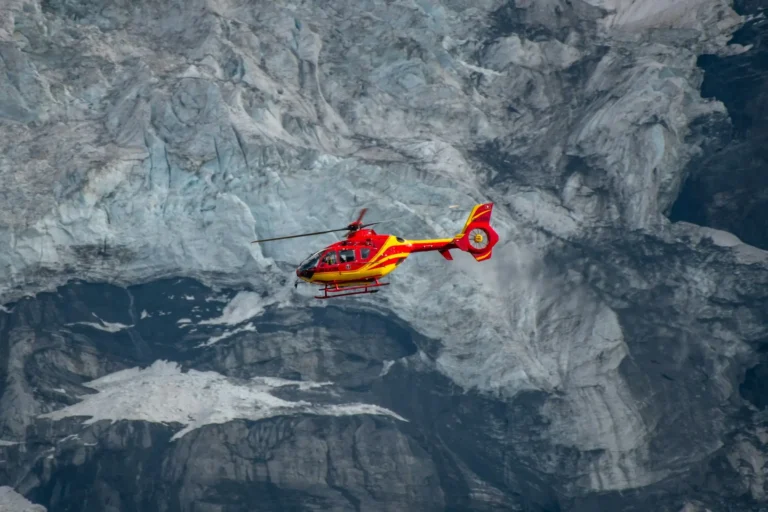
In a hurry? Helicopters can land near the ridge on charter flights. But most visitors arrive the old way, on foot, and the view feels better for it.
Yes, respectfully. The monastery generally welcomes visitors into the main prayer hall outside of closed ceremonies, and many trekkers time their visit for the daily puja, when the hall fills with chanting, drums, and horns. Sit quietly at the back, follow your guide’s lead, and let the ritual run its course.
A few courtesies keep you welcome:
Prayer times vary with the season and the monastery’s calendar. So ask your guide the evening you arrive, and they will point you to the right hour.
October and November are hard to beat, and not only for Mani Rimdu. Autumn brings the year’s most stable skies, so the sunrise and sunset views of Everest, Nuptse, Lhotse, and Ama Dablam from the ridge are at their sharpest. Spring (March to May) comes second, with warmer days and rhododendron forest in bloom on the climb from Phunki Thenga.
Then winter brings quiet and often crystal-clear days, but nights on the ridge are bitterly cold. And in the monsoon, cloud swallows the famous panorama for days at a time.
And yes, there is a bakery. At this altitude, a warm slice of apple pie beside the monastery wall has become a small trail tradition of its own.
Whatever the season, spend the golden hours here if you can. Dawn and dusk at Tengboche, when the peaks catch fire and the horns sound from the prayer hall, are the moments trekkers talk about for years.
Yes. Thyangboche is an older spelling of the same monastery and village. You will also see the name Dawa Choling Gompa, which is the monastery’s formal title.
Dress modestly, and cover your shoulders and legs. Remove your hat and your shoes where asked before entering the prayer hall. It is an active monastery rather than a museum, so quiet, unhurried behaviour matters as much as clothing.
About 9 km, usually 5 to 6 hours. The stage drops to the river at Phunki Thenga and then climbs about 600 m to the monastery ridge.
Yes. A handful of lodges sit beside the monastery, and more lie 20 minutes below in Deboche, which is slightly lower and more sheltered. Many itineraries sleep in one or the other.
There is no ticket for the courtyard. If you enter the prayer hall, a small donation is customary and helps maintain the monastery. Your national park and Khumbu permits, covered in our permits guide, already cover the trail itself.
Yes. Everest shows above the Nuptse-Lhotse wall, and Ama Dablam dominates the view to the east. The panorama is widest at dawn, before the clouds build.
Yes. For decades, expeditions have stopped at Tengboche for a blessing ceremony before continuing to base camp, and many Sherpa climbers consider it an essential start to the season. Trekkers walk the same courtyard.
The public days fall around the full moon of the tenth Tibetan month, usually late October or November. The exact dates change every year, so confirm them before you plan a trek around the festival.
Accuracy note: history and monastery facts verified against Wikipedia’s Tengboche Monastery article and the official Nepal Tourism Board Tengboche page (retrieved 2026-07-06); altitudes and stage distances match our published itineraries and distance guide; route details reviewed by Yubaraj Katel, government-licensed trekking guide (Licence No. 19827) with 10 years of experience leading treks in the Everest region.

Updated: 11 Jul, 2026
14 min
Who the Sherpa people really are: their Tibetan origin, Buddhist culture, altitude adaptation, famous climbers, and...
Updated: 8 Oct, 2026
10 min
Is the Everest helicopter tour worth it? An honest look at the cost, the safety, why...
Updated: 20 Jul, 2026
15 min
Quick answer: The Everest region, or Khumbu, is home to Everest Base Camp, the Gokyo Lakes,...