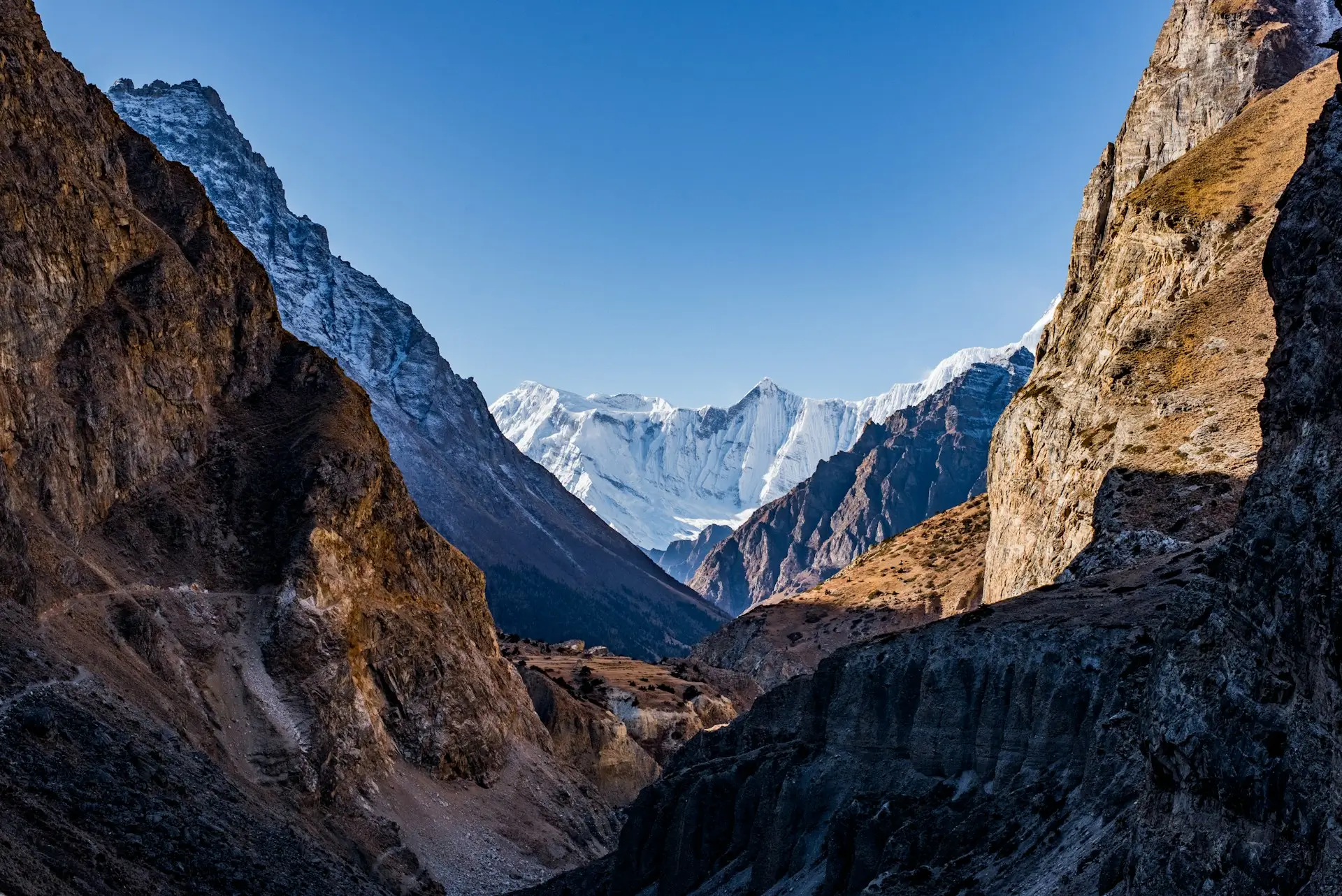
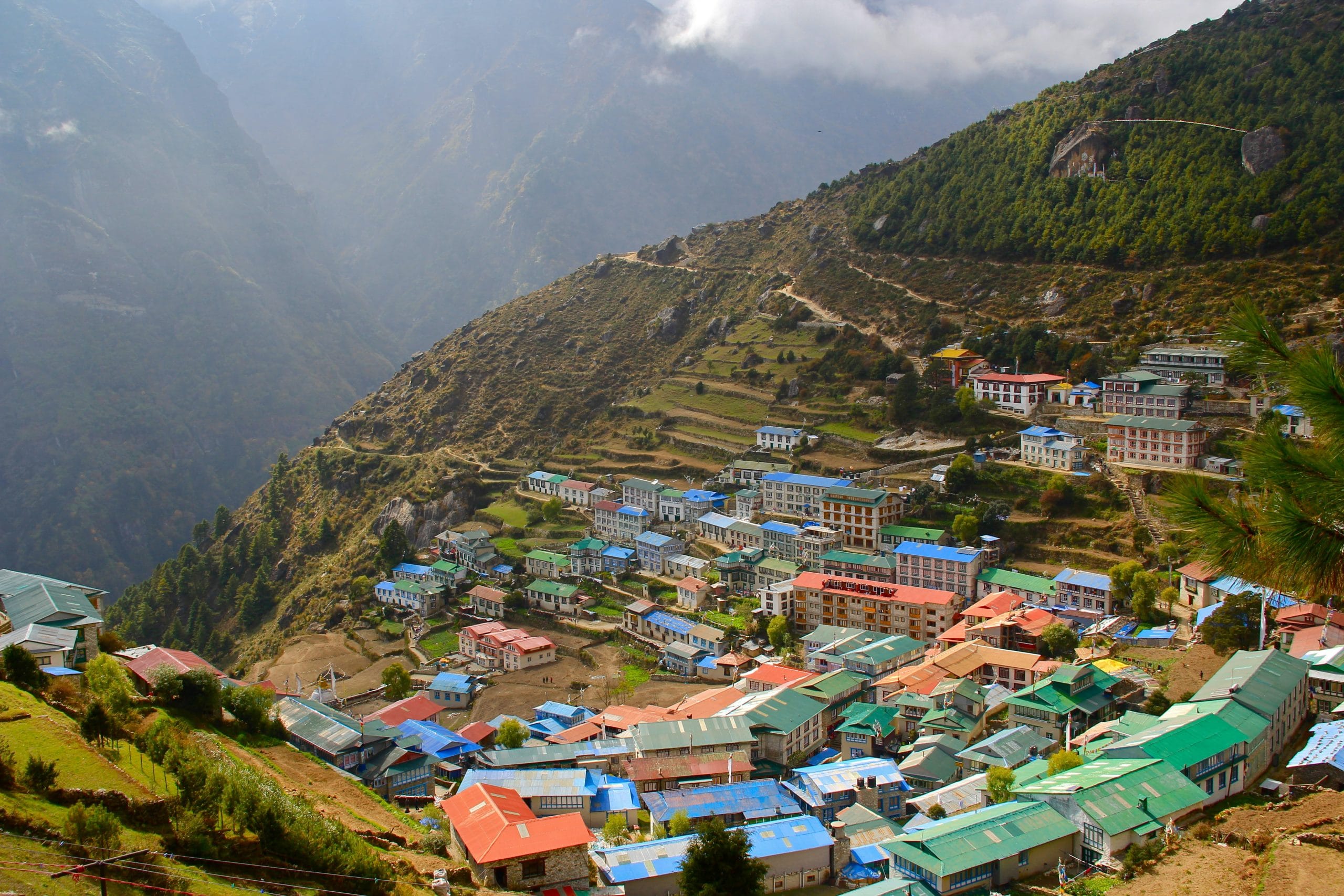
Quick answer: Namche Bazaar is the gateway town to Everest, built into a horseshoe-shaped mountainside at 3,440 m in Nepal’s Khumbu region. Nearly every trekker sleeps here twice for acclimatization. The town has lodges, bakeries, gear shops, a Saturday market, and the first big Everest views of the whole trek.
Every trail to Everest runs through one town. Base camp trekkers, Gokyo trekkers, Three Passes trekkers, and summit climbers all walk the same stone steps into the same mountain amphitheater. So if you are planning any Everest trip, you will get to know Namche Bazaar well. Here is everything that actually matters about it.
Key Takeaways
- Namche Bazaar sits at 3,440 m in the Khumbu, two walking days from Lukla.
- It is the capital of the Everest region: a historic Sherpa trading town turned trekking hub.
- Nearly all itineraries spend two nights here for acclimatization. That rest day is not optional.
- Expect lodges, bakeries, gear shops, ATMs, and a famous Saturday market.
- Hotel Everest View is not in the town. It stands at 3,880 m, a half-day hike above it.
What is Namche Bazaar?
Namche Bazaar in Nepal is the main town of the Khumbu, the valley that leads to Everest. It curves around a natural bowl in the mountainside, so the whole place looks like a green and blue amphitheater with prayer flags for rigging. Kongde Ri fills the skyline across the valley, and Thamserku rises just east of town. Fewer than 2,000 people live here permanently. In trekking season, the number feels several times higher. The lanes fill fast.
Long before trekking existed, this was a trading town. Sherpa caravans met traders from Tibet here. The town is still famous for its homemade yak cheese and butter, a point the Nepal Tourism Board itself makes. Then the first ascent of Everest in 1953 changed everything. Climbers and trekkers followed, and Namche grew into the busiest stop between Lukla and base camp.
Today it is the region’s headquarters in every practical sense, with the last real shops, the most comfortable lodges, and the social heart of the Everest trail.
How high is Namche Bazaar?
The Namche Bazaar altitude is 3,440 m (11,286 ft) at the lower part of town. Because the town climbs the sides of its bowl, some lodges sit noticeably higher than others. Either way, this is serious altitude. For most trekkers, Namche is the first place on the trail where the air feels thin.
Here is where it fits on the classic route.
| Stop | Altitude |
|---|---|
| Kathmandu | 1,400 m |
| Lukla | 2,846 m |
| Phakding | 2,610 m |
| Namche Bazaar | 3,440 m |
| Tengboche | 3,860 m |
| Hotel Everest View | 3,880 m |
| Everest Base Camp | 5,364 m |
So Namche marks the moment the trek stops being a warm-up. Above this town, altitude sets the pace, and our altitude sickness guide explains the rules that keep you safe.
How do you get to Namche Bazaar?
You fly to Lukla, then walk for two days. There is no road. First, a short mountain flight lands you at Lukla airport at 2,846 m. From there, the trail actually drops to Phakding at 2,610 m, an easy first day of about 6 km along the Dudh Koshi river.
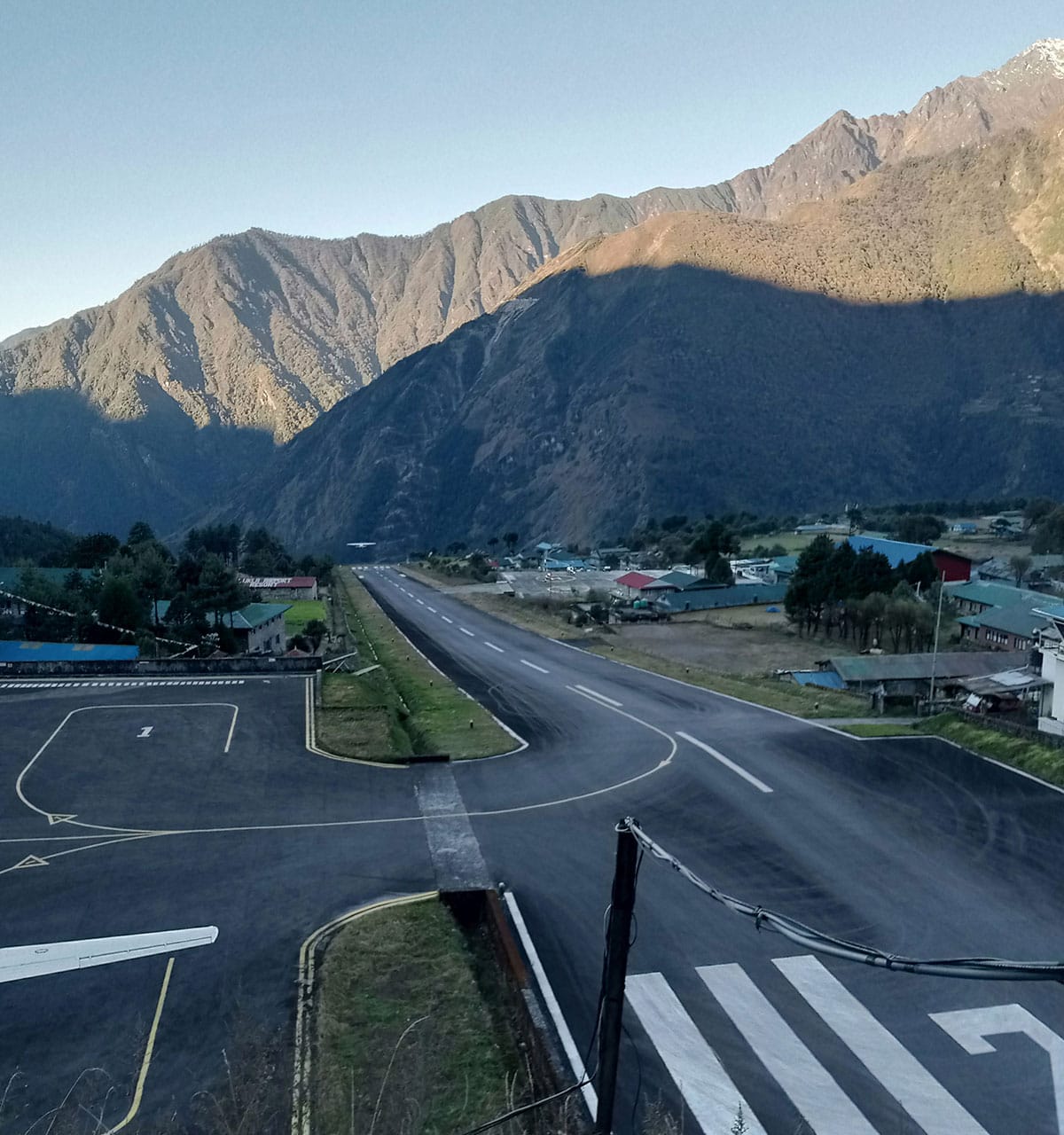
Tenzing-Hillary Airport in Lukla, Nepal. This high-altitude runway serves as the primary gateway to the Everest region.
Day two is the famous one. The trail crosses the river on a series of high suspension bridges. Then rangers check your permits near Monjo, at the entrance to Sagarmatha National Park. Our permits guide covers what you need. Soon after, the highest bridge of the day, the famous Hillary Suspension Bridge, marks the base of the Namche hill. Then comes the climb. The day covers roughly 7 km in 5 to 6 hours, with 600 m of ascent packed into the second half.
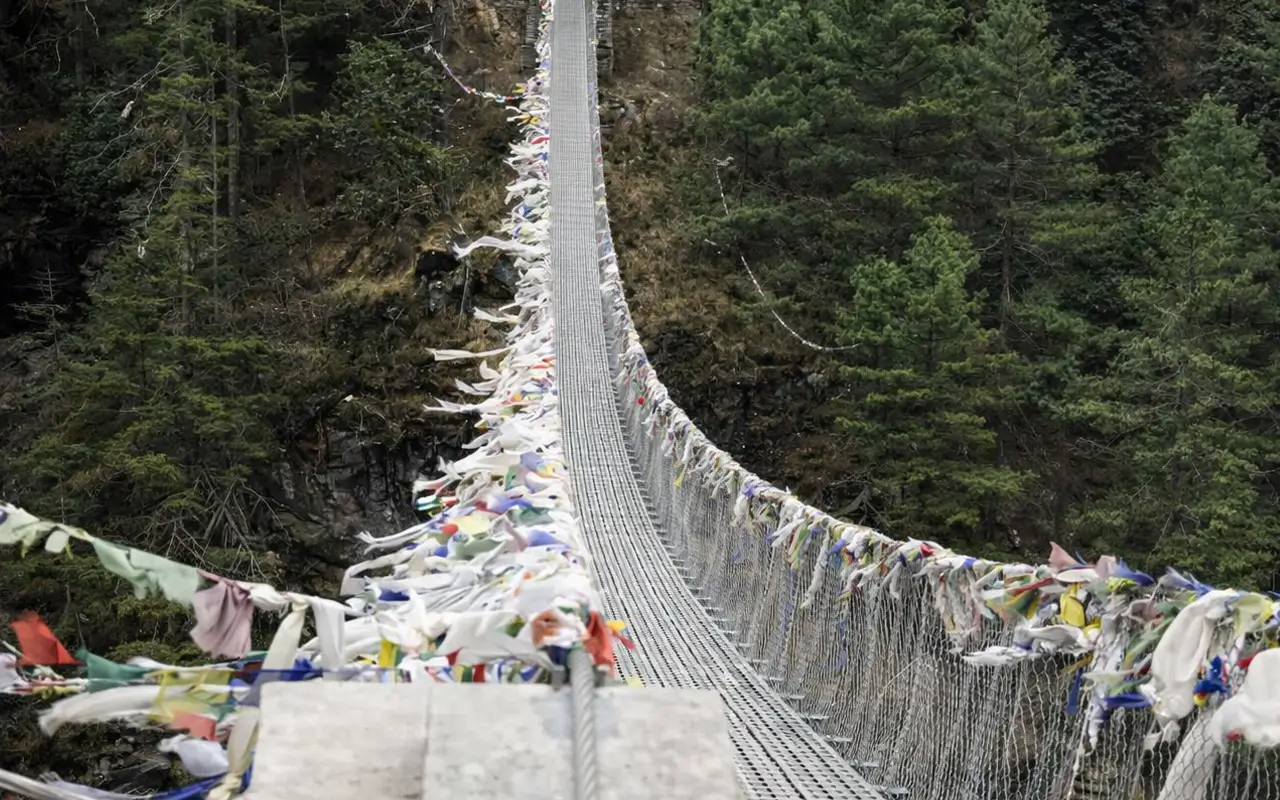
The famous Hillary Suspension Bridge, heavily draped in prayer flags, crossing the Dudh Koshi River gorge on the trail to Namche Bazaar.
And there is a reward hidden in that climb. When the sky is clear, a bend in the trail gives you your first view of Everest itself. Pine branches frame it like a postcard. Cameras come out fast. Most trekkers forget their burning legs for a minute. Full stage-by-stage details are in our distance guide.
Why do trekkers spend two nights in Namche?
Because your body needs time to catch up with the altitude. Jumping from Kathmandu at 1,400 m to 3,440 m in two days is a big ask. So every good itinerary adds an acclimatization day in Namche, and the official Nepal Tourism Board advice says the same: stay a couple of days and walk high before moving on.
A rest day here does not mean lying in bed. In fact, the golden rule is the opposite: climb high, sleep low. The classic options:
- Hike to Hotel Everest View (3,880 m): about 5 km up through the pines to the terrace with Everest, Lhotse, and Ama Dablam laid out in front of you.
- Visit Khumjung and Khunde villages: quieter Sherpa towns below the sacred peak of Khumbila, home to the school and the hospital that Edmund Hillary founded. The Khumjung monastery even keeps what locals say is a yeti scalp.
- Walk to the Syangboche airstrip: a dirt runway above town with huge valley views.
Then you return to Namche for the night, and your body thanks you higher up. Also watch for the small signs that you truly need this day: a light headache, broken sleep, or a weak appetite. Those are normal at 3,440 m, and they usually settle with rest and water. On our Everest Base Camp Trek, this day is built into the itinerary. On the gentler Everest Panorama Trek, Namche and the viewpoints above it are the destination itself.
What is the weather like in Namche Bazaar?
Namche Bazaar weather is mountain weather: clear mornings, clouding afternoons, and cold nights in every season. Namche is also the gateway to the Gokyo Lakes trek, which branches west from here. It turns far harsher higher up, so it helps to know how cold it gets at Everest Base Camp. The table below shows what our guides typically see through the year, as Spade field-experience estimates:
| Season | Day | Night | What to expect |
|---|---|---|---|
| Spring (Mar to May) | 8 to 15 C | -2 to 4 C | Clear mornings, rhododendrons below town |
| Monsoon (Jun to Aug) | 12 to 17 C | 5 to 9 C | Daily rain and cloud, few trekkers |
| Autumn (Sep to Nov) | 8 to 14 C | -3 to 3 C | The most stable skies of the year |
| Winter (Dec to Feb) | 2 to 8 C | -8 to -2 C | Cold and crisp, snow on the trails some weeks |
So pack for two different days in one. Expect t-shirt sunshine on the climb, then a down jacket the moment the sun drops behind Kongde Ri across the valley.
Where do you stay? Hotels and lodges in Namche
Most Namche Bazaar hotels are family-run lodges, and they are the most comfortable on the whole trail. Rooms are simple twin-share with thick blankets. Lodge kitchens serve dal bhat, noodles, and surprisingly good pizza. Prices climb with altitude, because everything here arrives by porter or yak. Also, this is the best place in the Khumbu for the small luxuries: hot showers, device charging, bakeries with real coffee, and lodge wifi for a small fee.

One important mix-up to clear: Hotel Everest View is not in Namche Bazaar. The famous hotel stands at 3,880 m on a ridge above town, a half-day hike away. You can sleep there on a trip built for it. But most trekkers sleep in Namche and visit the hotel’s terrace for breakfast. Our Hotel Everest View guide explains how both options work.
Because Spade Himalaya books your lodges ahead in high season, you never race anyone for a room after a 6 hour climb.
What can you do in Namche Bazaar?
More than anywhere else on the trail. The town is the Everest region’s shop window, and one lap of its stone lanes covers most of it:
- The Saturday market: every Saturday morning, traders from the lower valleys fill the town center with produce and goods, a tradition the Nepal Tourism Board highlights as the region’s weekly fair.
- The Sherpa Culture Museum: exhibits on Sherpa life and culture, a photo gallery of Everest summiteers, and the Tenzing Norgay statue at the viewpoint beside it. In fact, Kanchha Sherpa, the last surviving climber of the 1953 Everest expedition, was born right here in Namche and lived here until his death in 2025.
- Gear shops: your last full resupply. Forgot sunglasses, batteries, or a warm hat? Buy them here, not higher.
- Souvenir stalls: Tibetan handicrafts line the main lane. Prayer flags, thangka paintings, and Sherpa knitted hats are the classics.
- Bakeries and cafes: apple pie at 3,440 m tastes better than it has any right to.
- The stupa and prayer wheels: the quiet heart of a working Buddhist town.
- Lodge evenings: dinner around the stove, pool tables (the tourism board lists pool among the town’s pastimes), and early nights, because trail mornings start at dawn.
And when you leave, the trail to Tengboche runs about 9 km up and down along the valley wall, on what our guides call the most beautiful walking day in Nepal.
When is the best time to visit Namche Bazaar?
October to November and March to May, the same windows as the rest of the Everest trail. Autumn brings the most stable skies of the year, so the big views above town rarely disappoint. Spring trades a little clarity for warmth and flowering rhododendron forests on the lower trail.
Winter is quieter but workable, because Namche sits well below the high passes. Monsoon is the gamble. It can hide the mountains for days at a time. In every season, build a buffer day around your Lukla flights. Our Everest region guide compares the seasons across the whole valley.
FAQs
Where is Namche Bazaar?
In the Khumbu region of northeastern Nepal, inside Sagarmatha National Park. It sits at 3,440 m, about two walking days from Lukla and roughly a week below Everest Base Camp.
What is Namche Bazaar famous for?
For being the gateway to Everest. It is the historic Sherpa market town where every trek and expedition pauses to acclimatize, famous for its Saturday market, its yak cheese trading past, and the first Everest views of the trail.
Is Everest visible from Namche Bazaar?
Barely from the town itself. The bowl faces Kongde Ri across the valley, and the Everest massif hides behind the ridge above town. But you never walk far for it: the first clear view comes at a bend on the Namche hill, and the rest day hikes toward Syangboche and Hotel Everest View open the full panorama.
What is the population of Namche Bazaar?
The recorded census figure is 1,647 permanent residents, mostly Sherpa families whose ancestors traded from this same hillside. But in spring and autumn, trekkers, guides, and seasonal workers multiply the real number many times over.
How far is Lukla to Namche Bazaar?
About 13 km of walking, split over two days. First Lukla to Phakding (about 6 km), then Phakding to Namche (about 7 km with the big climb). Fit trekkers sometimes push it in one long day. We do not recommend that, because the altitude gain is too fast.
How far is it from Namche Bazaar to Everest Base Camp?
About 52 km of walking, one way. The full route from Lukla is about 65 km, and Namche sits 13 km in. Most trekkers take six days from Namche to base camp, because the second acclimatization day at Dingboche is built into that stretch.
Can you get to Namche Bazaar by road?
No. No road reaches Namche, and that is part of its character. The classic walk-in routes from Jiri and Salleri take extra days, so nearly everyone flies to Lukla instead. Supplies still arrive the old way: by plane, helicopter, porter, and yak.
Can you reach Namche Bazaar by helicopter?
Yes. Helicopters land at the Syangboche airstrip above town. Also, our Everest helicopter tour flies the same valley in a single morning. For trekkers, though, walking in is part of the acclimatization plan.
Are there ATMs and wifi in Namche Bazaar?
Yes, both. Lodges sell wifi access, and the town has ATMs. Still, carry enough Nepali rupees from Kathmandu, because mountain ATMs run out of cash and the machines are the last ones on the trail.
Do you pass through Namche Bazaar on the way back?
Yes. Nearly every itinerary sleeps here again on the descent, and it feels like a different town when your body is trail-fit. Most trekkers celebrate with a hot shower and bakery pie.
Is Namche Bazaar worth an extra day?
Yes, and not only for safety. The acclimatization day doubles as the best sightseeing day of the lower trek: Everest views from the ridge, Sherpa villages, and the museum all fit into one loop.
Accuracy note: town facts verified against the official Nepal Tourism Board Namche Bazaar page and the public record (retrieved 2026-07-05); altitudes and stage distances match our published itineraries and distance guide; seasonal temperatures are Spade field-experience estimates; route details reviewed by Yubaraj Katel, government-licensed trekking guide (Licence No. 19827) with 10 years of experience leading treks in the Everest region.

Ready to See It for Yourself?
Updated: 6 Jul, 2026
9 min
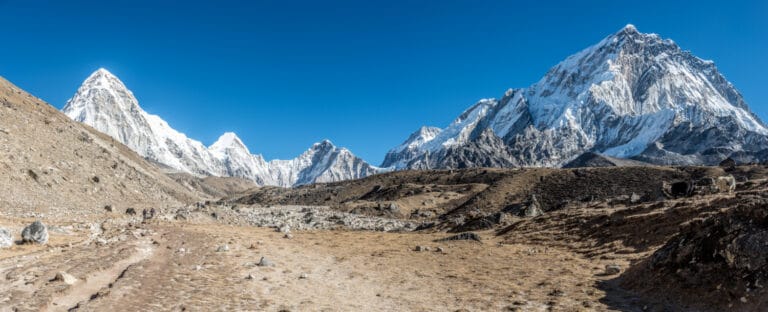
Everest Base Camp Trek Cost in 2026: Full Breakdown
Quick answer: A guided Everest Base Camp Trek’s biggest single cost is the round-trip Lukla flight,...
Updated: 8 Oct, 2026
10 min
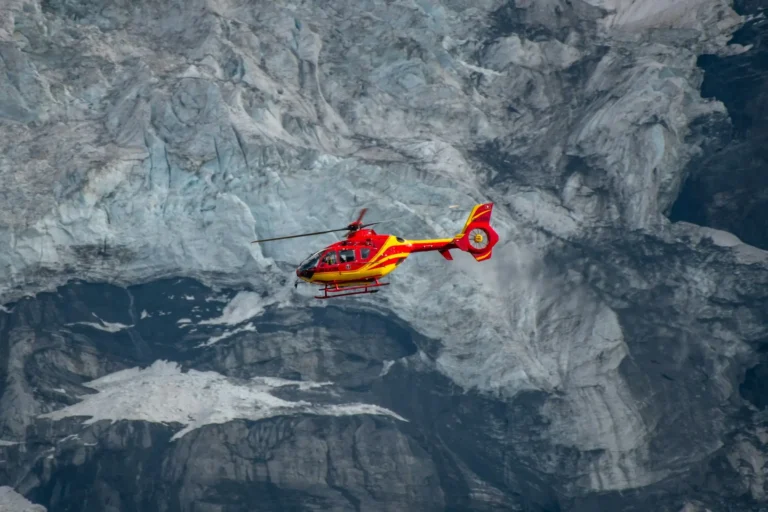
Everest Helicopter Tour: Is It Worth It? Cost, Safety and the Reality
Is the Everest helicopter tour worth it? An honest look at the cost, the safety, why...
Updated: 20 Jul, 2026
15 min
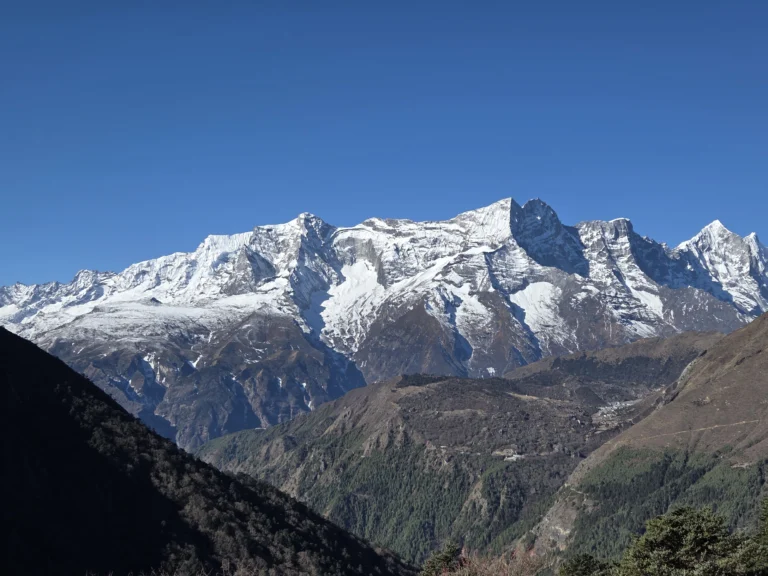
Everest Region Treks: Routes, Cost & Best Time (2026 Guide)
Quick answer: The Everest region, or Khumbu, is home to Everest Base Camp, the Gokyo Lakes,...