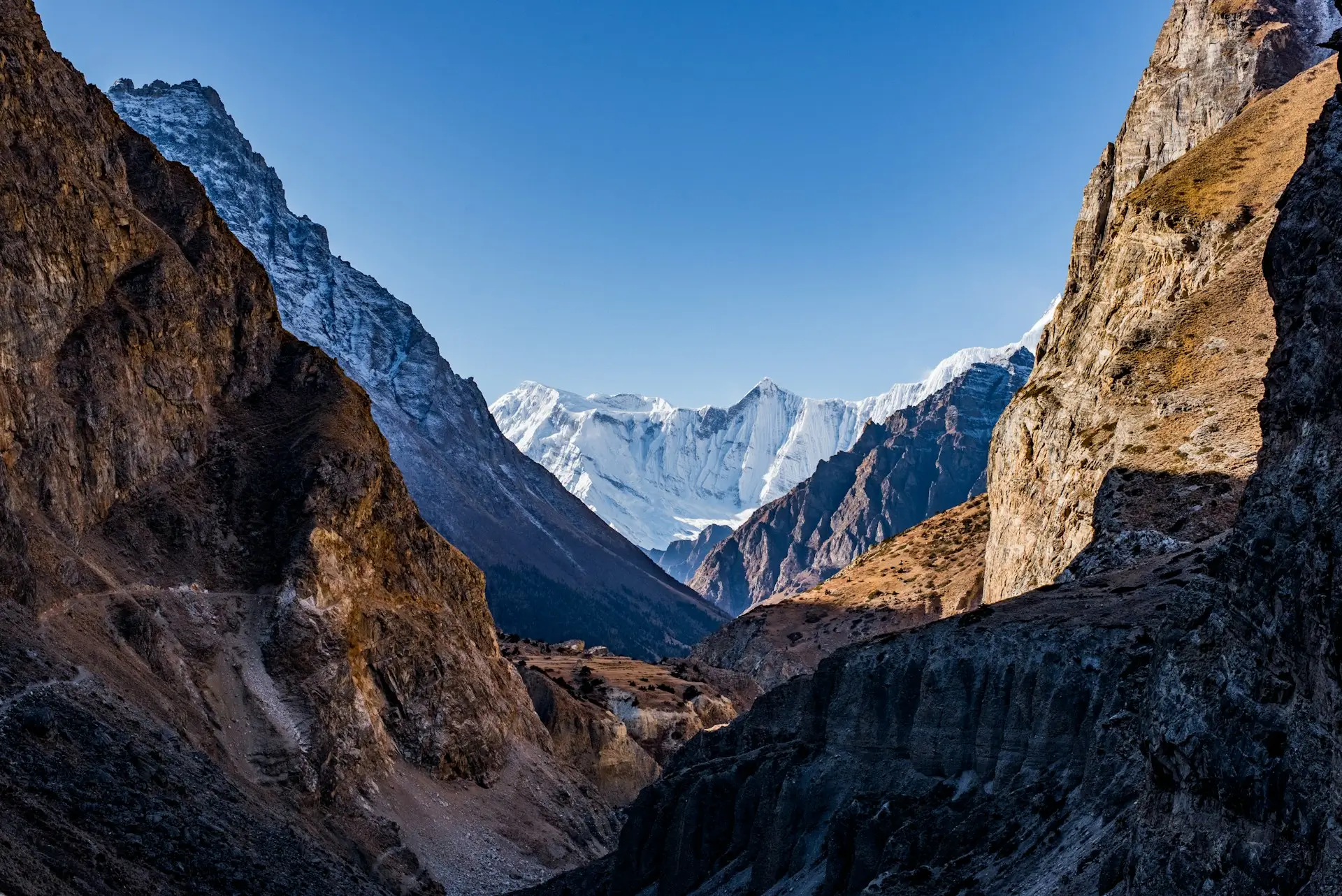
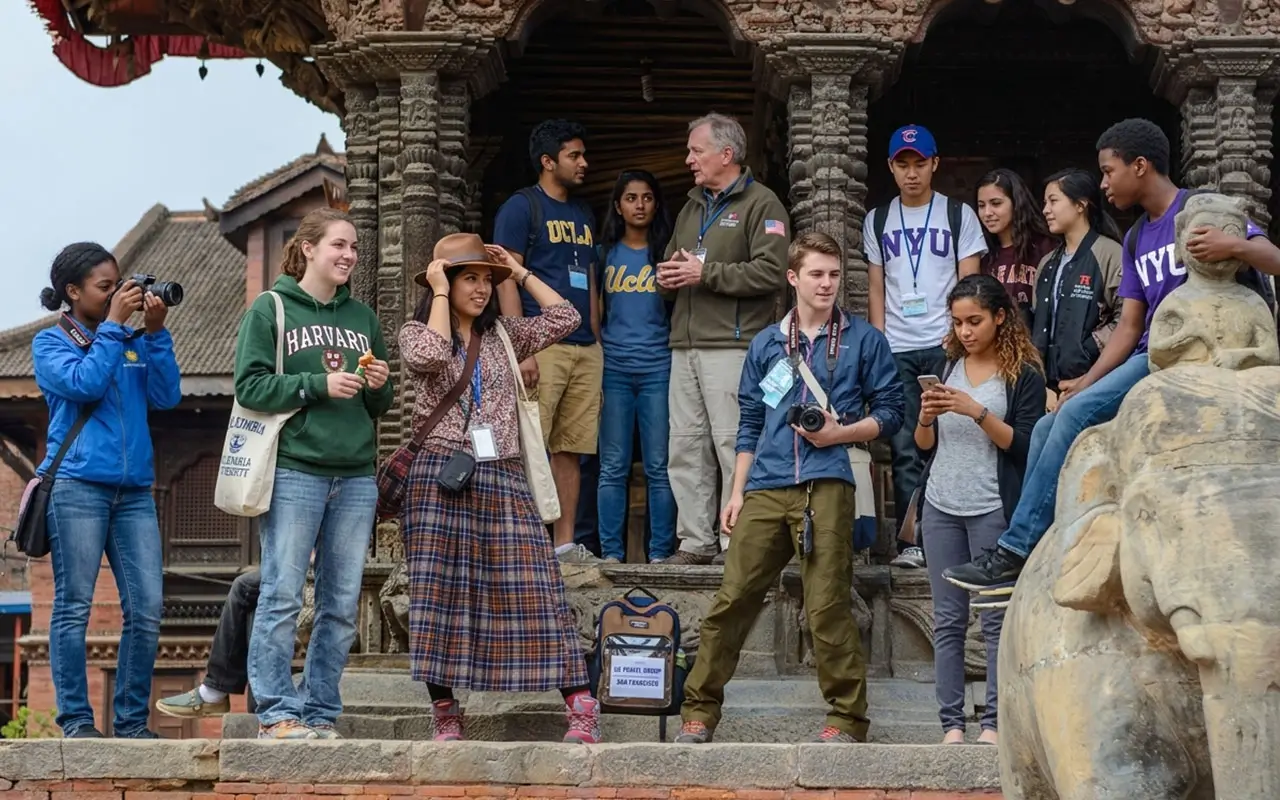
Quick answer: Yes, Nepal is safe to visit in 2026. The political unrest of September 2025 ended over a year of headlines with an election, a new government, and calm streets. The US rates Nepal Level 2 overall, the same tier as France or the UK, with one exception: a Level 4 Do Not Travel now covers the flood-hit Rasuwa district in the north. Violent crime against tourists is rare. The real risks are road travel, altitude, and monsoon weather, and all three are manageable with basic planning.
Update, 28 August 2026: A glacial flood surged out of Tibet into the Bhotekoshi and Trishuli rivers on 26 August, causing severe damage in Rasuwa district in northern Nepal. Syabrubesi, the road trailhead for the Langtang Valley, Gosaikunda and Tamang Heritage treks, was badly hit, and the Nepal Tourism Board has advised postponing travel through the Galchhi to Nuwakot to Rasuwa to Syabrubesi corridor. The Prithvi Highway, the main road connecting Kathmandu to Pokhara and Chitwan, has also been affected. The United States has since placed a Level 4 Do Not Travel on the Rasuwagadhi, Timure and Syabrubesi area of Rasuwa district and the Nepal to China border crossing, while keeping Nepal as a whole at Level 2. The Everest and Annapurna regions, Kathmandu, Pokhara and Chitwan are unaffected and operating normally. If your plans involve the Langtang region, check the current position before you book.
We live here, we run trips here, and we will give you the answer we give our own guests: yes, come, and here is exactly what you should know. After all, Nepal made world news in September 2025. Almost a year later, people still type “is it safe to travel to Nepal right now” into Google. Fair question. So instead of vague reassurance, this guide walks through what actually happened, where things stand today, and the real risks. Because those deserve your attention more than the headlines do.
Key Takeaways
- Flood update, August 2026: a glacial flood has severely damaged Rasuwa district and the Syabrubesi trailhead, disrupting access to Langtang, Gosaikunda and Tamang Heritage. Everest, Annapurna, Kathmandu, Pokhara and Chitwan are unaffected.
- Nepal is calm in 2026: the September 2025 protests ended, elections were held in March, and a new government is in place.
- The US advisory is Level 2 nationally, the same broad tier as much of Western Europe, but a Level 4 Do Not Travel now applies to the Rasuwagadhi, Timure and Syabrubesi area of Rasuwa district after the 26 August 2026 flood.
- Violent crime against tourists is rare. Petty theft in crowded spots is the realistic worry.
- The genuine risks are roads, altitude, and monsoon landslides, not politics or crime.
- Solo and female travelers rate Nepal among Asia’s friendlier destinations, with normal precautions.
- Tourism is growing again: 620,453 arrivals in the first half of 2026, up 7.4% on last year.
What happened in Nepal in 2025, and is it over?
It is over, and here is the short, honest version. First, the facts. On 4 September 2025, the government abruptly blocked 26 social media platforms. Then, within days, the country saw its largest youth protests in a generation, because young Nepalis read the ban as censorship. The protests turned deadly. In all, 76 people were killed, a toll later confirmed by Nepal’s own National Human Rights Commission after a six-month investigation, and Prime Minister K.P. Sharma Oli resigned (Britannica).
But what followed surprised many observers. First, former Chief Justice Sushila Karki was appointed interim prime minister, the first woman ever to lead Nepal. Next, early elections were held on 5 March 2026. And the Rastriya Swatantra Party won a landslide, taking 182 of 275 seats, Nepal’s first single-party majority since 1999. Then Balen Shah was sworn in as prime minister on 27 March 2026 (The Kathmandu Post).
So here is the honest summary for a traveler. Nepal went through a painful political moment. Then it resolved that moment through the ballot box, in under seven months. And it came out with a stable government and calm streets. And four days after the new government took office, the United States lowered its travel advisory. One more thing says a lot: Nepal’s own rights commission investigated the violence openly and published its findings in May 2026. Countries that do that tend to be the safe ones. Also worth adding: the tourist areas were never targets during the unrest. Trekkers on the trails in September 2025 mostly learned about the protests from the news, same as everyone else.
What do official travel advisories say about Nepal in 2026?
Every major government now places Nepal in its ordinary-caution tier. Not the “reconsider travel” tier, and not the “do not travel” one. The standard second level, shared with dozens of mainstream destinations.
| Country | Current advice | Note |
|---|---|---|
| United States | Level 2 nationally. Level 4: Do Not Travel for the Rasuwagadhi, Timure and Syabrubesi area of Rasuwa district and the Nepal to China border crossing | Lowered to Level 2 on 31 March 2026. The Rasuwa Level 4 was added after the 26 August 2026 flood |
| United Kingdom | Standard travel advice | Notes protests can occur; no travel warning |
| Australia | Exercise a high degree of caution | Level 2 of 4 |
| Canada | Exercise a high degree of caution | “Avoid non-essential travel” was removed |
The US update is the one worth reading, because it is specific. The State Department’s Nepal advisory (31 March 2026) says demonstrations “can start with little warning.” It notes that medical services “have limited ability to handle regular and emergency care” outside Kathmandu. Also, it flags monsoon flooding and landslides from June to September. Finally, it strongly discourages solo trekking, pointing to Nepal’s own rule that independent trekkers must hire a licensed guide in national parks.
Now read that list again. Politics barely features. Instead, the advisory worries about roads, weather, altitude, and remote-area logistics. So that is where this guide spends its time too.
Meanwhile, travelers are voting with their feet. Nepal welcomed 620,453 visitors in the first half of 2026, up 7.4% year on year (Nepal Tourism Board statistics, retrieved 2026-07-13). October 2025, one month after the protests, was still the year’s busiest month.
Is Nepal safe from crime?
Safer than most travelers expect, honestly. Violent crime against foreigners is rare enough that individual cases make national news. Here, guests are treated with a seriousness that is hard to overstate. In the hills, that old instinct, the guest is a god, still shapes how visitors are received.
The realistic issues are small and avoidable:
- Pickpocketing in crowded places: Thamel’s lanes, festival crowds, packed local buses. Keep valuables zipped and forward-facing, the same as in any busy city.
- Overcharging: some taxi drivers quote fantasy fares. Agree the price first, or use ride apps like Pathao and inDrive in Kathmandu and Pokhara, which have quietly fixed this problem.
- Scams aimed at the kind-hearted: the milk-for-the-baby routine, the gem “investment,” the too-cheap trek that gets expensive halfway up. A polite no ends nearly all of them.
- Bandhas (strikes): occasionally a political group calls a shutdown and transport pauses for a day. Annoying, rarely dangerous, and usually announced in advance. We build itineraries with the flexibility to absorb one.
And that is the whole list. No armed robbery epidemic, no tourist kidnapping problem, no no-go zones in Kathmandu. So walk well-lit streets at night, keep your bag in sight, and Nepal’s cities will treat you gently.
Is Nepal safe for female travelers?
Yes, and many solo women rank it among the friendliest countries in Asia, though the usual rules still apply. Every season, thousands of women trek Nepal with a guide or in groups. And the culture is broadly respectful and protective toward guests.
What actually helps, from the women on our own team and our returning guests:
- Dress modestly outside tourist hubs: shoulders and knees covered reads as respect, especially in villages and temples. And yes, to answer a question people genuinely Google: girls can wear shorts in Nepal, especially in Kathmandu, Pokhara, and on hot trekking days. Longer shorts or trousers simply draw less attention and work better in rural areas.
- Choose well-reviewed lodges and, if it adds comfort, ask for a female guide. We arrange them on request.
- Skip overnight buses and avoid walking alone late at night in unfamiliar lanes, the same judgment you would use anywhere.
- Share your itinerary, and on treks, stick to the established routes where lodges and other trekkers are never far.
Harassment is not absent, because no country can claim that. Still, it is notably less aggressive than in much of South Asia. In practice, unwanted attention usually stops at staring.
Is Nepal safe for solo travelers?
Yes, and Nepal may be the easiest place in Asia to travel alone without feeling alone. The main trekking trails are social by design. You share lodges, tables, and sunrise viewpoints with trekkers from everywhere, so solo travelers make friends by day two whether they meant to or not. Meanwhile, Pokhara’s lakeside and Kathmandu’s Thamel run on a steady stream of independent travelers.
One rule changed solo trekking in 2023, and it changed it for the better. Independent trekkers must now hire a licensed guide in the national parks, per the Nepal Tourism Board. So “solo” on the big trails now means you, plus a local professional who knows the route, the lodges, and the warning signs of altitude sickness. The full rulebook, every permit, fee, and where the rule applies, is in our Nepal trekking permits and rules guide. Solo travelers tell us the guide becomes half companion, half safety net.
A few practical notes for the solo planner:
- Costs run a little higher alone, since you carry the guide and room costs solo. Joining a small group drops the price, and we match solo travelers into groups on request.
- The best solo-friendly bases are Pokhara, Kathmandu, and the busy teahouse routes like Everest Base Camp, Annapurna, and Langtang, where company is never far.
- Tell someone your plan. Share your itinerary, check in from Wi-Fi stops, and let your guide handle the rest.
Is Nepal safe for American and Indian tourists?
For Americans: yes, and Level 2 means exactly that. “Exercise increased caution” is the same advice Americans get for France, the UK, and most of Europe. Also, there is no targeting of Americans in Nepal, and the dollar goes far. Register with the embassy’s STEP program if it gives you peace of mind, buy proper insurance, and come.
Meanwhile, for Indian travelers, Nepal is about as easy as foreign travel gets. No visa, no currency headache at the border, shared festivals, and food that feels familiar. The practical cautions are the same as for everyone: agree taxi fares, book treks with a registered operator, and treat the mountain roads with respect. Our visa guide covers the entry rules for every nationality, including the no-visa rule for Indians.
What are the REAL risks in Nepal?
Roads, altitude, and weather. In that order, and none of them are secrets. This is the section that actually matters, so we will be blunt.
First, road travel. This is Nepal’s weakest safety point. Here, mountain highways are narrow, monsoon rains undermine them, and long-distance night buses hold the country’s worst accident record. The fixes are simple and cheap: prefer flying on long routes, use tourist-class buses over local ones, never ride overnight, and give the driver daylight. When our itineraries choose a 25-minute flight over a 7-hour road day, this is why.
Second, altitude. This is the trekker’s risk. Above 3,000 m, altitude sickness can affect anyone, fit or not. Still, it is the most manageable risk on this list. Ascend gradually, sleep low, drink water, and descend at real symptoms. Our altitude sickness guide explains the signs, and our guides carry pulse oximeters and check every guest daily.
Third, monsoon weather, June to September. This is the seasonal risk. In those months, heavy rain triggers landslides on hill roads and closes mountain flights for days at a time. Yet it is completely predictable. Trek in the main seasons, keep a buffer day before international flights, and the monsoon becomes a scheduling question rather than a safety one. Our best time to visit guide maps the whole year.
Fourth, earthquakes deserve one honest paragraph. Nepal sits in an active seismic zone, and the 2015 earthquake is within living memory. Quakes cannot be predicted. But your response can be prepared: know your hotel’s exits, drop and cover indoors, and move to open ground when the shaking stops. What was rebuilt after 2015 is mostly stronger than what it replaced.
And flying? Honestly, Nepal’s mountain aviation is demanding, with short high-altitude strips like Lukla and fast-changing weather. The safety culture answer is the one our pilots live by: morning flights, strict weather rules, and a willingness to cancel. Delays here are the system protecting you. If a flight is scrubbed, that is a decision working in your favor, so build slack into your plan and let it work.
How do you avoid trekking scams, including the helicopter one?
Book registered, insist on paperwork, and be suspicious of anything free. In truth, most Nepal trek operators are honest. But the exceptions cluster around a few known patterns, and one of them made international news in 2026.
The helicopter rescue scam works like this. First, a dishonest guide talks up a trekker’s mild symptoms. Then they call in a rescue flight the trekker does not need. Finally, they take a cut of the inflated insurance claim. Canadian and other advisories flagged a surge in these frauds in 2026. So protect yourself the boring way. Book with a registered operator you chose deliberately. Know the honest signs of altitude sickness yourself. And if a rescue flight is suggested, ask questions unless it is a true emergency. And a legitimate operator welcomes the questions.
The rest of the checklist:
- Check the license. Nepali trekking firms are registered with the state, so ask for the number.
- Get the quote in writing, with what is included spelled out. Surprises on day four are not a coincidence.
- Confirm your guide is licensed and insured. Every Spade Himalaya guide is, and our itineraries name what is covered before you pay, as our permits and rules guide explains.
- Buy real insurance yourself, covering trekking to your maximum altitude and helicopter evacuation. Confirm the altitude ceiling in the policy wording, not the brochure.
How does Spade Himalaya keep guests safe?
The unglamorous way: licensed people, conservative decisions, and slack in the schedule. We are a Kathmandu-based company, so this is not theory to us. It is Tuesday.
First, every guide we field holds a government license and first-aid training. Above 3,000 m, they carry a pulse oximeter. Second, itineraries follow the acclimatization ladder rather than racing it. Rest days go where the altitude says so, not where the calendar looks tidy. Third, we keep buffer days around mountain flights, prefer morning air travel, and choose flights over long night drives. And when weather or health says turn around, we turn around. The mountain will be there next year, and we would like you to be as well.
Of course, none of this is heroic. It is just the difference between a company that lives here and one that sells here.
FAQs
Is Nepal safe to visit right now?
Yes. The 2025 unrest ended with elections in March 2026 and a peaceful transfer of power, and daily life is fully normal. In fact, the US lowered Nepal to advisory Level 2 on 31 March 2026. And tourist arrivals in the first half of 2026 grew 7.4% year on year.
What is going on in Nepal now, after the 2025 protests?
A new government is at work. The September 2025 protests led to early elections on 5 March 2026. The Rastriya Swatantra Party won decisively, and Balen Shah became prime minister on 27 March 2026. The streets have been calm since, and the political story has moved from protest to governing.
Is Kathmandu safe for tourists now?
Yes. Kathmandu’s tourist districts are lively and heavily walked at all hours, and violent crime against visitors is rare. So watch for pickpockets in crowded lanes. Agree taxi fares in advance, or use ride apps. And avoid dark unfamiliar alleys late at night.
What is the current travel advisory level for Nepal?
The US advisory sits at Level 2, updated 31 March 2026, which is the same broad tier as much of Western Europe. Always check your own government’s current advisory before booking, since these are reviewed periodically.
How do you avoid trekking scams in Nepal?
Book with a registered operator, insist on written paperwork, and be suspicious of anything offered free. The known helicopter-rescue scam works by pushing unnecessary evacuations, so use an operator who documents decisions and bills transparently.
Can girls wear shorts in Nepal?
Yes, especially in Kathmandu, Pokhara, and on warm trekking days. In villages and at temples, knee-length or longer simply fits the local dress sense better and draws less attention. Carry a light layer and you are covered, literally, for every setting.
Is Nepal safe for families with kids?
Yes. Nepali culture adores kids, and families do well on gentle treks, safari trips, and city tours. The planning points are altitude (keep young kids low), road time (fly where you can), and food and water care.
Is it safe to fly within Nepal?
Mountain flying here is demanding, and the system manages it with strict weather rules and morning schedules. Delays and scrubbed flights are common, and they are the safety system doing its job. Keep a buffer day before your international connection.
Are the trekking trails safe?
The main trails are busy, lodge-lined, and well-mapped, and the mandatory guide rule covers national parks. The real trail risks are altitude and weather, both managed by sensible pacing and season choice, not by luck.
Is the food and water safe in Nepal?
Eat hot, cooked food and you will rarely have trouble; the lodges and restaurants on tourist routes handle thousands of foreign stomachs a season. Do not drink tap water. Use purified, boiled, or treated water, and skip ice outside good hotels and restaurants.
Do I need travel insurance for Nepal?
Yes, and not as a formality. Your policy must cover trekking to your highest altitude and helicopter evacuation, which can cost thousands of dollars paid upfront without it. Check the altitude ceiling in the actual policy wording.
How much money do I need per day in Nepal?
Nepal remains one of Asia’s most affordable countries: a comfortable mid-range day commonly runs US$50 to $100, and budget travelers spend far less. The full picture, including trek costs, is in our Nepal trekking cost guide, and our how to plan a trip to Nepal guide ties the whole trip together.
Accuracy note: advisory levels and quoted language verified on the official US State Department Nepal advisory (Level 2 nationally, lowered 31 March 2026; a Level 4 Do Not Travel was added for the Rasuwagadhi, Timure and Syabrubesi area of Rasuwa district and the Nepal to China border crossing after the 26 August 2026 flood, rechecked 1 September 2026), UK FCDO travel advice, Australia’s Smartraveller, and Canada’s travel advice (all retrieved 2026-07-13); the 76-death toll from the findings of Nepal’s National Human Rights Commission (report endorsed May 2026, as reported by The Himalayan Times); the swearing-in of PM Balen Shah on 27 March 2026 from The Kathmandu Post; the wider 2025 protest timeline (4 September social-media ban, resignation of PM Oli, interim PM Sushila Karki, 5 March 2026 election) cross-checked against Britannica; the mandatory-guide rule from the Nepal Tourism Board; arrival statistics from Nepal Tourism Board statistics monthly data (620,453 arrivals January to June 2026, +7.4%; 128,443 in October 2025); safety practices reviewed by Yubaraj Katel, government-licensed trekking guide (Licence No. 19827) with 10 years of experience leading groups across Nepal.

Keep Planning Your Trek
Updated: 11 Sep, 2026
12 min
How to Plan a Trip to Nepal (2026): A Local’s Step-by-Step Guide
How to plan a trip to Nepal in 2026: sample itineraries by trip length, real costs,...
Updated: 9 Aug, 2026
15 min
Best Time to Visit Nepal: Month by Month (2026 Guide)
The best time to visit Nepal, month by month: weather, crowds, festivals, and prices, plus the...
Updated: 20 Jul, 2026
15 min
Everest Region Treks: Routes, Cost & Best Time (2026 Guide)
Quick answer: The Everest region, or Khumbu, is home to Everest Base Camp, the Gokyo Lakes,...