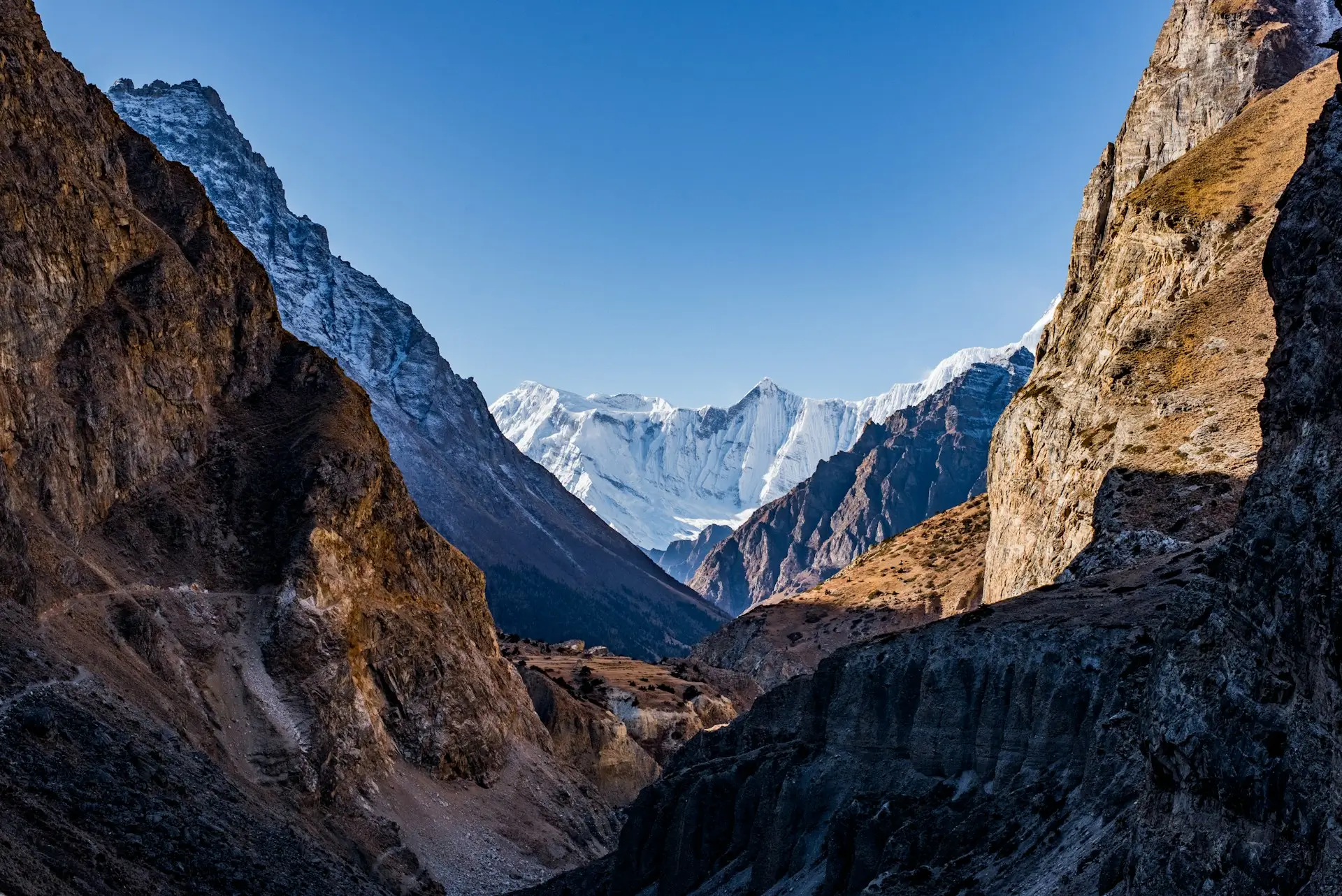
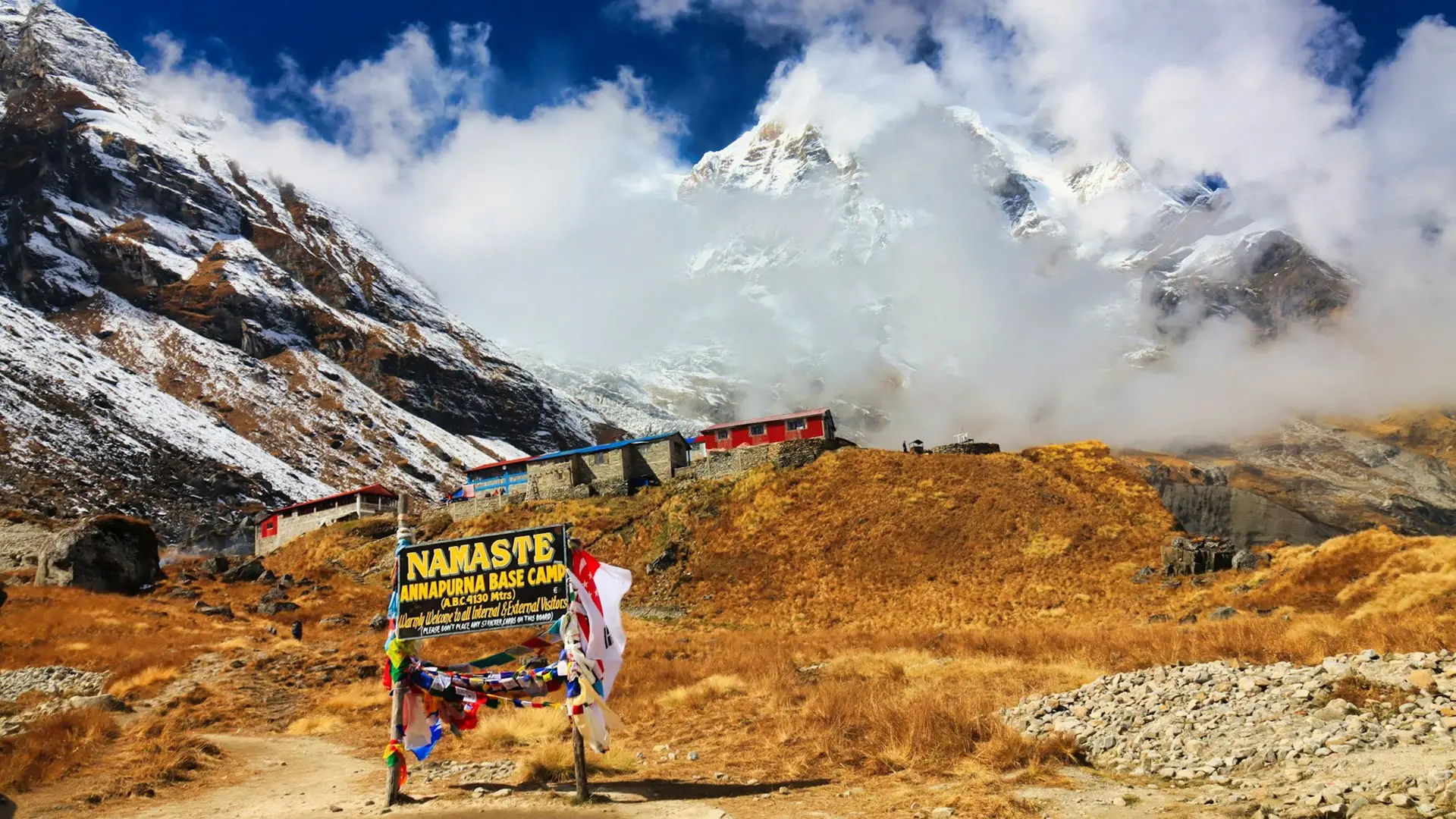
Quick answer: The Annapurna Base Camp trek climbs to a glacial amphitheatre at 4,130 m, ringed by some of the world’s highest peaks, in about 7 to 12 days from Pokhara. It is graded moderate, needs no climbing skill, and is widely considered Nepal’s best first Himalayan trek. It is shorter, lower, and cheaper than Everest Base Camp, with no risky mountain flight to reach the start.
If someone asked me for one trek to fall in love with Nepal, this is the one I would name. The Annapurna Base Camp trek, ABC for short, takes you from warm terraced hills straight into the heart of a giant mountain arena, where 7,000 and 8,000 metre peaks close in a full circle around you. It asks for effort, not expertise. And unlike Everest, it does not begin with a white-knuckle flight into the mountains. So let me walk you through the whole thing, honestly, the way I would prepare a friend.
Key Takeaways
- ABC sits at 4,130 m, in the glacial Annapurna Sanctuary, ringed by giants.
- It is graded moderate: no climbing skill needed, but real walking days.
- The trek takes 7 to 12 days, starting and ending near Pokhara.
- It is the best first Himalayan trek for most fit beginners.
- The mountain Annapurna is deadly to climb; the ABC trek is not. Two different things.
- It is lower, shorter, and cheaper than Everest Base Camp, with no Lukla flight.
What is the Annapurna Base Camp trek?
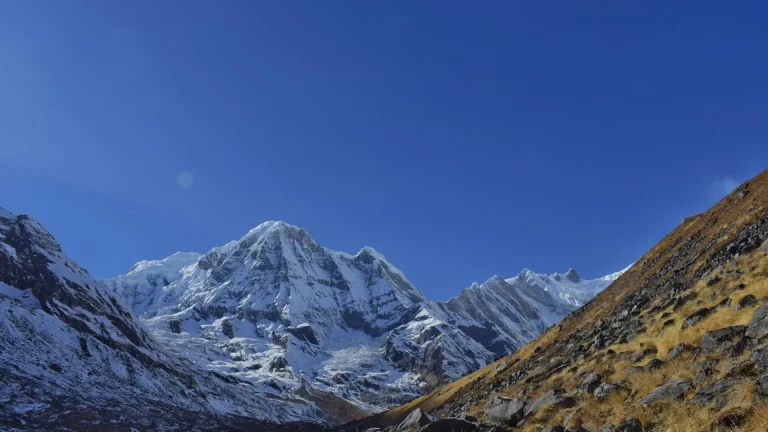
It is a walk into a natural amphitheatre of ice and rock, the Annapurna Sanctuary, at 4,130 m. And base camp is not a viewpoint tucked below one mountain. It is a bowl at the center of a ring of them, and standing there feels like being inside the mountains rather than looking at them.
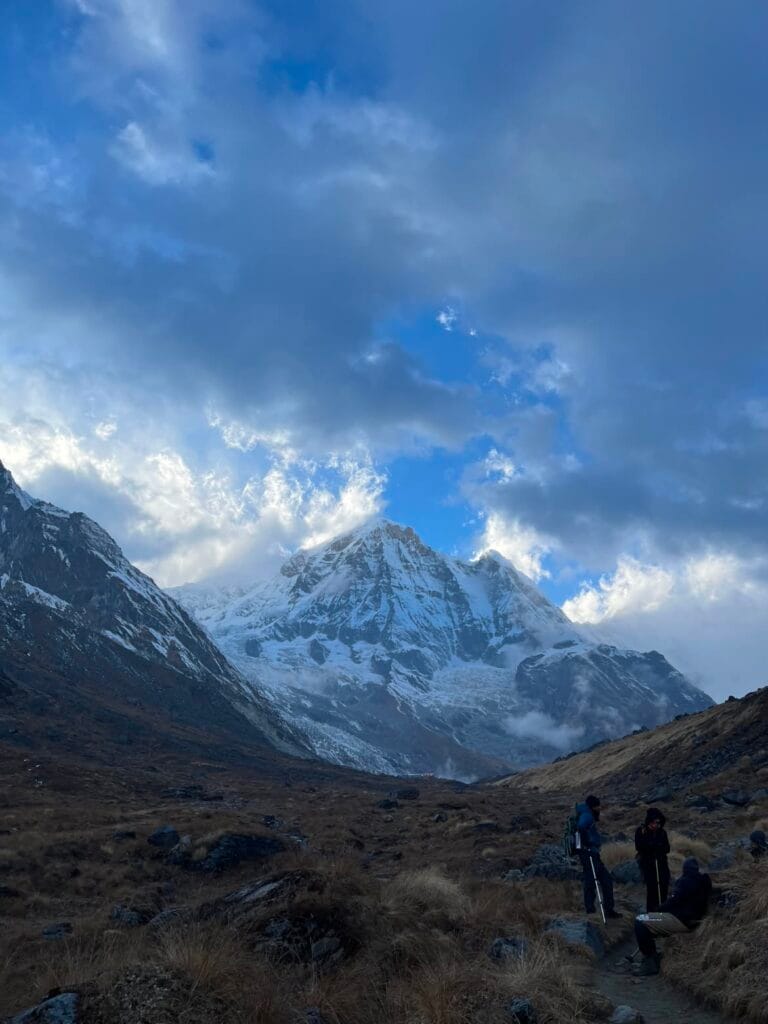
The peaks that close around you are the real headline. Annapurna I rises to 8,091 m. It is the tenth highest mountain on Earth, and the first 8,000 metre peak ever climbed, back in 1950. Directly above base camp stands Machhapuchhre, the 6,993 m "Fishtail." It is a sacred peak, and the government has never allowed anyone to summit it. So the view is not just tall. It is holy, and unrepeatable.
That combination draws travelers from all over the world: an easy base camp, set inside a cathedral of famous peaks. So it delivers the full high-Himalaya feeling. And it never asks you to be a mountaineer.
The British explorer Colonel Jimmy Roberts, often called the father of trekking in Nepal, mapped a way into this basin in 1956 and called it the Sanctuary of Gods. The name stuck, and so did the mystique. One honest note for first-timers, though: you cannot see Mount Everest from here. Everest sits far to the east, so the giants around you are the Annapurnas and the Fishtail, not Everest.
Where is Annapurna Base Camp, and how do you get there?
In north-central Nepal, above Pokhara, which is the nearest airport and the gateway to the whole trek. Here, you do not fly to a scary mountain strip. You fly or drive to Pokhara, the relaxed lakeside city, and the trail begins a short drive from there.
Here is the classic route our own Annapurna Base Camp Trek follows. You start at Pokhara (820 m) and drive to Nayapul (1,050 m). Then you climb through Ghandruk (1,940 m), Chhomrong (2,170 m), and Himalaya (2,920 m). Next comes Machhapuchhre Base Camp (3,700 m), and finally Annapurna Base Camp (4,130 m). The way home drops through Bamboo and the hot springs at Jhinu Danda.
So you climb through Gurung villages, rhododendron forest, and river gorges. Then the trail funnels into the Sanctuary itself. And Pokhara waits at the end, with a lake and a cold drink. It is a fine way to finish a trek.
How difficult is the Annapurna Base Camp trek?
Moderate, and the real challenge is stone staircases, not thin air. Now, this is the honest answer that most guides skip. ABC tops out at 4,130 m, low enough that serious altitude sickness is uncommon if you pace yourself. So the difficulty is physical, not medical. For the full elevation profile and how to handle the height, see our Annapurna Base Camp altitude and difficulty guide.
What actually makes you sweat is the terrain. The Annapurna trails are famous for their stone steps, and by some counts the route holds around 30,000 of them. And the climb in and out of Chhomrong is a leg-burner that trekkers remember long after the views. You walk roughly 5 to 7 hours a day, up and down, on real gradients, covering about 110 km round trip. So the fitter you arrive, the more you enjoy it.
None of it is technical. There are no ropes, no ice axes, no exposure that would frighten a hillwalker. Can you climb stairs for a few hours, then do it again the next day? Then you can walk to Annapurna Base Camp. In our experience, the trekkers who train their legs beforehand have the best trip. Think hills, stairs, and back-to-back walks.
Can a beginner do the Annapurna Base Camp trek?
Yes. For most fit first-timers, ABC is the ideal introduction to Himalayan trekking. It is the trek I most often recommend to people who have never walked at altitude, and here is why it fits beginners so well.
First, the altitude stays moderate, so your body has an easier time than on the higher routes. Second, the trail is busy and well served, with comfortable teahouses, hot meals, and other trekkers around. Third, the trip is short enough to fit a normal holiday. And the reward, that full Sanctuary panorama, is as big as anything in Nepal.
So what does a beginner need? Basic fitness and a little preparation. Spend six to eight weeks before the trek building your legs and lungs. That means brisk walks, stairs, and a few long hikes with a daypack. Then add a licensed guide, which Nepal requires anyway. And a beginner with a sensible plan finishes this trek proud and grinning. If you want an even gentler first taste, the shorter Ghorepani Poon Hill trek is the classic warm-up.
Is the Annapurna Base Camp trek risky or dangerous?
Here is a distinction that clears up a lot of worry: the mountain Annapurna is deadly to climb, but the ABC trek is a safe, moderate walk. People read that Annapurna I has the highest death rate of any 8,000 metre peak, and they assume the trek must be terrifying. It is not. Climbing to the 8,091 m summit and walking to the 4,130 m base camp are completely different activities.
Instead, the ABC trek carries the normal, manageable risks of any Himalayan walk. Think altitude if you rush, slips on wet stone, and the weather. But all are handled by sensible pacing, decent boots, and a good guide.
There is one ABC-specific point worth knowing. I would rather tell you than have you find it in a forum. The final approach runs through a narrow valley. After heavy snowfall, it can hold avalanche risk, mainly in deep winter and the early spring melt. This is exactly why the season you choose matters, and why a licensed local guide who reads the conditions is worth every rupee. Walk it in the right months with the right guide, and the Sanctuary is as safe as it is beautiful.
Annapurna Base Camp vs Everest Base Camp: which should you choose?
Choose Annapurna Base Camp for a shorter, easier, cheaper first trek; choose Everest Base Camp for the higher, more famous challenge. This is the single most common question I get, so here is the honest comparison.
| Factor | Annapurna Base Camp | Everest Base Camp |
|---|---|---|
| Highest point | 4,130 m | 5,364 m |
| Length | 7 to 12 days | 12 to 14 days |
| Getting there | Drive from Pokhara | Flight to Lukla |
| Difficulty | Moderate | Harder, higher |
| Altitude risk | Lower | Higher |
| Cost | Lower | Higher |
| Best for | First-timers, shorter trips | Bucket-list, more time |
So is this your first Himalayan trek? Are your days limited, or does the Lukla flight worry you? Then ABC is the smarter choice, and no less beautiful. But if your heart is set on the foot of the world’s highest mountain, and you have two full weeks, Everest earns its fame. Neither is a lesser trip. They are different doors into the same range. Our Everest Base Camp guide covers that side in full, and our ABC versus Annapurna Circuit comparison helps if you are weighing the two Annapurna options.
How many days do you need, and can you do it in 5 days?
Seven to twelve days is the honest range, and yes, a fit trekker can do it in about five from Pokhara, though it is a rush. The right number depends on where you start and how much you want to enjoy it rather than endure it.
- 5 days: Possible for the fit, starting high and moving fast. You will trade rest and side trips for speed, and feel it in your legs.
- 7 days: A comfortable, popular length that reaches base camp without punishing pacing.
- 9 to 12 days: The relaxed sweet spot, with time for villages, acclimatization, and the Jhinu hot springs on the way down.
Our Annapurna Base Camp Trek runs a well-paced 9 days including the Kathmandu and Pokhara connections. So my advice is simple: if you can spare the days, take them. This trek rewards a slower walk.
Annapurna Base Camp trek itinerary
Here is the classic route, day by day, the way we run it. Think of it as the proven skeleton; we flex it around your pace and the season. For the 5-day and 7-day options and the full route, see our Annapurna Base Camp itinerary guide.
| Day | Route | Sleep at |
|---|---|---|
| 1 | Arrive Kathmandu | 1,400 m |
| 2 | Drive to Pokhara, drive to Nayapul, trek to Ghandruk | 1,940 m |
| 3 | Trek to Chhomrong | 2,170 m |
| 4 | Trek to Himalaya | 2,920 m |
| 5 | Trek to Annapurna Base Camp via Machhapuchhre Base Camp | 4,130 m |
| 6 | Descend to Bamboo | 2,350 m |
| 7 | Trek to Jhinu Danda, soak in the hot springs | 1,780 m |
| 8 | Trek to Nayapul, drive to Pokhara, fly to Kathmandu | 1,400 m |
| 9 | Departure | Fly home |
Notice day 5, the big one: you reach base camp with the sunrise if you time it well, and the whole Sanctuary lights up around you. And notice the hot springs at Jhinu on the way down, which your legs will thank you for.
When is the best time to trek to Annapurna Base Camp?
Autumn (October to November) and spring (March to May) are the two best windows. Autumn brings the clearest skies and firm, dry trails. Spring adds warmth and rhododendron forests in full red bloom on the lower slopes, which is a special thing to walk through.
Here is a rough sense of the temperatures, since people always ask. In the peak seasons, days on the trail sit around 10 to 20 C lower down, while nights near base camp drop to freezing or below. Winter nights up high can fall to -10 C or colder, and heavy snow raises avalanche caution in the Sanctuary, so winter needs an experienced guide and warm kit.
Meanwhile, winter is possible and beautifully quiet, but cold up high. And heavy snow raises the avalanche caution in the Sanctuary, so it needs an experienced guide and flexible plans. The summer monsoon, June to September, brings rain, cloud, and leeches on the lower trail, so most first-timers skip it. For the full month-by-month picture across Nepal, see our best time to visit Nepal guide.
How much does the Annapurna Base Camp trek cost?
A guided ABC trek typically runs a few hundred to around US$1,300 per person, depending on group size and service. Our own Annapurna Base Camp Trek is priced from about US$930 to $1,190 per person by group size, including guide, permits, lodges, meals on the trail, and the Kathmandu to Pokhara connections. So the big variables are your group size, your comfort level, and whether flights are included.
Here is a note for Nepali and Indian trekkers, since it comes up often. Domestic and SAARC rates run lower than the international package price. That is because you save on international flights and some permit costs. We are always happy to quote a local rate. For the full ABC breakdown, including the domestic rate for Nepali trekkers, see our Annapurna Base Camp trek cost guide. For costs across all treks, our Nepal trekking cost guide has the wider picture.
What permits and guide do you need?
You need the Annapurna Conservation Area Permit and a licensed guide. The Annapurna region sits inside a conservation area, so every trekker buys the ACAP permit. And since 2023, Nepal requires independent trekkers to hire a licensed guide, per the Nepal Tourism Board.
On a Spade Himalaya trip we arrange the permits and the guide for you, so this is one less thing to organize. For the exact fees and the full rulebook, see our Nepal trekking permits and rules guide.
What should you pack for ABC?
Pack in layers, and put real thought into your boots and your knees. The trek moves from warm valleys to a cold, high base camp, so you want a layering system rather than one heavy coat. And because the Annapurna trail is all stairs, two things matter more here than on gentler routes. First, broken-in boots with good grip. Second, a pair of trekking poles to save your knees on the long stone descents.
Beyond that, the usual high-trek kit applies. Pack a warm sleeping bag, a down jacket for base camp, sun protection, and a small first-aid kit. Our full Nepal trekking packing list has the complete, season-by-season breakdown.
FAQs
Is there avalanche risk on the Annapurna Base Camp trek?
After heavy snowfall, yes. The Sanctuary is a steep-sided glacial bowl, so it can hold avalanche risk, mainly in deep winter and during the early spring melt. Guides watch conditions and will delay or reroute a day when the snow is unstable.
Do you need a flight to reach the Annapurna Base Camp trek?
No, and that is one of its advantages. You drive from Pokhara to the trailhead, so there is no risky mountain flight to reach the start. That removes the weather delays that can disrupt an Everest trip.
Is the Annapurna Base Camp trek dangerous?
The trek itself is safe and moderate. People confuse it with climbing Annapurna I, which has the highest death rate of any 8,000 metre peak, but that is mountaineering, not trekking. The one trek-specific caution is avalanche risk in the Sanctuary after heavy snow, which is why the season and a good guide matter.
Is Annapurna Base Camp harder than Everest Base Camp?
No, ABC is easier. It is lower (4,130 m versus 5,364 m), shorter, and reached by road rather than the Lukla flight. That makes it the gentler and cheaper of the two, and the better first trek for most people.
How many days does the Annapurna Base Camp trek take?
Usually 7 to 12 days, with 9 to 10 being a comfortable, popular length from Pokhara. A very fit trekker can do a rushed version in about 5 days, but the extra days buy rest, villages, and a far better experience.
Can the ABC trek be done in 5 days?
Yes, for fit trekkers starting near Pokhara and moving fast, but it is tight. You sacrifice rest days and side trips, and the descent is hard on the legs. Seven days or more is a much kinder plan.
What is the nearest airport to Annapurna Base Camp?
Pokhara. You fly or drive from Kathmandu to Pokhara, then start the trek a short drive away at Nayapul. There is no small mountain airstrip involved, unlike the flight to Lukla for Everest.
When is the best month to trek to Annapurna Base Camp?
October and November for the clearest skies, or March to May for warmth and rhododendron blooms. Avoid the June to September monsoon, and treat deep winter with care because of snow and avalanche risk in the Sanctuary.
What is included in an Annapurna Base Camp trek package?
Our package covers your licensed guide, all permits, teahouse lodging, meals on the trail, and the Kathmandu to Pokhara connection. Personal gear, travel insurance, and tips are the usual extras to budget separately.
Can you do the ABC trek alone?
You can hire your own guide and trek in a small private group, but Nepal no longer allows fully solo, guideless trekking in the national parks and conservation areas. A licensed guide is required, and on ABC it also adds real safety in the Sanctuary.
Why is the Annapurna Base Camp trek so famous?
Because base camp sits inside a ring of giant peaks, the Annapurna Sanctuary, including the tenth highest mountain on Earth and the sacred, unclimbed Fishtail. Few places let you stand surrounded by 7,000 and 8,000 metre summits after a moderate, beginner-friendly walk.
Accuracy note: ABC altitude (4,130 m), the route, and pricing reflect Spade Himalaya’s own Annapurna Base Camp Trek product (retrieved 2026-07-14); Annapurna I (8,091 m, tenth highest, first 8,000er climbed in 1950) and Machhapuchhre (6,993 m, sacred and officially unclimbed) are established figures consistent with Nepal’s peak records; the mandatory-guide rule and conservation-area permit are covered on the Nepal Tourism Board; difficulty, seasonal avalanche caution, and itinerary details are Spade Himalaya’s operating experience on the route; reviewed by Yubaraj Katel, government-licensed trekking guide (Licence No. 19827) with 10 years of experience across Nepal’s regions.

Start Planning Your Trek
Updated: 20 Jul, 2026
9 min
Annapurna Base Camp Trek Cost (2026): A Full Breakdown
What the Annapurna Base Camp trek really costs in 2026: permits, guide, food, transport, and package...
Updated: 14 Sep, 2026
8 min
Annapurna Base Camp Trek Itinerary, Route and Map
The Annapurna Base Camp trek route and itinerary, village by village, with 5-day, 7-day, and 9-day...
Updated: 15 Jul, 2026
12 min
Annapurna Region Treks: Routes, Cost & Best Time (2026 Guide)
Quick answer: The Annapurna region, near Pokhara, has Nepal’s widest range of treks: from the easy Poon...