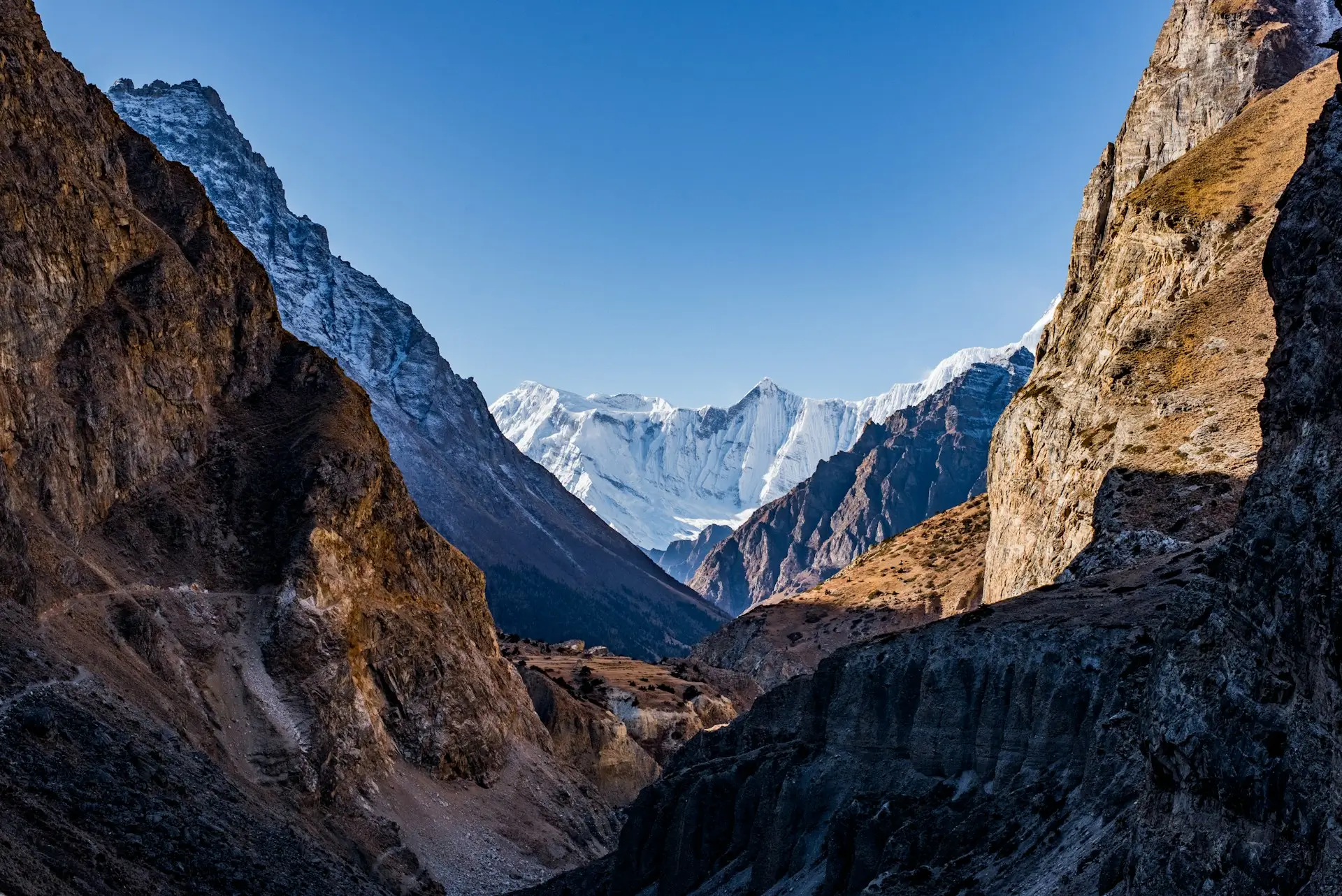
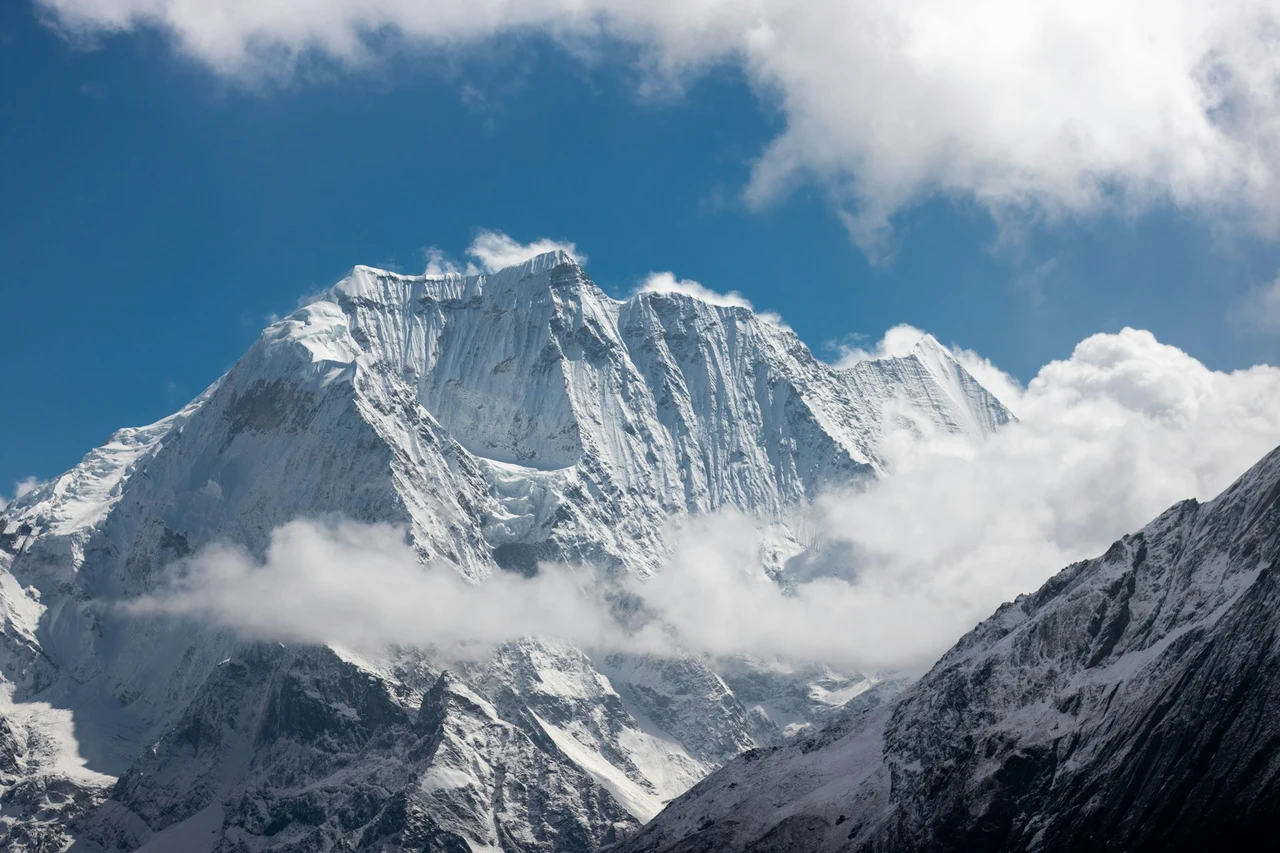
Quick answer: The Manaslu Circuit Trek is a remote 14-day loop around Mount Manaslu (8,163 m), the world’s eighth-highest peak, crossing the Larkya La pass (5,106 m). It is a restricted area, so a licensed guide and special permits are required. It costs about US$1,000 to US$1,600. Spring and autumn are best.
The Manaslu Circuit Trek loops around Mount Manaslu, the eighth-highest mountain on Earth. It is wild, remote, and far quieter than Everest or Annapurna. However, it is also a restricted area. So by law you must trek with a licensed guide and special permits. This guide walks you through the route, permits, cost, difficulty, and best time, all in plain terms.
Key Takeaways
- The trek circles Mount Manaslu (8,163 m) and crosses the Larkya La pass (5,106 m), its high point.
- It is a restricted area. So you need a licensed guide, a registered agency, and three permits.
- Most people finish it in about 14 days. It is harder and more remote than the Annapurna Circuit.
- The best time is spring (March to May) and autumn (September to November).
- Budget roughly US$1,000 to US$1,600 for a guided trip.
This is the hub for everything we cover on Manaslu. First, use it to plan the big picture. Then follow the links to our deeper guides and the full trek itinerary.
What is the Manaslu Circuit Trek?
The Manaslu Circuit is a two-week loop around Mount Manaslu in west-central Nepal. It follows the Budhi Gandaki river up from the lowlands. Then it climbs into high, Tibetan-style villages. Finally, it crosses the Larkya La pass and drops into the Annapurna region.
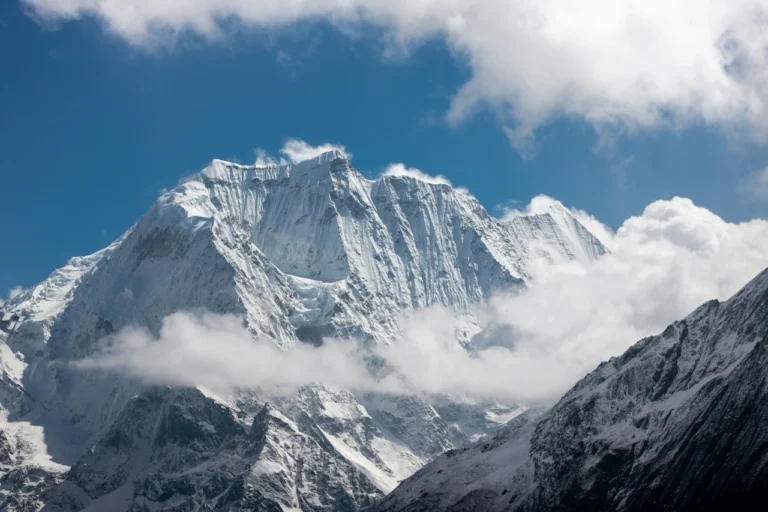
Manaslu means “Mountain of the Spirit.” The peak stands at 8,163 m, so it is the eighth-highest in the world (Wikipedia: Manaslu, retrieved 2026-06-20). The region opened to trekkers only in 1991. As a result, it still feels raw and unspoilt today.
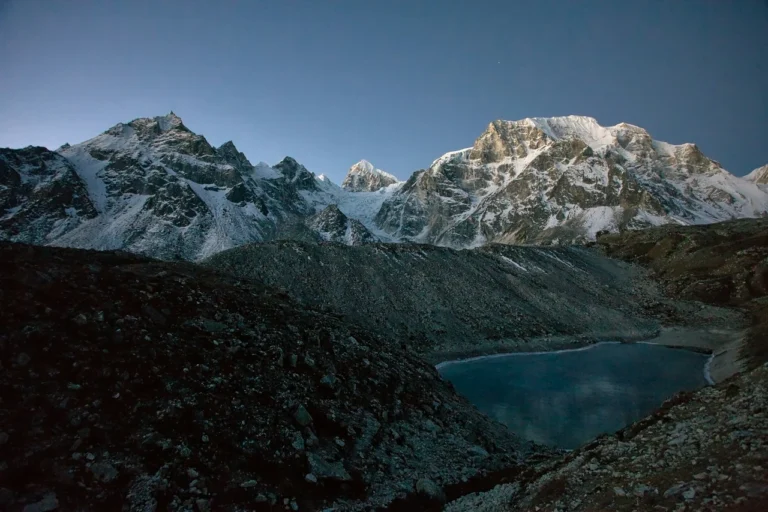
Almost the whole route sits inside the Manaslu Conservation Area. This protected zone covers 1,663 km² and was set up in 1998 (Wikipedia: Manaslu Conservation Area, retrieved 2026-06-20). It is home to snow leopard, blue sheep, and Himalayan tahr. In short, this is one of Nepal’s wildest classic treks.
For the full day-by-day plan, see our 14-day Manaslu Circuit Trek.
What is the route, and how many days does it take?
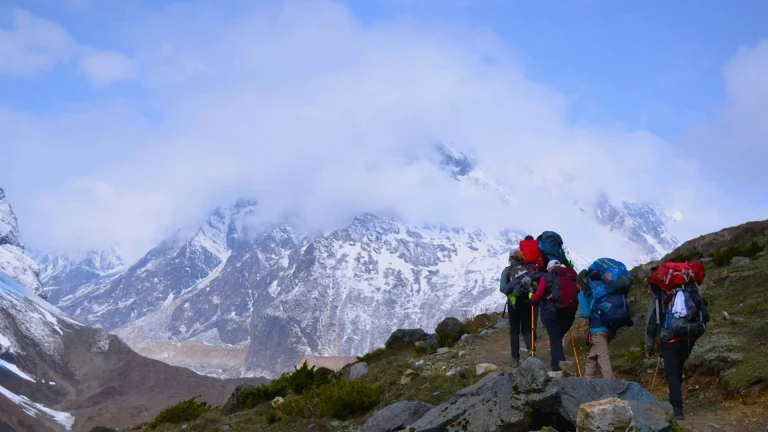
Most people complete the Manaslu Circuit in about 14 days, plus travel time. The trek starts with a long drive from Kathmandu to Soti Khola or Machha Khola. From there, you walk north up the river for several days. Then you climb to the high villages of Lho, Samagaun, and Samdo.
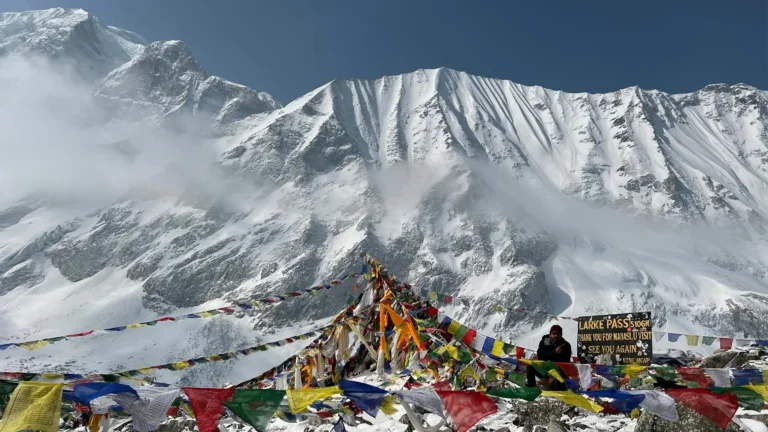
Next comes the big day: the Larkya La pass at 5,106 m. After the pass, you descend fast into the green Bimtang valley. Finally, you reach Dharapani. There, the trail joins the Annapurna Circuit, and a jeep takes you back toward Kathmandu.
Here is the route in short:
Kathmandu to Soti Khola to Machha Khola to Jagat to Deng to Namrung to Samagaun to Samdo to Dharmasala to Larkya La (5,106 m) to Bimtang to Dharapani to Kathmandu.
You can also add the Tsum Valley, a sacred side valley near the Tibet border. This adds about a week. Plus it needs its own permit.
Manaslu Circuit trek map
This is the full circuit from Machha Khola to Dharapani, over the Larkya La at 5,106 m, with every overnight stop.
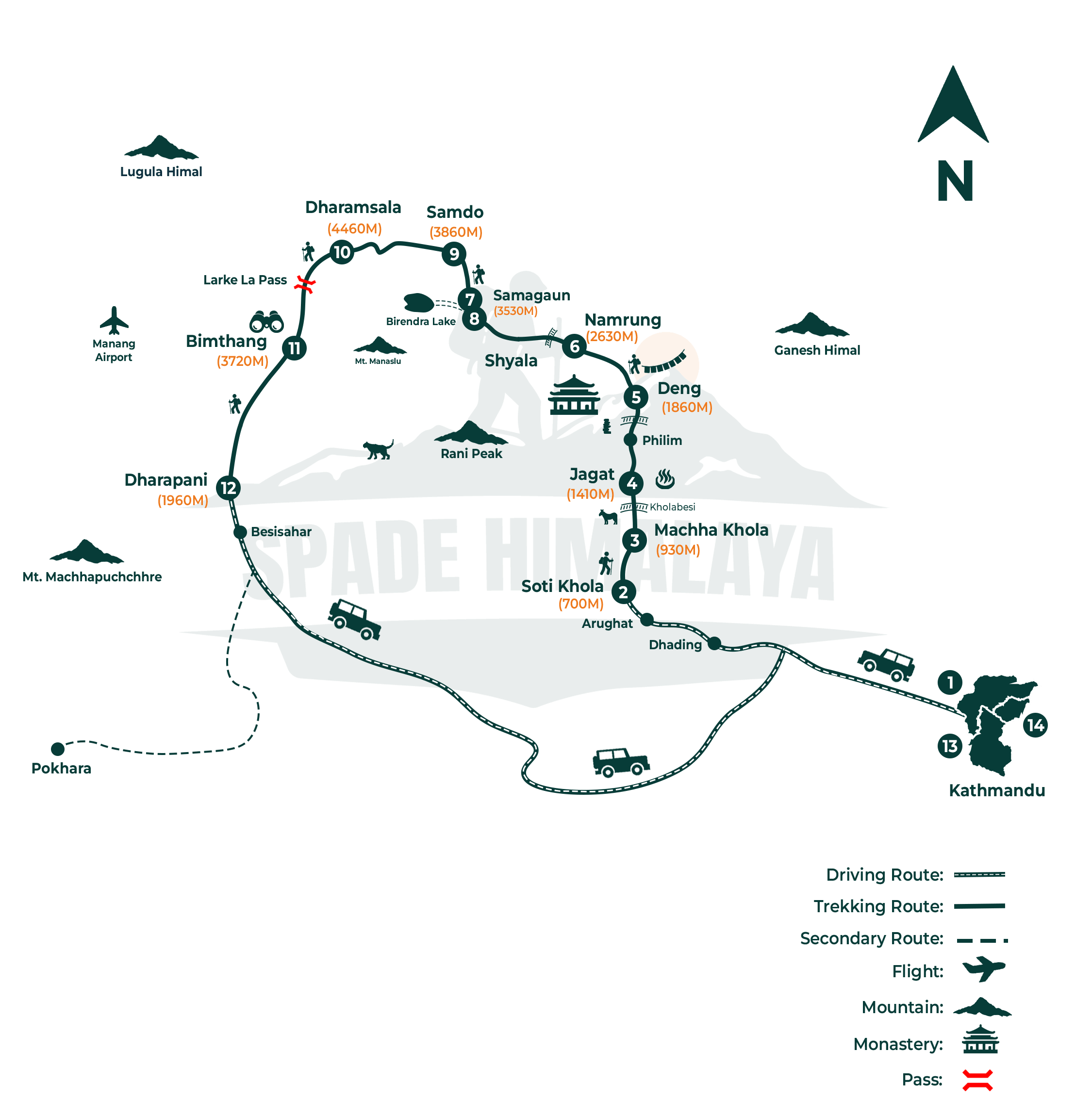
Our own Manaslu Circuit trek map. The route runs Soti Khola (710 m), Machha Khola (930 m), Jagat (1,410 m), Deng (1,860 m), Namrung (2,630 m), Samagaun (3,530 m), Samdo (3,860 m) and Dharmasala (4,460 m), crossing the Larkya La at 5,106 m to Bimtang (3,720 m) and out at Dharapani (1,960 m).
What permits do you need for the Manaslu Circuit?
Manaslu is a restricted area, so the rules are stricter than on Everest or Annapurna. You cannot trek it alone or without permits. Instead, you must book through a registered agency and trek with a licensed guide.
You need three permits:
- Manaslu Restricted Area Permit (RAP). In autumn (September to November) it costs US$100 per person for the first 7 days, then US$15 per day. In the December to August window it is US$75 for the first 7 days, then US$10 per day (Nepal Department of Immigration, retrieved 2026-06-20).
- Manaslu Conservation Area Permit (MCAP). This is about NPR 3,000 for foreign trekkers.
- Annapurna Conservation Area Permit (ACAP). You need this too, because the trek ends in the Annapurna area at Dharapani. It is also about NPR 3,000.
In March 2026, Nepal eased one rule. Now solo travellers can apply for a restricted-area permit on their own. However, the licensed guide and registered agency are still required (Kathmandu Post, 2026). So you still cannot walk Manaslu without a guide.
Spade Himalaya arranges all three permits for you. For the full breakdown, see our Manaslu permit cost guide.
How much does the Manaslu Circuit Trek cost?
A guided Manaslu Circuit Trek usually costs about US$1,000 to US$1,600 per person in 2026. The exact price depends on group size, season, and comfort level. Manaslu costs a little more than Annapurna, mainly because of the restricted permit and the remote logistics.
The main costs are the three permits, your guide and porter, transport, and food and lodging. There is no expensive mountain flight, though. So the trek stays good value for a restricted area.
For a full line-by-line breakdown, see our Manaslu Circuit Trek cost guide.
Trek difficulty: the Spade Himalaya Trek Difficulty Scale
We grade every trek from 1 to 5, so you can compare them fast. This is our own scale, based on altitude, length, remoteness, and lodging.
| Grade | Name | What it means | Example treks |
|---|---|---|---|
| 1 | Easy | Under 3,500 m, short, gentle days | Poon Hill |
| 2 | Moderate | Up to about 4,200 m, no high pass | Annapurna Base Camp |
| 3 | Strenuous | 5,000 to 5,550 m, a base camp or one high pass, good lodges | Everest Base Camp, Annapurna Circuit, Manaslu Circuit |
| 4 | Challenging | Remote, above 5,000 m, long rough days, simple lodges or some camping | Makalu, Everest Three Passes |
| 5 | Expedition | Very remote, full camping, or several high passes | Upper Dolpo |
On this scale, the Manaslu Circuit Trek is Grade 3 (Strenuous), at the harder end. It sits there because it is remote and crosses the Larkya La pass.
What are the temperatures by season?
Here are rough temperatures by season, so you know what to pack. These are field-experience ranges from our guides, not exact figures, because mountain weather changes fast.
| Season | Lower valley (day) | Larkya La and high camps (night) | Verdict |
|---|---|---|---|
| Spring (Mar to May) | 12 to 20°C | -8 to -15°C | Excellent |
| Autumn (Sep to Nov) | 10 to 18°C | -10 to -18°C | Excellent, clearest |
| Winter (Dec to Feb) | 6 to 14°C | -15 to -22°C | Pass can close |
| Monsoon (Jun to Aug) | 15 to 22°C | -4 to -10°C | Wet, leeches lower down |
How hard is the Manaslu Circuit Trek?
The Manaslu Circuit is graded moderate to strenuous, and it is harder than the Annapurna Circuit. There is no climbing or technical ground. Still, the trail is rough and remote, the days are long, and you cross a high pass.
You walk 6 to 7 hours on most days. On pass day, you walk longer. The teahouses are simpler than on busier routes, too. So good fitness and some trekking experience help a lot.
The main challenge is altitude, not the terrain. Therefore, the trek builds in an acclimatization day at Samagaun (3,530 m). For more on this, see our guide to Manaslu Circuit difficulty and best time.
What is Larkya La, the high point of the trek?
Larkya La sits at 5,106 m, and crossing it is the crux of the whole trek. It is one of the longest passes in the Nepal Himalaya. You start before dawn from Dharmasala. Then you climb slowly over snow and moraine to the top.
The views from the pass are huge. For example, you can see Himlung Himal, Cheo Himal, Kang Guru, and Annapurna II. After the prayer flags at the top, a long, steep descent leads down to Bimtang. Your guide checks the weather first, because fresh snow can make the pass risky.
Manaslu or Annapurna Circuit?
Choose Manaslu if you want wild and remote; choose the Annapurna Circuit if you want more comfort and easier access. Both are great two-week loops. However, they feel different.
Manaslu is quieter, rougher, and more “off the map.” Annapurna has better lodges, more variety, and no restricted-permit rules. In short, Manaslu rewards experience, while Annapurna suits a wider range of trekkers.
For a full head-to-head, read Manaslu vs the Annapurna Circuit.
When is the best time to trek Manaslu?
Spring (March to May) and autumn (September to November) are the best seasons. Both bring stable weather, clear skies, and an open pass. Autumn is the most popular. Spring adds rhododendron blooms lower down.
Winter (December to February) is cold, and snow can block Larkya La. The summer monsoon brings rain and leeches at lower heights. So most trekkers pick spring or autumn for the safest pass crossing.
How do you get there?
The trek starts and ends with road travel, not a flight. First, you drive from Kathmandu to the trailhead at Soti Khola or Machha Khola. This takes most of a day on rough roads.
At the end, a jeep brings you from Dharapani to Besisahar. Then a vehicle takes you back to Kathmandu. Because there is no Lukla-style flight, the trek avoids that cost and those weather delays.
What are accommodation and food like?
You sleep in simple teahouses, the small family lodges along the route. Lower down, rooms are basic but comfortable. Higher up, they get colder and plainer. So a warm sleeping bag matters above Namrung.
The food is filling and good for trekking. For example, you get dal bhat, noodles, potatoes, soups, and Tibetan bread. Vegetarian meals are easy to find, too. Meat is best avoided high up, because it travels a long way.
How do you stay safe at altitude?
Altitude is the main risk on this trek, but it is very manageable with a slow pace. Altitude sickness (AMS) gets more likely the higher you go. In one study of Nepali Himalaya trekkers, AMS affected about 15% of people at 4,000 to 4,500 m and 51% at 4,500 to 5,000 m (PubMed, retrieved 2026-06-20).
So the plan is simple. First, climb slowly. Next, take the acclimatization day at Samagaun. Also, drink 3 to 4 litres of water a day, and skip alcohol up high. Your guide carries a pulse oximeter and checks you daily.
Watch for two rare but serious problems too. HACE affects the brain, and HAPE affects the lungs. For both, the best treatment is to go down fast (CDC Yellow Book, retrieved 2026-06-20). In short, tell your guide early if you feel unwell.
What should you pack?
The key is layers, because the trek runs from warm valleys to a freezing pass. Here is a short list of essentials:
- Waterproof trekking boots, broken in, plus warm socks
- Base layers, a fleece or down mid-layer, and a waterproof shell
- A four-season sleeping bag and a down jacket (you can rent both in Kathmandu)
- Warm hat, sun hat, sunglasses, buff, and gloves
- Headlamp, trekking poles, sunscreen, and a water bottle
- Micro spikes for the pass, in case of snow
Our trek page lists the full, season-by-season packing list.
What is the culture like on the Manaslu trail?
The upper Manaslu valley feels more like Tibet than Nepal. The villages of Lho, Samagaun, and Samdo are Tibetan Buddhist. So you pass mani walls, chortens, and prayer flags every day. You also see old monasteries and barley fields.
Please trek with respect. For example, walk clockwise around mani walls and chortens. Also, ask before you photograph people or inside monasteries. These small habits matter a lot in such a traditional area.
Who should trek the Manaslu Circuit?
Manaslu suits fit trekkers who want a wild, quiet route and have some experience. You do not need climbing skills. However, you do need good fitness and the right gear for a high pass.
It is not the best choice for a first-ever trek. So if you are new to the Himalaya, the Annapurna Base Camp Trek or the Everest Base Camp Trek is a gentler start. Then you can return for Manaslu later.
If you are comparing regions, our Everest region guide and Annapurna region guide help you choose.
FAQs
How many days is the Manaslu Circuit Trek?
Most people finish it in about 14 days, plus travel. Some plans run 16 to 18 days, especially with extra rest days or the Tsum Valley add-on. The walking itself takes roughly 11 to 12 days. The rest is travel to and from the trail.
Do you need a guide for the Manaslu Circuit?
Yes. Manaslu is a restricted area, so a licensed guide and a registered agency are required by law. In March 2026, Nepal let solo travellers apply for the permit on their own. However, the guide rule did not change. So you still cannot trek Manaslu without one.
Why is Manaslu a restricted area?
Manaslu sits near the Tibetan border, so Nepal designates it a restricted area to control access. In practice that means you need special permits, a licensed guide, and a minimum of two trekkers in the group.
Is the Manaslu Circuit harder than the Annapurna Circuit?
Yes, a little. Manaslu has rougher trails, fewer lodges, and more remote terrain. Annapurna has better infrastructure and gentler access. Both cross a high pass, but Manaslu feels wilder and asks for more experience.
How high is the Larkya La pass?
Larkya La sits at 5,106 m (16,752 ft). It is the high point of the trek and one of the longest passes in Nepal. You cross it on a long, early-morning day from Dharmasala down to Bimtang.
When is the best time for the Manaslu Circuit?
Spring (March to May) and autumn (September to November) are best. Both give clear skies and an open pass. Winter can block Larkya La with snow, and the monsoon brings rain lower down, so most trekkers avoid those seasons.
Accuracy note: official fees, rules, and hard facts in this guide are cited inline from their sources; trail and price details are Spade Himalaya field research; route details reviewed by Yubaraj Katel, government-licensed trekking guide (Licence No. 19827) with 10 years of experience leading treks in the Manaslu region.

Start Planning Your Trek
Updated: 6 Jul, 2026
7 min
Manaslu Circuit Trek Cost in 2026: Full Budget Breakdown
Quick answer: A guided Manaslu Circuit Trek costs about US$1,000 to US$1,600 per person in 2026....
Updated: 6 Jul, 2026
7 min
Manaslu Circuit Trek Difficulty and Best Time (2026)
Quick answer: The Manaslu Circuit Trek is graded strenuous (Grade 3): remote, with long days and...
Updated: 6 Jul, 2026
7 min
Manaslu Circuit Trek Permits and Cost (2026): The Full Rules
Quick answer: The Manaslu Circuit needs three permits: the Manaslu Restricted Area Permit (RAP), the Manaslu...