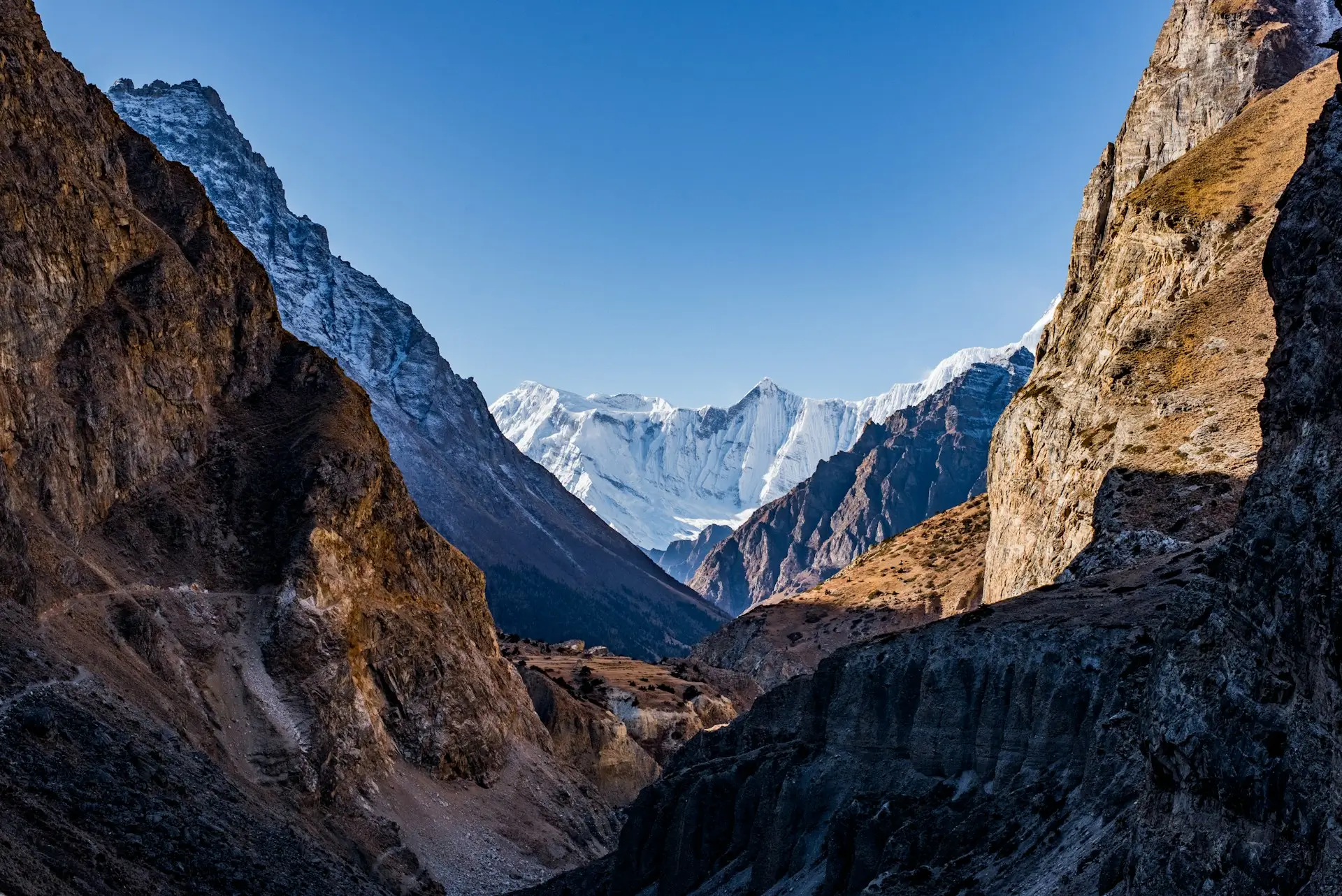
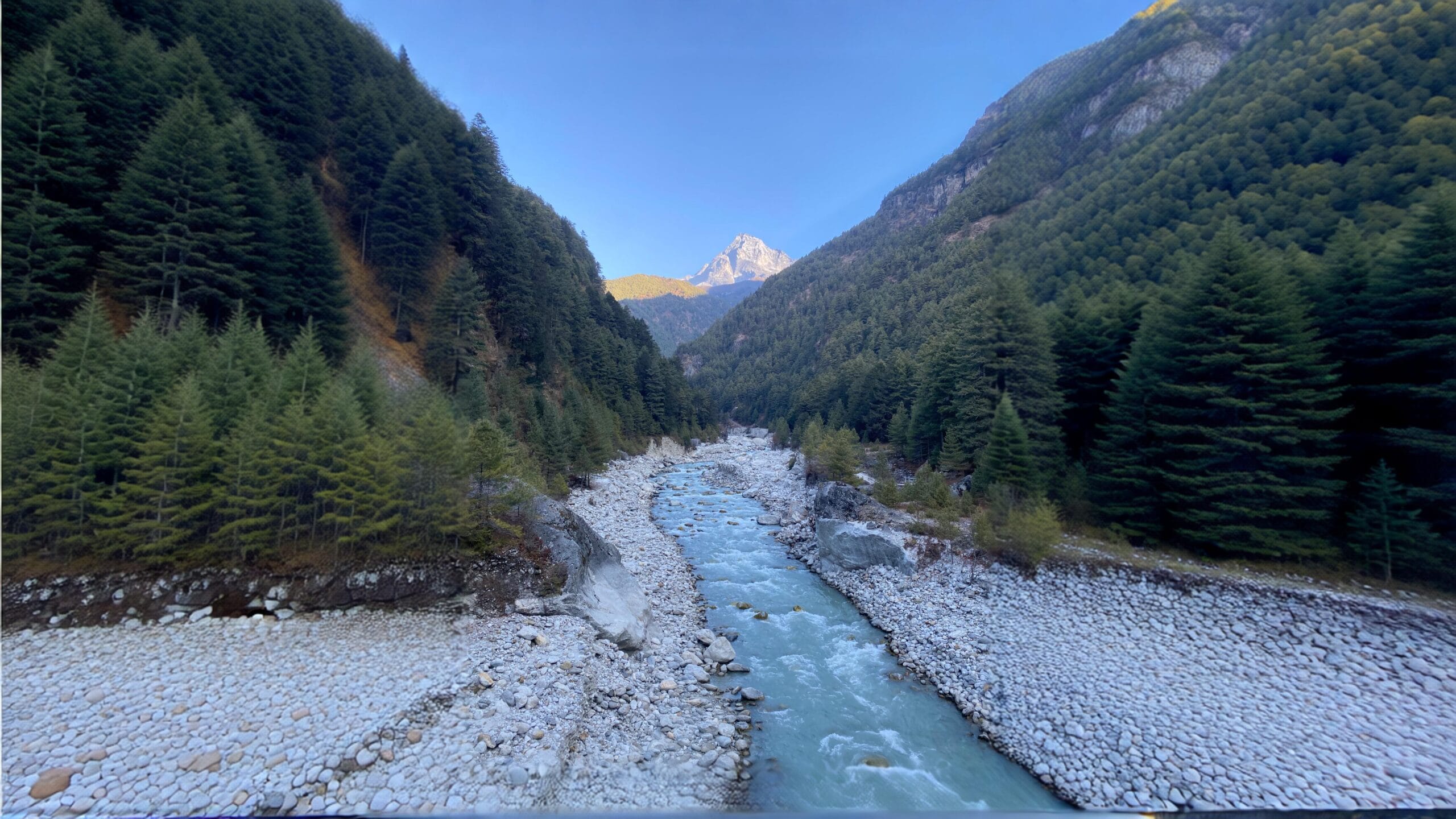
Quick answer: Choose the Everest Base Camp Trek (14 days, strenuous) for the classic route and a first big high-altitude trek. Choose the Three Passes Trek (20 days, challenging) for three high passes, the Gokyo Lakes, and quieter trails. Our full Three Passes route guide covers each pass in detail. Both reach Base Camp and Kala Patthar (5,545 m) (Wikipedia, retrieved 2026-06-25). If you are instead weighing Gokyo against base camp on its own, our Gokyo Lakes vs Everest Base Camp comparison covers that decision.
Choose the Everest Base Camp Trek if it is your first big Himalayan trek, or you have about two weeks. Choose the Everest Three Passes Trek if you are experienced and want three high passes, the Gokyo Lakes, and a tougher, quieter route. Both reach Everest Base Camp and Kala Patthar. The Three Passes simply adds far more. It adds more days, more altitude, more remoteness, and three hard pass crossings.
Key Takeaways
- Everest Base Camp Trek: 14 days, graded strenuous. The classic route, good for first-time high-altitude trekkers.
- Three Passes Trek: 20 days, graded challenging. It crosses Kongma La (5,535 m), Cho La (5,420 m), and Renjo La (5,360 m), plus the Gokyo Lakes.
- Both reach Everest Base Camp (5,364 m) and Kala Patthar (5,545 m).
- Pick by experience, not ego. The Three Passes needs prior fitness and a head for rough, glaciated ground.
Deciding between the 14-day Everest Base Camp Trek and the 20-day Everest Three Passes Trek? This guide compares them on the things that matter: difficulty, length, altitude, views, cost, and who each one suits. For the wider picture of all Everest routes, see our Everest region trekking guide.
Quick comparison
| Feature | Everest Base Camp Trek | Three Passes Trek |
|---|---|---|
| Duration | 14 days | 20 days |
| Grade | Strenuous | Challenging |
| Highest point | Kala Patthar 5,545 m | Kala Patthar 5,545 m |
| High passes | None | Kongma La 5,535 m, Cho La 5,420 m, Renjo La 5,360 m |
| Reaches Everest Base Camp | Yes | Yes |
| Gokyo Lakes and Gokyo Ri | No | Yes |
| Walking distance | around 130 km round trip | around 160 km |
| Terrain | Well-trodden valley trail | Rugged, glaciated, remote in places |
| Crowds | Busier (popular route) | Quieter, mainly on the passes |
| Best for | First big trek, limited time | Experienced trekkers wanting more |
Difficulty: how much harder is the Three Passes?
The Three Passes Trek is clearly harder than the standard Everest Base Camp Trek. The main reasons are the three high passes and the rougher ground. On the classic route to base camp, there is no technical terrain. The challenge there is the altitude, not the trail. So anyone reasonably fit who trains and acclimatizes can do it at a sensible pace.
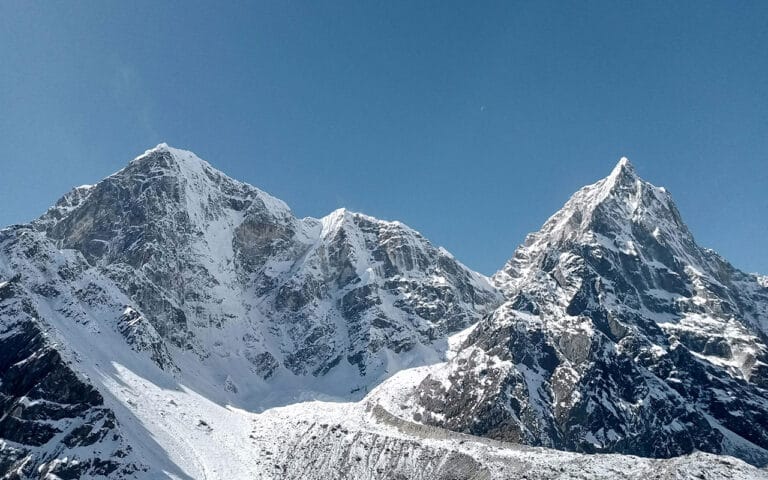
The Three Passes adds three full pass days. Each one starts before dawn, and each is above 5,300 m. One is the glaciated Cho La, where micro spikes matter. You walk 6 to 9 hours on pass days, over moraine, loose rock, and sometimes snow. You also spend many more nights at high altitude. In our experience, the trekkers who enjoy the Three Passes already know they cope well with long days and thin air. So it is not the right choice for a first high-altitude trek.
What does the Three Passes route add?
Both treks share the famous core: Namche, Tengboche, base camp, and the Kala Patthar sunrise. The Three Passes simply wraps a full circuit around it. On the classic Everest Base Camp Trek, you walk up the valley and back down the same way. That is efficient and scenic.
The Three Passes turns that out-and-back into a loop. First, you cross Kongma La to reach base camp. Then you traverse Cho La into the Gokyo valley. Next, you climb Gokyo Ri (5,357 m) for a view of four 8,000 m peaks above the turquoise Gokyo Lakes. Finally, you cross Renjo La, with one of the most beautiful framed views of Everest on the whole trek. So if you want the most complete Khumbu experience in one trip, the Three Passes delivers it.
How do time and cost compare?
The Three Passes costs more, simply because it is a longer trip. More days means more guiding, food, lodging, and a longer permit window. So it sits above the price of the 14-day trek. The permits are the same Everest-region permits for both routes. So the extra cost is days on the trail, not paperwork.
If budget is part of your decision, our full breakdown of the Everest Base Camp Trek cost in 2026 explains every line item: permits, Lukla flight, guide, food, and gear. The same logic scales up for the longer Three Passes. On time alone, you need about two weeks for base camp and closer to three weeks for the Three Passes.
How do altitude and acclimatization compare?
Both treks demand respect for altitude. However, the Three Passes exposes you to it for longer. The classic route builds in two acclimatization days, at Namche and Dingboche, before base camp and Kala Patthar. The Three Passes uses the same early acclimatization. Then it keeps you high for many more days, as you cross the passes and reach Gokyo.
More time above 4,500 m means more chances for altitude sickness. That is exactly why the Three Passes suits people who already know how their body handles height. On both routes, our guides carry a pulse oximeter and check you daily. And descending is always the best response if anyone struggles. So either way, your acclimatization plan matters more than your raw fitness.
Which trek is right for you?
- Choose Everest Base Camp (14 days) if it is your first major high-altitude trek, you have about two weeks, or you want the iconic experience without technical passes.
- Choose the Three Passes (20 days) if you have prior multi-day trekking experience, you are comfortable with long days and rough ground, and you want the passes, Gokyo, and far fewer people.
- Short on time but want more than base camp? Then the 16-day Everest Base Camp via Kala Patthar adds extra acclimatization and a Kathmandu cultural day, without the technical passes. It is a middle option between the two.
There is no shame in choosing the classic route. Honestly, base camp is already a serious, rewarding trek. And the Three Passes will always be there for your next visit.
FAQs
Is the Three Passes Trek harder than Everest Base Camp?
Yes, clearly harder. It crosses three passes above 5,300 m, including the glaciated Cho La. It also runs 20 days versus 14, over rougher, more remote ground. The classic base camp trek has no technical sections, so its main challenge is altitude. So the Three Passes is best for experienced trekkers, not first-timers.
Do both treks reach Everest Base Camp and Kala Patthar?
Yes. Both routes visit Everest Base Camp (5,364 m) and climb Kala Patthar (5,545 m) for the classic Everest sunrise. The difference is what the Three Passes adds around that core: Kongma La, Cho La, and Renjo La, plus the Gokyo Lakes and Gokyo Ri.
How much longer is the Three Passes Trek?
About six days longer in our itineraries: 20 days versus 14 for the standard Everest Base Camp Trek. It also covers more ground, roughly 160 km versus about 130 km round trip. And it keeps you at high altitude for more days.
Is the Three Passes Trek worth it?
For experienced trekkers, yes. It combines Everest Base Camp with three high passes, the Gokyo Lakes, a view of four 8,000 m peaks from Gokyo Ri, and much quieter trails. If you have the time, fitness, and prior altitude experience, it is one of the most complete treks in Nepal. First-timers are usually happier with the classic route.
Can a beginner do the Three Passes Trek?
It is not recommended as a first big trek. The long pass days, glaciated ground, and extended time at altitude suit trekkers who already handle multi-day walking and thin air well. So beginners are better served by the 14-day Everest Base Camp Trek first, then the Three Passes on a later trip.
Which has better views?
Both are stunning. The classic route gives you the iconic Everest and Ama Dablam views and the Kala Patthar sunrise. The Three Passes adds the Gokyo Ri view, with four 8,000 m peaks at once, and the framed Everest view from Renjo La. So it offers more variety of viewpoints overall.
Accuracy note: prices, durations, and trail details in this guide are Spade Himalaya’s 2026 field research and typical market ranges; route details reviewed by Yubaraj Katel, government-licensed trekking guide (Licence No. 19827) with 10 years of experience leading treks in the Everest region.

Still Deciding?
Updated: 3 Oct, 2026
13 min
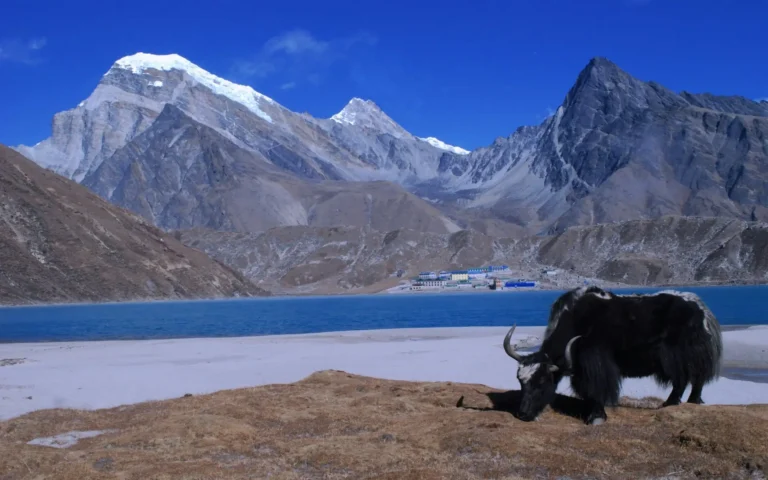
Gokyo Lakes Trek Guide (2026): Nepal’s Highest Freshwater Lakes
Gokyo Lakes trek guide: the route, cost, permits, Gokyo Ri at 5,357 m, lake depths, and...
Updated: 6 Jul, 2026
9 min
Everest Base Camp Trek Cost in 2026: Full Breakdown
Quick answer: A guided Everest Base Camp Trek’s biggest single cost is the round-trip Lukla flight,...
Updated: 20 Jul, 2026
15 min
Everest Region Treks: Routes, Cost & Best Time (2026 Guide)
Quick answer: The Everest region, or Khumbu, is home to Everest Base Camp, the Gokyo Lakes,...