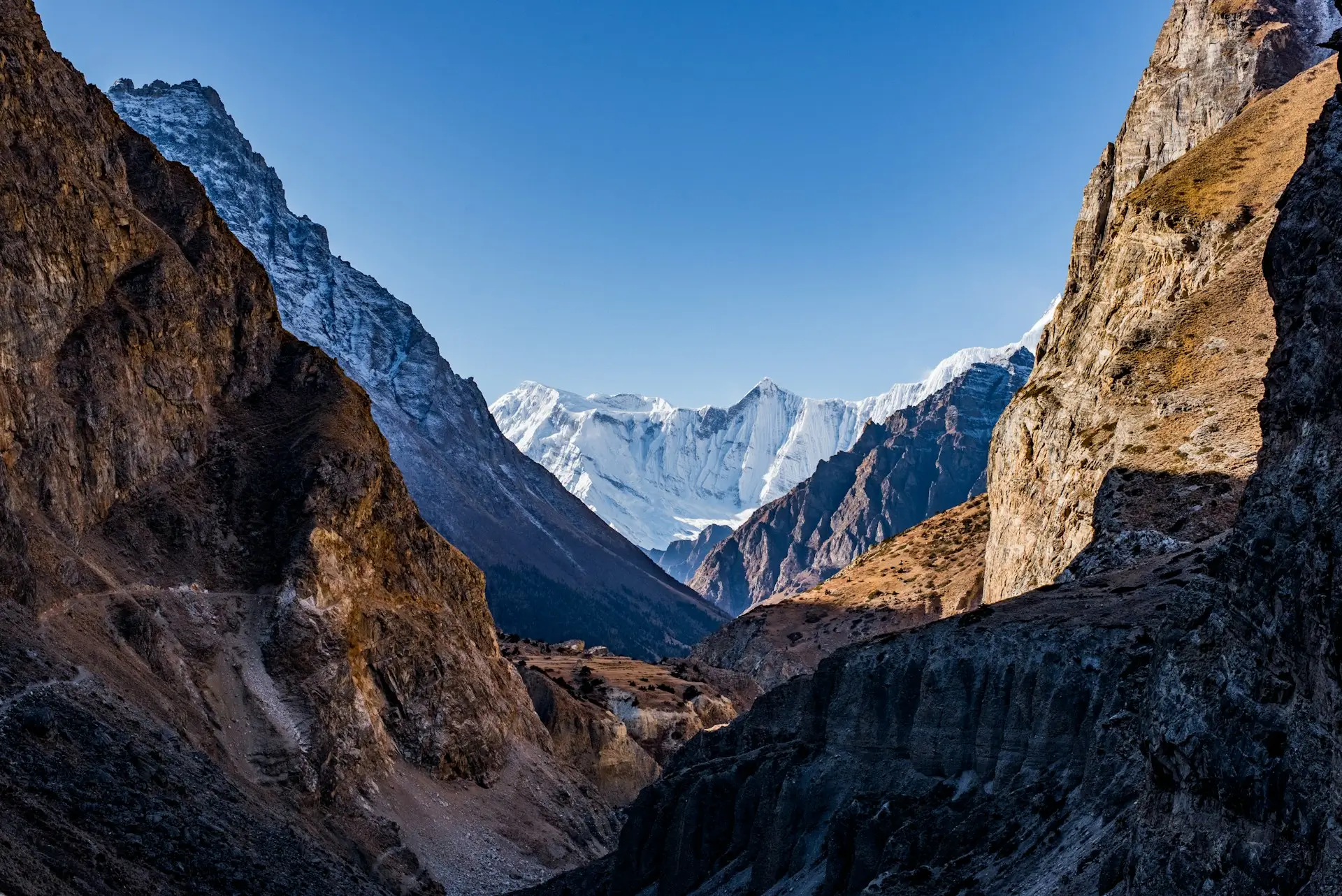
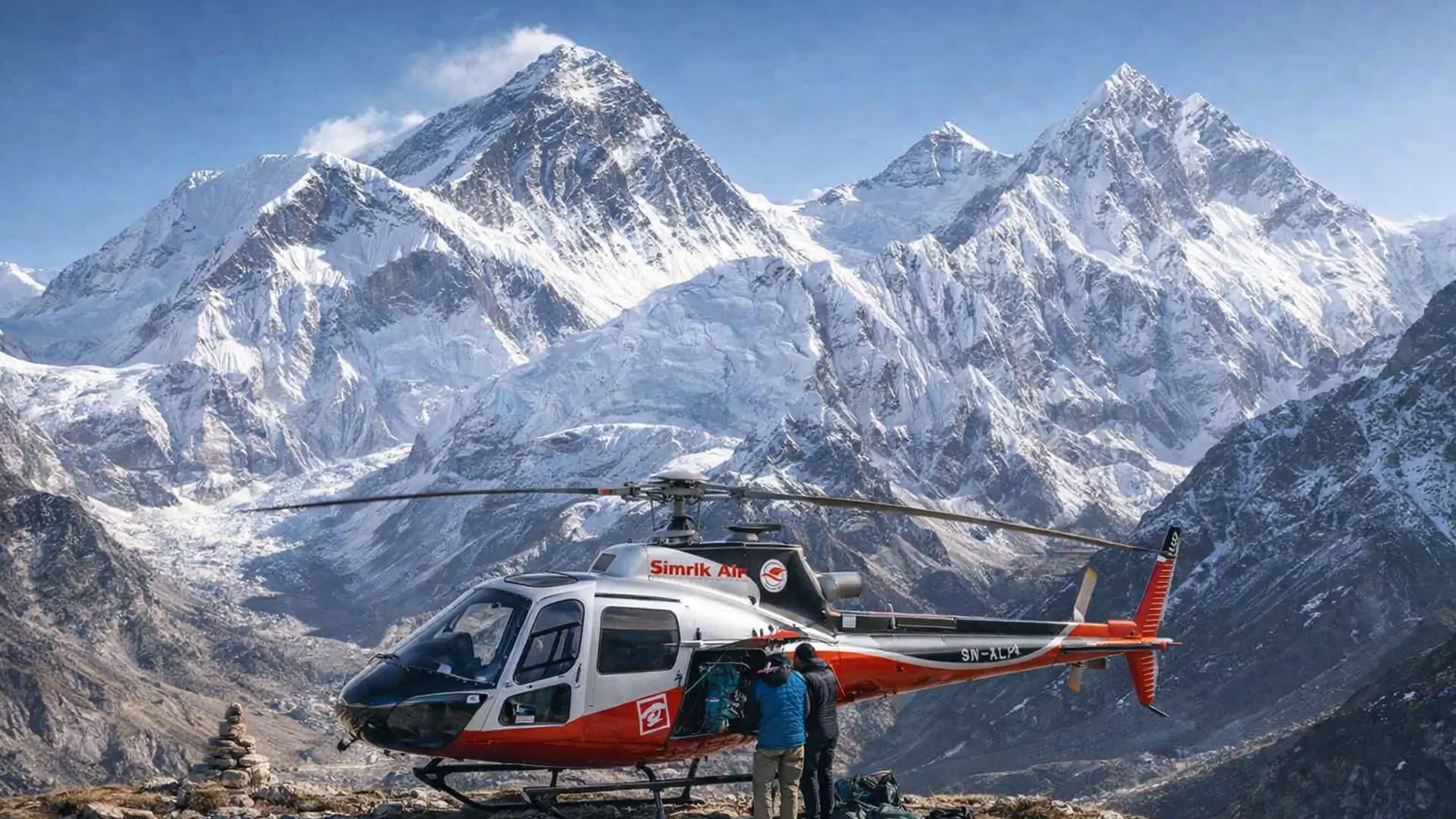
Quick answer: Nepal has three main helicopter day tours, to Everest, Annapurna and Langtang, plus the option of trekking up and flying out. All of them land in the mountains rather than just flying over. Prices run from roughly US$550 per person on a full Langtang flight to US$1,950 for a single seat to Everest. So the biggest factor in what you pay is not the destination. It is how many people share the aircraft.
Most people arrive with one question and the wrong version of it. They ask which helicopter tour is best. However, the better question is what you are short of: time, fitness, or company to split the cost with. So this page sets out every option we run, what each actually costs, and who each one genuinely suits.
Who this guide is for
This guide is for travellers deciding whether to fly rather than trek in Nepal. So here is who each option actually suits.
- Best for travellers with under a week in Nepal who still want to stand in the high Himalaya rather than look at it from a plane window.
- Ideal for families travelling with children or older parents, where a multi-day trek is not realistic for everyone in the party.
- Suitable for anyone whose fitness, knees or health rules out walking at altitude, since there is no trekking involved at all.
- Also useful for photographers who need height and light without the four-day walk-in that normally buys it.
- Use this if you would rather trek up and fly back than walk both directions.
- Not for you if you have two weeks and working knees. Then trekking gives you more for the money, and we say so plainly below.
Key Takeaways
- Three day tours: Everest, Annapurna and Langtang. Each lands in the mountains.
- A fourth option: trek up and fly out, which saves days without skipping the walk.
- Price is driven by occupancy, not distance. A helicopter costs the same to fly empty.
- All flights are morning flights, because Himalayan valleys make their own cloud by midday.
- Weight matters more than seats. Roughly 500 kg combined, so five average adults or four heavier ones.
- You gain altitude faster than any trekker, so the landing stop is deliberately short.
- Permits still apply even though you arrive by air.
What helicopter tours can you actually do in Nepal?
There are four, and they answer different problems. Here is the whole picture in one place.
| Tour | Lands at | Altitude | Time | Starts from | Price |
|---|---|---|---|---|---|
| Everest Base Camp helicopter tour | Kala Patthar | 5,545 m | About 4 to 5 hours | Kathmandu | From US$1,490 to US$1,950 per person |
| Langtang helicopter tour | Kyanjin Gompa | 3,800 m | About 2 to 3 hours | Kathmandu | US$2,750 per aircraft, so US$550 each at five |
| Annapurna Base Camp helicopter tour | Annapurna Base Camp | 4,130 m | About 3 hours | Pokhara | On request |
| Everest trek with helicopter return | Kala Patthar, after trekking | 5,545 m | 11 days | Kathmandu | On request |
So the Everest flight goes highest and costs most. Meanwhile Langtang is the shortest and the closest to Kathmandu. Annapurna is the only one that leaves from Pokhara rather than Kathmandu.
How does helicopter pricing actually work?
This is the part almost nobody explains, and it is where people get caught out.
A helicopter is chartered as a whole aircraft. So it costs the same to fly whether one person boards or five. Then the operator either sells you the whole thing, or sells single seats and waits to fill them.
That produces two very different-looking prices for the same flight.
- A seat on a shared flight is cheaper, but it only departs if enough people book the same morning.
- A private charter departs when you want, and you carry the whole cost.
So if you are travelling alone, expect to pay either a seat price on somebody else’s schedule, or the full charter on your own. Neither is a trick. It is simply what a fixed-cost aircraft does.
Because of that, the single biggest lever on your cost is how many people you bring. Five sharing a Langtang flight pay about US$550 each. One person flying alone pays the full US$2,750.
What altitude do you reach, and is that safe?
You gain height faster than any trekker on earth, and that deserves a straight answer.
A Langtang flight takes you from Kathmandu at 1,400 m to 3,800 m in under half an hour. The Everest flight goes to 5,545 m at Kala Patthar. Meanwhile a trekker takes four days to reach the first and about ten to reach the second.
Still, the risk stays low, because your time up high is short. So most people feel nothing worse than breathlessness. But some feel dizzy or headachy within minutes. The CDC Yellow Book treats travel above 2,500 m as a genuine altitude exposure rather than a formality, and the Himalayan Rescue Association, who run the aid posts on these routes, say the same about rapid gain.
So our aircraft carry oxygen. Then the ground stop is kept deliberately short, and if anyone feels unwell the helicopter descends at once. In short, nobody is asked to endure it for the sake of photographs.
If you have a heart or lung condition, or you are pregnant, speak to your doctor before booking. After all, it is better asked at home than discovered at 5,545 m.
What are the weight limits?
About 500 kg combined, and weight decides the flight, not the number of seats.
Helicopters lose lifting power as air thins. So at 3,800 m or 5,545 m the margin matters far more than it does at sea level.
That works out near 100 kg a head across five passengers. So five average adults fly together. However, a heavier group of five becomes a group of four, or two rotations. Also, we ask for rough weights at booking. Still, it is not a personal question. Instead it is a flight-planning one, and getting it wrong on the day is how a tour gets cut short.
When do helicopters fly, and what stops them?
Mornings only, in practice, and cloud is what stops them.
Himalayan valleys generate their own cloud as the day warms. So a clear seven in the morning often becomes an unflyable eleven. That is why every operator in Nepal, including us, flies at dawn.
Then there is the season. Flights run year round, but October to May gives the most reliable mornings. Meanwhile the monsoon months bring long spells where nothing flies for days.
So if the weather stops your flight, we move you to the next clear morning, or refund it in full if you have run out of days. We do not fly marginal weather into a mountain valley, and no amount of disappointment changes that.
Do you need permits if you arrive by helicopter?
Yes. National park entry permits apply however you arrive.
Everest sits inside Sagarmatha National Park. Langtang and Annapurna sit inside their own protected areas. So the entry permit is due whether you walk in over days or land for half an hour, and the current fees are published by the Nepal Tourism Board. We arrange these for you.
However, you do not need a TIMS card on a helicopter day tour, because TIMS covers trekkers travelling on foot. For how the whole system works, region by region, see our Nepal trekking permits guide.
What we actually see on these flights
Three things come up nearly every season, and none of them appear in the brochures.
People book the flight for their last morning. That is the single most common mistake we see. Because weather cancels flights and the next clear window can be two days away, a flight booked for your final morning has no room to move. So we ask guests to leave at least two spare days after the date they want.
Groups are reweighed at the helipad, and some are surprised. A party of five who together exceed the 500 kg allowance becomes a party of four, or two rotations at extra cost. It is settled in ten minutes at the gate, and it is far better settled at booking.
A worked example, using our own rates. Four friends want Langtang. The aircraft is USD 2,750 whichever way you cut it. Split four ways that is USD 690 each. Then a fifth person joins and the same flight costs USD 550 each, so everyone saves USD 140 because one more person came. Meanwhile one of those four travelling alone would pay the whole USD 2,750. That is the arithmetic in full, and it is why we ask how many of you there are before quoting anything.
Which helicopter tour should you choose?
Match it to what you are actually short of.
- Short on time, want the famous one: the Everest tour. It is the highest, the most expensive, and the one people travel for.
- Short on time and money, near Kathmandu: Langtang. It is the shortest flight and the cheapest per head with a full aircraft.
- Already in Pokhara: Annapurna, since it is the only one that does not start in Kathmandu.
- Want to earn it but not walk out: the trek with helicopter return. So you walk up over days, then fly down in an hour.
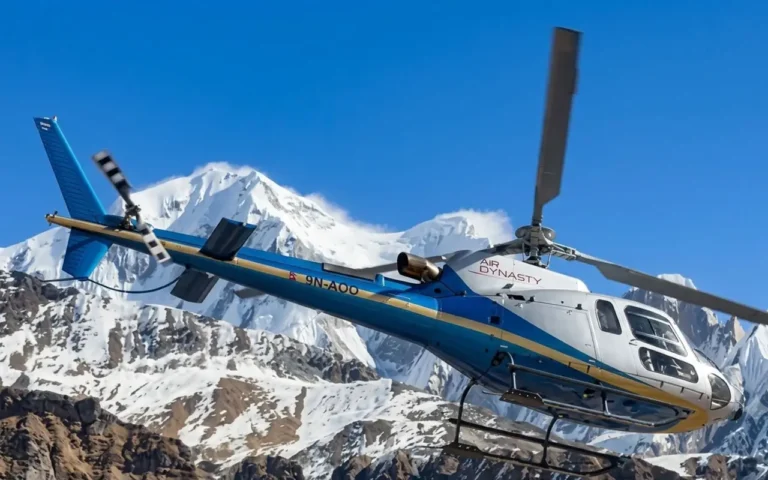
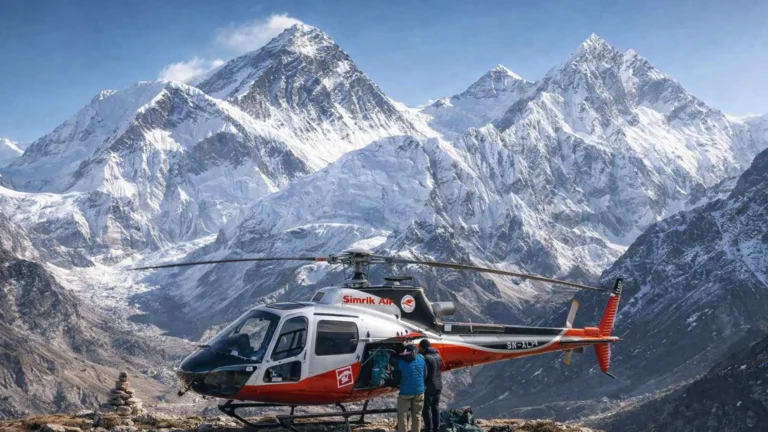
There is one more reason to consider Langtang this season. A glacial flood destroyed the road through Rasuwa district in August 2026, so the valley currently has no vehicle access. Flying is one of the few ways in. We keep the current position on our Langtang helicopter tour guide.
And if you are weighing the Everest flight against the trek itself, we have written that comparison honestly in our Everest helicopter tour guide.
FAQs
Can you land at Everest Base Camp itself?
Not usually. Helicopters land at Kala Patthar, the ridge above Gorak Shep at 5,545 m, which gives the closer view of Everest anyway. Landings at base camp itself are restricted and depend on conditions and the season.
How many people fit in a helicopter in Nepal?
Five passengers plus the pilot, but weight is the real limit. The combined passenger allowance is about 500 kg, so a heavier group of five becomes four.
Do helicopter tours run in monsoon?
They fly year round, but the monsoon brings long spells of cloud when nothing takes off. So October to May gives the most reliable mornings.
Is a helicopter tour worth it compared with trekking?
They are different things rather than better and worse. A flight gives you the view in a morning. A trek gives you the valley, the villages and the people over days. So if you have the time and the legs, walk. If you do not, fly without apology.
What happens if the weather cancels my flight?
We move you to the next clear morning. If you have run out of days, we refund the flight in full.
Do I need travel insurance for a helicopter tour?
Yes, and it should cover helicopter evacuation as well as the flight itself. That matters more at these altitudes than most policies assume.
Accuracy note: prices, permit rules and access were checked in September 2026 against our own operations and the issuing authorities. Two of the four tours are quoted on request because their prices are set per enquiry. Access in Rasuwa is changing after the August 2026 flood, so we will update this page when the road reopens.

Before You Book
Updated: 13 Jul, 2026
10 min
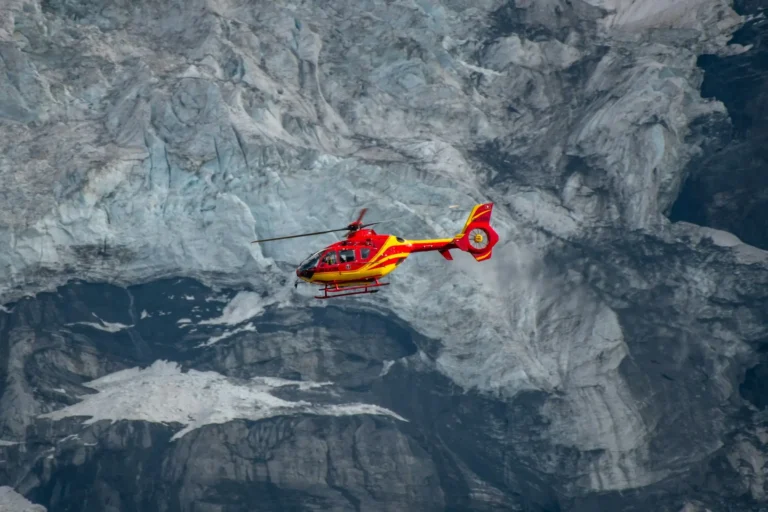
Everest Helicopter Tour: Is It Worth It? Cost, Safety and the Reality
Is the Everest helicopter tour worth it? An honest look at the cost, the safety, why...
Updated: 14 Sep, 2026
6 min
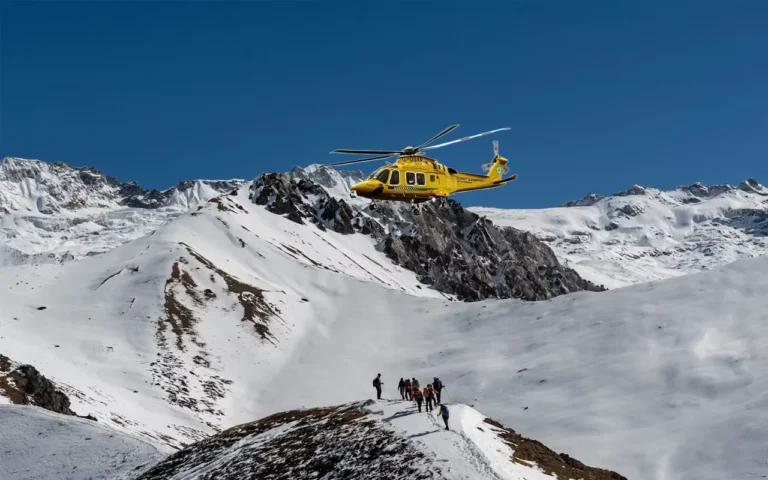
Langtang Helicopter Tour and Heli Return: Cost and Options (2026)
Access note, 1 September 2026. A glacial flood on 26 August 2026 destroyed road access in...
Updated: 12 Jul, 2026
7 min
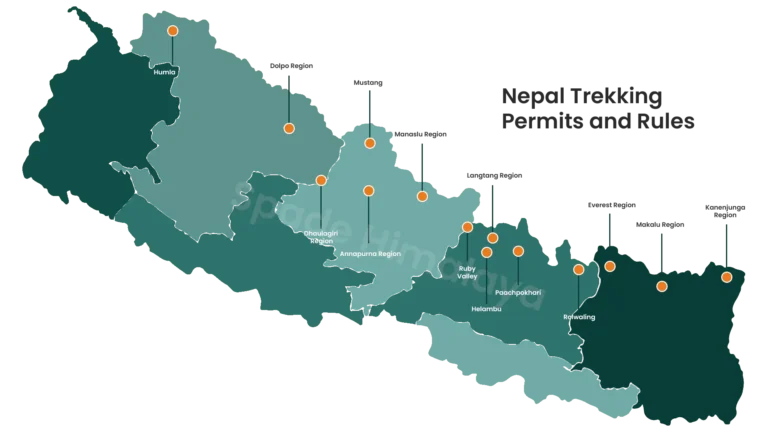
Nepal Trekking Permits and Rules: The Complete 2026 Guide
Last updated: June 2026. Every fee here is checked against official Nepal government sources. Quick answer:...