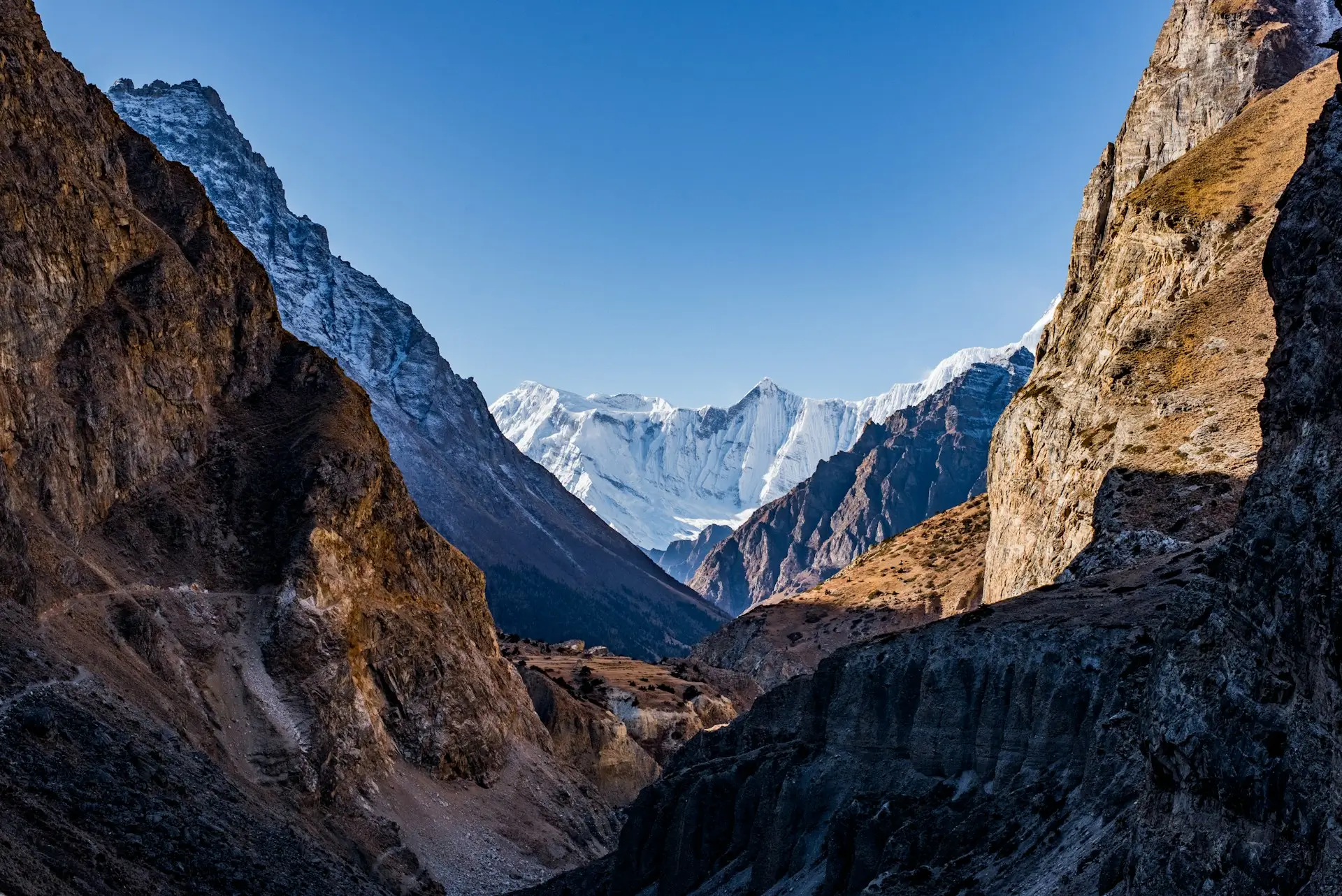
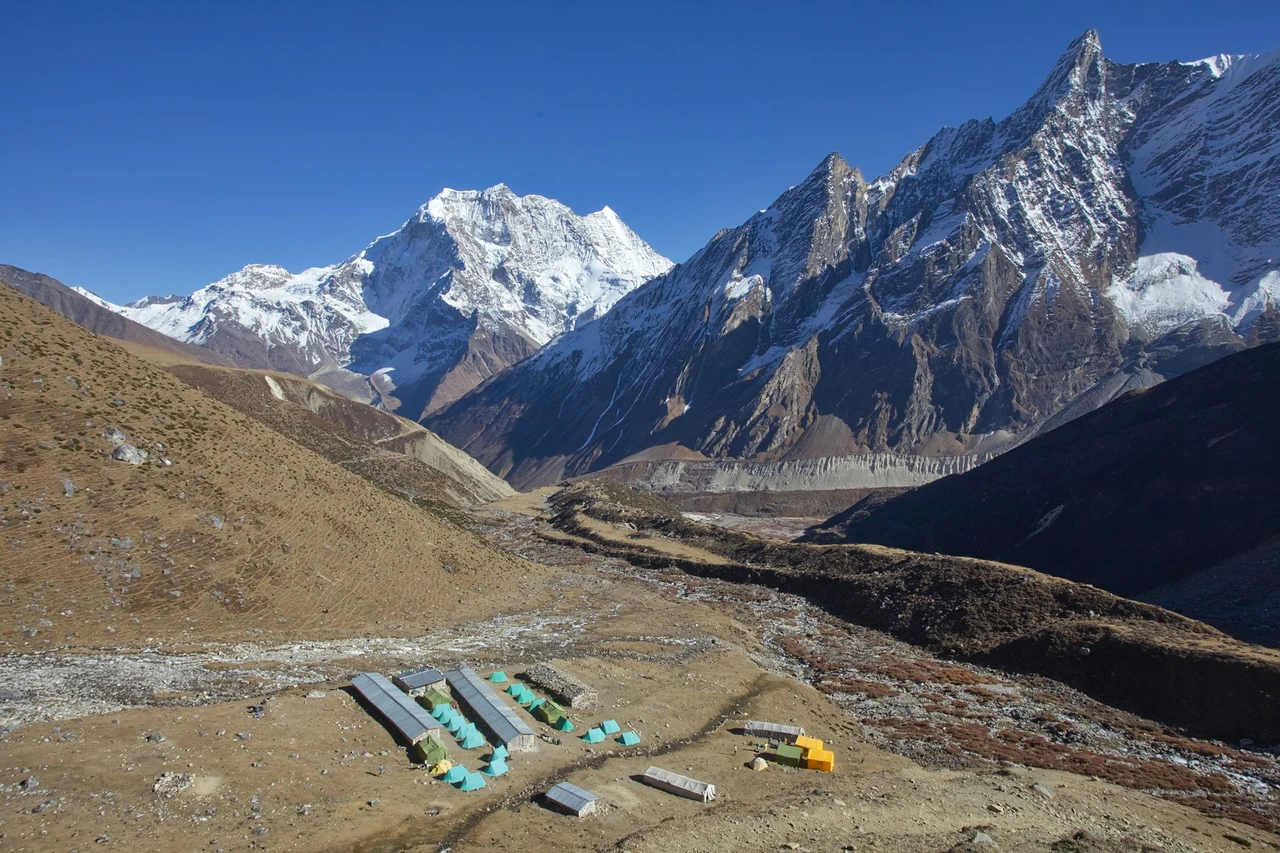
Quick answer: The combined Manaslu and Tsum trek takes about 21 to 24 days. You walk into the Tsum Valley first, return to Philim, then continue north around the Manaslu Circuit and over the Larkya La at 5,106 m. It needs two separate restricted-area permits, and a licensed guide is required by law.
This is the most complete way to see the Manaslu region, and it is far more efficient than doing the two trips separately. Because both routes share the same approach from Machha Khola, combining them saves you a repeated four-day walk in and a second long drive from Kathmandu.
So if you have three weeks, this is the itinerary to ask for. You get both the culture and the high pass.
Key Takeaways
- Takes roughly 21 to 24 days from Kathmandu.
- You need both restricted-area permits, the Tsum one and the Manaslu one.
- Walk Tsum first, then the Circuit. The order matters for acclimatization.
- High point is the Larkya La at 5,106 m, near the end.
- Grade 3 on our scale, strenuous.
- Best in October and November, then late March to May.
Why combine them at all?
Because they share a trail for four days, and doing them separately means walking that stretch twice.
Both routes begin with the long drive to Machha Khola, then follow the Budhi Gandaki north through Jagat to Philim. Only after Philim do they part. Tsum turns east into the Shiar Khola. Meanwhile the Circuit continues north towards Deng and Namrung.
So if you booked them as two trips, you would repeat that approach. You would also pay for the drive twice and lose about four extra days. Instead, the combined route treats Tsum as a side journey off the main trail. You walk in, come back to the junction, and carry on.
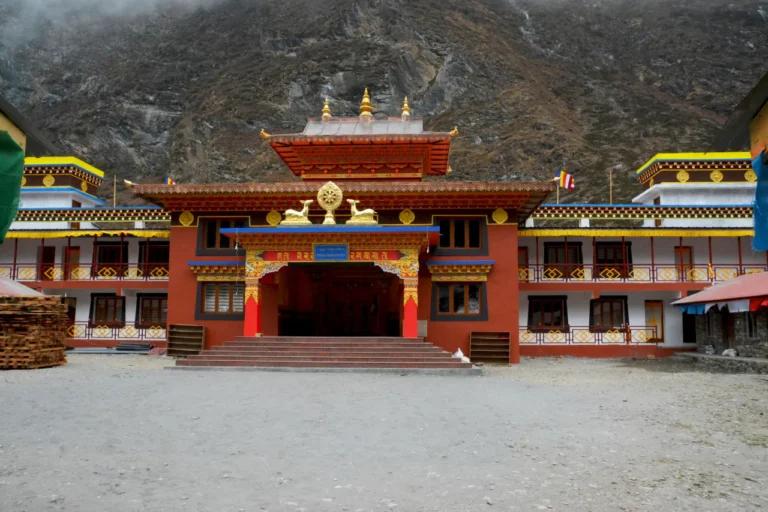
There is a second reason too. The two halves are genuinely different, and together they make a more complete trip than either alone. Tsum gives you the Tibetan Buddhist culture. Then the Circuit gives you the high mountain scenery. We set out that contrast in full in Tsum Valley vs Manaslu Circuit.
How long does the combined trek take?
Plan on 21 to 24 days from Kathmandu, including both road days.
Roughly, the time splits like this.
| Stage | Days |
|---|---|
| Kathmandu to Machha Khola by road | 1 |
| Machha Khola to Philim, the shared approach | 2 |
| Into the Tsum Valley to Mu Gompa, with an acclimatization day | 6 |
| Back down Tsum to the Philim junction | 3 |
| North up the Manaslu valley to Samagaun | 4 |
| Acclimatization at Samagaun, then Samdo and Dharmasala | 3 |
| Larkya La (5,106 m) to Bimtang and down to Dharapani | 3 |
| Drive back to Kathmandu | 1 |
Anything under about 20 days compresses the acclimatization, and that is the part you should not cut. Because the pass sits at the end of the trip, you arrive there after three weeks. Turning up tired and under-acclimatized is the main way this itinerary goes wrong.
Which order should you walk it in?
Tsum first, then the Circuit. This is not a matter of preference.
Tsum is a dead-end valley, so you have to return to the Philim junction whichever way round you go. That much is fixed. However, walking Tsum first has a real advantage. It gives you roughly nine days of gradual altitude gain, up to 3,700 m, before the Manaslu leg begins.
Then, by the time you reach Samagaun at 3,530 m and Samdo at 3,860 m, you are already adapted. So the Larkya La at 5,106 m comes at the end of three weeks of walking. It does not land in the middle of your second week.
Doing the Circuit first and then dropping into Tsum would waste that. You would cross the pass early, then spend the back half of your trip at lower altitude. It works, but it is the weaker plan.
What permits do you need?
Both restricted-area permits, plus the conservation permits for each zone.
- Tsum Valley Restricted Area Permit, about US$40 per person for the first seven days in autumn, about US$30 off-season.
- Manaslu Restricted Area Permit, about US$100 per person for the first seven days in autumn, about US$75 off-season.
- Manaslu Conservation Area Permit (MCAP), about NPR 3,000.
- Annapurna Conservation Area Permit (ACAP), about NPR 3,000, because the Circuit finishes at Dharapani inside the Annapurna area.
- A small local rural municipality fee collected on the ground.
You do not need a TIMS card. In restricted areas the restricted-area permit replaces it.
So permits on this trip run higher than on either route alone. That is expected, since you enter two restricted zones. Budget roughly US$200 to US$260 per person in total. The exact figure depends on season and days inside each zone.
Our Tsum Valley permit guide and Manaslu permit guide cover each side in detail.
How hard is the combined trek?
Grade 3 on our scale, strenuous, and the length is a real factor.
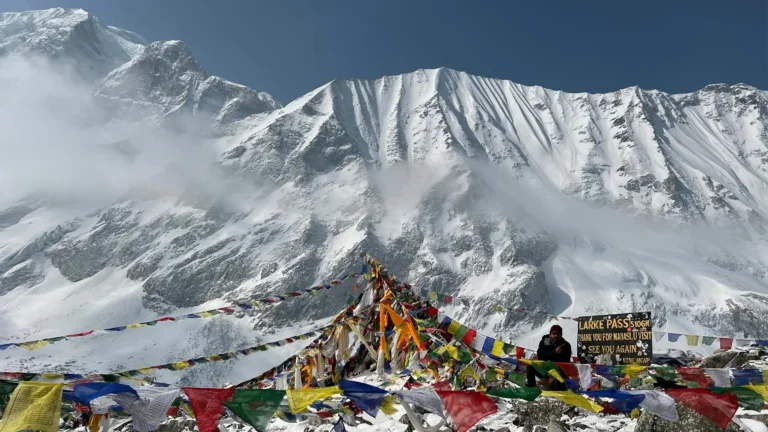
Neither half is technical. Still, three weeks of consecutive walking days is demanding in itself. Also the Larkya La is a long cold day at 5,106 m.
Here is how the difficulty distributes. The Tsum leg is moderate throughout, with two steep climbs and nothing above 3,700 m. Then the Manaslu leg builds steadily to the pass. So the hardest day is day nineteen or twenty, not day five.
Because of that shape, fitness matters less at the start than stamina does at the end. Our guides watch the group carefully through the Samagaun and Samdo stage. Here is where problems show before the pass.
For altitude guidance, see our notes on altitude sickness in Nepal. For the daily shape of the Tsum leg, see our Tsum Valley itinerary and distance guide.
When should you go?
October and November first, then late March to May.
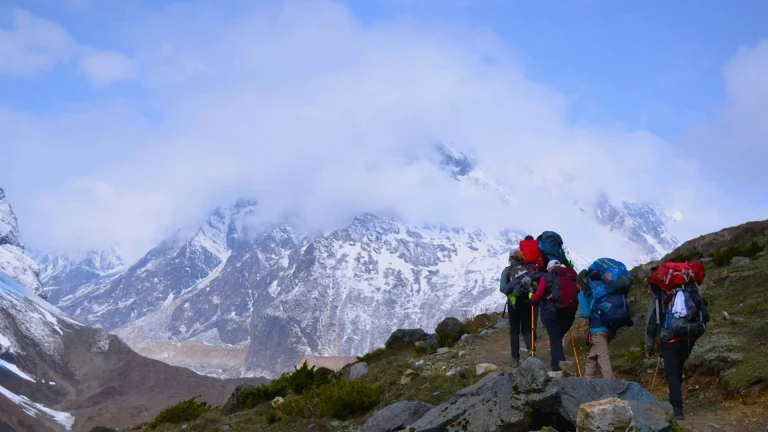
Autumn gives the most stable weather and the clearest views. That matters more here than on lower treks, because the Larkya La can close in snow. Spring is the second window and it is warmer, though hazier.
Winter is a poor choice for this itinerary specifically. The pass becomes genuinely serious in snow, and lodges high on both legs close. Monsoon is also difficult, since the approach road is unreliable and landslides are common.
More on timing sits in our overview of the best time to trek in Nepal.
Who is this trip right for?
People with three weeks, previous multi-day trekking experience, and a reason to want both halves.
It suits you if you are comfortable at altitude, if you have walked at least one long trek before, and if you would rather see a region properly than tick off a famous name.
It is not the right trip if your holiday is two weeks. In that case pick one. Our Tsum Valley Trek is the culture-led option, and our Manaslu Circuit Trek is the high-mountain one.
We build this combined itinerary privately rather than as a fixed departure, because the number of days inside each zone changes the permit cost. So tell us your dates and we will price it properly.
FAQs
How many days do you need to trek Manaslu with the Tsum Valley?
About 21 to 24 days from Kathmandu, including both long road days. You can compress it to around 20, but that eats into the acclimatization before the Larkya La, which is the part you should not cut.
Do you need two permits for Manaslu with Tsum Valley?
Yes. You need the Tsum Valley Restricted Area Permit and the Manaslu Restricted Area Permit, because you enter two separate restricted zones. You also carry the Manaslu Conservation Area Permit and an Annapurna Conservation Area Permit for the finish at Dharapani.
Should you do Tsum Valley or the Manaslu Circuit first?
Tsum first. It is a dead-end valley so you return to the Philim junction either way, but walking Tsum first gives you around nine days of gradual acclimatization before the Manaslu leg. That puts you in far better shape for the Larkya La at 5,106 m.
How much do the permits cost for the combined trek?
Roughly US$200 to US$260 per person in total, depending on season and days inside each zone. Autumn costs more than the December to August window for both restricted permits.
Is the combined trek harder than the Manaslu Circuit alone?
Yes, mainly because of its length. The individual days are no harder, and the Tsum leg is easier than anything on the Circuit. However, three weeks of consecutive walking with a 5,106 m pass near the end asks more of your stamina.
Can you trek it solo?
You can hold the permits as a single trekker since March 2026, when Nepal removed the two-person minimum for restricted areas. However, a licensed guide and a registered agency are still compulsory, so you cannot walk it independently.
Accuracy note: Tsum Valley restricted-area permit fees and the Manaslu Conservation Area Permit come from our Nepal trekking permits guide (retrieved 2026-08-20). The removal of the two-trekker minimum in restricted areas on 22 March 2026, and the fact that the licensed-guide and registered-agency rules were kept, is reported by the Kathmandu Post. The contrast with the Manaslu restricted-area permit is set out in our Manaslu permit guide; on the combined route you carry BOTH restricted-area permits plus the Manaslu and Annapurna conservation permits, because the Circuit finishes at Dharapani inside the Annapurna Conservation Area, as set out in our Manaslu permit guide (retrieved 2026-08-20); the 21 to 24 day duration and the Larkya La height of 5,106 m reflect the itinerary Spade Himalaya operates; reviewed by a licensed Spade Himalaya trekking guide.

Still Deciding?
Updated: 7 Sep, 2026
7 min
Tsum Valley vs Manaslu Circuit: Which Should You Walk?
Tsum Valley or Manaslu Circuit? One has a 5,106 m pass, the other has no pass...
Updated: 11 Sep, 2026
8 min
Tsum Valley Trek Permit Cost 2026: What You Actually Need
Tsum Valley permits in 2026: the restricted-area permit is US$40 a week, not the Manaslu US$100....
Updated: 6 Jul, 2026
7 min
Manaslu Circuit Trek Permits and Cost (2026): The Full Rules
Quick answer: The Manaslu Circuit needs three permits: the Manaslu Restricted Area Permit (RAP), the Manaslu...