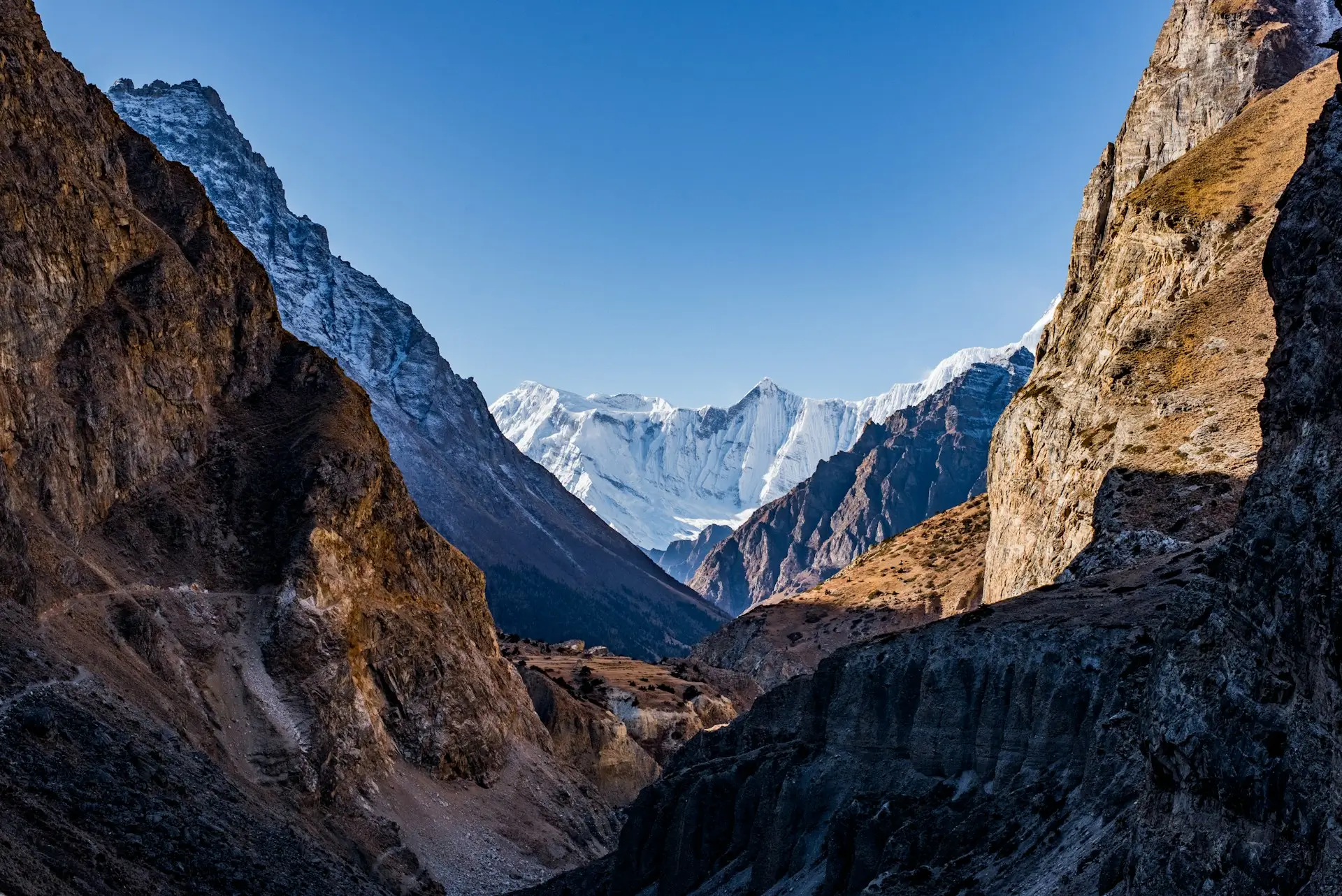
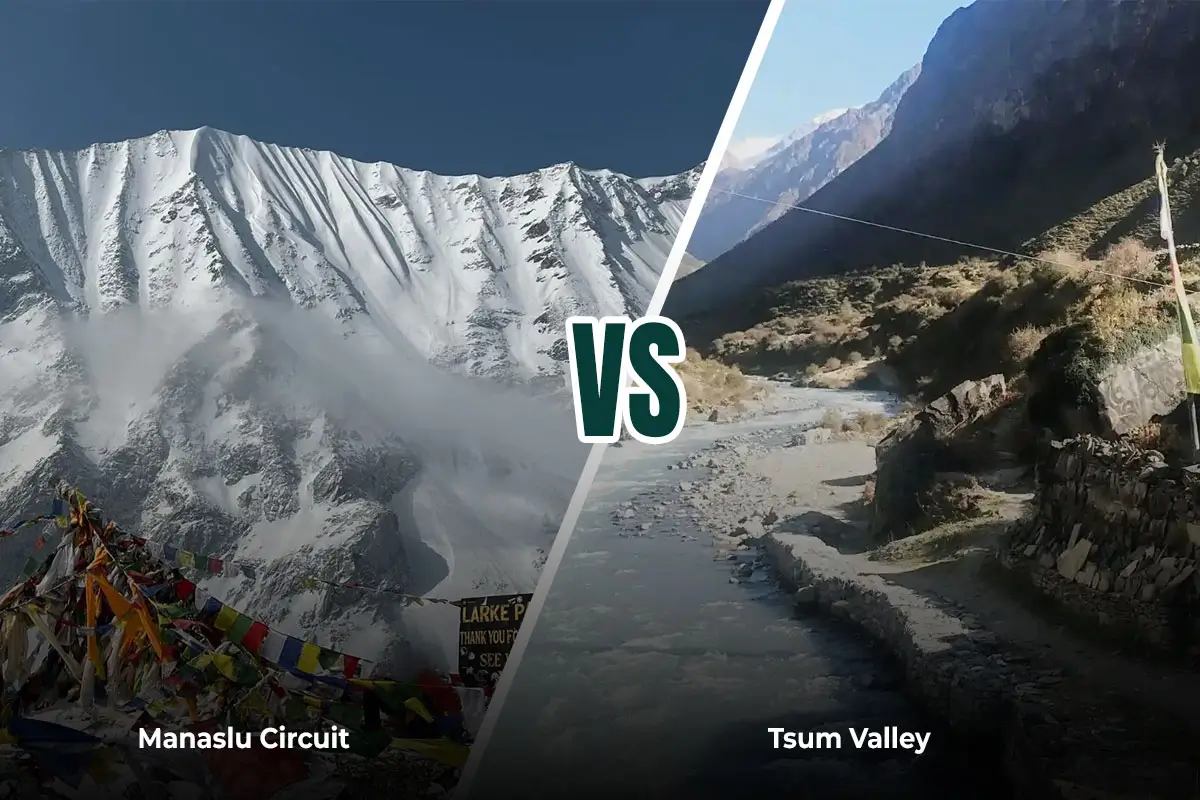
Quick answer: Choose the Manaslu Circuit if you want big mountain scenery and a serious high pass, since it crosses the Larkya La at 5,106 m and circles an 8,163 m peak. Choose the Tsum Valley if you want Tibetan Buddhist culture and solitude, because it tops out at 3,700 m, crosses no pass, costs less in permits, and sees far fewer trekkers.
These two treks start on the same trail and share it for about four days. So people often assume they are variations of one route. They are not. After the village of Philim they separate completely, and from that point they offer genuinely different experiences.
This comparison sets out the real differences, so you can pick the one that fits rather than the one that came up first in a search.
Key Takeaways
- Manaslu Circuit crosses the Larkya La at 5,106 m. Tsum Valley has no pass at all.
- Tsum’s highest night is 3,700 m at Mu Gompa. Manaslu’s is 4,460 m at Dharmasala.
- The Tsum permit costs about US$40 a week. The Manaslu permit is about US$100.
- Manaslu is about scenery. Tsum is about culture and solitude.
- Both need a licensed guide and a registered agency by law.
- You can walk both together in roughly 21 to 24 days.
How do they compare at a glance?
| Tsum Valley | Manaslu Circuit | |
|---|---|---|
| Typical length | 15 days | 14 days |
| Highest point | Mu Gompa, 3,700 m | Larkya La pass, 5,106 m |
| Highest sleeping altitude | 3,700 m | 4,460 m |
| Grade on our scale | 2, moderate | 3, strenuous |
| Restricted permit, autumn | About US$40 per week | About US$100 per week |
| Shape | In and out, same valley | A loop around a mountain |
| Main draw | Tibetan Buddhist culture | High mountain scenery |
| Trekkers you will meet | Very few | Busy in season |
| Meat available | No, the valley is vegetarian | Yes |
Which is harder?
The Manaslu Circuit is clearly harder, and the gap is bigger than the day counts suggest.
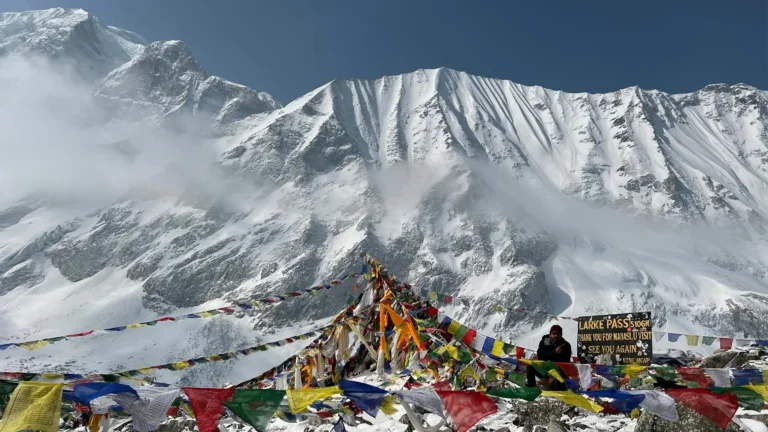
The Circuit’s difficulty is concentrated in one day. You leave Dharmasala at 4,460 m before dawn. Then you climb to the Larkya La at 5,106 m. After that you descend a long way to Bimtang at 3,720 m. It is a long, cold, high day, and it is where people struggle.
Tsum has nothing comparable. The highest you sleep is 3,700 m, and the walk to get there is gradual. So the challenge is spread evenly rather than concentrated: five to seven hours a day, two steep climbs, and a lot of remoteness.
Because of that, altitude problems are less common on Tsum. You cross 2,500 m on day four and only reach 3,700 m on day eight. That said, altitude is never risk-free, and our guide to altitude sickness on Nepal treks is worth reading before either trip.
For the detail on the Circuit side, see Manaslu Circuit trek difficulty.
Which costs more?
Manaslu costs more, and the permit difference is the clearest single gap.
The Manaslu Restricted Area Permit runs about US$100 per person for the first seven days in autumn. Meanwhile the Tsum Valley permit is about US$40 for the same period. Both then charge a smaller daily rate after that.
Manaslu also needs an extra conservation permit that Tsum does not. Because the Circuit finishes at Dharapani inside the Annapurna Conservation Area, you carry an ACAP as well as the Manaslu conservation permit. Tsum needs only the Manaslu Conservation Area Permit plus a small local fee.
So on permits alone, expect Manaslu to cost roughly US$60 to US$90 more per person. The trip prices follow a similar pattern, though group size affects that more than anything else.
Full detail sits in our Tsum Valley permit guide and our Manaslu permit guide.
Which has better scenery?
Manaslu, and it is not really close.
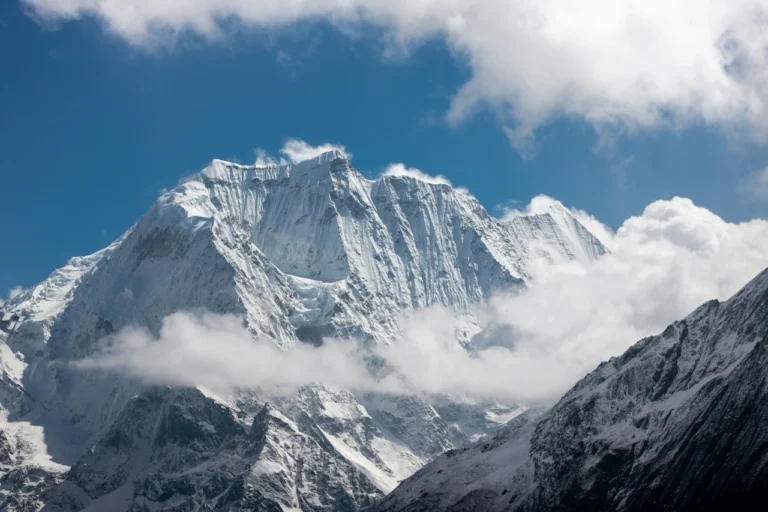
The Circuit takes you around Manaslu itself, the eighth-highest mountain on earth at 8,163 m. You sleep at Samagaun beneath it. Also you can walk up to Manaslu Base Camp or Birendra Lake. Then the Larkya La crossing gives you a genuine high-mountain day, with peaks on every side.
Tsum’s mountains are good rather than overwhelming. Ganesh Himal dominates the valley on clear mornings, with Sringi Himal and Boudha Himal visible higher up. However, you are looking at mountains from a valley rather than moving among them.
So if photographs of big peaks are your main reason for coming, choose the Circuit.
Which has better culture?
Tsum, decisively, and this is the reason to go.
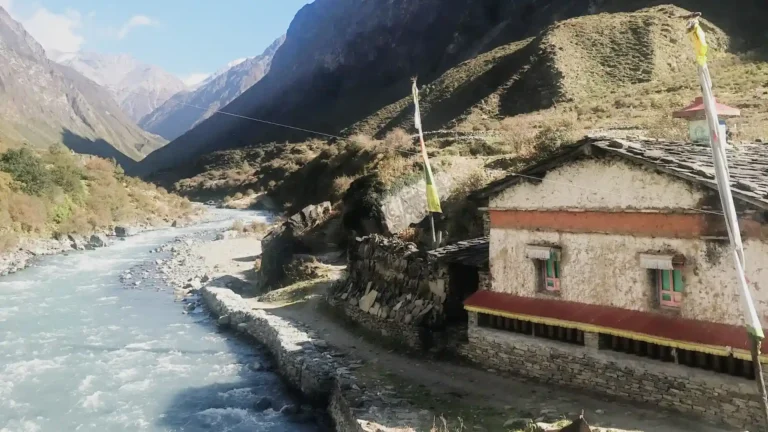
The Tsum Valley stayed closed to foreign trekkers until 2008. Because of that, the villages were never rebuilt around tourism. Instead they remain farming and herding settlements with a few lodges added.
The people are Tsumba. Today they speak a Tibetan dialect and follow Tibetan Buddhism. Once, they belonged to a small kingdom with stronger ties across the Tibetan border than south to Kathmandu.
Then there is the shyagya vow, a community pledge of non-violence that prohibits killing animals in the valley. So no meat is served anywhere in Tsum, and you will eat vegetarian for about a week. It is a genuine cultural rule rather than a tourist curiosity.
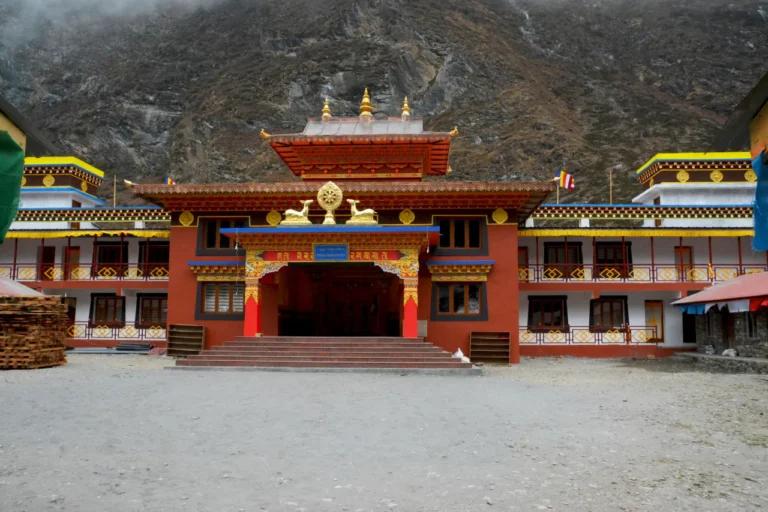
The route also takes in Mu Gompa at the head of the valley, Rachen Gompa which is one of Nepal’s larger nunneries, and Piren Phu, a cave shrine where the poet-saint Milarepa is said to have meditated.
Manaslu has Tibetan-influenced villages too, particularly Lho, Samagaun and Samdo. Still, they sit on a busier trail, and the cultural experience is thinner as a result.
Which is quieter?
Tsum, by a wide margin.
The Manaslu Circuit has grown steadily busier as people look for an alternative to Annapurna. In October you will share lodges and the pass day with a good number of other groups.
Tsum sees a fraction of that traffic. On many days you will pass more mule trains than trekkers, and some lodges will have only your group in them. If solitude matters to you, that difference is the whole point.
Can you do both?
Yes, and it is the most complete way to see the region.
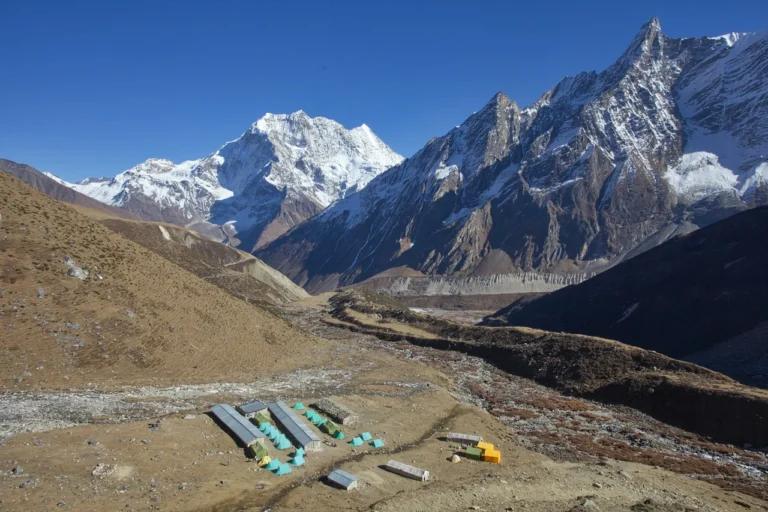
Because they share the same approach, you can walk into the Tsum Valley first. Then you come back down to Philim. After that you continue north on the Manaslu Circuit and over the Larkya La. It takes roughly 21 to 24 days.
You will need both restricted-area permits for that, the Tsum one and the Manaslu one, since you enter both zones. Our guide to the combined Manaslu and Tsum trek covers the logistics.
So which should you choose?
Choose the Manaslu Circuit if: you want high mountain scenery and you are comfortable crossing a 5,106 m pass. Also you have two weeks and some experience at altitude. See our Manaslu Circuit Trek.
Choose the Tsum Valley if: the culture is the point and you would rather not cross a high pass. Also you want to see very few people, and a vegetarian week without hot showers or phone signal sounds fine. See our Tsum Valley Trek.
Choose both if: you have three weeks and you want the full picture of the region.
If neither quite fits, the Nar Phu Valley Trek in the Annapurna region offers a similar restricted-area feel to Tsum with slightly more mountain scenery.
FAQs
Is the Tsum Valley harder than the Manaslu Circuit?
No, it is easier. Tsum tops out at 3,700 m and crosses no pass, while the Manaslu Circuit crosses the Larkya La at 5,106 m and has you sleeping at 4,460 m the night before. We grade Tsum moderate and the Circuit moderate to strenuous.
Is the Tsum Valley cheaper than the Manaslu Circuit?
Yes. The restricted-area permit alone is about US$60 less per person per week, and Manaslu needs an extra Annapurna conservation permit that Tsum does not. Overall trip costs follow the same direction, though group size matters more than either.
Do both treks need a guide?
Yes. Both are restricted areas, so a licensed guide and a registered agency are required by law. The March 2026 change removed the old two-person minimum but kept both of those requirements.
Which one has better mountain views?
The Manaslu Circuit. It circles an 8,163 m peak and crosses a high pass, so the scale is far greater. Tsum’s views of Ganesh Himal are fine, but you are looking from a valley rather than walking among high peaks.
Can you eat meat on the Tsum Valley Trek?
No. The valley follows a shyagya vow prohibiting the killing of animals, so no meat is served there. On the Manaslu Circuit meat is generally available, though it is often carried in and we would not recommend it high on the route.
How many days do you need for both?
Roughly 21 to 24 days, walking into Tsum first and then continuing around the Circuit. You need both restricted-area permits for that itinerary.
Accuracy note: Tsum Valley restricted-area permit fees and the Manaslu Conservation Area Permit come from our Nepal trekking permits guide (retrieved 2026-08-20). The removal of the two-trekker minimum in restricted areas on 22 March 2026, and the fact that the licensed-guide and registered-agency rules were kept, is reported by the Kathmandu Post. The contrast with the Manaslu restricted-area permit (about US$100 per week in autumn) is set out in our Manaslu permit guide; the Larkya La height of 5,106 m, the Manaslu summit height of 8,163 m and the Tsum high point of 3,700 m at Mu Gompa reflect the routes Spade Himalaya operates and are published on our Tsum Valley Trek and our Manaslu Circuit Trek (retrieved 2026-08-20); both routes reviewed by a licensed Spade Himalaya trekking guide who works the region each season.

Still Deciding?
Updated: 25 Aug, 2026
12 min
Tsum Valley Trek: The Complete 2026 Guide
Tsum Valley Trek 2026 guide: the sacred valley that opened in 2008, real permit costs, a...
Updated: 19 Aug, 2026
7 min
Manaslu Circuit with Tsum Valley: The Combined Trek
Walk the Tsum Valley and the Manaslu Circuit as one trek. Route, both permits, cost, difficulty...
Updated: 14 Sep, 2026
10 min
Manaslu Circuit Trek Guide and Route Map (2026)
Quick answer: The Manaslu Circuit Trek is a remote 14-day loop around Mount Manaslu (8,163 m),...