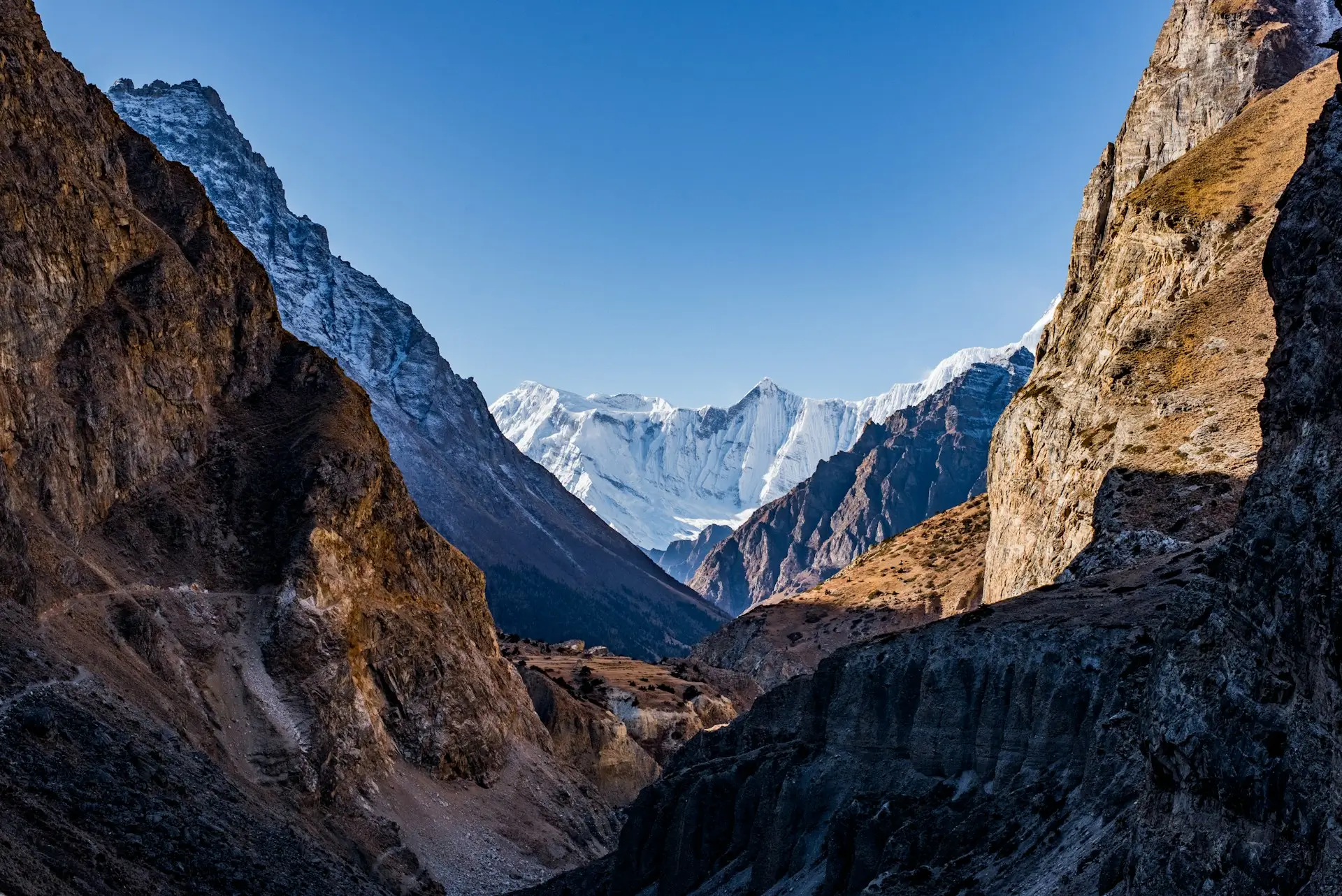
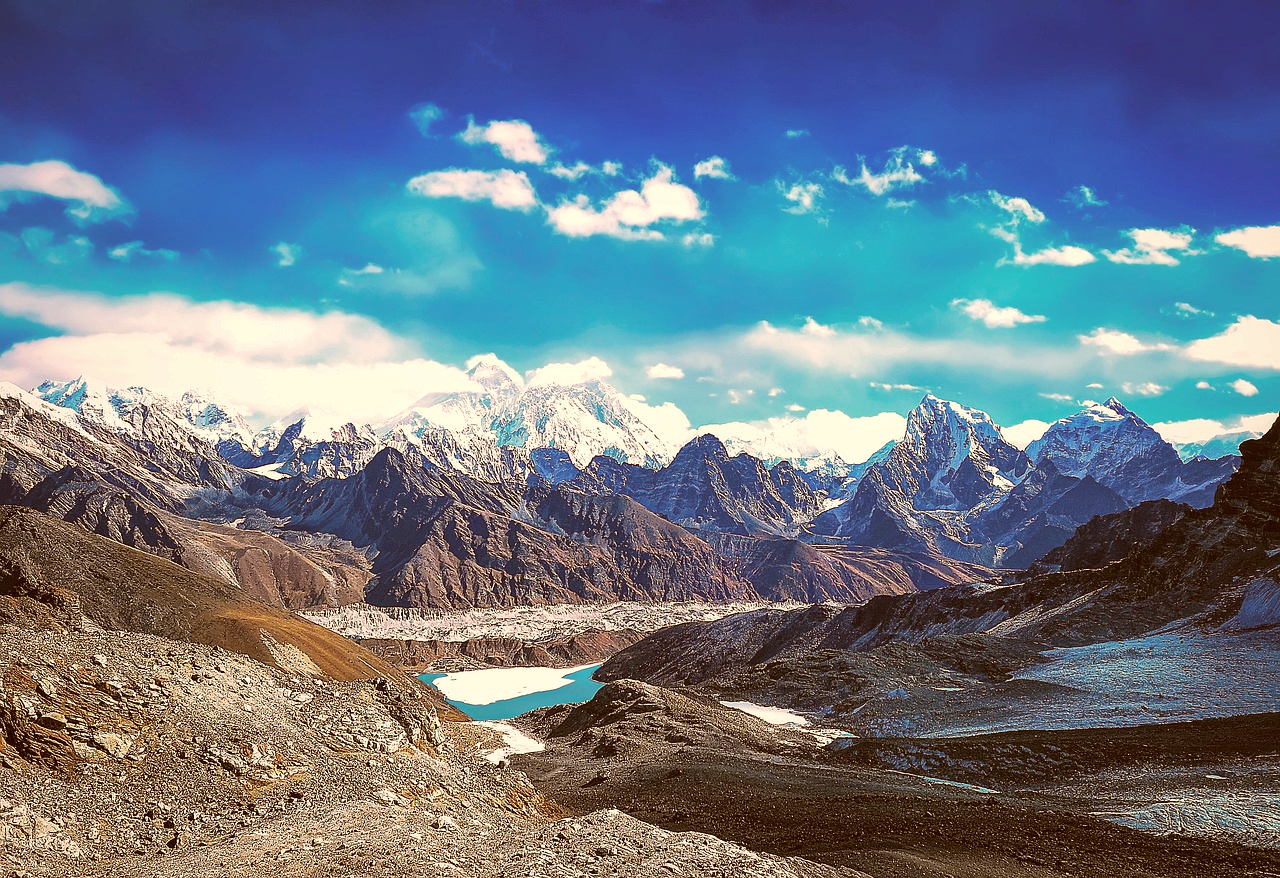
Quick answer: The Everest Three Passes trek is a 20 day loop over Kongma La (5,535 m), Cho La (5,420 m) and Renjo La (5,360 m). It takes in Everest Base Camp, Kala Patthar (5,545 m) and the Gokyo Lakes in one circuit. It grades 4, Challenging, and suits trekkers who have been to altitude before.
This is the trek that links every valley in the Khumbu into a single loop, and it is the one our returning clients ask for by name. So you do not choose between Everest Base Camp and Gokyo. Instead, you walk both, and you cross three high passes to join them. So here is the route, the honest difficulty, what each pass actually demands, and the two questions nobody else seems to answer.
Key Takeaways
- Three passes: Kongma La 5,535 m, Cho La 5,420 m, Renjo La 5,360 m.
- The highest point is not a pass. It is Kala Patthar at 5,545 m.
- Kongma La is the hardest, and the reasons are not just its height.
- It grades 4, Challenging, on the Spade Himalaya Trek Difficulty Scale.
- Plan 20 days and roughly US$1,790 to $2,260 per person, by group size.
- The direction you walk the loop changes how well you acclimatize.
What is the Everest Three Passes trek?
It is a circuit that connects the three main valleys of the Khumbu by crossing the high ridges between them. Most Everest treks go up one valley and come back down the same way. However, this one goes up, over, across, over again, and out through a third valley.
So in one trip you get Everest Base Camp, the Kala Patthar sunrise, the Gokyo Lakes, the Ngozumpa Glacier, and three passes above 5,300 m. That is why it takes 20 days, and why we grade it 4 rather than 3.
Also, it answers a question we get constantly, which is whether to choose base camp or Gokyo. On this route you stop choosing.
How high are the three passes?
Here are the exact altitudes, which is oddly hard to find written down anywhere.
| Pass | Altitude | Where it takes you |
|---|---|---|
| Kongma La | 5,535 m | Chhukung to Lobuche, the Khumbu valley |
| Cho La | 5,420 m | Dzongla to Thagnak, into the Gokyo valley |
| Renjo La | 5,360 m | Gokyo back toward Thame and Namche |
Notably, the passes get lower as you go. However, the single highest point of the whole trek is not a pass at all. It is Kala Patthar at 5,545 m, the viewpoint above Gorak Shep where you get the classic Everest photograph.
Which of the three passes is hardest?
Kongma La, and not only because it is the highest. This is the question every trekker asks and almost nothing online answers directly, so here is our guides’ view after many crossings.
In short, Kongma La is hardest for three reasons at once. First, it is the highest at 5,535 m. Second, it comes early in the loop, so you have had less time on the trail than you will have later. Third, the day is simply long, with a steep rocky climb out of Chhukung and then a crossing of the Khumbu Glacier moraine on the far side, which is slow, awkward ground when you are already tired.
Then comes Cho La. It is lower, but it holds ice near the top for most of the season, so it is the pass where footing matters most. An early start is not optional here.
Finally, Renjo La is the gentlest of the three, and also the most beautiful. You come over the top and the whole Gokyo valley opens below with Everest standing at the head of it. Since it comes last, you are also at your fittest and best acclimatized.
Which direction should you walk the loop?
Anticlockwise, taking Kongma La first, and there is a real reason for it. This is the other question that goes unanswered nearly everywhere, and it matters more than it sounds.
First, walking anticlockwise, you approach Kongma La through Namche, Tengboche, Dingboche and Chhukung. That is a long, gradual climb with two acclimatization stops built in. So by the time you reach the highest pass, your body has had a week to adjust.
Now, reverse the loop and you meet the passes in the opposite order. That sounds easier, since Renjo La is lowest. But it puts you on a 5,360 m pass much sooner in the trip, with far less acclimatization behind you. So the “easier” direction is actually the riskier one.
In short, our itinerary sends you up the Khumbu first for a reason. The route is built around how the body adjusts, not around the map.
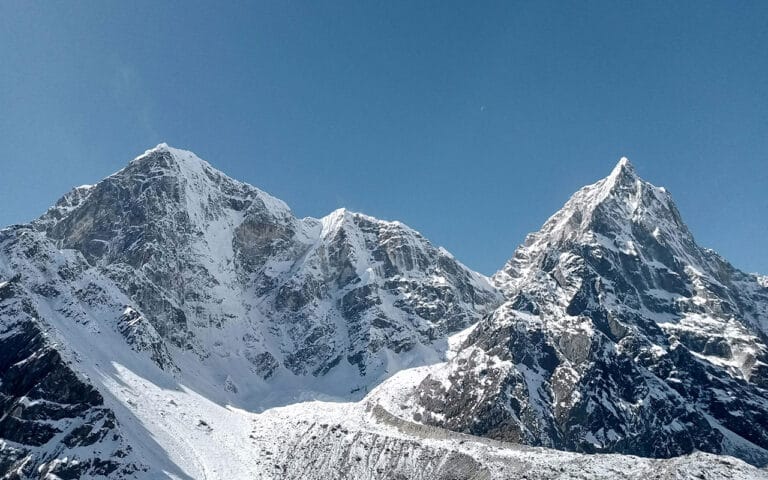
What is the Three Passes trek itinerary?
Twenty days from Kathmandu, with the loop taking shape after Namche. Here is the shape of the route with the altitude at each stop.
| Stage | Stop | Altitude |
|---|---|---|
| Start | Kathmandu | 1,400 m |
| Fly in | Lukla | 2,846 m |
| Acclimatize | Namche Bazaar | 3,440 m |
| Trek | Tengboche | 3,860 m |
| Acclimatize | Dingboche | 4,410 m |
| Base for pass 1 | Chhukung | 4,730 m |
| Pass 1 | Kongma La to Lobuche | 5,535 m |
| Goal | Everest Base Camp | 5,364 m |
| High point | Kala Patthar | 5,545 m |
| Base for pass 2 | Dzongla | 4,830 m |
| Pass 2 | Cho La to Gokyo | 5,420 m |
| Viewpoint | Gokyo Ri | 5,357 m |
| Pass 3 | Renjo La | 5,360 m |
| Descend | Thame | 3,800 m |
So the trek climbs steadily for a week, spends its middle section above 5,000 m, then unwinds down the Bhote Koshi valley to Namche and Lukla. Our Gokyo Lakes guide covers the lakes section in detail.
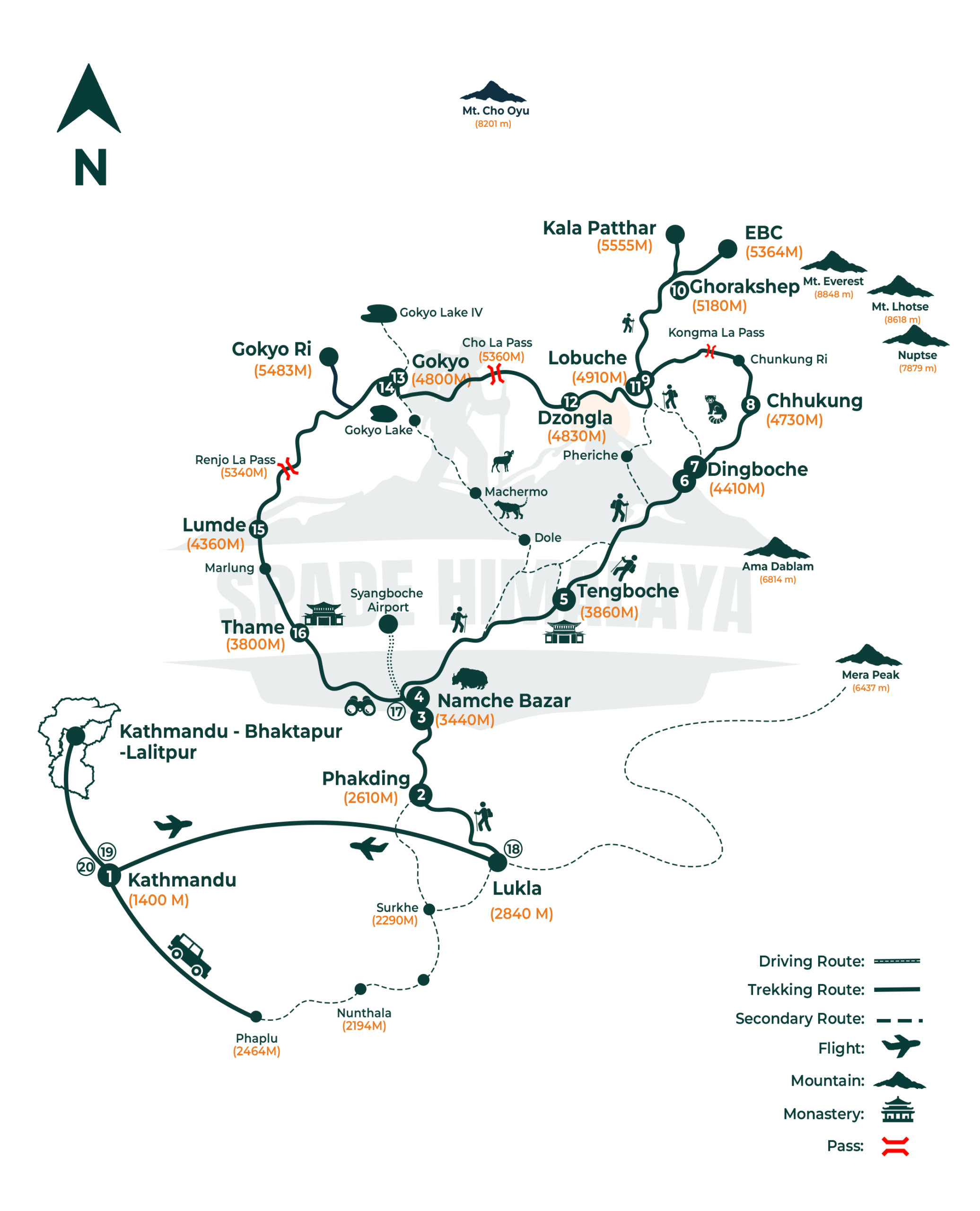
Our own Everest Three Passes trek map. The route runs Lukla (2,846 m), Namche Bazaar (3,440 m), Tengboche (3,860 m), Dingboche (4,410 m) and Chhukung (4,730 m), crossing the Kongma La (5,535 m) to Lobuche, on to Everest Base Camp (5,364 m) and Kala Patthar (5,545 m), then the Cho La (5,420 m) to Gokyo (4,790 m).
How hard is the Three Passes trek?
It grades 4, Challenging, on the Spade Himalaya Trek Difficulty Scale. That is one full grade above Everest Base Camp, which sits at 3.
| Grade | Level | Example |
|---|---|---|
| 1 | Easy | Short valley walks |
| 2 | Moderate | Annapurna Base Camp |
| 3 | Strenuous | Everest Base Camp, Gokyo Lakes |
| 4 | Challenging | Everest Three Passes, Makalu |
| 5 | Expedition | Upper Dolpo |
However, the difference is not technical skill. There is still no climbing on this route. The difference is accumulation: three weeks on the trail, three crossings above 5,300 m, long days, and simpler lodges on the quieter sections.
So we ask that trekkers have been to altitude before. Not because the ground is dangerous, but because you learn how your own body behaves up high, and this is not the trek to find that out on. Our altitude sickness guide explains what to watch for.
How do you train for the Three Passes trek?
Give yourself three to four months, and train for repeated long days rather than one hard effort. This is the question we are asked most once someone has booked, and it is the one that decides how much you enjoy the trip.
The demand here is endurance, not power. You walk six to eight hours a day for nearly three weeks, and then you do it again on a pass day at 5,500 m. So the training that helps most looks boring and works:
- Hike back-to-back days. One long walk on Saturday and another on Sunday teaches your legs to start tired. That single habit does more than any gym session.
- Carry a loaded daypack, 6 to 8 kg, on those walks. That is roughly what you carry while a porter takes the duffel.
- Find stairs or hills. The passes are long climbs followed by long rocky descents, and descending is what wrecks untrained knees.
- Build steady cardio three or four times a week, running, cycling or brisk walking, aiming for sessions over an hour.
- Add basic leg and core strength, squats, lunges and step-ups, twice a week.
You cannot train for altitude at sea level, so do not try. Acclimatization is handled by the itinerary, not by your gym. What training buys you is spare capacity, so a hard pass day is merely hard instead of overwhelming.
Break your boots in properly before you fly. And if you can manage one multi-day hike with real elevation before the trip, that is the best single rehearsal available.
Do you need crampons or special gear?
Usually microspikes, and sometimes crampons for Cho La, depending on the season. This is worth saying plainly because almost nobody covers it, and trekkers arrive without either.
In practice, Cho La holds ice on its upper section through most of the trekking season, and there is a short glacier crossing. In good autumn conditions, microspikes and a trekking pole are enough. After fresh snow, or in the shoulder weeks, crampons are the sensible call, and your guide will make that judgement on the morning.
Otherwise, the kit list matches a standard Everest trek: four-season sleeping bag, real down jacket, layers, broken-in boots. Our Everest packing list covers the full set. We carry a rope and basic safety gear on the pass days as a matter of course.
How much does the Three Passes trek cost?
Roughly US$1,790 to $2,260 per person in 2026, depending on group size. The price falls as the group grows, because the guide, permits and transport split further with each trekker.
| Group size | Price per person |
|---|---|
| 1 person | US$2,260 |
| 2 to 4 | US$2,170 |
| 5 to 8 | US$2,060 |
| 9 to 12 | US$1,880 |
| 13 or more | US$1,790 |
In practice, that covers the Lukla flights, your licensed guide, both permits, teahouse lodging and meals on the trail. It costs more than a standard base camp trek mainly because it runs six days longer.
Permits are the same two as any Khumbu trek: the Sagarmatha National Park entry permit (NPR 3,000) and the Khumbu Pasang Lhamu Rural Municipality permit (NPR 3,000), about US$45 together. There is no TIMS card in the Everest region. See our Everest permits guide for the detail.
When is the best time for the Three Passes trek?
March to May and late September to November, and the window matters more here than on lower treks. The passes are the reason.
First, autumn gives the most stable air and the clearest views, so it is our first choice. Spring is warmer, with rhododendron colour lower down, and it works well too. Both seasons keep the passes in reasonable condition.
However, winter is a different proposition. Snow can close Cho La and Kongma La entirely, and some lodges on the quieter sections shut. We do not run this route in the monsoon, since cloud hides the views you came for and the pass days become genuinely unpleasant. For the wider seasonal picture, see our best time to trek Everest Base Camp guide.
Who should choose this trek instead of Everest Base Camp?
Trekkers who have already been high once and want the whole region rather than one trail. If Everest Base Camp is your first Himalayan trek, do that one first. It is the better introduction, and it is a superb trek in its own right.
So choose the Three Passes if you have altitude experience, three spare weeks, and the idea of walking the same trail twice does not appeal. You will see the lakes, the glaciers, base camp and three passes, and you will spend long stretches on trails where you meet almost nobody.
Still weighing it against the simpler options? Our Gokyo vs Everest Base Camp comparison sets out that choice, and the Everest region guide lays out every route in the Khumbu.
FAQs
How many days is the Everest Three Passes trek?
Twenty days from Kathmandu, including the Lukla flights and a buffer day. That is about 16 days of walking, with two acclimatization stops and three pass crossings.
What is the highest point of the Three Passes trek?
Kala Patthar at 5,545 m, which is a viewpoint rather than a pass. The highest pass is Kongma La at 5,535 m, just 10 m lower.
Can you do the Three Passes trek solo?
Nepal requires a licensed guide in national park areas, and the Khumbu is inside Sagarmatha National Park. Beyond the rule, the pass days involve route-finding on glacier moraine and ice, which is genuinely not sensible alone.
Do you need a guide for the Three Passes trek?
Yes. Nepal requires a licensed guide inside national park areas, and the whole route sits within Sagarmatha National Park. Beyond the rule, the pass days involve route-finding across glacier moraine and ice, deciding when conditions are safe to cross, and rerouting if a pass closes. That judgement is the real reason to have one.
Can a beginner do the Three Passes trek?
We would not recommend it as a first Himalayan trek. It grades 4, Challenging, with three crossings above 5,300 m and nearly three weeks on the trail. Do Everest Base Camp or another grade 3 trek first, learn how your body handles altitude, then come back for this one. A fit beginner can absolutely walk to Everest Base Camp; this route asks for that experience already in hand.
Why do you see figures like US$40,000 for Everest?
Because those are for climbing the summit, which is a different activity entirely. A guided expedition to the top of Everest runs tens of thousands of dollars, largely in climbing permits, oxygen, and Sherpa support. Trekking is not climbing. The Three Passes trek costs US$1,790 to $2,260, and you never leave walking trails.
Is the Three Passes trek harder than Everest Base Camp?
Yes, by one full grade. Everest Base Camp is grade 3, Strenuous. The Three Passes is grade 4, Challenging, because of the three high crossings, the extra six days, and the simpler lodges on the quiet sections.
Do you need technical climbing experience?
No. There is no roped climbing and no technical ground. You need altitude experience, good fitness, and comfort walking on rocky moraine and short icy sections with microspikes.
What happens if a pass is closed by snow?
Your guide reroutes. Each pass has a bypass down the valley, so the trip continues even if one crossing is out. So that flexibility is a large part of why a guide matters on this route.
Is this the toughest trek in Nepal?
It is among the harder teahouse treks, but not the toughest. It grades 4, Challenging. Genuinely remote routes like Upper Dolpo grade 5, Expedition, because they need camping, longer isolation and several high passes with no lodges at all. The Three Passes is demanding but well supported throughout.
Which pass has the best view?
Renjo La, by most accounts including ours. You crest it and the Gokyo lakes lie below with Everest at the head of the valley. Also, it comes last, when you are fit enough to enjoy it.
Is there mobile signal and wifi on the route?
In the main villages, yes, usually for a small fee. On the pass sections and the quieter stretches toward Thame, expect nothing. Carry a power bank, since charging costs more the higher you go.
Accuracy note: pass altitudes (Kongma La 5,535 m, Cho La 5,420 m, Renjo La 5,360 m), the Kala Patthar high point (5,545 m), the full stop-by-stop altitude profile, the 20-day duration and the 2026 group-size pricing (US$1,790 to $2,260) are Spade Himalaya’s own operating figures for our Everest Three Passes Trek; permit fees (Sagarmatha National Park NPR 3,000 + Khumbu Pasang Lhamu Rural Municipality NPR 3,000, no TIMS in the Khumbu) follow the Nepal Tourism Board and match our Everest permits guide; the mandatory licensed-guide rule applies in national park areas; difficulty grading uses the Spade Himalaya Trek Difficulty Scale; route conditions, pass-day judgement and seasonal notes are our guides’ first-hand experience on the circuit; reviewed by Yubaraj Katel, government-licensed trekking guide (Licence No. 19827) with 10 years of experience leading treks in the Everest region.

Start Planning Your Trek
Updated: 20 Jul, 2026
13 min
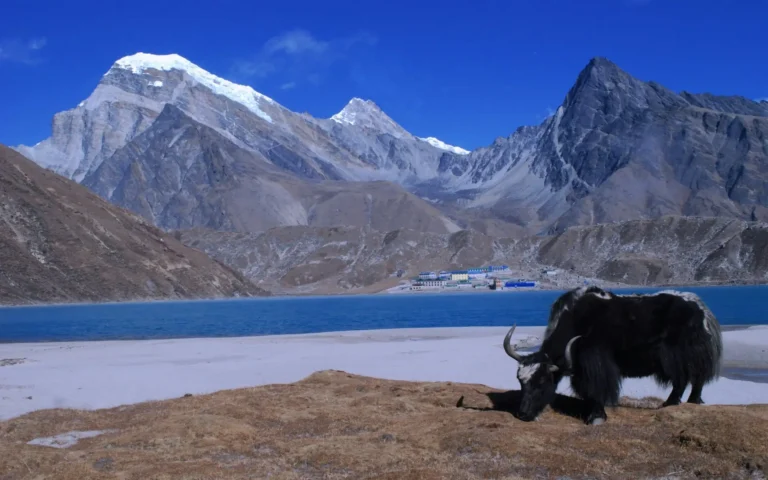
Gokyo Lakes Trek Guide (2026): Nepal’s Highest Freshwater Lakes
Gokyo Lakes trek guide: the route, cost, permits, Gokyo Ri at 5,357 m, lake depths, and...
Updated: 6 Jul, 2026
6 min
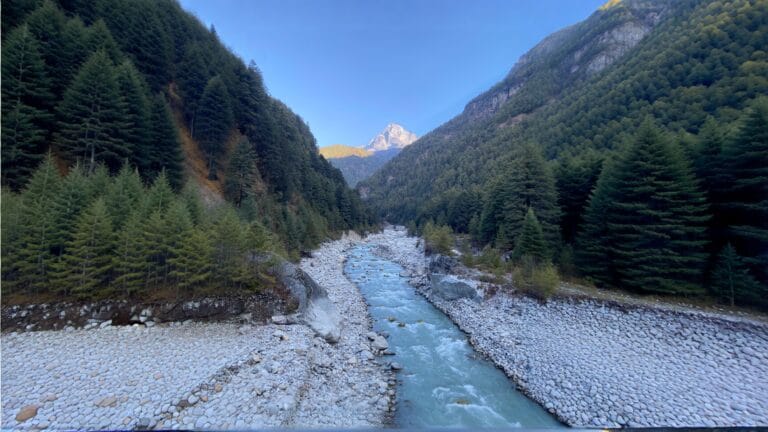
Everest Base Camp vs Three Passes: Which Trek Should You Choose?
Quick answer: Choose the Everest Base Camp Trek (14 days, strenuous) for the classic route and...
Updated: 20 Jul, 2026
15 min
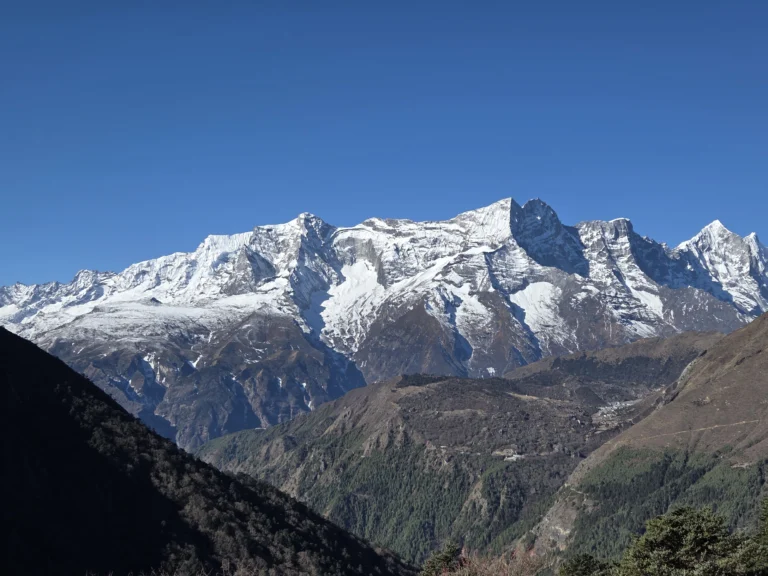
Everest Region Treks: Routes, Cost & Best Time (2026 Guide)
Quick answer: The Everest region, or Khumbu, is home to Everest Base Camp, the Gokyo Lakes,...