Quick answer: The Everest region, or Khumbu, is home to Everest Base Camp, the Gokyo Lakes, and the Three Passes. Treks run 12 to 20 days, reach 5,300 to 5,545 m, and start with a flight to Lukla. The best seasons are spring and autumn.
The Everest (Khumbu) region offers several world-class treks. They run from the classic 14-day Everest Base Camp Trek to the demanding 20-day Three Passes circuit. Which one is right for you comes down to three things: your time, your experience, and your appetite for altitude. All of them start with the famous flight to Lukla. And all of them run inside Sagarmatha National Park, a 1,148 km2 UNESCO World Heritage Site listed in 1979 (UNESCO, retrieved 2026-06-18).
Key Takeaways
- The classic Everest Base Camp Trek (14 days) is the iconic route and the best first choice for most trekkers.
- The Three Passes Trek (20 days) is the hardest and most complete Khumbu circuit, for experienced trekkers.
- You need two permits: Sagarmatha National Park (NPR 3,000) and the Khumbu local permit (NPR 3,000). No TIMS here.
- Spring and autumn are the best seasons. The Everest region is currently exempt from Nepal’s guide rule, though a guide is strongly advised.
This guide is the hub for everything we cover on Everest trekking. First, use it to choose a route, permits, costs, training, and safety. Then follow the links to the deeper guides and trek pages.
The Everest region at a glance
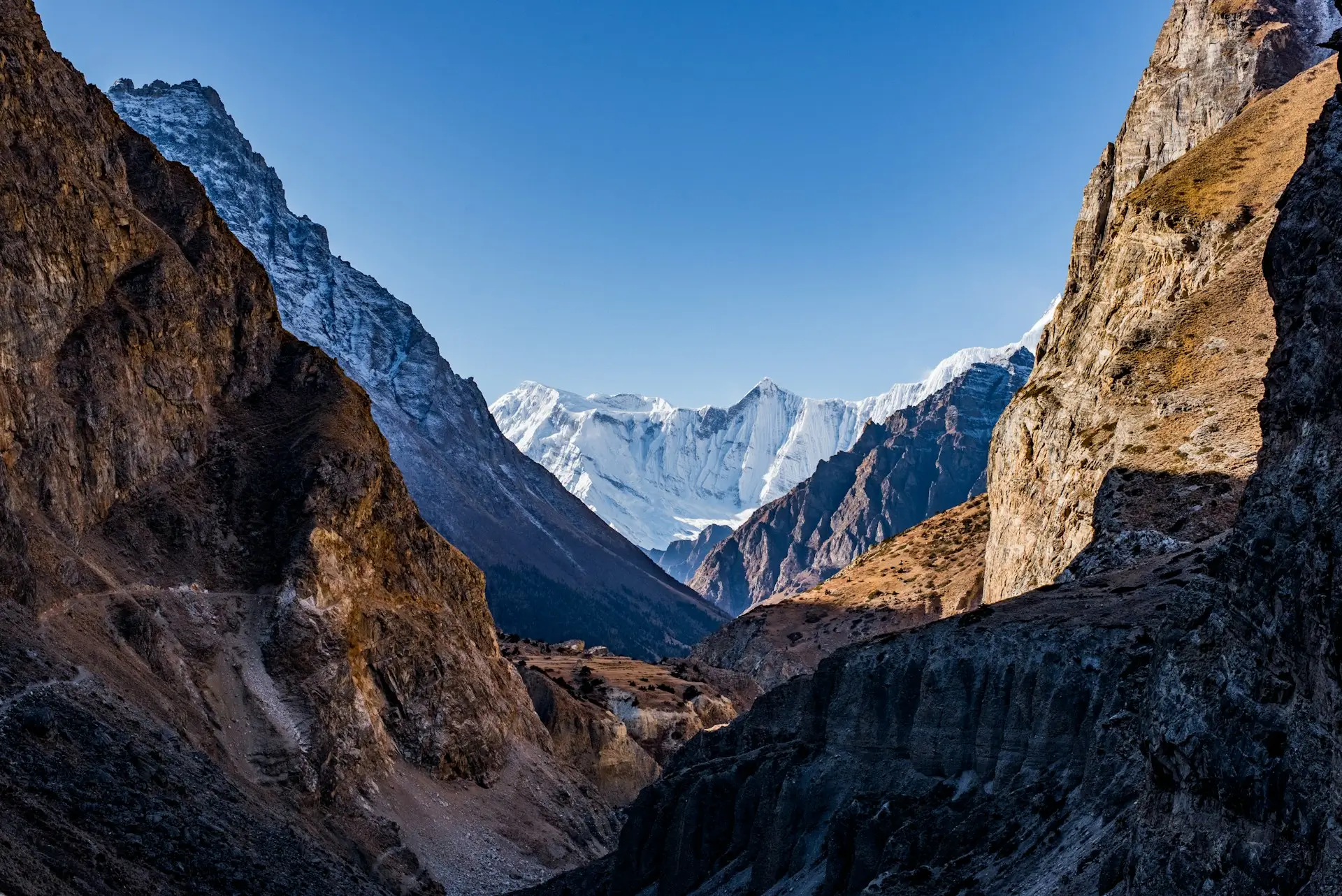
The Everest region, known locally as the Khumbu, is the homeland of the Sherpa people. It is also home to the highest mountains on earth. It sits in northeastern Nepal, north of the town of Lukla. The whole area is protected within Sagarmatha National Park. “Sagarmatha” is the Nepali name for Mount Everest.
The region is built around three great valleys. The main treks explore them.
- The Khumbu valley is the classic route up to Everest Base Camp and Kala Patthar.
- The Gokyo valley has a chain of turquoise lakes and the viewpoint of Gokyo Ri. It sits beside the Ngozumpa Glacier, the longest glacier in Nepal. See our Gokyo Lakes trek guide.
- The high passes (Kongma La, Cho La, Renjo La) link these valleys into one big circuit.
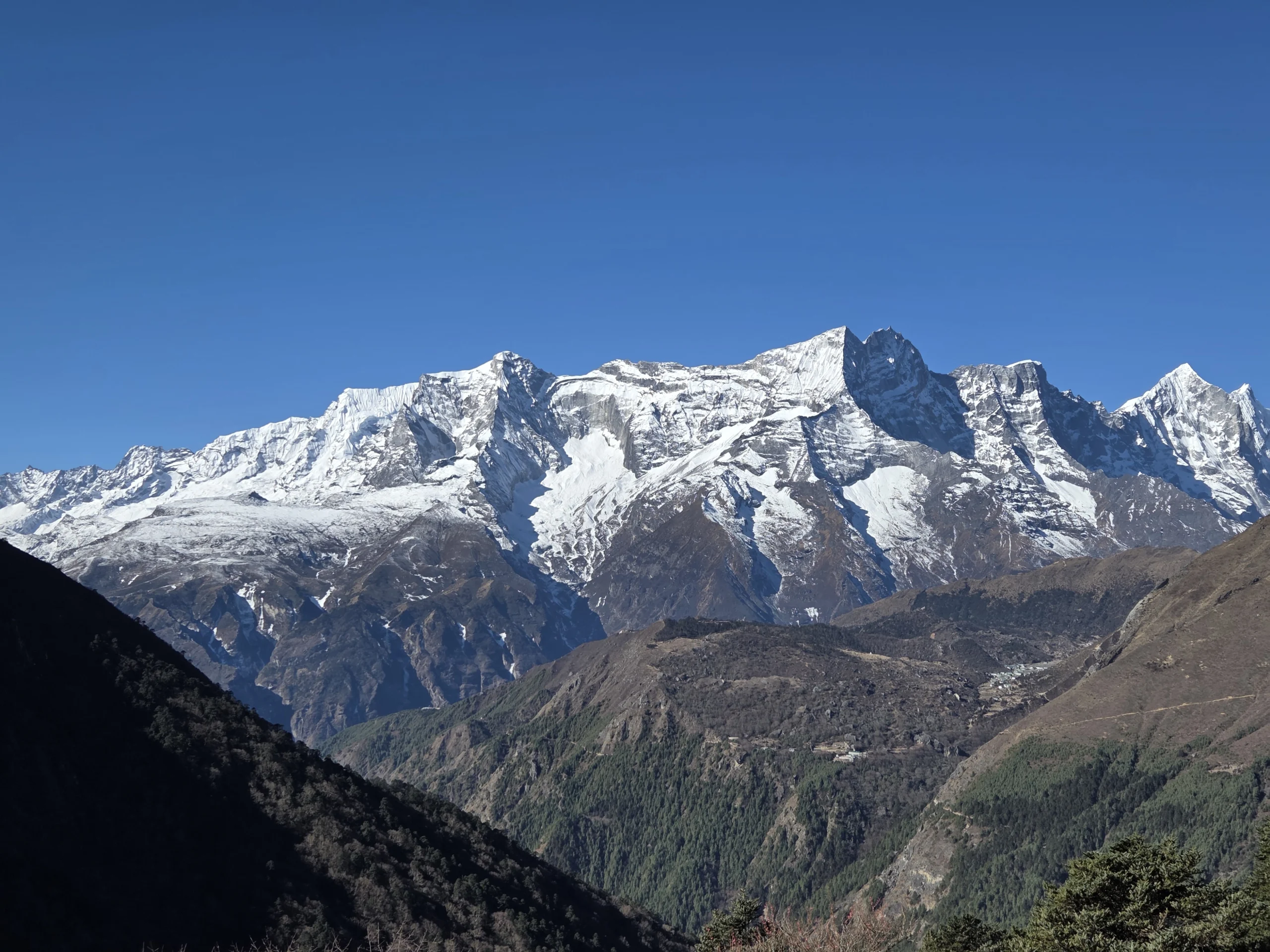
From the trails, you see four of the six highest mountains in the world: Everest (8,849 m), Lhotse (8,516 m), Cho Oyu (8,188 m), and Makalu (8,463 m). You also see the elegant pyramid of Ama Dablam. So it is a land of glaciers, prayer flags, stone villages, and old monasteries. In short, it is the most famous trekking spot on the planet.
The main Everest region treks compared
There are a few classic ways to see the Khumbu. They share the same core valley, but they differ in length and difficulty.
| Trek | Duration | Grade | Highlights | Best for |
|---|---|---|---|---|
| Everest Base Camp Trek | 14 days | Strenuous | Base camp, Kala Patthar, Namche, Tengboche | First-time high-altitude trekkers |
| Everest Base Camp via Kala Patthar | 16 days | Strenuous | Extra acclimatization, Kathmandu culture day | More buffer and a cultural finish |
| Everest Three Passes Trek | 20 days | Challenging | Kongma La, Cho La, Renjo La, Gokyo Lakes | Experienced trekkers wanting it all |
All three reach Everest Base Camp (5,364 m) and climb Kala Patthar (5,545 m) for the classic Everest view. The Three Passes simply adds the Gokyo Lakes and three high passes on top.
How do you choose your Everest trek?
Pick by your experience and time, not by ambition alone. Here is a simple way to choose.
- First big high-altitude trek, or about two weeks free? Choose the classic Everest Base Camp Trek. It is demanding but achievable for any fit, well-prepared trekker, with no technical terrain.
- Want more acclimatization and a cultural finish, with about 16 days? Choose the Kala Patthar version. It adds a Chhukung hike and a Kathmandu sightseeing day, with no technical passes.
- Experienced, with three weeks and prior altitude time? Choose the Three Passes Trek. It crosses three passes above 5,300 m and visits the Gokyo Lakes.
For a full head-to-head on difficulty, length, and views, see our guide to Everest Base Camp vs the Three Passes Trek. When in doubt, start with the classic route. The bigger circuits are always there for a return trip.
Are there quieter or easier Everest treks?
Yes. Not every Everest trek goes to base camp. So if you want fewer crowds or a gentler trip, two routes stand out.
The Gokyo Valley Trek is a 12-day trek to the turquoise Gokyo Lakes and the Gokyo Ri viewpoint (5,357 m). It skips base camp, so it stays quieter. Still, it shows four 8,000 m peaks in one view.
The Pikey Peak Trek is a short, easy 8-day trek in the lower Everest region. It climbs Pikey Peak (4,065 m) for one of the best Everest sunrises. So it suits beginners, and it even works in winter. Our Pikey Peak trek guide covers the route altitudes, costs and difficulty in full.
Where is it, and how do you get there?
Almost every Everest trek begins with the flight to Lukla, the gateway to the Khumbu. Lukla’s Tenzing-Hillary Airport sits at 2,846 m. From there, the trail follows the Dudh Koshi river up to Namche Bazaar, the trading heart of the region.
- In peak months (March, April, May, October, November), flights are rerouted through Manthali / Ramechhap. That means a 4 to 6 hour drive from Kathmandu, then a 20-minute flight.
- In quieter months, flights usually run direct from Kathmandu, about 35 minutes.
- A direct helicopter from Kathmandu to Lukla costs about US$550 per person on a 5-share basis.
- For those with extra time, the historic Jiri or Salleri road-head start adds several quiet, lower days before Lukla.
Weather can delay Lukla flights. So always keep a spare day before your international flight home.
What permits and rules apply in the Everest region?
You need two permits to trek in the Khumbu, and there is no TIMS card here. Both are easy to arrange and cheap.
- Sagarmatha National Park entry permit: NPR 3,000 for foreign nationals (Nepal Tourism Board, retrieved 2026-06-18).
- Khumbu Pasang Lhamu Rural Municipality permit: NPR 3,000 per foreigner. The local government raised it from NPR 2,000 in September 2024. It replaced the old TIMS card in this region.
Now for the guide question. Nepal’s 2023 rule lists the Everest region among the areas needing a licensed guide (Nepal Tourism Board, retrieved 2026-06-29). However, the local Khumbu Pasang Lhamu Rural Municipality rejected the rule and allows solo trekking (The Himalayan Times, 2023-03-28). So independent trekking is still allowed here in 2026. Even so, a licensed guide adds real safety at altitude. A guide also manages your acclimatization and handles permits and logistics. So we include one in every trip, and Spade Himalaya arranges both permits for you. For the exact fees, where to buy them, and the no-TIMS rule, see our Everest Base Camp trek permits guide.
When is the best time to trek the Everest region?
Spring (March to May) and autumn (late September to November) are the prime seasons. Both bring stable weather and clear mountain views. October has the clearest skies and the biggest crowds. Late November is crisp and quieter. Winter is cold but doable with the right gear. The summer monsoon brings cloud, rain, and frequent flight delays.

For a full month-by-month breakdown, including temperatures, crowds, and how the season affects your Lukla flight, see our guide to the best time to trek Everest Base Camp. For the famous viewpoint above Gorak Shep, our Kala Patthar guide has the full details.
How much do Everest treks cost?
A guided 14-day Everest Base Camp trek usually costs US$1,400 to US$2,500 per person in 2026. Longer routes like the Three Passes cost more, because of the extra days. The permits are cheap, at about US$38 total. The main costs are the Lukla flight, your guide and porter, and food and lodging on the trail.
For a full line-by-line breakdown of permits, flights, guides, food, gear, and insurance, read our Everest Base Camp Trek cost guide for 2026.
Trek difficulty: the Spade Himalaya Trek Difficulty Scale
We grade every trek from 1 to 5, so you can compare them fast. This is our own scale, based on altitude, length, remoteness, and lodging.
| Grade | Name | What it means | Example treks |
|---|---|---|---|
| 1 | Easy | Under 3,500 m, short, gentle days | Poon Hill |
| 2 | Moderate | Up to about 4,200 m, no high pass | Annapurna Base Camp |
| 3 | Strenuous | 5,000 to 5,550 m, a base camp or one high pass, good lodges | Everest Base Camp, Annapurna Circuit, Manaslu Circuit |
| 4 | Challenging | Remote, above 5,000 m, long rough days, simple lodges or some camping | Makalu, Everest Three Passes |
| 5 | Expedition | Very remote, full camping, or several high passes | Upper Dolpo |
On this scale, the Everest Base Camp Trek is Grade 3 (Strenuous). The longer Everest Three Passes Trek is Grade 4 (Challenging). For a full look at fitness, training, and the oxygen level, see our Everest Base Camp trek difficulty guide.
What are the temperatures by season?
Here are rough temperatures by season, so you know what to pack. These are field-experience ranges from our guides, not exact figures, because mountain weather changes fast.
| Season | Namche and mid-trail (day) | Base camp area (night) | Verdict |
|---|---|---|---|
| Spring (Mar to May) | 8 to 16°C | -8 to -15°C | Excellent, warmer |
| Autumn (Sep to Nov) | 6 to 14°C | -10 to -18°C | Excellent, clearest |
| Winter (Dec to Feb) | 2 to 9°C | -18 to -25°C | Cold and quiet |
| Monsoon (Jun to Aug) | 10 to 18°C | -5 to -12°C | Cloudy, flight delays |
For the full month-by-month breakdown, including night lows and how to check the live forecast, see our Everest Base Camp weather guide.
How fit do you need to be?
Everest treks are demanding because of altitude and long days, not technical climbing. The classic route has no ropes or scrambling. The challenge is walking 5 to 8 hours a day for two weeks, and coping with thin air up to 5,545 m. The Three Passes adds glaciated passes and rougher ground. So it is graded harder.
You do not need to be an athlete. Still, you should train. In our experience, trekkers who prepare enjoy the trip far more and cope better at altitude. Here is a simple plan.
- Start 8 to 12 weeks out. Build cardio with walking, jogging, cycling, or stairs, 3 to 4 times a week.
- Do long hikes on consecutive days, ideally on hills, with a daypack. This trains your legs and feet for back-to-back days.
- Add strength work for legs and core. Also, break in your boots well before you fly.
- Practise with a loaded daypack, so the weight feels normal on the trail.
In short, acclimatization matters more than raw fitness. That is why our itineraries build in rest days and a steady climb.
How do you avoid altitude sickness?
Altitude is the single biggest risk on any Everest trek. However, it is very manageable with the right pace. Acute mountain sickness (AMS) gets more likely the higher you go. In one study of Nepali Himalaya trekkers, AMS affected about 15% at 4,000 to 4,500 m and 51% at 4,500 to 5,000 m (PubMed, retrieved 2026-06-18). So every good itinerary is built around gradual ascent.
Here is how we keep you safe:
- Climb high, sleep low. Rest days at Namche and Dingboche let your body adjust.
- Walk slowly and drink 3 to 4 litres of water a day. Rushing is the most common mistake.
- Daily health checks. Our guides carry a pulse oximeter to track your oxygen.
- Know the signs. Headache, nausea, dizziness, and poor sleep are early warnings. So tell your guide at once.
- Descending is the cure. Going down is the best treatment, and your guide will make that call without hesitation if needed.
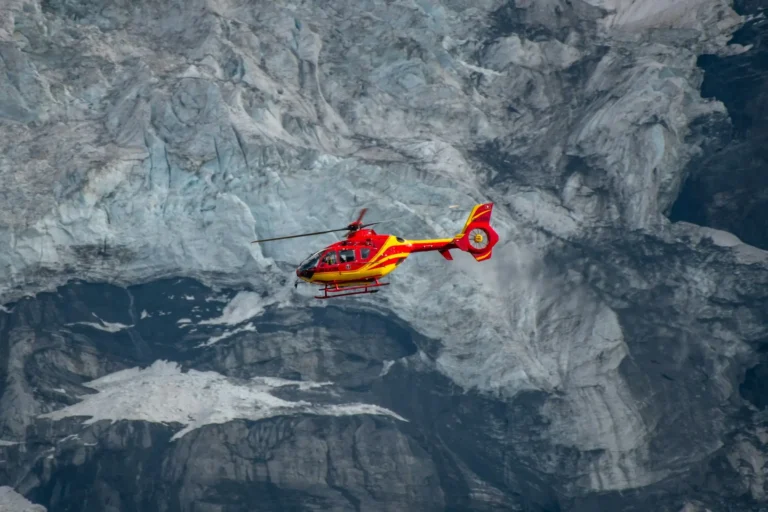
There is also a Himalayan Rescue Association aid post at Pheriche, staffed in season. And a helicopter can evacuate you in a serious emergency. So comprehensive travel insurance is essential.
What are accommodation and food like?
You sleep in teahouses, the family-run lodges that line the Everest trails. Lower down, rooms are comfortable, with twin beds and sometimes attached bathrooms. Higher up, they get simpler and colder, with shared bathrooms and unheated rooms. So a good sleeping bag matters above Namche.
The food is hearty and full of carbs, which is perfect for trekking. Expect:
- Dal bhat, the Nepali staple of rice, lentils, and vegetables, usually with free refills. Most guides swear by it.
- Noodles, potatoes, soups, fried rice, momos, and Tibetan bread.
- Vegetarian options everywhere. Meat is best avoided at altitude, because it travels a long way.
- Tea, coffee, and the famous apple pie in the bigger villages.
Meals cost more the higher you climb, because everything is carried up by porter or yak. On a package, your three daily meals are included.
What about money, Wi-Fi, and practical tips?
Carry enough Nepalese rupees in cash, because the Khumbu runs on cash and ATMs are unreliable beyond Namche. Here are a few practical notes.
- Money: draw cash in Kathmandu or Namche. Budget for drinks, snacks, hot showers, charging, and tips.
- Wi-Fi and charging: most teahouses offer them for a small fee that rises with altitude. So bring a power bank.
- Hot showers: a few dollars each, and a real treat after a cold day.
- Water: refill and purify it rather than buying bottled water, which is costly and adds plastic waste in the park.
- Buffer day: keep a spare day before your international flight, in case Lukla flights are delayed.
What should you pack?
The key is layers, because you move through several climate zones in one trek. Here is a short list of essentials.
- Footwear: broken-in waterproof boots, plus warm socks and camp shoes.
- Layers: base layers, a fleece or down mid-layer, and a waterproof, windproof shell.
- Warmth: a four-season sleeping bag and a down jacket. You can rent both in Kathmandu for about US$35 each.
- Head and hands: warm hat, sun hat, sunglasses, buff, and liner plus insulated gloves.
- Extras: headlamp, trekking poles, sunscreen, a water bottle, and micro spikes for winter or the passes.
For a full, season-by-season kit list, see our Everest Base Camp trek packing list.
Respecting the Khumbu: Sherpa culture and environment
The Everest region is a living Sherpa homeland and a fragile mountain environment. So trek lightly and with respect. A few simple habits go a long way.
- Walk clockwise around mani walls, chortens, and prayer wheels.
- Ask before photographing people, monks, or inside monasteries.
- Dress modestly in villages and at religious sites.
- Carry out what you carry in, cut plastic, and use refillable water.
- Support local lodges and porters, and treat the crew well.
A small, dry cough at altitude, the “Khumbu cough,” is common from the cold, dry air. A buff over the mouth and plenty of fluids help.
Highlights of the Khumbu
Whichever route you choose, the Everest region delivers some of the greatest scenery on earth.
- Namche Bazaar, the lively Sherpa town and trading hub of the Khumbu.
- Tengboche Monastery, the largest in the region, with Everest and Ama Dablam behind it.
- Everest Base Camp (5,364 m) and the Khumbu Icefall.
- Kala Patthar (5,545 m), the best viewpoint for sunrise on Everest.
- The Gokyo Lakes and Gokyo Ri (5,357 m), with four 8,000 m peaks in one view, on the Three Passes route.
- The warm living culture of the Sherpa people and their centuries-old monasteries.
More Everest guides
Want to plan in detail? These guides go deeper on each part of the trek.
- Everest Base Camp trek cost (2026)
- Gokyo Lakes trek guide: route, cost, and Gokyo Ri
- Gokyo Lakes vs Everest Base Camp: which to choose
- Everest Three Passes trek: the full route guide
- Everest Base Camp trek permits
- Everest Base Camp trek difficulty and training
- Everest Base Camp trek distance and how long it takes
- Everest Base Camp trek packing list
- Best time to trek Everest Base Camp
- Everest Base Camp weather: temperatures month by month, and how cold it gets at night
- Sherpa people and culture: who they really are, their faith, altitude adaptation, and famous climbers
- Everest helicopter tour: cost, safety, and whether the scenic flight is worth it
- Helicopter tours in Nepal: every flight option compared, with costs, weight limits and who each suits
- Everest Base Camp vs the Three Passes Trek
- Namche Bazaar guide: the gateway town, its altitude, hotels, and the rest day
- Lukla airport guide: how the famous mountain flight really works
- Kala Patthar guide: the best Everest view a trekker can earn on foot
- Where is Mount Everest?: the border, the map, and how travelers reach it
- Hotel Everest View: breakfast at the world’s highest placed hotel
- Sleeping Beauty of Mount Everest: the death zone’s history, told with respect, and why trekkers never see it
- Tengboche Monastery guide: the history, the Mani Rimdu festival, and how trekkers visit
And to book a trip, see the 14-day Everest Base Camp Trek or the faster Everest Base Camp Trek with helicopter return.
FAQs
What treks can you do in the Everest region?
The main routes are the classic Everest Base Camp Trek (14 days), the Everest Base Camp via Kala Patthar (16 days), and the Everest Three Passes Trek (20 days), which adds the Gokyo Lakes and three high passes. All reach Everest Base Camp and Kala Patthar. They differ mainly in length, difficulty, and how much of the region they cover.
What permits do I need to trek in the Everest region?
Two: the Sagarmatha National Park entry permit (NPR 3,000) and the Khumbu Pasang Lhamu local permit (NPR 3,000). There is no TIMS card in the Khumbu. Both are paid in Nepalese rupees and are arranged for you on a guided trip.
Do you need a guide to trek in the Everest region?
Not by law in the Khumbu. Nepal’s 2023 rule lists the Everest region among the areas needing a licensed guide (Nepal Tourism Board, retrieved 2026-06-29). However, the local Khumbu Pasang Lhamu Rural Municipality rejected the rule and allows solo trekking (The Himalayan Times, 2023-03-28). So independent trekking is still allowed. Even so, a licensed guide greatly improves safety at altitude, so we strongly recommend one.
Which Everest trek is best for beginners?
The classic 14-day Everest Base Camp Trek. It has no technical terrain, well-established teahouses, and two built-in acclimatization days. The Three Passes Trek is not recommended as a first high-altitude trek, because of its glaciated passes and the long time at altitude.
How fit do I need to be to trek in the Everest region?
You need good general fitness, not athletic ability. If you can comfortably hike 5 to 6 hours with a daypack on consecutive days, you can do the classic route with training. Build cardio and hill fitness for 8 to 12 weeks beforehand. The Three Passes needs a higher level and prior altitude experience.
How do you avoid altitude sickness on an Everest trek?
Ascend gradually, take the built-in rest days, walk slowly, drink plenty of water, and avoid alcohol up high. AMS affects a large share of trekkers above 4,500 m. So tell your guide at the first sign of a headache or nausea. Descending is the best treatment, and our guides check you daily with a pulse oximeter.
When is the best time to trek in the Everest region?
Spring (March to May) and autumn (late September to November), with October offering the clearest skies. Winter is cold but possible with the right gear. The monsoon (June to August) is the least reliable, due to cloud and flight delays.
How do you get to the Everest region?
Almost all treks start with a flight to Lukla. It runs direct from Kathmandu in quieter months, or via Manthali in peak season. A helicopter is available for about US$550 per person. And a longer overland start from Jiri or Salleri is an option for those with extra time.
Accuracy note: official fees, rules, and hard facts in this guide are cited inline from their sources; trail and price details are Spade Himalaya field research; route details reviewed by Yubaraj Katel, government-licensed trekking guide (Licence No. 19827) with 10 years of experience leading treks in the Everest region.

Start Planning Your Trek
Updated: 6 Jul, 2026
9 min
Everest Base Camp Trek Cost in 2026: Full Breakdown
Quick answer: A guided Everest Base Camp Trek’s biggest single cost is the round-trip Lukla flight,...
Updated: 3 Oct, 2026
13 min
Gokyo Lakes Trek Guide (2026): Nepal’s Highest Freshwater Lakes
Gokyo Lakes trek guide: the route, cost, permits, Gokyo Ri at 5,357 m, lake depths, and...
Updated: 8 Oct, 2026
10 min
Everest Helicopter Tour: Is It Worth It? Cost, Safety and the Reality
Is the Everest helicopter tour worth it? An honest look at the cost, the safety, why...